Kirjojen hintavertailu. Mukana 12 390 323 kirjaa ja 12 kauppaa.

Kirjailija

Laura Briggs

Kirjat ja teokset yhdessä paikassa: 22 kirjaa, julkaisuja vuosilta 2003-2023, suosituimpien joukossa Ghosts of Graveyards Past. Vertaile teosten hintoja ja tarkista saatavuus suomalaisista kirjakaupoista.

22 kirjaa

Kirjojen julkaisuhaarukka 2003-2023.

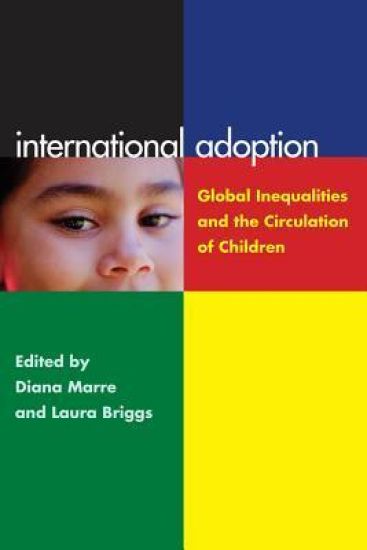
International Adoption

International Adoption

Laura Briggs

New York University Press
2009
pokkari
In the past two decades, transnational adoption has exploded in scope and significance, growing up along increasingly globalized economic relations and the development and improvement of reproductive technologies. A complex and understudied system, transnational adoption opens a window onto the relations between nations, the inequalities of the rich and the poor, and the history of race and racialization, Transnational adoption has been marked by the geographies of unequal power, as children move from poorer countries and families to wealthier ones, yet little work has been done to synthesize its complex and sometimes contradictory effects. Rather than focusing only on the United States, as much previous work on the topic does, International Adoption considers the perspectives of a number of sending countries as well as other receiving countries, particularly in Europe. The book also reminds us that the U.S. also sends children into international adoptions—particularly children of color. The book thus complicates the standard scholarly treatment of the subject, which tends to focus on the tensions between those who argue that transnational adoption is an outgrowth of American wealth, power, and military might (as well as a rejection of adoption from domestic foster care) and those who maintain that it is about a desire to help children in need.
Reproducing Empire

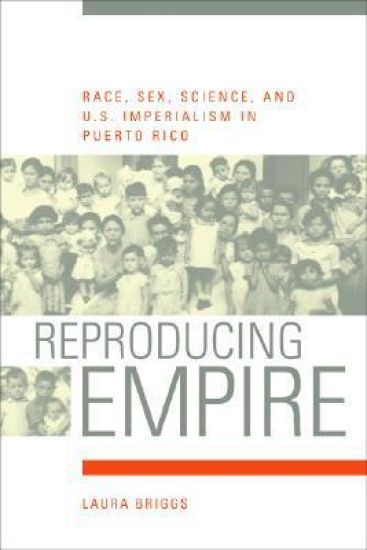
Reproducing Empire

Laura Briggs

University of California Press
2003
pokkari
Original and compelling, Laura Briggs' "Reproducing Empire" shows how, for both Puerto Ricans and North Americans, ideologies of sexuality, reproduction, and gender have shaped relations between the island and the mainland. From science to public policy, the 'culture of poverty' to overpopulation, feminism to Puerto Rican nationalism, this book uncovers the persistence of concerns about motherhood, prostitution, and family in shaping the beliefs and practices of virtually every player in the twentieth-century drama of Puerto Rican colonialism. In this way, it sheds light on the legacies haunting contemporary debates over globalization. Puerto Rico is a perfect lens through which to examine colonialism and globalization because for the past century it has been where the United States has expressed and fine-tuned its attitudes toward its own expansionism. Puerto Rico's history holds no simple lessons for present-day debate over globalization but does unearth some of its history. "Reproducing Empire" suggests that interventionist discourses of rescue, family, and sexuality fueled U.S. imperial projects and organized American colonialism. Through the politics, biology, and medicine of eugenics, prostitution, and birth control, the United States has justified its presence in the territory's politics and society. Briggs makes an innovative contribution to Puerto Rican and U.S. history, effectively arguing that gender has been crucial to the relationship between the United States and Puerto Rico, and more broadly, to U.S. expansion elsewhere.