Kirjojen hintavertailu. Mukana 12 595 353 kirjaa ja 12 kauppaa.

Kirjailija

Laura Rademaker

Kirjat ja teokset yhdessä paikassa: 5 kirjaa, julkaisuja vuosilta 2018-2024, suosituimpien joukossa Found in Translation. Vertaile teosten hintoja ja tarkista saatavuus suomalaisista kirjakaupoista.

5 kirjaa

Kirjojen julkaisuhaarukka 2018-2024.

Aboriginal Rock Art and the Telling of History

Aboriginal Rock Art and the Telling of History

Laura Rademaker; Sally K. May; Gabriel Maralngurra; Joakim Goldhahn

Cambridge University Press
2024
sidottu
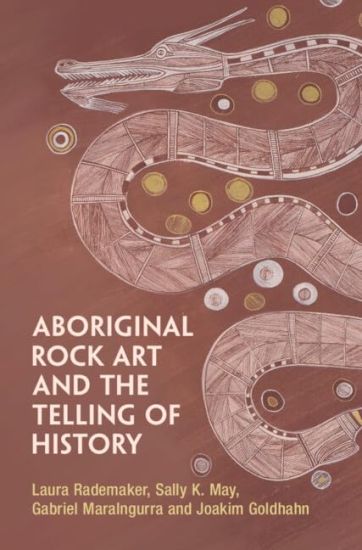
The rock art of Australia is among the oldest, most complex, and most fascinating manifestations of human creativity and imagination in the world. Aboriginal people used art to record their experiences, ceremonies, and knowledge by embedding their understanding of the world in the landscape over many generations. Indeed, rock art serves as archives and libraries for Australia's Indigenous people. It is, in effect, its repository of memory. This volume explores Indigenous perspectives on rock art. It challenges the limits and assumptions of traditional, academic ways of understanding and knowing the past by showing how history has literally been painted 'on the rocks'. Each chapter features a biography of an artist or family of artists, together with an artwork created by contemporary artist Gabriel Maralngurra. By bringing together history, archaeology, and Indigenous artistic practice, the book offers new insights into the medium of rock art and demonstrates the limits of academic methods and approaches.
Tiwi Story

Tiwi Story

Mavis Kerinaiua; Laura Rademaker

NewSouth Publishing
2023
nidottu
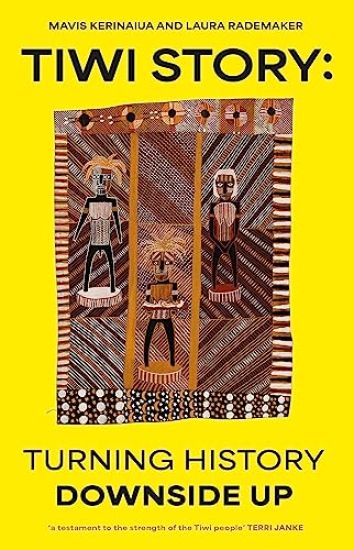
Tiwi people have plenty to be proud of. This little tropical island community has more than its fair share of surprising stories that turn ideas of Australian history upside down.The Tiwi claim the honour of having defeated a global superpower. When the world's most powerful navy attempted to settle and invade the Tiwi Islands in 1824, Tiwi guerrilla warriors fought the British and won. The Tiwi remember the fight and oral histories reveal their tactical brilliance.Later, in 1911, Catholic priest Francis Xavier Gsell styled himself as the 'Bishop with 150 wives'. Gsell said he 'purchased' Tiwi women and 'freed' them from traditional Tiwi marriage, and Tiwi girls grew up into devoted Catholics. But Tiwi women had more power in their marriage negotiations than the missionaries realised. They worked out how to be both Tiwi and Catholic. And it was the missionaries who came around to Tiwi thinking, not the other way around.Then there are stories of the Tiwis' 'number one religion': Aussie Rules Football; the eldest living Tiwi woman, Calista Kantilla, remembers her time growing up in the mission dormitory; and Tiwi Traditional Owner Teddy Portaminni explains the importance of Tiwi history and culture, as something precious, owned by Tiwi and the source of Tiwi strength.Tiwi Story showcases stories of resilience, creativity and survival, as told by the Tiwi people.
Found in Translation

Found in Translation

Laura Rademaker

UNIVERSITY OF HAWAI'I PRESS
2022
nidottu
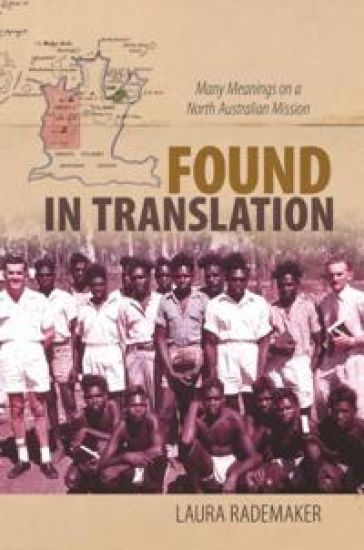
Found in Translation is a rich account of language and shifting cross-cultural relations on a Christian mission in northern Australia during the mid-twentieth century. It explores how translation shaped interactions between missionaries and the Anindilyakwa-speaking people of the Groote Eylandt archipelago and how each group used language to influence, evade, or engage with the other in a series of selective "mistranslations." In particular, this work traces the Angurugu mission from its establishment by the Church Missionary Society in 1943, through Australia’s era of assimilation policy in the 1950s and 1960s, to the introduction of a self-determination policy and bilingual education in 1973. While translation has typically been an instrument of colonization, this book shows that the ambiguities it creates have given Indigenous people opportunities to reinterpret colonization’s position in their lives. Laura Rademaker combines oral history interviews with careful archival research and innovative interdisciplinary findings to present a fresh, cross-cultural perspective on Angurugu mission life. Exploring spoken language and sound, the translation of Christian scripture and songs, the imposition of English literacy, and Aboriginal singing traditions, she reveals the complexities of the encounters between the missionaries and Aboriginal people in a subtle and sophisticated analysis. Rademaker uses language as a lens, delving into issues of identity and the competition to name, own, and control. In its efforts to shape the Anindilyakwa people’s beliefs, the Church Missionary Society utilized language both by teaching English and by translating Biblical texts into the native tongue. Yet missionaries relied heavily on Anindilyakwa interpreters, whose varied translation styles and choices resulted in an unforeseen Indigenous impact on how the mission’s messages were received. From Groote Eylandt and the peculiarities of the Australian settler-colonial context, Found in Translation broadens its scope to cast light on themes common throughout Pacific mission history such as assimilation policies, cultural exchanges, and the phenomenon of colonization itself. This book will appeal to Indigenous studies scholars across the Pacific as well as scholars of Australian history, religion, linguistics, anthropology, and missiology.
Found in Translation

Found in Translation

Laura Rademaker

University of Hawai'i Press
2018
sidottu
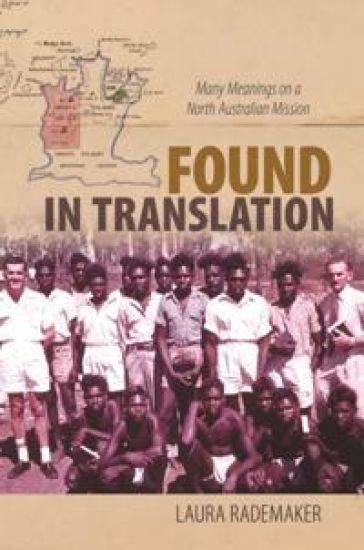
Found in Translation is a rich account of language and shifting cross-cultural relations on a Christian mission in northern Australia during the mid-twentieth century. It explores how translation shaped interactions between missionaries and the Anindilyakwa-speaking people of the Groote Eylandt archipelago and how each group used language to influence, evade, or engage with the other in a series of selective “mistranslations.” In particular, this work traces the Angurugu mission from its establishment by the Church Missionary Society in 1943, through Australia’s era of assimilation policy in the 1950s and 1960s, to the introduction of a self-determination policy and bilingual education in 1973. While translation has typically been an instrument of colonization, this book shows that the ambiguities it creates have given Indigenous people opportunities to reinterpret colonization’s position in their lives. Laura Rademaker combines oral history interviews with careful archival research and innovative interdisciplinary findings to present a fresh, cross-cultural perspective on Angurugu mission life. Exploring spoken language and sound, the translation of Christian scripture and songs, the imposition of English literacy, and Aboriginal singing traditions, she reveals the complexities of the encounters between the missionaries and Aboriginal people in a subtle and sophisticated analysis. Rademaker uses language as a lens, delving into issues of identity and the competition to name, own, and control. In its efforts to shape the Anindilyakwa people’s beliefs, the Church Missionary Society utilized language both by teaching English and by translating Biblical texts into the native tongue. Yet missionaries relied heavily on Anindilyakwa interpreters, whose varied translation styles and choices resulted in an unforeseen Indigenous impact on how the mission’s messages were received. From Groote Eylandt and the peculiarities of the Australian settler-colonial context, Found in Translation broadens its scope to cast light on themes common throughout Pacific mission history such as assimilation policies, cultural exchanges, and the phenomenon of colonization itself. This book will appeal to Indigenous studies scholars across the Pacific as well as scholars of Australian history, religion, linguistics, anthropology, and missiology.