Kirjojen hintavertailu. Mukana 12 390 323 kirjaa ja 12 kauppaa.

Kirjailija

Laura Westra

Kirjat ja teokset yhdessä paikassa: 26 kirjaa, julkaisuja vuosilta 1994-2021, suosituimpien joukossa Environmental Justice and the Rights of Indigenous Peoples. Vertaile teosten hintoja ja tarkista saatavuus suomalaisista kirjakaupoista.

26 kirjaa

Kirjojen julkaisuhaarukka 1994-2021.

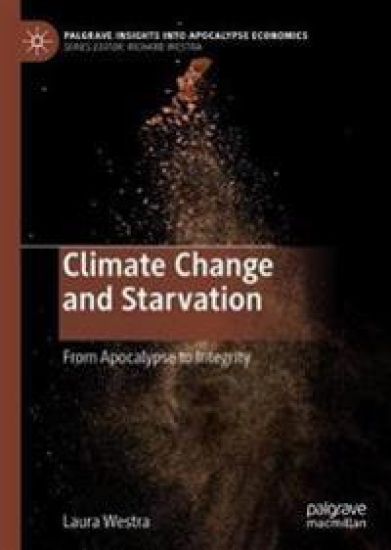
Climate Change and Starvation

Climate Change and Starvation

Laura Westra

Springer Nature Switzerland AG
2021
nidottu
There is a lot written on climate change from various points of view, but this is the first work that demonstrates the connection between the hunger of the poor, the deprivation of safe and healthy food on the part of those who can afford it in the wealthy countries, but still face starvation in the sense of lack of nourishment, and climate change itself. It looks at the case law and the jurisdiction of the ICC, and adopts a thorough critical approach. This book is an excellent contribution to the development of the debate on climate change.
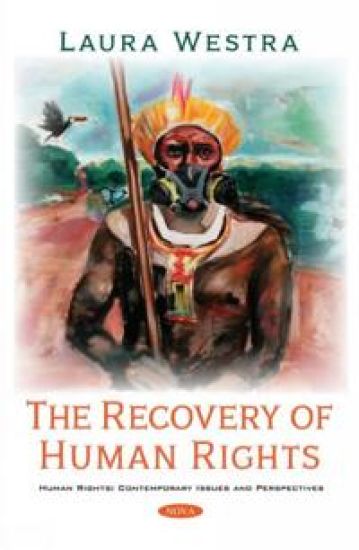
The Recovery of Human Rights

The Recovery of Human Rights

Laura Westra

Nova Science Publishers Inc
2020
nidottu
Human rights were established in law many decades ago and were primarily intended to ensure that citizens could be protected from the absolute authority of the State. However, things are completely different today: first, the power of the state has declined substantially for many reasons, primarily the fact that a great number of functions, formerly performed by the state, have been taken over by private enterprises, who work for their own interest, nor for the public good. Moreover, these enterprises are no controlled either by domestic or by international legal instruments or organizations. The United Nations are nominally responsible for all the people of the world, according to their own Charter, but in this case as well, their authority is undermined by other entries keen to establish their power and to advance their economic interests, while the protection of human rights, of human life and dignity, are not considered. Finally, it is not only the legal infrastructure that has changed substantively, but the classic human rights of long ago are far different from the rights that need to be protected today. Climate change and the ongoing destruction of nature, the presence of land grabs, are now viewed as crimes against humanity, as they represent conditions that did not exist in earlier times. Similarly, the racist disregard for Indigenous Peoples and their rights are increasingly prevalent today. The conditions that exist today, where the threats to human health and life go far beyond what existed at the time human rights were established, such as the pandemic that reigns globally since 2019, has rendered our attempts to recover the respect and protection of human rights, which therefore require a radical reformulation.
Climate Change and Starvation

Climate Change and Starvation

Laura Westra

Springer Nature Switzerland AG
2020
sidottu
There is a lot written on climate change from various points of view, but this is the first work that demonstrates the connection between the hunger of the poor, the deprivation of safe and healthy food on the part of those who can afford it in the wealthy countries, but still face starvation in the sense of lack of nourishment, and climate change itself. It looks at the case law and the jurisdiction of the ICC, and adopts a thorough critical approach. This book is an excellent contribution to the development of the debate on climate change.
Ecological Integrity and Global Governance
It is increasingly argued that a focus on environmental sustainability is fundamental to effective and equitable governance, and ultimately for the good of mankind. This book argues that, in the face increasing environmental challenges, it is essential to recognise the role that ecological integrity has played, and must play, in governance for environmental sustainability in order to ensure the future survival of life on earth.Ecological integrity encompasses not only the necessity of respect for nature, but also the human right to a sound and healthy environment. The author shows that on this basis, acceptance of its primacy in law and governance is key to a sustainable and equitable future for all. The book presents a uniquely informed treatise on the term, its origins, evolution and position in current debates, exploring the conflicts which have so far prevented its acceptance.Written by a leading scholar on the subject, this book provides the most in-depth exposition of ecological integrity available to increase understanding of this crucial concept and encourage its adoption in governance and international law.
Towards a Refugee Oriented Right of Asylum

Towards a Refugee Oriented Right of Asylum

Laura Westra; Satvinder Juss

Routledge
2017
nidottu
This volume explores the factors that give rise to the number of people seeking asylum and examines the barriers they currently and will continue to face. Divided into three parts, the authors first explore the causality that generates displacement, examining climate change, illegal conflicts and the deprivation of natural resources. They argue that all of these problems either originate from human agency directly, or are strongly influenced by human activities, particularly those of wealthy countries in the North West. The study goes on to discuss how migrants are received and the problems they face on arrival, and concludes with confronting the fate and the status of asylum seekers after arrival, and the walls, both virtual and material, that they encounter. The authors propose ways of approaching the situation, beyond the present language and the limited interpretations of the Convention on the Status of Refugees. Written by leading experts in environmental ethics, asylum law, and international law, the book will be essential reading for those working in these and related areas.
Child Law

Child Law

Laura Westra

Springer International Publishing AG
2016
nidottu
Child Law starts with the question “Who is the Child?” In direct contrast to the CRC, which calls for putting the interests of the child first in all policies dealing with children, it appears that the interests of others are the major consideration de facto. In law, children’s right to protection is severely limited by the presence of a maximum age limit, with no consideration of the starting point: current and ongoing scientific research has demonstrated the effects of this non-consideration in a number of abnormalities and diseases, not only in children, but in adults and the elderly. The WHO has published a number of studies to that effect and the 2012 Report on Endocrine Disruptors more than confirms this claim. This and other scientific insights that have largely been ignored show the flaws and inadequacies of the legal regimes intended to protect children, in a number of areas, from the basic public health to the right to normal development; child labor law conventions; in conflict situations; as a result of climate and other events; children as illegal migrants and as inmates in prison camps.
Ecological Integrity and Global Governance
It is increasingly argued that a focus on environmental sustainability is fundamental to effective and equitable governance, and ultimately for the good of mankind. This book argues that, in the face increasing environmental challenges, it is essential to recognise the role that ecological integrity has played, and must play, in governance for environmental sustainability in order to ensure the future survival of life on earth.Ecological integrity encompasses not only the necessity of respect for nature, but also the human right to a sound and healthy environment. The author shows that on this basis, acceptance of its primacy in law and governance is key to a sustainable and equitable future for all. The book presents a uniquely informed treatise on the term, its origins, evolution and position in current debates, exploring the conflicts which have so far prevented its acceptance.Written by a leading scholar on the subject, this book provides the most in-depth exposition of ecological integrity available to increase understanding of this crucial concept and encourage its adoption in governance and international law.
Towards a Refugee Oriented Right of Asylum

Towards a Refugee Oriented Right of Asylum

Laura Westra; Satvinder Juss

Routledge
2015
sidottu
This volume explores the factors that give rise to the number of people seeking asylum and examines the barriers they currently and will continue to face. Divided into three parts, the authors first explore the causality that generates displacement, examining climate change, illegal conflicts and the deprivation of natural resources. They argue that all of these problems either originate from human agency directly, or are strongly influenced by human activities, particularly those of wealthy countries in the North West. The study goes on to discuss how migrants are received and the problems they face on arrival, and concludes with confronting the fate and the status of asylum seekers after arrival, and the walls, both virtual and material, that they encounter. The authors propose ways of approaching the situation, beyond the present language and the limited interpretations of the Convention on the Status of Refugees. Written by leading experts in environmental ethics, asylum law, and international law, the book will be essential reading for those working in these and related areas.
Supranational Corporation, The: Beyond The Multinationals
In The Supranatural Corporation, Laura Westra lays bare corporate actions both domestic and international - under the guise of legal 'personhood' - and shows how corporations flaunt laws and act as controlling powers beyond the constraints imposed on legal state citizens. Corporations are now embedded within domestic legal regimes and insinuate themselves to subvert the very systems designed to restrain corporate power and protect the public.
Child Law

Child Law

Laura Westra

Springer International Publishing AG
2014
sidottu
Child Law starts with the question “Who is the Child?” In direct contrast to the CRC, which calls for putting the interests of the child first in all policies dealing with children, it appears that the interests of others are the major consideration de facto. In law, children’s right to protection is severely limited by the presence of a maximum age limit, with no consideration of the starting point: current and ongoing scientific research has demonstrated the effects of this non-consideration in a number of abnormalities and diseases, not only in children, but in adults and the elderly. The WHO has published a number of studies to that effect and the 2012 Report on Endocrine Disruptors more than confirms this claim. This and other scientific insights that have largely been ignored show the flaws and inadequacies of the legal regimes intended to protect children, in a number of areas, from the basic public health to the right to normal development; child labor law conventions; in conflict situations; as a result of climate and other events; children as illegal migrants and as inmates in prison camps.
Faces Of State Terrorism

Faces Of State Terrorism

Laura Westra

Haymarket Books
2014
nidottu
Terrorism, a widespread global phenomenon, manifests itself in the actions and the policies of individuals and groups, but also and primarily in the actions and policies of states. Delving into the seldom-discussed question of the motivation for most episodes of terrorism, this book studies terrorism's effects based on the economic and geopolitical imbalances that frame today's global governance.
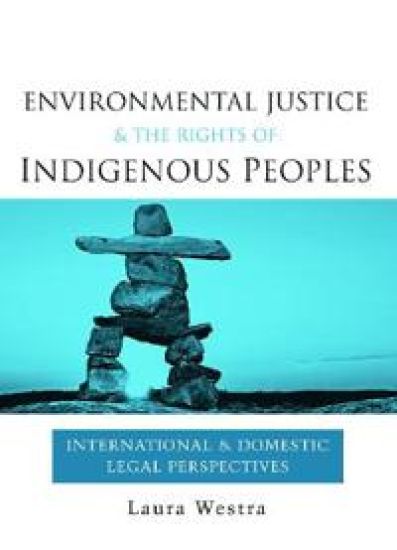
Environmental Justice and the Rights of Indigenous Peoples
More than 300 million people in over 70 countries make up the worlds indigenous populations. Yet despite ever-growing pressures on their lands, environment and way of life through outside factors such as climate change and globalization, their rights in these and other respects are still not fully recognized in international law. In this incisive book, Laura Westra deftly reveals the lethal effects that damage to ecological integrity can have on communities. Using examples in national and international case law, she demonstrates how their lack of sufficient legal rights leaves indigenous peoples defenceless, time and again, in the face of governments and businesses who have little effective incentive to consult with them (let alone gain their consent) in going ahead with relocations, mining plans and more. The historical background and current legal instruments are discussed and, through examples from the Americas, Africa, Oceania and the special case of the Arctic, a picture emerges of how things must change if indigenous communities are to survive. It is a warning to us all from the example of those who live most closely in tune with nature and are the first to feel the impact when environmental damage goes unchecked.
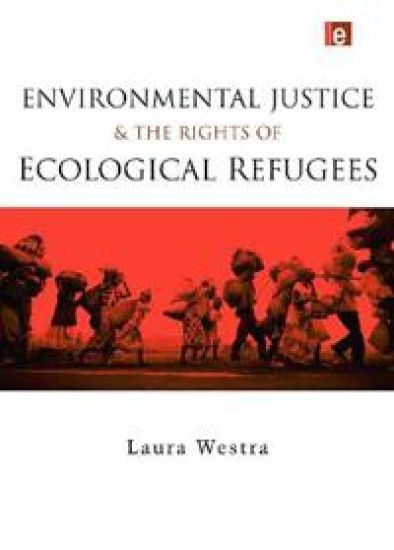
Environmental Justice and the Rights of Ecological Refugees
Climate change and other environmental problems are increasingly leading to the displacement of populations from their homelands, whether through drought, flooding, famine or other causes. Worse, there is currently no protection in international law for people made refugees by such means. Following on from her previous explorations of environmental justice as it relates to future generations and indigenous peoples, Laura Westra now turns her attention to the plight of ecological refugees. In Part I, Westra provides an overview of what defines an ecological refugee and their present legal status. Part II goes into greater depth as to who the vulnerable are and what protection they have in international law. Part III looks to the future, advocating a comprehensive approach to the problem. With extensive examples and analysis, this is a compelling treatment that will be indispensable for legal professionals, government and business leaders, academics and students of the role of law in the protection of the rights of refugees.
Globalization, Violence And World Governance
Exploring how society may yet reconstruct a true system of international rights enforced by international laws and contemplates the limitations of international organisations to effectively address truly international problems. Through the lens of political ecology, Westra offers a call for action to protect the global environment and the people. Offering insights into our currently reality by exploring the content and consequences of power relationships under capitalism and by considering the spaces of opposition and resistance to these changes.
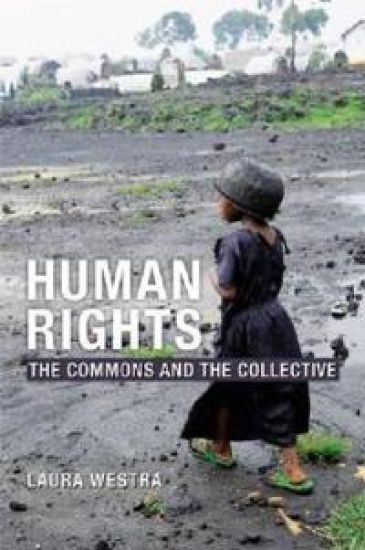
Human Rights

Human Rights

Laura Westra

University of British Columbia Press
2012
pokkari
International law has evolved to protect human rights. But what arehuman rights? Does the term have the same meaning in a world beingtransformed by climate change and globalized trade? Are existing lawssufficient to ensure humanity's survival? Drawing on case law and practice and examples from philosophy, law,and ecology, Laura Westra argues that the current system is notadequate: international law privileges individual over collectiverights, permitting multinational corporations to overlook thecollectivity and the environment in their quest for wealth and power.Unless policy makers redefine human rights and reformulateenvironmental law and policies to protect the preconditions for lifeitself -- water, food, clean air, and biodiversity -- humankind facesthe complete loss of the ecological commons, the preservation of whichis one of our most basic human rights. A new kind of cosmopolitanism,one centred on the United Nations, offers the best hope for preservingour common heritage and the survival of future generations.
Environmental Justice and the Rights of Ecological Refugees
Climate change and other environmental problems are increasingly leading to the displacement of populations from their homelands, whether through drought, flooding, famine or other causes. Worse, there is currently no protection in international law for people made refugees by such means. Following on from her previous explorations of environmental justice as it relates to future generations and indigenous peoples, Laura Westra now turns her attention to the plight of ecological refugees. In Part I, Westra provides an overview of what defines an ecological refugee and their present legal status. Part II goes into greater depth as to who the vulnerable are and what protection they have in international law. Part III looks to the future, advocating a comprehensive approach to the problem. With extensive examples and analysis, this is a compelling treatment that will be indispensable for legal professionals, government and business leaders, academics and students of the role of law in the protection of the rights of refugees.
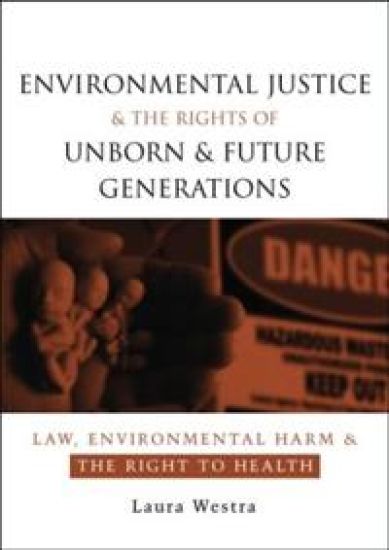
Environmental Justice and the Rights of Unborn and Future Generations
The traditional concept of social justice is increasingly being challenged by the notion of a humankind that spans current and future generations. This book, with a foreword by Roger Brownsword, is the first systematic examination of how the rights of the unborn and future generations are handled in common law and under international legal instruments. It provides comprehensive coverage of the arguments over international legal instruments, key legal cases and examples including the Convention on the Rights of the Child, industrial disasters, clean water provision, diet, HIV/AIDS, environmental racism and climate change. Also covered are international agreements and objectives as diverse as the Kyoto Protocol, the Millennium Development Goals and international trade. The result is the most controversial and thorough examination to date of the subject and the enormous ramifications and challenges it poses to every aspect of international and domestic environmental, human rights, trade and public health law and policy.