
Kirjailija
Laura Wright
Kirjat ja teokset yhdessä paikassa: 52 kirjaa, julkaisuja vuosilta 1995-2025, suosituimpien joukossa Kinnie Wagner. Vertaile teosten hintoja ja tarkista saatavuus suomalaisista kirjakaupoista.
52 kirjaa
Kirjojen julkaisuhaarukka 1995-2025.
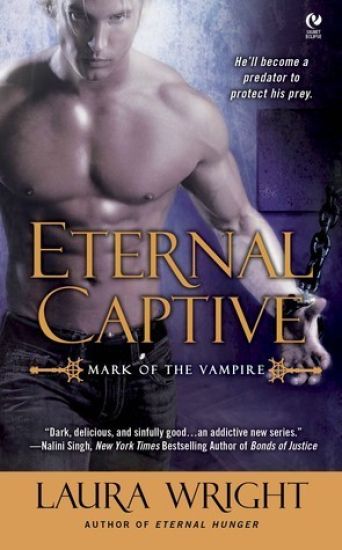
Lucian Roman knows he must stay away from Bronwyn Kettler for sanity's sake. Since feeding her his blood, he can think of nothing else but possessing her - fighting an uncontrollable desire to kill her, if need be, and the vampire she has sworn to wed.Bronwyn, a brilliant vampire genealogist, can never escape her connection to Lucian. He sustained her when she was starving. He still rules her dreams. And when the nights get dark enough, she still craves him, but although his essence still courses through her body, she has found a true mate in someone else.But when a dangerous enemy threatens Bronwyn, only Lucian - bound to her for ever by blood - can save her life. Even if it means sacrificing his own . . .
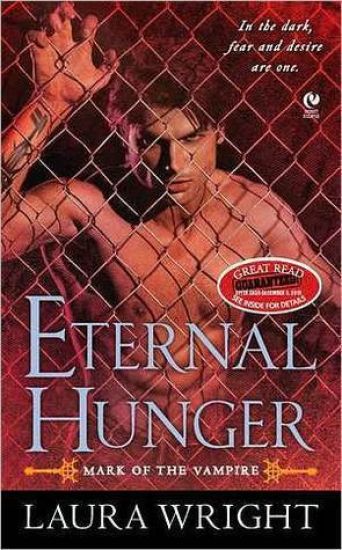
Alexander Roman wants nothing to do with the controlling rulers of his vampire breed, but as a new threat to the pureblood vampires emerges, Alexander's ties to the past are forced upon him, and without warning, he finds himself disoriented, terrified and near death at the door of a stranger.Dr Sara Donohue is dedicated to removing the traumatic memories of her patients - like those of the stranger at her front door. But what he tells her of his past is too astonishing to be anything more than the delusion of a madman. Then, as their worlds collide, Sara and Alexander are bound as one becomes hunter and the other prey. And Sara's only chance of survival is to surrender to the final - and most unimaginable - desire of her life.

His father unknown, his mother dead, Nicholas Roman was raised by the vampire Breed with one wish: to live as a normal vampire. But once he's transformed against his will into a gifted immortal, Nicholas now has one goal: to stop the Eternal Order of vampires from controlling his life. Then comes a beautiful stranger with a startling secret . . . Vampire Kate Everborne claims she's sheltering Nicholas's long lost son. If this is true, then who is the mother? And how endangered are they if, indeed, Nicholas does possess the bloodline so coveted by the Order? These are questions that with every seductive whisper and every silken touch draw Nicholas and Kate intimately closer, and nearer still to the truth.
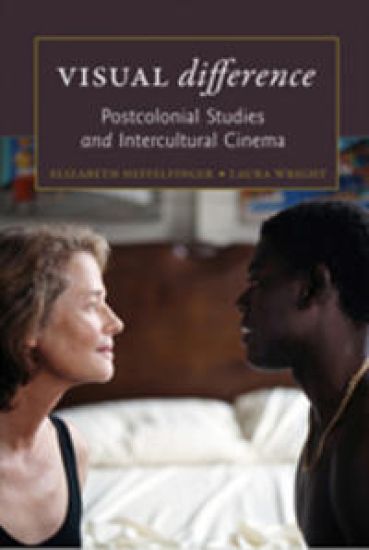
To date, no text exists that focuses exclusively on the concept of postcolonial film as a framework for identifying films produced within and outside of various formerly colonized nations, nor is there a scholarly text that addresses pedagogical issues about and frameworks for teaching such films. This book borrows from and respects various forms of categorization – intercultural, global, third, and accented – while simultaneously seeking to make manifest an alternate space of signification. What feels like a mainstream approach is pedagogically necessary in terms of access, both financial and physical, to the films discussed herein, given that this text proposes models for teaching these works at the university and secondary levels. The focus of this work is therefore twofold: to provide the methodology to read and teach postcolonial film, and also to provide analyses in which scholars and teachers can explore the ways that the films examined herein work to further and complicate our understanding of «postcolonial» as a fraught and evolving theoretical stance.
This study examines how postcolonial landscapes and environmental issues are represented in fiction. Wright creates a provocative discourse in which the fields of postcolonial theory and ecocriticism are brought together.Laura Wright explores the changes brought by colonialism and globalization as depicted in an array of international works of fiction in four thematically arranged chapters. She looks first at two traditional oral histories retold in modern novels, Zakes Mda’s The Heart of Redness (South Africa) and Ngugi wa Thiong’o’s Petals of Blood (Kenya), that deal with the potentially devastating effects of development, particularly through deforestation and the replacement of native flora with European varieties. Wright then uses J. M. Coetzee’s Disgrace (South Africa), Yann Martel’s Life of Pi (India and Canada), and Joy Williams’s The Quick and the Dead (United States) to explore the use of animals as metaphors for subjugated groups of individuals. The third chapter deals with India’s water crisis via Arundhati Roy’s activism and her novel, The God of Small Things. Finally, Wright looks at three novels—Flora Nwapa’s Efuru (Nigeria), Keri Hulme’s The Bone People (New Zealand), and Sindiwe Magona’s Mother to Mother (South Africa)—that depict women’s relationships to the land from which they have been dispossessed.Throughout Wilderness into Civilized Shapes, Wright rearticulates questions about the role of the writer of fiction as environmental activist and spokesperson, the connections between animal ethics and environmental responsibility, and the potential perpetuation of a neocolonial framework founded on western commodification and resource-based imperialism.
This study examines how postcolonial landscapes and environmental issues are represented in fiction. Wright creates a provocative discourse in which the fields of postcolonial theory and ecocriticism are brought together.Laura Wright explores the changes brought by colonialism and globalization as depicted in an array of international works of fiction in four thematically arranged chapters. She looks first at two traditional oral histories retold in modern novels, Zakes Mda’s The Heart of Redness (South Africa) and Ngugi wa Thiong’o’s Petals of Blood (Kenya), that deal with the potentially devastating effects of development, particularly through deforestation and the replacement of native flora with European varieties. Wright then uses J. M. Coetzee’s Disgrace (South Africa), Yann Martel’s Life of Pi (India and Canada), and Joy Williams’s The Quick and the Dead (United States) to explore the use of animals as metaphors for subjugated groups of individuals. The third chapter deals with India’s water crisis via Arundhati Roy’s activism and her novel, The God of Small Things. Finally, Wright looks at three novels—Flora Nwapa’s Efuru (Nigeria), Keri Hulme’s The Bone People (New Zealand), and Sindiwe Magona’s Mother to Mother (South Africa)—that depict women’s relationships to the land from which they have been dispossessed.Throughout Wilderness into Civilized Shapes, Wright rearticulates questions about the role of the writer of fiction as environmental activist and spokesperson, the connections between animal ethics and environmental responsibility, and the potential perpetuation of a neocolonial framework founded on western commodification and resource-based imperialism.
Writing "Out of all the Camps": J. M. Coetzee's Narratives of Displacement is an interdisciplinary examination--combining ethical, postcolonial, performance, gender-based, and environmental theory--of the ways that 2003 Nobel Prize-winning South African novelist J. M. Coetzee, primarily through his voicing of a female subject position and his presentation of a voiceless subjectivity, the animal, displaces both the narrative and authorial voice in his works of fiction. Coetzee's work remains outside of conventional notions of genre by virtue of the free indirect discourse that characterizes many of his third-person narrated texts that feature male protagonists (Life & Times of Michael K, The Master of Petersburg, and Disgrace), various and differing first-person narrative accounts of the same story (Dusklands, In the Heart of the Country), the use of female narrators and female narrative personas (Age of Iron, The Lives of Animals), and unlocatable, ahistorical contexts (Waiting for the Barbarians). The work has broad academic appeal in the established fields of not only literary studies--postcolonial, contemporary, postmodern and environmental--but also in the realm of performance and gender studies. Because of its broad and interdisciplinary range, this text bridges a conspicuous gap in studies on Coetzee.
Writing Out of all the Camps: J. M. Coetzee's Narratives of Displacement is an interdisciplinary examination--combining ethical, postcolonial, performance, gender-based, and environmental theory--of the ways that 2003 Nobel Prize-winning South African novelist J. M. Coetzee, primarily through his voicing of a female subject position and his presentation of a voiceless subjectivity, the animal, displaces both the narrative and authorial voice in his works of fiction. Coetzee's work remains outside of conventional notions of genre by virtue of the free indirect discourse that characterizes many of his third-person narrated texts that feature male protagonists (Life & Times of Michael K , The Master of Petersburg , and Disgrace ), various and differing first-person narrative accounts of the same story (Dusklands , In the Heart of the Country ), the use of female narrators and female narrative personas (Age of Iron , The Lives of Animals ), and unlocatable, ahistorical contexts (Waiting for the Barbarians ). The work has broad academic appeal in the established fields of not only literary studies--postcolonial, contemporary, postmodern and environmental--but also in the realm of performance and gender studies. Because of its broad and interdisciplinary range, this text bridges a conspicuous gap in studies on Coetzee.
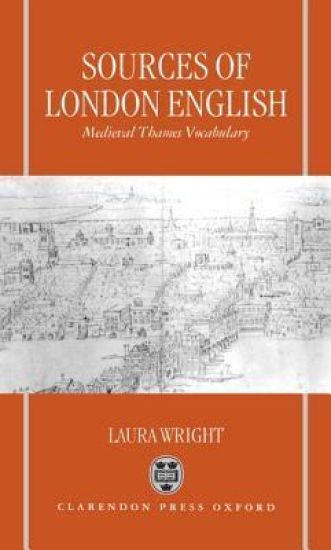
The macaronic (mixed-language) business texts of London for the period 1275 to 1500 present a rich source of evidence for the medieval dialect of London English. Hitherto they have been ignored because of mistaken ideas about their value: they have been viewed as bastardized forms produced by ill-educated scribes. We cannot dismiss macaronic documents as debased or degenerate without investigation, nor should we underestimate the evidence they present for the development of the English language. The contemporary importance of these documents is attested by their sheer number - it is easier today to find macaronic business documents from the late medieval period in record offices than it is to find monolingual texts. The book focuses on terminology surrounding the River Thames to present a study of the medieval dialect of London. The vocabulary survey lists many words which had previously been lost to us, and the illustrative extracts from the texts present a fascinating picture of life in medieval times on the River Thames. The author's analysis covers the orthography, phonology, and morphology of the dialect as revealed in these texts.
Using a wide range of twentieth-century literary prose Laura Wright and Jonathan Hope provide an `interactive' introduction to the techniques of stylistic analysis. Divided up into five sections; the noun phrase, the verb phrase, the clause, text structure and vocabulary, the book also provides an introduction to the basics of descriptive grammar for beginning students. * Presumes no prior linguistic knowledge * Provides a comprehensive glossary of terms * Adaptable: designed to be used in a variety of classroom contexts * Introduces students to an enormous range of 20th century literature from James Joyce to Roddy Doyle A practical coursebook rather than a survey account of stylistics as a discipline, the book provides over forty opportunities for hands-on stylistic analysis. For each linguistic feature under discussion the reader is offered a definition, a text for analysis, exercises and tasks, in addition to a suggested solution.Stylistics: A Practical Coursebook is genuinely `student friendly' and will be an invaluable tool for all beginning undergraduates and A-level students of language and literature.