Kirjojen hintavertailu. Mukana 12 595 353 kirjaa ja 12 kauppaa.

Kirjailija

Laure Humbert

Kirjat ja teokset yhdessä paikassa: 5 kirjaa, julkaisuja vuosilta 2012-2025, suosituimpien joukossa Retour à la normale ?. Vertaile teosten hintoja ja tarkista saatavuus suomalaisista kirjakaupoista.

5 kirjaa

Kirjojen julkaisuhaarukka 2012-2025.

Reinventing French Aid

Reinventing French Aid

Laure Humbert

Cambridge University Press
2023
pokkari
Laure Humbert explores how humanitarian aid in occupied Germany was influenced by French politics of national recovery and Cold War rivalries. She examines the everyday encounters between French officials, members of new international organizations, relief workers, defeated Germans and Displaced Persons, who remained in the territory of the French zone prior to their repatriation or emigration. By rendering relief workers and Displaced Persons visible, she sheds lights on their role in shaping relief practices and addresses the neglected issue of the gendering of rehabilitation. In doing so, Humbert highlights different cultures of rehabilitation, in part rooted in pre-war ideas about 'overcoming' poverty and war-induced injuries and, crucially, she unearths the active and bottom-up nature of the restoration of France's prestige. Not only were relief workers concerned about the image of France circulating in DP camps, but they also drew DP artists into the orbit of French cultural diplomacy in Germany.
Reinventing French Aid

Reinventing French Aid

Laure Humbert

Cambridge University Press
2021
sidottu
Laure Humbert explores how humanitarian aid in occupied Germany was influenced by French politics of national recovery and Cold War rivalries. She examines the everyday encounters between French officials, members of new international organizations, relief workers, defeated Germans and Displaced Persons, who remained in the territory of the French zone prior to their repatriation or emigration. By rendering relief workers and Displaced Persons visible, she sheds lights on their role in shaping relief practices and addresses the neglected issue of the gendering of rehabilitation. In doing so, Humbert highlights different cultures of rehabilitation, in part rooted in pre-war ideas about 'overcoming' poverty and war-induced injuries and, crucially, she unearths the active and bottom-up nature of the restoration of France's prestige. Not only were relief workers concerned about the image of France circulating in DP camps, but they also drew DP artists into the orbit of French cultural diplomacy in Germany.

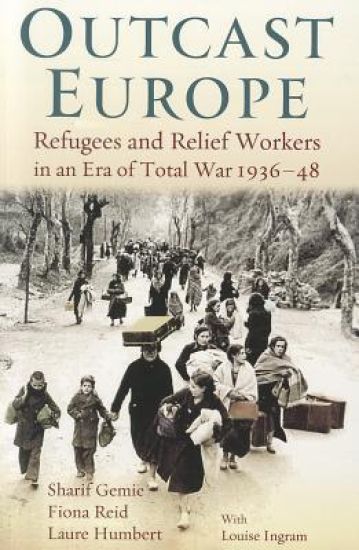
Outcast Europe

Outcast Europe

Sharif Gemie; Laure Humbert; Fiona Reid

Continuum Publishing Corporation
2012
nidottu
The period of the 'long' Second World War (1936-1948) was marked by mass movements of diverse populations: 60 million people either fled or were forced from their homes. This book considers the Spanish Republicans fleeing Franco's Spain in 1939, the French civilians trying to escape the Nazi invasion in 1940, and the millions of people displaced or expelled by the forces of Hitler's Third Reich. Throughout this period state and voluntary organisations were created to take care of the homeless and the displaced. National organisations dominated until the end of the war; afterwards, international organisations - the United Nations Relief and Rehabilitation Agency and the International Refugee Organisation - were formed to deal with what was clearly an international problem. Using case studies of displaced people and of relief workers, this book is unique in placing such crises at the centre rather than the margins of wartime experience, making the work nothing less than an alternative history of the Second World War.
Outcast Europe

Outcast Europe

Sharif Gemie; Laure Humbert; Fiona Reid

Continuum Publishing Corporation
2012
sidottu
This is an original perspective on the experience of refugees and relief workers. The period of the 'long' Second World War (1936-1948) was marked by mass movements of diverse populations: 60 million people either fled or were forced from their homes. This book considers the Spanish Republicans fleeing Franco's Spain in 1939, the French civilians trying to escape the Nazi invasion in 1940, and the millions of people displaced or expelled by the forces of Hitler's Third Reich. Throughout this period state and voluntary organisations were created to take care of the homeless and the displaced. National organisations dominated until the end of the war; afterwards, international organisations - the United Nations Relief and Rehabilitation Agency and the International Refugee Organisation - were formed to deal with what was clearly an international problem. Using case studies of displaced people and of relief workers, this book is unique in placing such crises at the centre rather than the margins of wartime experience, making the work nothing less than an alternative history of the Second World War.