Kirjojen hintavertailu. Mukana 12 112 050 kirjaa ja 12 kauppaa.

Kirjailija

Lauren Anderson

Kirjat ja teokset yhdessä paikassa: 11 kirjaa, julkaisuja vuosilta 2009-2021, suosituimpien joukossa Making a Difference. Vertaile teosten hintoja ja tarkista saatavuus suomalaisista kirjakaupoista.

11 kirjaa

Kirjojen julkaisuhaarukka 2009-2021.

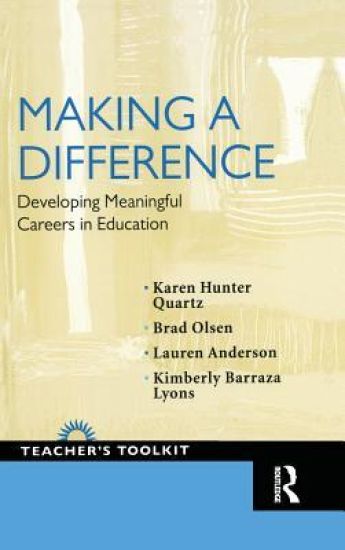
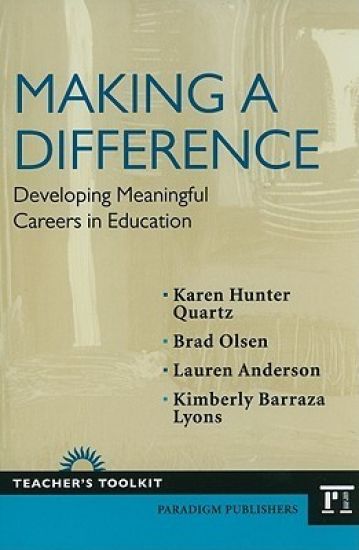
Making a Difference

Making a Difference

Karen Hunter-Quartz; Brad Olsen; Lauren Anderson; Kimberly Barraza-Lyons

Paradigm
2009
sidottu
Our culture and media often simplify the choice educators face--stay in or leave classroom teaching. Written for teachers and other educational professionals, this book dispels this simple dichotomy by representing the range of responses and career pathways that enable educators to make a difference. Based on interviews with hundreds of change-minded educators, the authors share career stories and insights against a backdrop that maps out the complexities, roles, and structures that define professional advancement in education. All of the teachers in this book have taught in challenging urban contexts, fought hard to exercise their professional autonomy and responsibility to serve students well, navigated social networks of educators, friends, and family who buoy or dampen their reform spirit, and remain committed to changing society through schooling. Their stories are as instructive as they are inspiring and offer roadmaps for the current generation of change-minded educators.
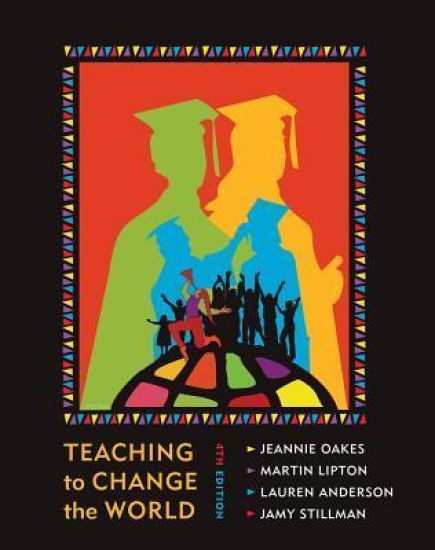
Teaching to Change the World

Teaching to Change the World

Jeannie Oakes; Martin Lipton; Lauren Anderson; Jamy Stillman

Routledge
2018
sidottu
Teaching to Change the World is an up-to-the-moment, engaging, social justice-oriented introduction to education and teaching, and the challenges and opportunities they present. Both foundational and practical, the chapters are organized around conventional topics but in a way that consistently integrates a coherent story that explains why schools are as they are. Taking the position that a hopeful, democratic future depends on ensuring that all students learn, the text pays particular attention to inequalities associated with race, social class, language, gender, and other social categories and explores teachers’ role in addressing them. This thoroughly revised fifth edition remains a vital introduction to the profession for a new generation of teachers who seek to become purposeful, knowledgeable practitioners in our ever-changing educational landscape—for those teachers who see the potential for education to change the world. Features and Updates of the New Edition: • Fully updated Chapter 1, "The U.S. Schooling Dilemma," reflects our current state of education after the 2016 U.S. presidential election. • First-person observations from teachers, including first-year teachers, continue to offer vivid, authentic pictures of what teaching to change the world means and involves. • Additional coverage of the ongoing effects of Common Core highlights the heated public discourse around teaching and teachers, and charter schools. • Attention to diversity and inclusion is treated as integral to all chapters, woven throughout rather than tacked on as separate units. • "Digging Deeper" resources on the new companion website include concrete resources that current and future teachers can use in their classrooms. • "Tools for Critique" provides instructors and students questions, prompts, and activities aimed at encouraging classroom discussion and particularly engaging those students least familiar with the central tenets of social justice education.
Teaching to Change the World

Teaching to Change the World

Jeannie Oakes; Martin Lipton; Lauren Anderson; Jamy Stillman

Routledge
2018
nidottu
Teaching to Change the World is an up-to-the-moment, engaging, social justice-oriented introduction to education and teaching, and the challenges and opportunities they present. Both foundational and practical, the chapters are organized around conventional topics but in a way that consistently integrates a coherent story that explains why schools are as they are. Taking the position that a hopeful, democratic future depends on ensuring that all students learn, the text pays particular attention to inequalities associated with race, social class, language, gender, and other social categories and explores teachers’ role in addressing them. This thoroughly revised fifth edition remains a vital introduction to the profession for a new generation of teachers who seek to become purposeful, knowledgeable practitioners in our ever-changing educational landscape—for those teachers who see the potential for education to change the world. Features and Updates of the New Edition: • Fully updated Chapter 1, "The U.S. Schooling Dilemma," reflects our current state of education after the 2016 U.S. presidential election. • First-person observations from teachers, including first-year teachers, continue to offer vivid, authentic pictures of what teaching to change the world means and involves. • Additional coverage of the ongoing effects of Common Core highlights the heated public discourse around teaching and teachers, and charter schools. • Attention to diversity and inclusion is treated as integral to all chapters, woven throughout rather than tacked on as separate units. • "Digging Deeper" resources on the new companion website include concrete resources that current and future teachers can use in their classrooms. • "Tools for Critique" provides instructors and students questions, prompts, and activities aimed at encouraging classroom discussion and particularly engaging those students least familiar with the central tenets of social justice education.
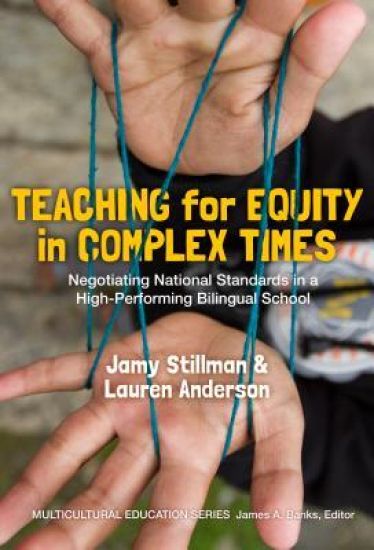
Teaching for Equity in Complex Times

Teaching for Equity in Complex Times

Mercedes K. Schneider; Jamy Stillman; Lauren Anderson

Teachers' College Press
2017
sidottu
In schools serving high concentrations of bilingual learners, it can be especially challenging for teachers to maintain commitments to equity minded instruction while meeting the demands of new educational policies, including national standards. This book details how one school integrated equity pedagogy into standards-based curriculum and produced exemplary levels of achievement. As the authors illustrate, however, the school’s dual commitment to bilingual education and standards-based reform engendered numerous complex tensions. Specifically, the authors describe teachers’ attempts to balance demands for rigor and content coverage within their high-performing school and with their diverse student population. They identify specific tensions that emerged, concerning: The degree of academic struggle that is generative for student learning, and the point at which such struggle becomes counterproductive. The holding of high expectations for all learners and the provision of differentiated, student-centered learning experiences. The CCSS emphasis on engaging students around more complex text and the contested determination of what constitutes complexity in text and in teaching. The influence of high-stakes accountability on school norms and practices, including teachers’ interpretations and enactment of new national standards. The performance pressures placed on teachers in today’s educational policy context.This timely book illustrates what can happen when a school’s teachers embrace equity pedagogy while navigating policy-related pressures. It offers a cogent counternarrative to traditional accounts of standards-based reform, especially for emerging bilingual students.
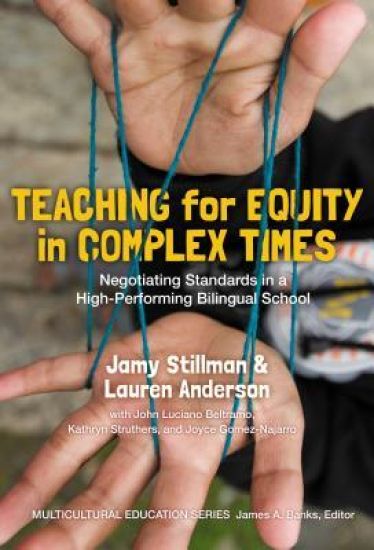
Teaching for Equity in Complex Times

Teaching for Equity in Complex Times

Mercedes K. Schneider; Jamy Stillman; Lauren Anderson

Teachers' College Press
2017
nidottu
In schools serving high concentrations of bilingual learners, it can be especially challenging for teachers to maintain commitments to equity minded instruction while meeting the demands of new educational policies, including national standards. This book details how one school integrated equity pedagogy into standards-based curriculum and produced exemplary levels of achievement. As the authors illustrate, however, the school’s dual commitment to bilingual education and standards-based reform engendered numerous complex tensions. Specifically, the authors describe teachers’ attempts to balance demands for rigor and content coverage within their high-performing school and with their diverse student population. They identify specific tensions that emerged, concerning: The degree of academic struggle that is generative for student learning, and the point at which such struggle becomes counterproductive. The holding of high expectations for all learners and the provision of differentiated, student-centered learning experiences. The CCSS emphasis on engaging students around more complex text and the contested determination of what constitutes complexity in text and in teaching. The influence of high-stakes accountability on school norms and practices, including teachers’ interpretations and enactment of new national standards. The performance pressures placed on teachers in today’s educational policy context.This timely book illustrates what can happen when a school’s teachers embrace equity pedagogy while navigating policy-related pressures. It offers a cogent counternarrative to traditional accounts of standards-based reform, especially for emerging bilingual students.
Teaching to Change the World

Teaching to Change the World

Jeannie Oakes; Martin Lipton; Lauren Anderson; Jamy Stillman

Paradigm
2012
nidottu
This is an up-to-the-moment, engaging, multicultural introduction to education and teaching and the challenges and opportunities they present. Together, the four authors bring a rich blend of theory and practical application to this groundbreaking text. Jeannie Oakes is a leading education researcher and former director of the UCLA teacher education program. Martin Lipton is an education writer and consultant and has taught in public schools for 31 years. Lauren Anderson and Jamy Stillman are former public school teachers, now working as teacher educators. This unique, comprehensive foundational text considers the values and politics that pervade the U.S. education system, explains the roots of conventional thinking about schooling and teaching, asks critical questions about how issues of power and privilege have shaped and continue to shape educational opportunity, and presents powerful examples of real teachers working for equity and justice. Taking the position that a hopeful, democratic future depends on ensuring that all students learn, the text pays particular attention to inequalities associated with race, social class, language, gender, and other social categories and explores teachers role in addressing them. The text provides a research-based and practical treatment of essential topics, and it situates those topics in relation to democratic values; issues of diversity; and cognitive, sociocultural, and constructivist perspectives on learning. The text shows how knowledge of education foundations and history can help teachers understand the organization of today s schools, the content of contemporary curriculum, and the methods of modern teaching. It likewise shows how teachers can use such knowledge when thinking about and responding to headline issues like charter schools, vouchers, standards, testing, and bilingual education, to name just a few. Central to this text is a belief that schools can and must be places of extraordinary educational quality and institutions in the service of social justice. Thus, the authors address head-on tensions between principles of democratic schooling and competition for always-scarce high-quality opportunities. Woven through the text are the voices of a diverse group of teachers, who share their analyses and personal anecdotes concerning what teaching to change the world means and involves. Click Here for Book Website Pedagogical Features: Digging Deeper sections referenced at the end of each chapter and featured online include supplementary readings and resources from scholars and practitioners who are addressing issues raised in the text. Instructor s Manual offers insights about how to teach course content in ways that are consistent with cognitive and sociocultural learning theories, culturally diverse pedagogy, and authentic assessment.New to this Edition: "
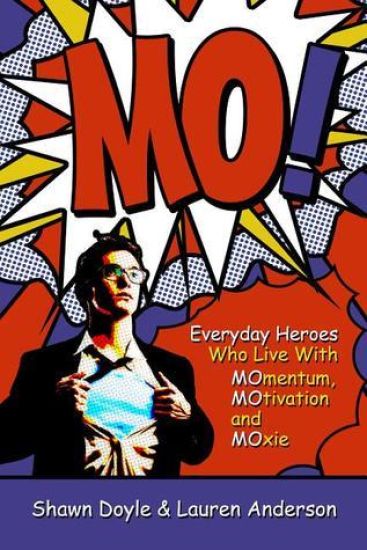
MO!

MO!

Shawn Doyle; Lauren Anderson

Sound Wisdom
2012
pokkari
What is MO? The purpose of "MO "is to help people get and stay motivated but with a very unique twist. See most people think that motivation for them is "out of reach." They have an average job at an average company. This book is intended to give people hope by shining the light on people who "are" in average regular jobs but do amazing work and have fun doing it. In the book we offer inspiring profiles of Service Advisors, Hot Dog vendors, Airline Gate Agents, Seafood MarketOwners, Construction workers, Seamstresses, Fitness Trainers, and Taxi drivers who all have the magic "MO "qualities. They are all normal people who work every day but their work isn't normal. At the end of each profile we provide a summation of the 3-4 special qualities that they have and our suggestions on how to incorporate it into the readers life and how they can get more MO
Making a Difference

Making a Difference

Karen Hunter-Quartz; Brad Olsen; Lauren Anderson; Kimberly Barraza-Lyons

Paradigm
2010
nidottu
Our culture and media often simplify the choice educators face-stay in or leave classroom teaching. Written for teachers and other educational professionals, this book dispels this simple dichotomy by representing the range of responses and career pathways that enable educators to make a difference. Based on interviews with hundreds of change-minded educators, the authors share career stories and insights against a backdrop that maps out the complexities, roles, and structures that define professional advancement in education. All of the teachers in this book have taught in challenging urban contexts, fought hard to exercise their professional autonomy and responsibility to serve students well, navigated social networks of educators, friends, and family who buoy or dampen their reform spirit, and remain committed to changing society through schooling. Their stories are as instructive as they are inspiring and offer roadmaps for the current generation of change-minded educators.