Kirjojen hintavertailu. Mukana 12 152 606 kirjaa ja 12 kauppaa.

Kirjailija

Laurence Anthony

Kirjat ja teokset yhdessä paikassa: 5 kirjaa, julkaisuja vuosilta 2014-2024, suosituimpien joukossa Knowledge-Based Vocabulary Lists. Vertaile teosten hintoja ja tarkista saatavuus suomalaisista kirjakaupoista.

5 kirjaa

Kirjojen julkaisuhaarukka 2014-2024.

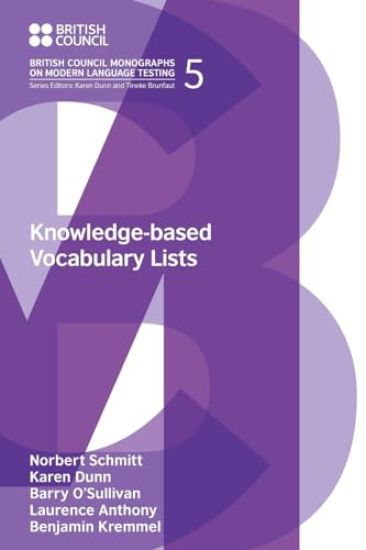
Knowledge-Based Vocabulary Lists

Knowledge-Based Vocabulary Lists

Laurence Anthony; Karen Dunn; Benjamin Kremmel; Barry O'Sullivan; Norbert Schmitt

EQUINOX PUBLISHING LTD
2024
pokkari
In teaching second language (L2) vocabulary, it is useful to have a way of prioritizing words to teach from among the multitude available. Word frequency, i.e. how often various words appear in written and spoken discourse, has typically been used to inform the emphasis taken. This volume explores the need for word lists based on direct tests of learner knowledge to inform L2 pedagogy. The Knowledge-based Vocabulary Lists (KVL) are introduced, and a description of the theoretical and practical basis for their development is given, highlighting pedagogical and assessment situations in which it is beneficial to know whether learners are likely to be able produce and correctly spell the words they know. A focus on L2 learners of English from Chinese, German, and Spanish L1 backgrounds resulted in three ranked lists of English-language word knowledge. The comparative probability of learners from these language backgrounds knowing each word are presented, and the correspondence with existing information about word frequency, word acquisition sequence, and word difficulty is explored. The value of the KVL is discussed in terms of providing one of the few evidence-based descriptions of L2 form-recall vocabulary knowledge available to teachers and researchers.
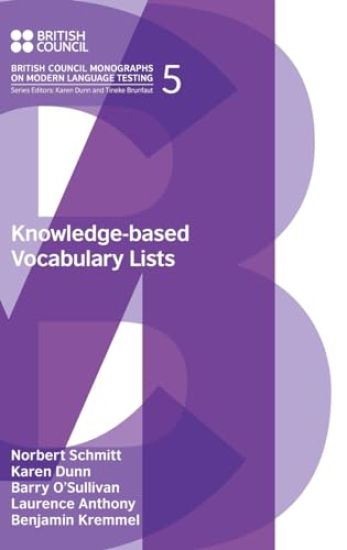
Knowledge-Based Vocabulary Lists

Knowledge-Based Vocabulary Lists

Laurence Anthony; Karen Dunn; Benjamin Kremmel; Barry O'Sullivan; Norbert Schmitt

EQUINOX PUBLISHING LTD
2024
sidottu
In teaching second language (L2) vocabulary, it is useful to have a way of prioritizing words to teach from among the multitude available. Word frequency, i.e. how often various words appear in written and spoken discourse, has typically been used to inform the emphasis taken. This volume explores the need for word lists based on direct tests of learner knowledge to inform L2 pedagogy. The Knowledge-based Vocabulary Lists (KVL) are introduced, and a description of the theoretical and practical basis for their development is given, highlighting pedagogical and assessment situations in which it is beneficial to know whether learners are likely to be able produce and correctly spell the words they know. A focus on L2 learners of English from Chinese, German, and Spanish L1 backgrounds resulted in three ranked lists of English-language word knowledge. The comparative probability of learners from these language backgrounds knowing each word are presented, and the correspondence with existing information about word frequency, word acquisition sequence, and word difficulty is explored. The value of the KVL is discussed in terms of providing one of the few evidence-based descriptions of L2 form-recall vocabulary knowledge available to teachers and researchers.

Introducing English for Specific Purposes
Introducing English for Specific Purposes presents the key concepts and practices of ESP in a modern, balanced, and comprehensive way. This book defines ESP and shows how the approach plays a crucial role in the world of English language teaching. Explaining how needs analysis, language and learning objectives, materials and methods, and evaluation combine to form the four main pillars of ESP, the book includes: practical examples that illustrate how the core theories and practices of ESP can be applied in real-world academic and occupational settings; discussion of some of the most hotly debated issues in ESP; insights on how ESP courses can be organized and integrated to form a complete program; reflection boxes, practical tasks, extension research questions, and resources for further reading in each chapter.Introducing English for Specific Purposes serves as an ideal textbook for graduate and advanced undergraduate students studying courses on English for Specific Purposes or English for Academic Purposes, as part of degrees in English for Specific Purposes, Education, ELT, Applied Linguistics, TESOL or TEFL. This comprehensive publication is also an invaluable reference resource for pre-service and in-service teachers of ESP, and for English program managers and administrators.
Introducing English for Specific Purposes
Introducing English for Specific Purposes presents the key concepts and practices of ESP in a modern, balanced, and comprehensive way. This book defines ESP and shows how the approach plays a crucial role in the world of English language teaching. Explaining how needs analysis, language and learning objectives, materials and methods, and evaluation combine to form the four main pillars of ESP, the book includes: practical examples that illustrate how the core theories and practices of ESP can be applied in real-world academic and occupational settings; discussion of some of the most hotly debated issues in ESP; insights on how ESP courses can be organized and integrated to form a complete program; reflection boxes, practical tasks, extension research questions, and resources for further reading in each chapter.Introducing English for Specific Purposes serves as an ideal textbook for graduate and advanced undergraduate students studying courses on English for Specific Purposes or English for Academic Purposes, as part of degrees in English for Specific Purposes, Education, ELT, Applied Linguistics, TESOL or TEFL. This comprehensive publication is also an invaluable reference resource for pre-service and in-service teachers of ESP, and for English program managers and administrators.