Kirjojen hintavertailu. Mukana 12 390 323 kirjaa ja 12 kauppaa.

Kirjailija

Laurence Brockliss

Kirjat ja teokset yhdessä paikassa: 8 kirjaa, julkaisuja vuosilta 1997-2025, suosituimpien joukossa The Filmmaker as Historian. Vertaile teosten hintoja ja tarkista saatavuus suomalaisista kirjakaupoista.

8 kirjaa

Kirjojen julkaisuhaarukka 1997-2025.

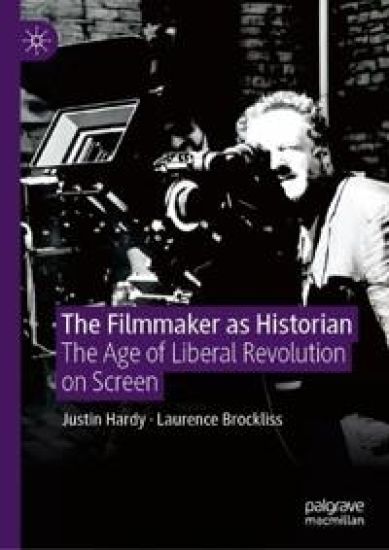
The Filmmaker as Historian

The Filmmaker as Historian

Justin Hardy; Laurence Brockliss

Springer International Publishing AG
2025
sidottu
This book examines the potential of audiovisual accounts of the past as a form of history making and dismisses the view of academic historians that history films are of no value. While this may be true of most, whether Hollywood features or television documentaries, this is not invariably so. As evidence, the book examines a mix of recent costume dramas and presenter-led documentaries dealing with episodes in the history of Britain, France and the United States between the American Revolution and the First World War. For the most part, the authors accept that the documentary is structurally the better of the two genres as a reliable vehicle for introducing past events in our modern audiovisual age. But they emphasize that the greatest potential lies in a hybrid genre which is a costume drama, but one where the filmmaker uses documentary techniques to balance confirmations of truth with dramatic narrative.
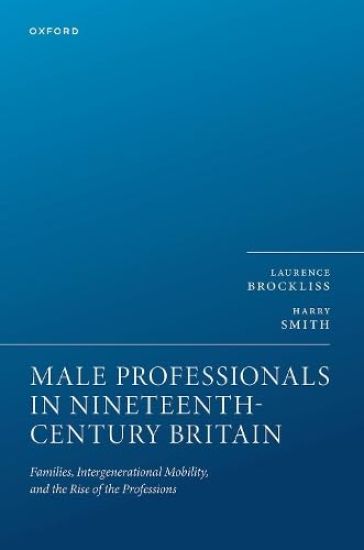
Male Professionals in Nineteenth Century Britain

Male Professionals in Nineteenth Century Britain

Laurence Brockliss; Harry Smith

Oxford University Press
2024
sidottu
Male Professionals in Nineteenth-Century Britain is the first statistically-based social, cultural and familial history of a fast-growing and socially prominent section of the Victorian propertied classes. It is built around a representative cohort of 750 men who were recorded in the 1851 census as practising a profession in eight British provincial towns with distinctive economic and social profiles: Brighton, Bristol, Dundee, Greenock, Leeds, Merthyr Tydfil, Winchester, and the twin county town of Northumberland, Alnwick/Morpeth. The book provides a collective account of the cohort's lives and the lives of their families across four generations, starting with their parents and ending with their grandchildren. It touches on the history of 16,000 individuals. The book aims to throw light on the extent to which nineteenth-century professionals had a distinctive socio-cultural profile, as sociologists and some historians have claimed, or were largely indistinguishable from other members of propertied society, as most historians today assume without further investigation. In exploring this question, particular attention is paid to the cohort families' wealth, household size, education, occupational history, geographical mobility, and broader involvement in society measured by their members' choice of marriage partner, their kinship and friendship circles, their political allegiance and their leisure activities. The book demonstrates that male professionals in the Victorian era were far from being a homogenous group, but were divided in many ways. The most important was wealth which played a key role in the social and occupational fortunes of their descendants. These divisions largely explain why some professionals and some individual professions were much more likely to display endogenous characteristics than others. The book also demonstrates that even the most successful professional families got poorer over time, and reveals how easily in the age of industrialisation branches of families and sometimes complete families could drop out of the elite.
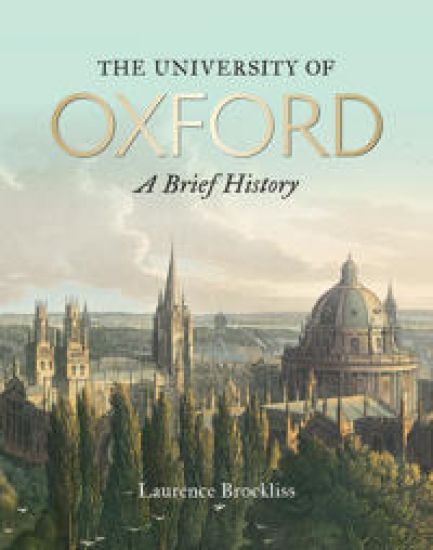
University of Oxford: A Brief History, The

University of Oxford: A Brief History, The

Laurence Brockliss

Bodleian Library
2018
nidottu
The University of Oxford is the third oldest university in Europe and remains one of the greatest universities in the world. How did such an ancient institution flourish through the ages? This book offers a succinct illustrated account of its colourful and controversial 800-year history, from medieval times through the Reformation and on to the nineteenth century, in which the foundations of the modern tutorial system were laid. It describes the extraordinary and influential people who shaped the development of the institution and helped to create today’s world-class research university. Institutions have waxed and waned over the centuries but Oxford has always succeeded in reinventing itself to meet the demands of a new age. Richly illustrated with archival material, prints and portraits, this book explores how a university in a small provincial town rose to become one of the top universities in the world at the beginning of the twenty-first century.
From Provincial savant to Parisian naturalist

From Provincial savant to Parisian naturalist

Laurence Brockliss

Voltaire Foundation
2017
nidottu
Pierre-Joseph Amoreux of Montpellier was a Linnaean naturalist, agronomist and bibliographer whose adult life spanned the last decades of the ancien régime, the French Revolution, the age of Napoleon and the Restoration. Thanks to his many publications and contacts, he was a well-known figure in his own day, not just in the Midi but in Paris and beyond. His autobiography, published here for the first time along with a substantial introduction, provides the fullest first-person account of the life of a provincial man of science during this tumultuous period of France’s history.Before the French Revolution, Amoreux used his Montpellier base and the new prize-essay contest to become a renowned and respected figure in the multi-centred Republic of Letters. Post-Revolution, when French science became exclusively centred on Paris, he succeeded in relaunching his scientific career through frequent visits to the capital where he cultivated the leading lights of the Institut and the Jardin des plantes. Laurence Brockliss opens this volume by providing an in-depth analysis of the context of Amoreux’s life and work, based on his surviving letters, printed and manuscript books and articles, and his autobiographical Souvenirs. Amoreux emerges as a driven, often ruthless, man of science, wealthy enough to devote the majority of his life to his intellectual pursuits, keen to retain his independence, and more interested in worldly success than he pretended.The following fully annotated transcription of Amoreux’s Souvenirs provides an unparalleled insight into the world of the minor intellectual in the Age of Enlightenment and Revolution, where success or failure could turn on the whims of publishing fashion and the vagaries of the postal service. The Souvenirs also offer novel access to the vibrant underbelly of intellectual life in early nineteenth-century Paris as Amoreux introduces us to a little-known world of libraries, museums, booksellers, collectors, nurserymen and dealers.
Nelson's Surgeon

Nelson's Surgeon

Laurence Brockliss; John Cardwell; Michael Moss

Oxford University Press
2008
nidottu
Despite the significant role played by the health and fitness of the British crews in Nelson's defeat of the Combined Fleet in 1805, little has been written hitherto about the naval surgeon in the era of the long war against France. This book is intended to fill the gap. Sir William Beatty (1773-1842) was surgeon of the Victory at Trafalgar. An Ulsterman from Londonderry, he had joined the navy in 1791. Before being warranted to Nelson's flagship, Beatty had served upon ten other warships, and survived a yellow fever epidemic, court martial, and shipwreck to share in the capture of a Spanish treasure ship. After Trafalgar, he became Physician of the Channel Fleet, based at Plymouth, and eventually Physician to Greenwich Hospital, where he served until his retirement in 1838. As the book makes clear in drawing upon an extensive prosopographical database, Beatty's career until 1805 was representative of the experience of the approximately 2,000 naval surgeons who joined the navy in the course of the war. The first part of the biography provides a detailed and scholarly introduction to the professional education, training, and work of the naval surgeon. But after 1805 Beatty became a member of the service elite, and his career becomes interesting for other reasons. In the final decades of his life, Beatty was far more than a senior naval physician. As a Fellow of the Royal Society, director of the Clerical and Medical Insurance Company, and director of the London to Greenwich Railway, he was a prominent figure in London's business and scientific community, who used his growing wealth to build a large collection of books and manuscripts. His later life is testimony to the much wider contribution that some naval and army medical officers made to the development of the new Britain of the nineteenth century. In Beatty's case, too, the contribution was original. By publishing in 1807 his carefully crafted Authentic Narrative of the Death of Lord Nelson , he was instrumental in forging the myth of the hero's last hours, which has become a part of the national consciousness and has helped to define for generations the concept of Britishness.
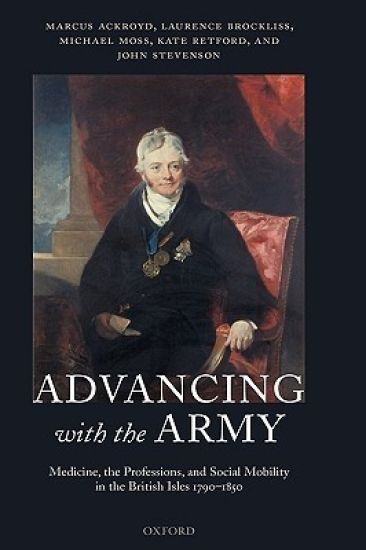
Advancing with the Army

Advancing with the Army

Marcus Ackroyd; Laurence Brockliss; Michael Moss; Kate Retford; John Stevenson

Oxford University Press
2007
sidottu
Providing the first ever statistical study of a professional cohort in the era of the industrial revolution, this prosopographical study of some 450 surgeons who joined the army medical service during the Revolutionary and Napoleonic wars, charts the background, education, military and civilian career, marriage, sons' occupations, wealth at death, and broader social and cultural interests of the members of the cohort. It reveals the role that could be played by the nascent professions in this period in promoting rapid social mobility. The group of medical practitioners selected for this analysis did not come from affluent or professional families but profited from their years in the army to build up a solid and sometimes spectacular fortune, marry into the professions, and place their sons in professional careers. The study contributes to our understanding of Britishness in the period, since the majority of the cohort came from small-town and rural Scotland and Ireland but seldom found their wives in the native country and frequently settled in London and other English cities, where they often became pillars of the community.
Nelson's Surgeon

Nelson's Surgeon

Laurence Brockliss; John Cardwell; Michael Moss

Oxford University Press
2005
sidottu
In the lead-up to the bicentenary of Trafalgar a number of important new studies have been published about the life of Nelson and his defeat of the Combined Fleet in 1805. Despite the significant role played by the health and fitness of the British crews in securing the victory, little has been written hitherto about the naval surgeon in the era of the long war against France. This book is intended to fill the gap. Sir William Beatty (1773-1842) was surgeon of the Victory at Trafalgar. An Ulsterman from Londonderry, he had joined the navy in 1791. Before being warranted to Nelson's flagship, Beatty had served upon ten other warships, and survived a yellow fever epidemic, court martial, and shipwreck to share in the capture of a Spanish treasure ship. After Trafalgar, he became Physician of the Channel Fleet, based at Plymouth, and eventually Physician to Greenwich Hospital, where he served until his retirement in 1838. As the book makes clear in drawing upon an extensive prosopographical database, Beatty's career until 1805 was representative of the experience of the approximately 2,000 naval surgeons who joined the navy in the course of the war. The first part of the biography provides a detailed and scholarly introduction to the professional education, training, and work of the naval surgeon. But after 1805 Beatty became a member of the service elite, and his career becomes interesting for other reasons. In the final decades of his life, Beatty was far more than a senior naval physician. As a Fellow of the Royal Society, director of the Clerical and Medical Insurance Company, and director of the London to Greenwich Railway, he was a prominent figure in London's business and scientific community, who used his growing wealth to build a large collection of books and manuscripts. His later life is testimony to the much wider contribution that some naval and army medical officers made to the development of the new Britain of the nineteenth century. In Beatty's case, too, the contribution was original. By publishing in 1807 his carefully crafted Authentic Narrative of the Death of Lord Nelson, he was instrumental in forging the myth of the hero's last hours, which has become a part of the national consciousness and has helped to define for generations the concept of Britishness.
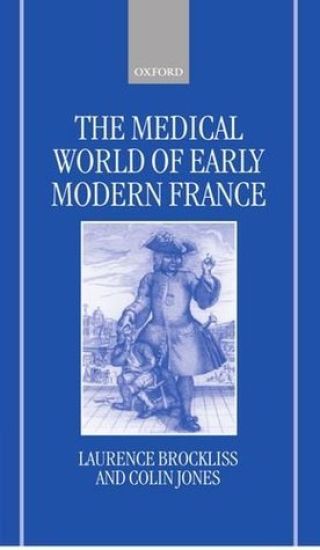
The Medical World of Early Modern France

The Medical World of Early Modern France

Laurence Brockliss; Colin Jones

Clarendon Press
1997
sidottu
The Medical World of Early Modern France recounts the history of medicine in France between the sixteenth century and the French Revolution. Physicians, surgeons and apothecaries are centre-stage, and the study provides an overview of long-term changes in their ideas about medicine and their craft. Other denizens of the medical world - quacks, charlatans, wise women, midwives, herbalist and others - are also brought into the analysis, which is set within the broader context of social, economic, demographic and cultural change. The breadth of the chronological and analytical framework, and the depth of the archival research behind it, makes this a unique account of the evolution of medical ideas and practices in one of the major countries of early modern Europe.