Kirjojen hintavertailu. Mukana 12 390 323 kirjaa ja 12 kauppaa.

Kirjailija

Laurence Cox

Kirjat ja teokset yhdessä paikassa: 9 kirjaa, julkaisuja vuosilta 2013-2023, suosituimpien joukossa Why Social Movements Matter. Vertaile teosten hintoja ja tarkista saatavuus suomalaisista kirjakaupoista.

9 kirjaa

Kirjojen julkaisuhaarukka 2013-2023.

Place, Craft and Neurodiversity

Place, Craft and Neurodiversity

Aonghus Gordon; Laurence Cox

TAYLOR FRANCIS LTD
2023
sidottu
For over four decades, Ruskin Mill Trust has worked with young people with special educational needs and behavioural issues who learn traditional crafts and organic farming as part of an integrated curriculum of therapeutic education, overcoming barriers to learning and re-engaging with the wider world. This accessible and inspiring book showcases how an appreciation of place, traditional crafts, farming and transformative education offers a wider route to human well-being for all. The authors outline the different fields of the “Practical Skills Therapeutic Education” method, which includes developing practical skills, learning the ecology of the farm and understanding therapeutic education, holistic care, health and self-leadership.Taking the reader on a tour of Ruskin Mill’s many extraordinary provisions across Britain, and going deeper in conversation with its founder, Aonghus Gordon, this book is an outstanding story of creative thinking in an age of narrow focus on classrooms and written examinations, presenting a transformative perspective on education and care. Being grounded in work supporting young people with complex additional needs, it provides a rare insight into the work of one of the world’s leading charities working with neurodiversity.With its non-specialist language, Place, Craft and Neurodiversity offers ideas and resources for work in different areas of education and therapy. It will inspire parents, educators and care workers around the globe.
Place, Craft and Neurodiversity

Place, Craft and Neurodiversity

Aonghus Gordon; Laurence Cox

TAYLOR FRANCIS LTD
2023
nidottu
For over four decades, Ruskin Mill Trust has worked with young people with special educational needs and behavioural issues who learn traditional crafts and organic farming as part of an integrated curriculum of therapeutic education, overcoming barriers to learning and re-engaging with the wider world. This accessible and inspiring book showcases how an appreciation of place, traditional crafts, farming and transformative education offers a wider route to human well-being for all. The authors outline the different fields of the “Practical Skills Therapeutic Education” method, which includes developing practical skills, learning the ecology of the farm and understanding therapeutic education, holistic care, health and self-leadership.Taking the reader on a tour of Ruskin Mill’s many extraordinary provisions across Britain, and going deeper in conversation with its founder, Aonghus Gordon, this book is an outstanding story of creative thinking in an age of narrow focus on classrooms and written examinations, presenting a transformative perspective on education and care. Being grounded in work supporting young people with complex additional needs, it provides a rare insight into the work of one of the world’s leading charities working with neurodiversity.With its non-specialist language, Place, Craft and Neurodiversity offers ideas and resources for work in different areas of education and therapy. It will inspire parents, educators and care workers around the globe.
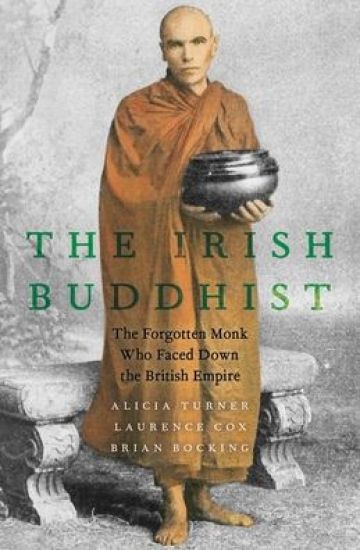
The Irish Buddhist

The Irish Buddhist

Alicia Turner; Laurence Cox; Brian Bocking

Oxford University Press Inc
2020
sidottu
The Irish Buddhist is the biography of an extraordinary Irish emigrant, sailor, and migrant worker who became a Buddhist monk and anti-colonial activist in early twentieth-century Asia. Born in Dublin in the 1850s, U Dhammaloka energetically challenged the values and power of the British Empire and scandalized the colonial establishment of the 1900s. He rallied Buddhists across Asia, set up schools, and argued down Christian missionaries--often using western atheist arguments. He was tried for sedition, tracked by police and intelligence services, and died at least twice. His story illuminates the forgotten margins and interstices of imperial power, the complexities of class, ethnicity and religious belonging in colonial Asia, and the fluidity of identity in the high Victorian period. Too often, the story of the pan-Asian Buddhist revival movement and Buddhism's remaking as a world religion has been told 'from above,' highlighting scholarly writers, middle-class reformers and ecclesiastical hierarchies. By turns fraught, hilarious, pioneering, and improbable, Dhammaloka's adventures 'from below' highlight the changing and contested meanings of Buddhism in colonial Asia. Through his story, authors Alicia Turner, Brian Bocking, and Laurence Cox offer a window into the worlds of ethnic minorities and diasporas, transnational networks, poor whites, and social movements. Dhammaloka's dramatic life rewrites the previously accepted story of how Buddhism became a modern global religion.
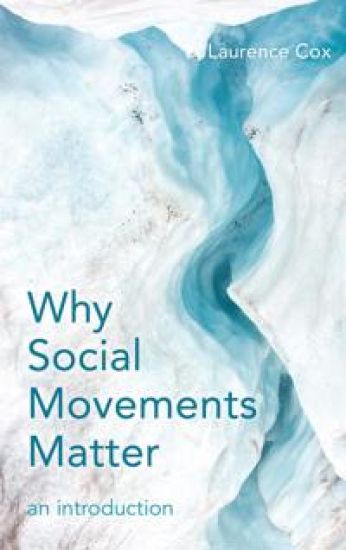
Why Social Movements Matter

Why Social Movements Matter

Laurence Cox

Rowman Littlefield
2018
sidottu
Social movements and popular struggle are a central part of today's world, but often neglected or misunderstood by media commentary as well as experts in other fields. In an age when struggles over climate change, women's rights, austerity politics, racism, warfare and surveillance are central to the future of our societies, we urgently need to understand social movements. Accessible, comprehensive and grounded in deep scholarship, Why Social Movements Matter explains social movements for a general educated readership, those interested in progressive politics and scholars and students in other fields. It shows how much social movements are part of our everyday lives, and how in many ways they have shaped the world we live in over centuries. It explores the relationship between social movements and the left, how movements develop and change, the complex relationship between movements and intellectual life, and delivers a powerful argument for rethinking how the social world is constructed. Drawing on three decades of experience, Why Social Movements Matter shows the real space for hope in a contested world.
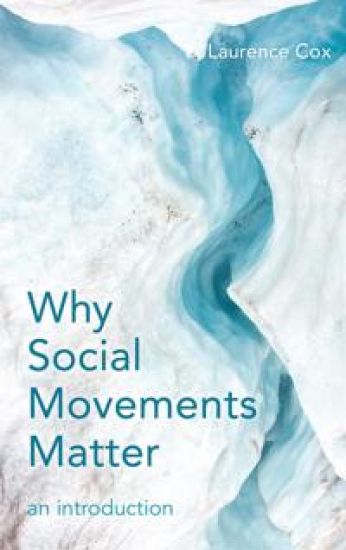
Why Social Movements Matter

Why Social Movements Matter

Laurence Cox

Rowman Littlefield
2018
nidottu
Social movements and popular struggle are a central part of today's world, but often neglected or misunderstood by media commentary as well as experts in other fields. In an age when struggles over climate change, women's rights, austerity politics, racism, warfare and surveillance are central to the future of our societies, we urgently need to understand social movements. Accessible, comprehensive and grounded in deep scholarship, Why Social Movements Matter explains social movements for a general educated readership, those interested in progressive politics and scholars and students in other fields. It shows how much social movements are part of our everyday lives, and how in many ways they have shaped the world we live in over centuries. It explores the relationship between social movements and the left, how movements develop and change, the complex relationship between movements and intellectual life, and delivers a powerful argument for rethinking how the social world is constructed. Drawing on three decades of experience, Why Social Movements Matter shows the real space for hope in a contested world.
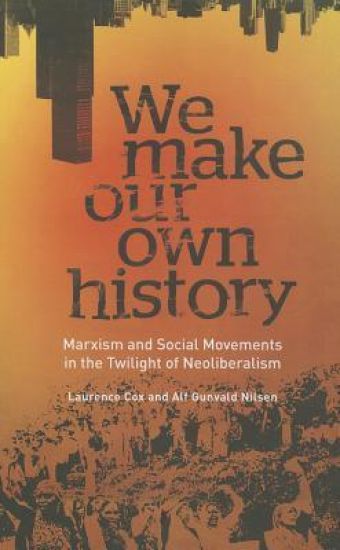
We Make Our Own History

We Make Our Own History

Laurence Cox; Alf Gunvald Nilsen

Pluto Press
2014
pokkari
We live in the twilight of neoliberalism: the ruling classes can no longer rule as before, and ordinary people are no longer willing to be ruled in the old way. Pursued by global elites since the 1970s, neoliberalism is defined by dispossession and ever-increasing inequality. The refusal to continue to be ruled like this - 'ya basta!' - appears in an arc of resistance stretching from rural India to the cities of the global North. From this network of movements, new visions are emerging of a future beyond neoliberalism. We Make Our Own History responds to these visions by reclaiming Marxism as a theory born from activist experience and practice. This book marks a break both with established social movement theory, and with those forms of Marxism which treat the practice of social movement organising as an unproblematic process. It shows how movements can develop from local conflicts to global struggles; how neoliberalism operates as a social movement from above, and how popular struggles can create new worlds from below.
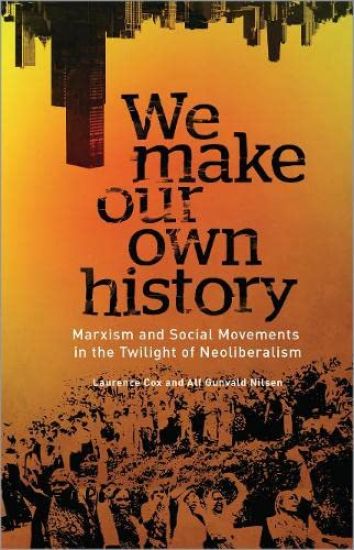
We Make Our Own History

We Make Our Own History

Laurence Cox; Alf Gunvald Nilsen

Pluto Press
2014
sidottu
We live in the twilight of neoliberalism: the ruling classes can no longer rule as before, and ordinary people are no longer willing to be ruled in the old way. Pursued by global elites since the 1970s, neoliberalism is defined by dispossession and ever-increasing inequality. The refusal to continue to be ruled like this - 'ya basta!' - appears in an arc of resistance stretching from rural India to the cities of the global North. From this network of movements, new visions are emerging of a future beyond neoliberalism. We Make Our Own History responds to these visions by reclaiming Marxism as a theory born from activist experience and practice. This book marks a break both with established social movement theory, and with those forms of Marxism which treat the practice of social movement organising as an unproblematic process. It shows how movements can develop from local conflicts to global struggles; how neoliberalism operates as a social movement from above, and how popular struggles can create new worlds from below.
Buddhism and Ireland

Buddhism and Ireland

Laurence Cox

Equinox Publishing Ltd
2013
sidottu
Ireland and Buddhism have a long history. Shaped by colonialism, contested borders, religious wars, empire and massive diasporas, Irish people have encountered Asian Buddhism in many ways over 14 centuries. From the thrill of travellers' tales in far-off lands to a religious alternative to Christianity, from the potential of anti-colonial solidarity to fears of "going native", and from recent immigration to the secular spread of Buddhist meditation, Buddhism has meant many different things to people in Ireland. Knowledge of Buddhist Asia reached Ireland by the 7th century, with the first personal contact in the 14th - a tale remembered for 500 years. The first Irish Buddhists appeared in the political and cultural crisis of the 19th century, in Dublin and the rural West, but also in Burma and Japan. Over the next hundred years, Buddhism competed with esoteric movements to become the alternative to mainstream religion. Since the 1960s, Buddhism has exploded to become Ireland's third-largest religion. Buddhism and Ireland is the first history of its subject, a rich and exciting story of extraordinary individuals and the journey of ideas across Europe and Asia.