

Kirjailija
Laurence Dreyfus
Kirjat ja teokset yhdessä paikassa: 4 kirjaa, julkaisuja vuosilta 1990-2025, suosituimpien joukossa Parsifal's Seduction. Vertaile teosten hintoja ja tarkista saatavuus suomalaisista kirjakaupoista.
4 kirjaa
Kirjojen julkaisuhaarukka 1990-2025.
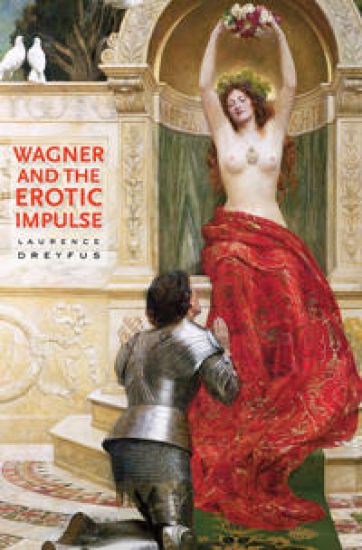
Though his image is tarnished today by unrepentant anti-Semitism, Richard Wagner (1813–1883) was better known in the nineteenth century for his provocative musical eroticism. In this illuminating study of the composer and his works, Laurence Dreyfus shows how Wagner’s obsession with sexuality prefigured the composition of operas such as Tannhäuser, Die Walküre, Tristan und Isolde, and Parsifal. Daring to represent erotic stimulation, passionate ecstasy, and the torment of sexual desire, Wagner sparked intense reactions from figures like Baudelaire, Clara Schumann, Nietzsche, and Nordau, whose verbal tributes and censures disclose what was transmitted when music represented sex.Wagner himself saw the cultivation of an erotic high style as central to his art, especially after devising an anti-philosophical response to Schopenhauer’s “metaphysics of sexual love.” A reluctant eroticist, Wagner masked his personal compulsion to cross-dress in pink satin and drench himself in rose perfumes while simultaneously incorporating his silk fetish and love of floral scents into his librettos. His affection for dominant females and surprising regard for homosexual love likewise enable some striking portraits in his operas. In the end, Wagner’s achievement was to have fashioned an oeuvre which explored his sexual yearnings as much as it conveyed—as never before—how music could act on erotic impulse.
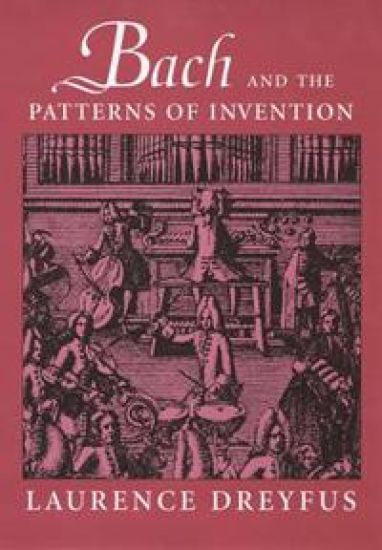
In this major new interpretation of the music of J. S. Bach, we gain a striking picture of the composer as a unique critic of his age. By reading Bach’s music “against the grain” of contemporaries such as Vivaldi and Telemann, Laurence Dreyfus explains how Bach’s approach to musical invention in a variety of genres posed a fundamental challenge to Baroque aesthetics.“Invention”—the word Bach and his contemporaries used for the musical idea that is behind or that generates a composition—emerges as an invaluable key in Dreyfus’s analysis. Looking at important pieces in a range of genres, including concertos, sonatas, fugues, and vocal works, he focuses on the fascinating construction of the invention, the core musical subject, and then shows how Bach disposes, elaborates, and decorates it in structuring his composition. Bach and the Patterns of Invention brings us fresh understanding of Bach’s working methods, and how they differed from those of the other leading composers of his day. We also learn here about Bach’s unusual appropriations of French and Italian styles—and about the elevation of various genres far above their conventional status.Challenging the restrictive lenses commonly encountered in both historical musicology and theoretical analysis, Dreyfus provocatively suggests an approach to Bach that understands him as an eighteenth-century thinker and at the same time as a composer whose music continues to speak to us today.
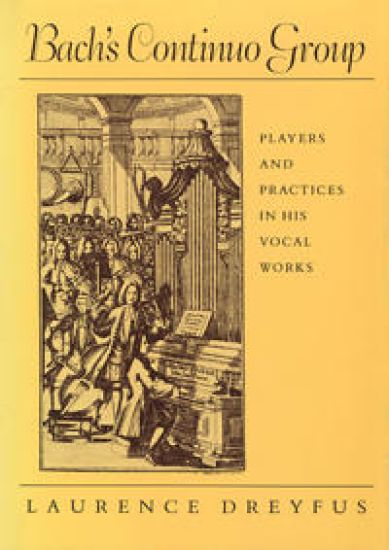
When Bach’s cantatas, masses, passions, and chorales were originally performed under the composer’s direction, which instruments played the basso continuo, the line that establishes the harmonic framework? Bach’s Continuo Group answers this and other fundamental questions and probes the rationale behind Baroque performance conventions.