Kirjojen hintavertailu. Mukana 12 390 323 kirjaa ja 12 kauppaa.

Kirjailija

Laurence Lampert

Kirjat ja teokset yhdessä paikassa: 10 kirjaa, julkaisuja vuosilta 1995-2024, suosituimpien joukossa How Philosophy Became Socratic. Vertaile teosten hintoja ja tarkista saatavuus suomalaisista kirjakaupoista.

10 kirjaa

Kirjojen julkaisuhaarukka 1995-2024.

The Beijing Lectures: Strauss, Plato, Nietzsche
"In this brilliant analysis of the coming to be of Strauss, Plato, and Nietzsche as philosophers and poets, Laurence Lampert reaches new heights and plumbs new depths. An extraordinarily rich and insightful book, thoughtful and beautiful in its execution. A masterful performance by a thinker and author at the height of his power."--Michael Allen Gillespie, author of Nietzsche's Final Teaching Six essays from a well-known Nietzsche scholar on Strauss, Plato, Nietzsche, and the history of western philosophy In The Beijing Lectures: Strauss, Plato, Nietzsche, Laurence Lampert presents what he calls the new history of philosophy made possible by Friedrich Nietzsche. This "new" history takes seriously Nietzsche's claim that "the greatest thoughts are the greatest events." To put it even more assertively that "genuine philosophers are commanders and legislators."Beginning with Leo Strauss and how his recovery of the philosophers' art of writing can change our way of viewing the history of philosophy, Lampert then focuses on six Platonic dialogues--Protagoras, Charmides, Republic, Phaedo, Parmenides, and Symposium. These, he believes, mark a turning point in Western history and set the pattern for the whole Western philosophic tradition. In the third and final section, Lampert considers Nietzsche in order to show how he revolutionized our understanding of the world, and in particular why it is appropriate to view him as "the first comprehensive ecological philosopher."
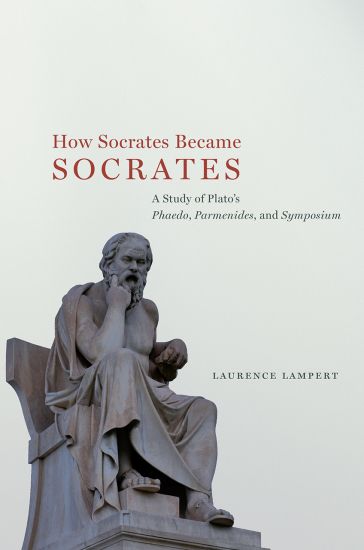
How Socrates Became Socrates

How Socrates Became Socrates

Laurence Lampert

University of Chicago Press
2021
sidottu
Plato dispersed his account of how Socrates became Socrates across three dialogues. Thus, Plato rendered his becoming discoverable only to readers truly invested. In How Socrates Became Socrates, Laurence Lampert recognizes the path of Plato's strides and guides us through the true account of Socrates' becoming. He divulges how and why Plato ordered his Phaedo, Parmenides, and Symposium chronologically to give readers access to Socrates' development on philosophy's fundamental questions of being and knowing. In addition to a careful and precise analysis of Plato's Phaedo, Parmenides, and Symposium, Lampert shows that properly entwined, Plato's three dialogues fuse to portray a young thinker entering philosophy's true radical power. Lampert reveals why this radicality needed to be guarded and places this discussion within the greater scheme of the politics of philosophy.
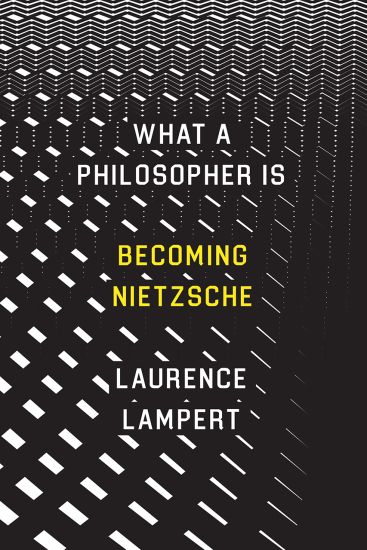
What a Philosopher Is

What a Philosopher Is

Laurence Lampert

University of Chicago Press
2021
nidottu
The trajectory of Friedrich Nietzsche’s thought has long presented a difficulty for the study of his philosophy. How did the young Nietzsche—classicist and ardent advocate of Wagner’s cultural renewal—become the philosopher of Will to Power and the Eternal Return? With this book, Laurence Lampert answers that question. He does so through his trademark technique of close readings of key works in Nietzsche’s journey to philosophy: The Birth of Tragedy, Schopenhauer as Educator, Richard Wagner in Bayreuth, Human All Too Human, and “Sanctus Januarius,” the final book of the 1882 Gay Science. Relying partly on how Nietzsche himself characterized his books in his many autobiographical guides to the trajectory of his thought, Lampert sets each in the context of Nietzsche’s writings as a whole, and looks at how they individually treat the question of what a philosopher is. Indispensable to his conclusions are the workbooks in which Nietzsche first recorded his advances, especially the 1881 workbook which shows him gradually gaining insights into the two foundations of his mature thinking. The result is the most complete picture we’ve had yet of the philosopher’s development, one that gives us a Promethean Nietzsche, gaining knowledge even as he was expanding his thought to create new worlds.
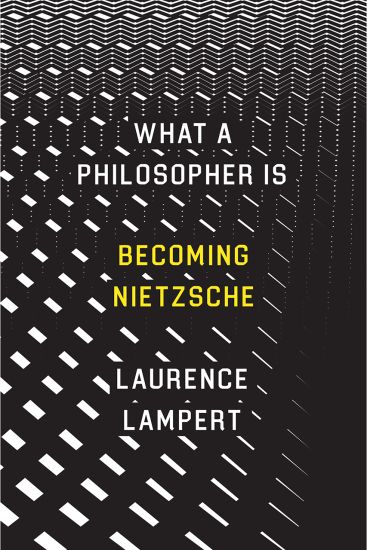
What a Philosopher Is

What a Philosopher Is

Laurence Lampert

University of Chicago Press
2018
sidottu
The trajectory of Friedrich Nietzsche's thought has long presented a difficulty for the study of his philosophy. How did the young Nietzsche classicist and ardent advocate of Wagner's cultural renewal become the philosopher of Will to Power and the Eternal Return? With this book, Laurence Lampert answers that question. He does so through his trademark technique of close readings of key works in Nietzsche's journey to philosophy: The Birth of Tragedy, Schopenhauer as Educator, Richard Wagner in Bayreuth, Human All Too Human, and "Sanctus Januarius," the final book of the 1882 Gay Science. Relying partly on how Nietzsche himself characterized his books in his many autobiographical guides to the trajectory of his thought, Lampert sets each in the context of Nietzsche's writings as a whole, and looks at how they individually treat the question of what a philosopher is. Indispensable to his conclusions are the workbooks in which Nietzsche first recorded his advances, especially the 1881 workbook which shows him gradually gaining insights into the two foundations of his mature thinking. The result is the most complete picture we've had yet of the philosopher's development, one that gives us a Promethean Nietzsche, gaining knowledge even as he was expanding his thought to create new worlds.
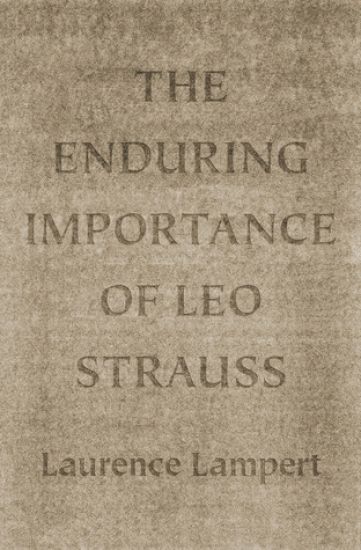
The Enduring Importance of Leo Strauss

The Enduring Importance of Leo Strauss

Laurence Lampert

University of Chicago Press
2013
sidottu
In The Enduring Importance of Leo Strauss, Laurence Lampert takes on the crucial task of separating what is truly important in the work of Leo Strauss from the ephemeral politics associated with his school. Lampert focuses on exotericism - the use of artful rhetoric to simultaneously communicate a socially responsible message to the public at large and a more radical message of philosophic truth to a smaller, more intellectually fit audience. Largely forgotten after the Enlightenment, exotericism, he shows, deeply informed Strauss both as a reader and as a philosopher. Examining Strauss' most important books and essays through this exoteric lens, Lampert reevaluates not only Strauss but the philosophers - from Plato to Homer to Halevi to Nietzsche - with whom Strauss most deeply engaged. Ultimately he shows that Strauss' famous distinction between ancient and modern thinkers is primarily rhetorical, one of the great examples of Strauss' own exoteric craft. Celebrating Strauss' achievements but recognizing one main shortcoming - a lack of proper grounding in modern science, which Nietzsche would remedy - Lampert illuminates Strauss as having even greater philosophic importance than generally realized.
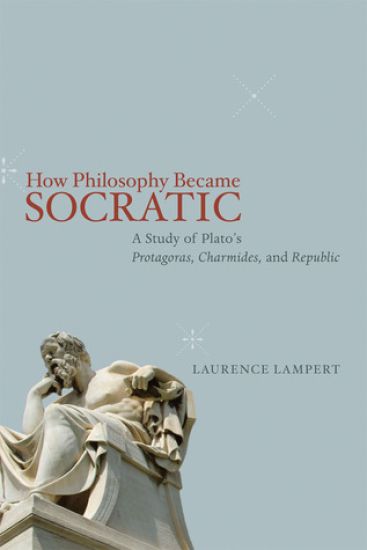
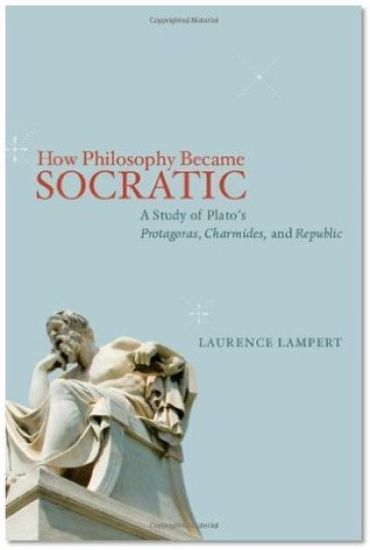
How Philosophy Became Socratic

How Philosophy Became Socratic

Laurence Lampert

University of Chicago Press
2013
nidottu
Plato's dialogues show Socrates at different ages, beginning when he was about nineteen and already deeply immersed in philosophy and ending with his execution five decades later. By presenting this model philosopher across a fifty-year span of his life, Plato leads his readers to wonder: Does that time period correspond to the development of Socrates' thought? In this magisterial investigation of the evolution of Socrates' philosophy, Laurence Lampert answers in the affirmative. The chronological route that Plato maps for us, Lampert argues, reveals the enduring record of philosophy as it gradually took the form that came to dominate the life of the mind in the West. The reader accompanies Socrates as he breaks with the century-old tradition of philosophy, turns to his own path, gradually enters into a deeper understanding of nature and human nature, and discovers the successful way to transmit his wisdom to the wider world. Focusing on the final and most prominent step in that process and offering detailed textual analysis of Plato's "Protagoras, Charmides, and Republic", "How Philosophy Became Socratic" charts Socrates' gradual discovery of a proper politics to shelter and advance philosophy.
How Philosophy Became Socratic

How Philosophy Became Socratic

Laurence Lampert

University of Chicago Press
2010
sidottu
Plato's dialogues show Socrates at different ages, beginning when he was about nineteen and already deeply immersed in philosophy and ending with his execution five decades later. By presenting his model philosopher across a fifty-year span of his life, Plato leads his readers to wonder: does that time period correspond to the development of Socrates' thought? In this magisterial investigation of the evolution of Socrates' philosophy, Laurence Lampert answers in the affirmative. The chronological route that Plato maps for us, Lampert argues, reveals the enduring record of philosophy as it gradually took the form that came to dominate the life of the mind in the West. The reader accompanies Socrates as he breaks with the century-old tradition of philosophy, turns to his own path, gradually enters into a deeper understanding of nature and human nature, and discovers a successful way to transmit his wisdom to the wider world. Focusing on the final and most prominent step in that process and offering detailed textual analysis of Plato's "Protagoras", "Charmides", and "Republic", "How Philosophy Became Socratic" charts Socrates' gradual discovery of a proper politics to shelter and advance philosophy.
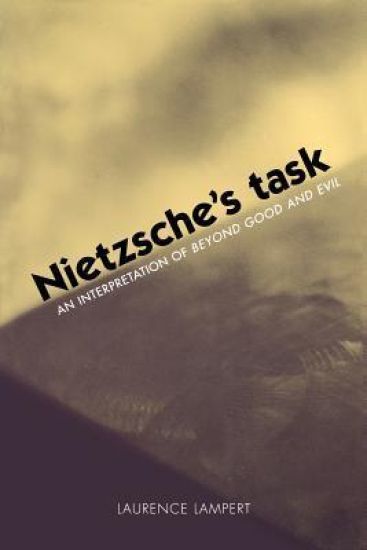
Nietzsche's Task

Nietzsche's Task

Laurence Lampert

Yale University Press
2004
pokkari
When Nietzsche published Beyond Good and Evil in 1886, he told a friend that it was a book that would not be read properly until “around the year 2000.” Now Laurence Lampert sets out to fulfill this prophecy by providing a section by section interpretation of this philosophical masterpiece that emphasizes its unity and depth as a comprehensive new teaching on nature and humanity.According to Lampert, Nietzsche begins with a critique of philosophy that is ultimately affirmative, because it shows how philosophy can arrive at a defensible ontological account of the way of all beings. Nietzsche next argues that a new post-Christian religion can arise out of the affirmation of the world disclosed to philosophy. Then, turning to the implications of the new ontology for morality and politics, Nietzsche argues that these can be reconstituted on the fundamental insights of the new philosophy. Nietzsche’s comprehensive depiction of this anti-Platonic philosophy ends with a chapter on nobility, in which he contends that what can now be publicly celebrated as noble in our species are its highest achievements of mind and spirit.
Leo Strauss and Nietzsche

Leo Strauss and Nietzsche

Laurence Lampert

University of Chicago Press
1997
nidottu
The political philosopher Leo Strauss has been credited by conservatives with the recovery of the great tradition of political philosophy stretching back to Plato. Strauss left a strongly negative assessment of Nietzsche as the modern philosopher most at odds with that tradition and most responsible for the sins of 20th-century culture - relativism, godlessness, nihilism, and the breakdown of family values. In fact, this apparent denunciation has become so closely associated with Strauss that it is often seen as the very core of his thought. This text offers a reassessment of the Strauss-Nietzsche connection. The author undertakes a searching examination of the key Straussian essay, "Note on the Plan of Nietzsche's `Beyond Good and Evil'". He shows that this essay, written toward the end of Strauss's life and placed at the centre of his final work, reveals an affinity for and debt to Nietzsche greater than Strauss's followers allow. Lampert argues that the essay comprises the most important interpretation of Nietzsche ever published, one that clarifies Nietzsche's conception of nature and of human spiritual history, and demonstrates the logical relationship between the essential themes in Nietzsche's thought - the will to power and the eternal return.
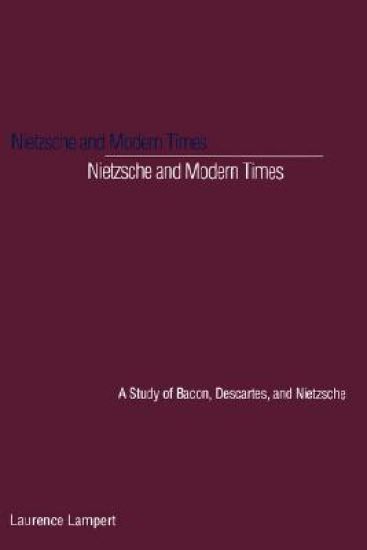
Nietzsche and Modern Times

Nietzsche and Modern Times

Laurence Lampert

Yale University Press
1995
pokkari
This major work by Laurence Lampert provides a new interpretation of modern philosophy by developing Nietzsche's view that genuine philosophers set out to determine the direction of culture through their ideas and that they conceal the radical nature of their thought by their esoteric style. From this Nietzschean perspective, Francis Bacon and René Descartes can be considered the founders of modernity.Lampert argues that Bacon's positive claims for science aimed to destroy the dominance of Christianity. Descartes continued Bacon's radical program while providing it with the mathematical physics required for its success. Far from being solely an epistemological and metaphysical thinker, says Lampert, Descartes was a master writer whose comic ridicule helped bring down the Church to which he paid lip service. Both Bacon and Descartes used the Platonic art of dissimulation to achieve their ends by making their revolutionary aims appear compatible with Christianity.Once we recognize Bacon and Descartes as legislators of modern times in a specifically Nietzschean sense, we can also see Nietzsche in a new way—as the first thinker to have understood modern times and transcended it in a postmodern worldview. According to Lampert, Nietzsche provides a new foundation for culture, a joyous science that reveals the grandeur and purposeless play of the cosmic whole and yet avoids enervating despair or destructive, dogmatic belief.