Kirjojen hintavertailu. Mukana 12 589 623 kirjaa ja 12 kauppaa.

Kirjailija

Laurence Mynors-Wallis

Kirjat ja teokset yhdessä paikassa: 3 kirjaa, julkaisuja vuosilta 2002-2020, suosituimpien joukossa Rix's Expert Psychiatric Evidence. Vertaile teosten hintoja ja tarkista saatavuus suomalaisista kirjakaupoista.

3 kirjaa

Kirjojen julkaisuhaarukka 2002-2020.

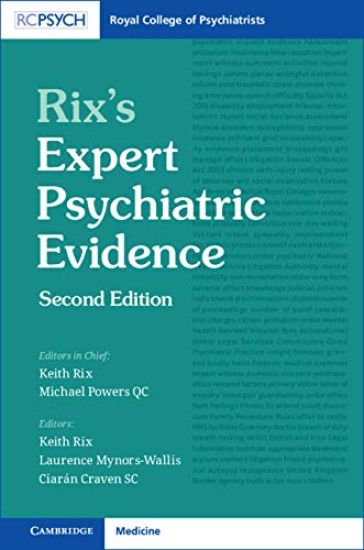
Rix's Expert Psychiatric Evidence

Rix's Expert Psychiatric Evidence

Keith Rix; Laurence Mynors-Wallis; Ciaran Craven

RCPsych/Cambridge University Press
2020
muu
Rix's Expert Psychiatric Evidence is a resource manual and guide for psychiatrists who provide expert testimony. It covers the entire expert psychiatric witness journey, from training and negotiation of instructions, through medicolegal assessment, report preparation, experts' meetings and joint statements, and conferences with counsel, to giving evidence in court along with advice on keeping up to date. Introductory chapters include essential information on the law of expert evidence and the different procedures in the criminal, civil, family and coroners' courts. It now includes in depth information on all eight jurisdictions of the British Isles. It is richly illustrated with reported and unreported cases including many important ones from the previous ten years, particularly relating to vulnerable witnesses and defendants. The book is supplemented by a library of online letters, forms, a new format report template and other documents which can be downloaded and adapted by readers for their own use.
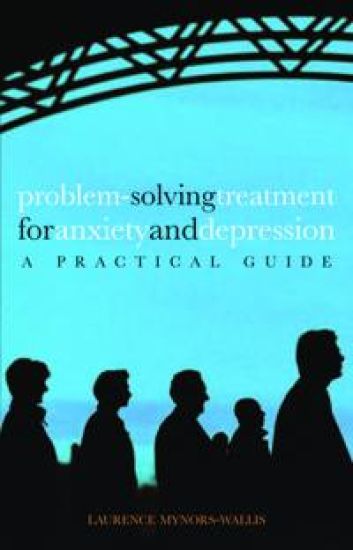
Problem Solving Treatment for Anxiety and Depression

Problem Solving Treatment for Anxiety and Depression

Laurence Mynors-Wallis

Oxford University Press
2005
nidottu
Problem-solving treatment is a well researched, practical psychological intervention. The treatment is very much a here and now treatment, focusing on current difficulties and setting future goals. It does not dwell on past relationships and past mistakes. Patients are helped to gain a sense of mastery over their difficulties. There is good evidence to support the use of problem-solving in treatment of patients with depression, emotional disorders, and after episodes of deliberate self-harm. Problem-solving has been developed as a brief, feasible, psychological treatment that can be delivered by non-specialists. Much of the evidence supporting the use of problem-solving treatment has been undertaken in primary care. This definitive guide provides a 'hands-on' manual to assist potential therapists in understanding the background and rationale for problem-solving. The first chapter of the book provides a brief description of the theory which lead to the development of problem-solving treatment. The research trials underpinning the effectiveness of treatment are discussed in chapter two. Chapters three to seven provide a detailed manual for potential therapists. The structure of problem-solving is set out supported by many relevant clinical examples. Detailed advice is given as to how to structure a course of problem-solving. Case examples of how problem-solving develops over a course of treatment are set out. Advice for would-be practitioners as to how best to deliver problem-solving and also guidance as to potential pitfalls are given. Chapter eight sets out the content of a two day course suitable for teaching problem-solving.
Shared Care in Mental Health

Shared Care in Mental Health

Laurence Mynors-Wallis; Michael Moore; Jon Maguire; Timothy Hollingbery

Oxford University Press
2002
nidottu
Shared care in mental health covers the broad spectrum of psychiatric disorders encountered by the primary care physician. It has been written to provide practical solutions to assist in the management of the common health problems seen in primary care. Shared care means not only care shared between primary and secondary care but also refers to utilizing the skills of the non-medical members of the primary healthcare team. This handbook is easy to read and user friendly and is designed to be 'dipped into' when faced with a problem in daily practice. It is problem-solving orientated and offers sensible, pragmatic and practical advice. The book is structured around the treatment of particular patient groups, for example, the depressed patient, the anxious patient, the patient with insomnia. Each treatment covers the following areas: epidemiology; recognition and diagnosis; management in primary care; when to refer and what to expect from secondary services. Equal attention is given to drug treatments, not only what to prescribe but also how to improve compliance, and psychological treatments. Case reports are included to illustrate the application of treatment techniques, and may be used for teaching purposes. This book has been written by a team who understands GPs, general practice and then psychiatry. The emphasis throughout the book is to provide the General Practitioner with practical and specific help in the management of mental health problems.