Kirjojen hintavertailu. Mukana 12 595 353 kirjaa ja 12 kauppaa.

Kirjailija

Laurence Raw

Kirjat ja teokset yhdessä paikassa: 7 kirjaa, julkaisuja vuosilta 2006-2017, suosituimpien joukossa Theatre of the People. Vertaile teosten hintoja ja tarkista saatavuus suomalaisista kirjakaupoista.

7 kirjaa

Kirjojen julkaisuhaarukka 2006-2017.

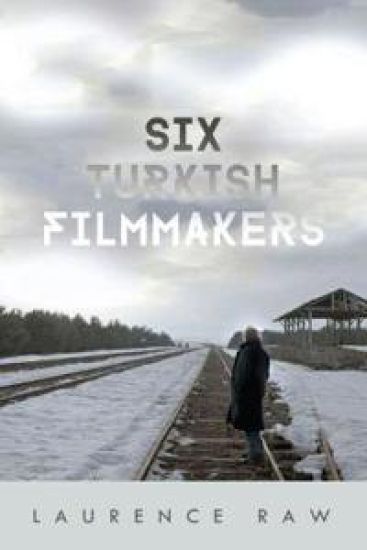
Six Turkish Filmmakers

Six Turkish Filmmakers

Laurence Raw

University of Wisconsin Press
2017
sidottu
Examining the vanguard of New Turkish Cinema, Laurence Raw shows how these films reveal the effects of profound socio economic change on ordinary people in contemporary Turkey.In analysis of and personal interviews with Dervis Zaim, Zeki Demirkubuz, Semih Kaplanoglu, Çagan Irmak, Tolga Örnek, and Palme d'Or winner Nuri Bilge Ceylan, Raw draws connections with Turkish theater, art, sculpture, literature, poetry, philosophy, and international cinema. A native of England and a twenty-five-year resident of Turkey, Raw interleaves his film discussion with thoughtful commentary on nationalism, gender, personal identity, and cultural pluralism.
Theatre of the People

Theatre of the People

Laurence Raw

Rowman Littlefield
2015
sidottu
Throughout World War II, audiences in the United Kingdom craved entertainment, even during the country’s darkest days. During this period, actor-manager Donald Wolfit and his theatre troupe toured Great Britain and Europe—often at great risk. After the war, Wolfit broadened his tour, bringing his brand of Shakespearean theatre to North American audiences. Wolfit believed that theatre should be accessible to everyone, regardless of their socioeconomic origins. It was this quality above all that accounted for his huge popularity throughout the fifteen years of his operation. In Theatre of the People: Donald Wolfit’s Shakespearean Productions 1937–1953, Laurence Raw looks at this tenacious personality whose determination to serve the nation by performing Shakespeare inspired audiences and fellow actors. Drawing on a series of hitherto unpublished materials—including letters and interviews—this part biography and part social history creates a vivid picture of what life was like for the touring actor during WWII and beyond. Recreating twelve of Wolfit’s touring dates throughout Great Britain and North America, this volume also demonstrates theatre’s importance as a source of mass entertainment and education, as well as a propaganda tool. Despite Wolfit’s popular appeal at the time, he was doomed to remain on the periphery of the theatrical establishment. This book contends that Wolfit deserves to be recognized for his efforts in maintaining public morale during times of stress. Theatre of the People will appeal not only to those interested in drama but also to students and scholars of history and popular entertainment in the 1940s and 1950s.
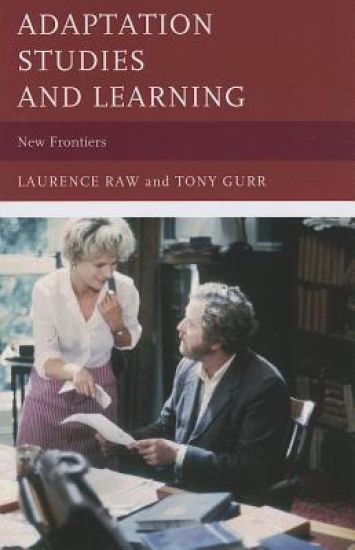
Adaptation Studies and Learning

Adaptation Studies and Learning

Laurence Raw; Tony Gurr

Scarecrow Press
2013
nidottu
Adaptation Studies is a fast-emerging discipline which has expanded into other areas of media scholarship. With its roots in literature and film, this discipline can be applied to much broader uses, even as a process that governs every aspect of our lives. Indeed, by expanding the scope of “adaptation” to encompass a larger perspective, this discipline can promote lifelong learning that emphasizes communication, social interaction, and aesthetic engagement. In Adaptation Studies and Learning: New Frontiers, Laurence Raw and Tony Gurr seek to redefine the ways in which adaptation is taught and learned. Comprised of essays, reflections, and “learning conversations” about the ways in which this approach to adaptation might be implemented, this book focuses on issues of curriculum construction, the role of technology, and the importance of collaboration. Including a series of case-studies and classroom experiences, the authors explore the relationship between adaptation and related disciplines such as history, media, and translation. The book also includes a series of case studies from the world of cinema, showing how collaboration and social interaction lies at the heart of successful film adaptations. By looking beyond the classroom, Raw and Gurr demonstrate how adaptation studies involves real-world issues of prime importance—not only to film and theater professionals, but to all learners. Covering a wide range of material, including film history, educational theory, and literary criticism, Adaptation Studies and Learning offers a radical repositioning of the way we think about adaptation both inside and outside academia.
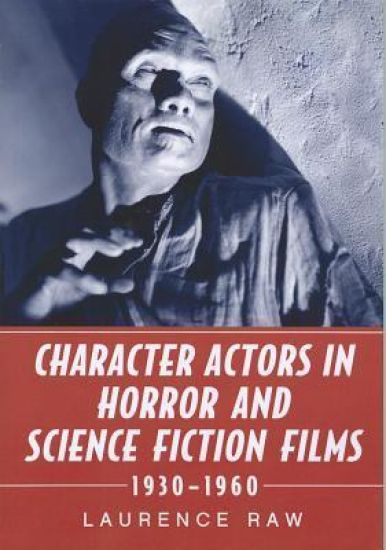
Character Actors in Horror and Science Fiction Films, 1930-1960
This biographical dictionary presents a stellar lineup of talented, versatile character actors who regularly appeared in horror and science fiction films during Hollywood's golden age. Many are well known by genre buffs and casual fans--they include Lionel Atwill, John Carradine, Dwight Frye, Rondo Hatton, Dick Miller, J. Carroll Naish, Maria Ouspenskaya, Glenn Strange, Edward Van Sloan, and George Zucco. Some are perhaps not so well known but equally at home in the horror and science fiction films--such as Anthony Carbone, Harry Cording, Rosemary La Planche, Dick Purcell, Elizabeth Russell and Mel Welles. The 96 entries are complete with a biography and in-depth analyses of the actor's best performances--demonstrating how important these personalities were to the success of their genre films.
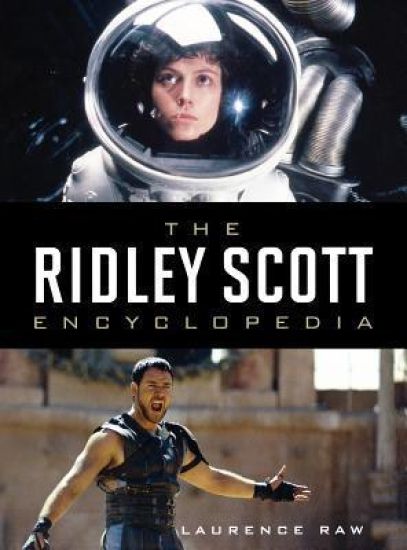
The Ridley Scott Encyclopedia

The Ridley Scott Encyclopedia

Laurence Raw; Lord Puttnam CBE

Scarecrow Press
2009
sidottu
From his first feature film, The Duellists, to his international successes Alien, Blade Runner, Thelma and Louise, Black Hawk Down, Gladiator, and American Gangster, Ridley Scott has directed some of the most compelling films of the last 30 years. Apart from his work as a film director, Scott has engaged in a vast range of activities, including that as a designer, producer, film mogul, and advertising executive. The Ridley Scott Encyclopedia is the first book that focuses on all aspects of his work in a wide-ranging career that spans nearly 50 years. The entries in this encyclopedia focus on all aspects of his work and are divided into four categories. The first focuses on Ridley Scott's work as a director, encompassing his feature films from The Duellists to Body of Lies, as well as his work in television, including commercials. The second category focuses on the people who have been involved in Scott's projects, including actors, directors, producers, designers, writers and other creative personnel. The third focuses on general thematic issues raised in Scott's work, such as gender construction, political issues, and geographical locations. Finally the encyclopedia incorporates entries on films by other directors who have influenced Scott's approach to his work as a director or producer. Each entry is followed by a bibliography of published sources, both in print and online, making this the most comprehensive reference on Scott's body of work.
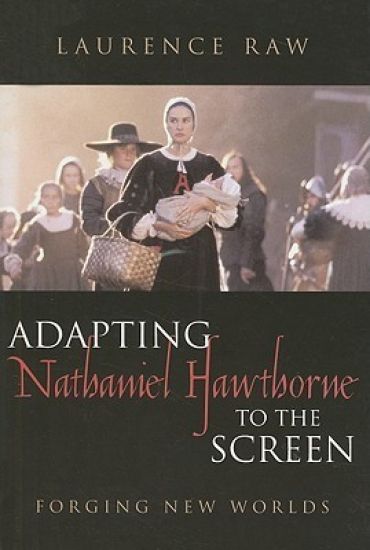
Adapting Nathaniel Hawthorne to the Screen
Considered one of the greatest of American authors, Nathaniel Hawthorne (1804-1864) created a memorable body of literature, which included the novels The Scarlet Letter and The House of Seven Gables, as well as a wealth of short stories. In Adapting Nathaniel Hawthorne to the Screen: Forging New Worlds, Laurence Raw demonstrates how filmmakers have turned to Hawthorne to comment on the nation's past, present, and future. Raw shows how some filmmakers have tackled the difficulty of Hawthorne's material by treating him strictly as a writer whose work was firmly situated in American life of the mid-nineteenth century. Raw also examines how directors have used Hawthorne's stories to comment on various aspects of twentieth century American life. This device is particularly evident in the many versions of The Scarlet Letter, such as the 1950 television version broadcast two months after Senator Joseph McCarthy's speech about State Department employees who were "card-carrying members of the Communist Party" and 1960s and early 70s versions supporting countercultural values where filmmakers created characters prepared to fly in the face of conformity and search for alternative means of existence. In this volume, Raw also discusses adaptations of the short stories "Feathertop," "The Snow Image," "Dr. Heidegger's Experiment," and "Rappacinni's Daughter," as well as the novels The House of Seven Gables and The Scarlet Letter, the latter having been transformed into film no less than ten times. By surveying the canon of adaptations produced over the last eight decades, this book provides a unique insight into American social, political, and cultural history from a variety of perspectives, underlining how Hawthorne's work has been of enduring concern to directors and audiences alike.
Adapting Henry James to the Screen

Adapting Henry James to the Screen

Laurence Raw

Scarecrow Press
2006
nidottu
One of Henry James's main achievements as a novelist was his ability to demonstrate how the notions of "masculinity" and "femininity" are socially constructed, depending on a variety of contradictory factors: social, political, sexual, and economic. His unique capacity to understand the ideological function of relationships often accepted as "natural" in late nineteenth century culture resulted in works of fiction that impress upon readers the oppressiveness inherent within them. Most adaptations of literary classics, however, tend to be influenced by Hollywood conventions that tend to reinforce dominant notions of gender and heterosexual relations. Adapting a novel for cinema or television is first and foremost a business enterprise, where the screenwriter has to take into account the wishes of conflicting interest groups: producers, stars, directors, and spectators. In Adapting Henry James to The Screen: Gender, Fiction and Film, author Laurence Raw suggests that most James adaptations have sought to shift attention away from the classical narrative to the spectator's interaction with that narrative. Raw demonstrates that while several adaptations have critically engaged with the subject of gender relations, they have often ended up by reinforcing rather than questioning accepted norms. Yet, there are instances where individual directors and/or screenwriters have bucked the trend and directly engaged with what people understand by 'masculine' and 'feminine' behavior, thus focusing on how the notions of 'masculinity' and 'femininity' are socially constructed, not only in the societies represented on screen, but in the spectators' world as well. This book shows how changing priorities affected the ways in which James's novels were translated to the screen, and how they examined the theme of gender relations. Not only does this represent a new departure for adaptation studies (which hitherto has largely focused on issues of textual fidelity), but it is a particularly appropriate methodology for stu