Kirjojen hintavertailu. Mukana 12 215 086 kirjaa ja 12 kauppaa.

Kirjailija

Laurence Smallman

Kirjat ja teokset yhdessä paikassa: 6 kirjaa, julkaisuja vuosilta 2008-2011, suosituimpien joukossa Lessons from U.S. Allies in Security Cooperation with Third Countries. Vertaile teosten hintoja ja tarkista saatavuus suomalaisista kirjakaupoista.

6 kirjaa

Kirjojen julkaisuhaarukka 2008-2011.

Lessons from U.S. Allies in Security Cooperation with Third Countries

Lessons from U.S. Allies in Security Cooperation with Third Countries

Jennifer D. P. Moroney; Celeste Ward Gventer; Stephanie Pezard; Laurence Smallman

RAND
2011
pokkari
Several key U.S. allies engage in security cooperation, albeit on a smaller scale than the United States. To see what the U.S. Air Force can learn from these efforts, the authors examined how and why three allies--Australia, France, and the United Kingdom--provide security cooperation and highlight three key areas that could benefit from further collaboration: staff talks, exercises, and training followed by exercises.
Preparing and Training for the Full Spectrum of Military Challenges

Preparing and Training for the Full Spectrum of Military Challenges

David E. Johnson; Jennifer D. P. Moroney; Roger Cliff; M. Wade Markel; Laurence Smallman; Michael Spirtas

RAND
2010
pokkari
What can the United States learn from other militaries about how better to prepare for full-spectrum operations - simultaneous offensive, defensive, and stability or civil support operations - and deployments? The authors examine the militaries of China, France, the UK, India, and Israel to identify different approaches to readiness, adaptability, and operational issues, including using subject-matter experts to improve training for specific deployments * using staff training to prepare forces for multiple contingencies; allowing combat training centers to focus on foundational skills; and, preparing units for a specific operational environment prior to deployment. The authors also examine how the United States, France, and the UK prepare for and conduct train, advise, and assist (TAA) missions, finding that the three countries employ significantly different approaches to staff selection, TAA deployments, staff training, and career progression.
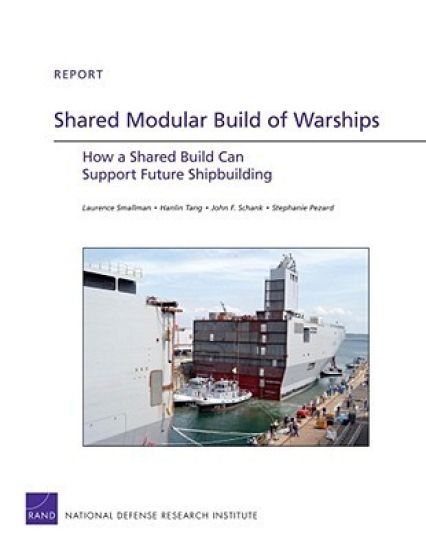
Shared Modular Build of Warships

Shared Modular Build of Warships

Laurence Smallman; Tang Hanlin; John F. Schank; Stephanie Pezard

RAND
2011
pokkari
Some recent shipbuilding programs in the United States and Europe have involved multiple shipyards constructing major modules of each ship for final integration and testing at one shipyard. The Navy needs to decide what it wants from a shared-build strategy, then monitor and manage the program to ensure that it delivers the required outcome, as well as the vessels called for in the program.
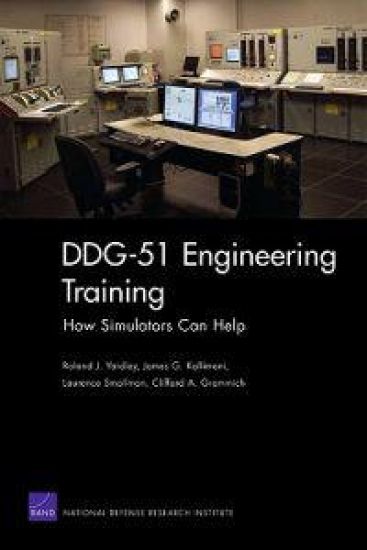
DDG-51 Engineering Training

DDG-51 Engineering Training

Roland J Yardley; James G Kallimani; Laurence Smallman; Clifford A Grammich

RAND
2009
pokkari
Much of the training for the engineering watchstanders of Arleigh Burke-class destroyers that is currently done underway could be done in port. Training could also be done on simulators at considerable savings in time, money, fuel, and ship wear and tear. This monograph discusses how training simulator use could improve engineering watchstanders' proficiency before ships go to sea, reserving time at sea for fine-tuning the training.
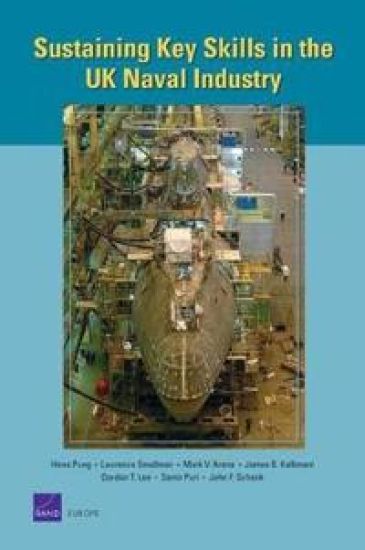
Sustaining Key Skills in the UK Naval Industry

Sustaining Key Skills in the UK Naval Industry

Hans Pung; Laurence Smallman; Mark V. Arena; James G. Kallimani; Gordon T. Lee; Samir Puri; John F. Schank

RAND
2008
pokkari
Building on prior RAND research, this monograph explores the need for and retention of technical skills in the UK's maritime industry, particularly among designers and engineers involved with surface ship and submarine acquisition and support. The results reveal that the UK's future naval programme likely will have to be modified or augmented to sustain these technical skills in the long term.
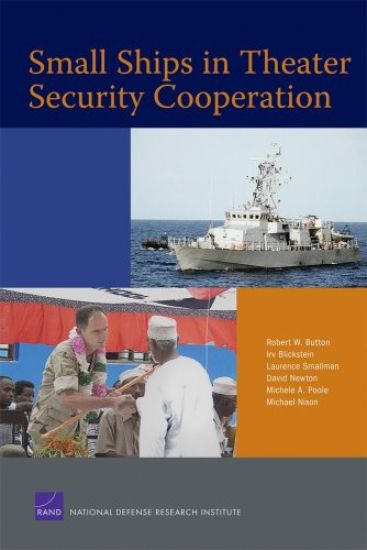
Small Ships in Theater Security Cooperation

Small Ships in Theater Security Cooperation

Robert W. Button; Irv Blickstein; Laurence Smallman; David Newton; Michele A. Poole; Michael Nixon

RAND
2008
pokkari
The authors evaluate the use of small ships in theater security cooperation (TSC). They provide the U.S. Navy with a concept of operation for small ships in TSC, necessary small ship characteristics, a survey of suitable ships, and recommendations for increasing the effectiveness of TSC operations conducted with a small vessel. The report concludes that, with a mothership, the PC-1 Cyclone Class would be fully capable for use in TSC.The authors evaluate roles for small ships in theater security cooperation, present a concept of operations for employing such ships, describe necessary ship and crew characteristics, and survey classes of suitable vessels.