Kirjojen hintavertailu. Mukana 12 638 946 kirjaa ja 12 kauppaa.

Kirjailija

Laurie Mook

Kirjat ja teokset yhdessä paikassa: 6 kirjaa, julkaisuja vuosilta 2012-2017, suosituimpien joukossa Understanding the Social Economy. Vertaile teosten hintoja ja tarkista saatavuus suomalaisista kirjakaupoista.

6 kirjaa

Kirjojen julkaisuhaarukka 2012-2017.

Understanding the Social Economy

Understanding the Social Economy

Jack Quarter; Laurie Mook; Ann Armstrong

University of Toronto Press
2017
pokkari
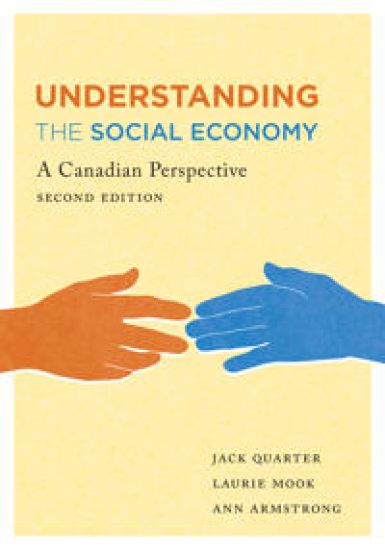
Suitable for courses addressing community economic development, non-profit organizations, co-operatives and the social economy more broadly, the second edition of Understanding the Social Economy expands on the authors’ ground-breaking examination of organizations founded on a social mission – social enterprises, non-profits, co-operatives, credit unions, and community development organizations. While the role of the private and public sectors are very much in the public light, the social economy is often taken for granted. However, try to imagine a society without the many forms of organizations that form the social economy: social service organizations, arts and recreation organizations, ethno-cultural associations, social clubs, self-help groups, universities and colleges, hospitals and other healthcare providers, foundations, housing co-operatives, or credit unions. Not only do these organizations provide valuable services, but they employ many people, and purchase goods and services. They are both social and economic entities. Understanding the Social Economy illustrates how organizations in the social economy interact with the other sectors of the economy and highlights the important social infrastructure that these organizations create. The second edition contains six new case studies as well three new chapters addressing leadership and strategic management, and human resources management. A much-needed work on an important but neglected facet of organizational studies, Understanding the Social Economy continues to be an invaluable resource for the classroom and for participants working in the social sector.

Understanding the Social Economy of the United States

Understanding the Social Economy of the United States

Laurie Mook; John R. Whitman; Jack Quarter; Ann Armstrong

University of Toronto Press
2015
sidottu
Understanding the Social Economy of the United States is a comprehensive introduction to the operation and study of organizations with social goals – public sector nonprofits, civil society organizations, social enterprises, cooperatives and other organizations with a social mission – under the rubric of the social economy. This text is rich in examples and case studies that explain the social economy framework in the context of the United States. The book not only highlights the differences between these organizations and traditional businesses, but also provides applied chapters on organizational development, strategic management and leadership, human resources, finance, and social accounting and accountability in social economy organizations. The perfect introduction to the social economy framework for students of nonprofit management, business, social entrepreneurship, and public policy, Understanding the Social Economy of the United States an invaluable resource for the classroom and for practitioners working in the social economy sector.
Understanding the Social Economy of the United States

Understanding the Social Economy of the United States

Laurie Mook; John R. Whitman; Jack Quarter; Ann Armstrong

University of Toronto Press
2015
pokkari
Understanding the Social Economy of the United States is a comprehensive introduction to the operation and study of organizations with social goals – public sector nonprofits, civil society organizations, social enterprises, cooperatives and other organizations with a social mission – under the rubric of the social economy. This text is rich in examples and case studies that explain the social economy framework in the context of the United States. The book not only highlights the differences between these organizations and traditional businesses, but also provides applied chapters on organizational development, strategic management and leadership, human resources, finance, and social accounting and accountability in social economy organizations. The perfect introduction to the social economy framework for students of nonprofit management, business, social entrepreneurship, and public policy, Understanding the Social Economy of the United States an invaluable resource for the classroom and for practitioners working in the social economy sector.
Accounting for Social Value

Accounting for Social Value

Laurie Mook

University of Toronto Press
2013
pokkari
When organizations use social accounting practices, they are able to measure their performance in terms of benefits accrued to key stakeholders such as their communities, human resources, and those investing in the organization. This innovative change in accounting can lead to a fundamentally different perspective on the value of an organization. Through case studies of organizations that have implemented social accounting in the United States, Canada, India, and Scotland, Accounting for Social Value provides a unique perspective for understanding key issues in this growing field. Building on two related titles, Researching the Social Economy (2010) and Businesses with a Difference (2012), Accounting for Social Value offers academics, accountants, policy-developers, and members of non-profit, co-operative, and for-profit organizations tools and insights to explore the connections between economic, social, and environmental dimensions. The lessons learned are valuable not only for other social economy organizations, but also for organizations in the public and for-profit sectors.
Businesses with a Difference

Businesses with a Difference

Laurie Mook; Jack Quarter; Sherida Ryan

University of Toronto Press
2012
sidottu
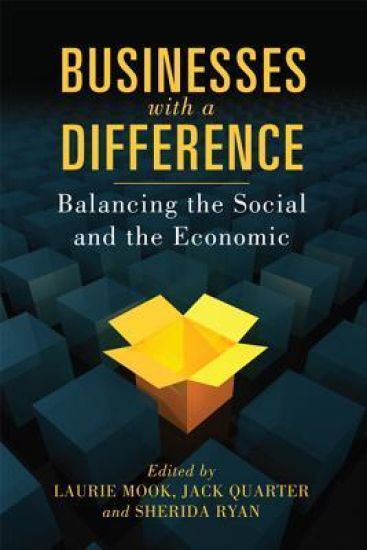
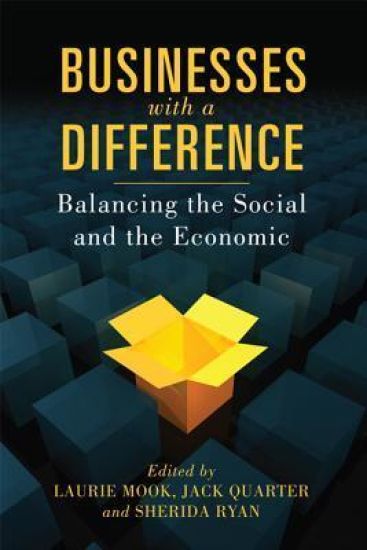
Market-based social economy firms such as social enterprises, social purpose businesses, co-operatives, credit unions, and community economic development corporations aim to meet distinct social needs while making money. Do these types of businesses have the potential for growth in the modern economy? Are they destined to function only in areas where conventional firms cannot achieve a sufficient rate of return? Or will the role of social economy organizations change as businesses begin placing more emphasis on corporate social responsibility? Building on the popular 2010 collection Researching the Social Economy, Businesses with a Difference explores the challenges and opportunities faced by firms that seek a genuine balance between their social and economic objectives. Through international case studies, including comparative analyses, this innovative collection highlights the unique issues that must be addressed when associations are accountable not to investors and shareholders, but instead to ordinary people.
Businesses with a Difference

Businesses with a Difference

Laurie Mook; Jack Quarter; Sherida Ryan

University of Toronto Press
2012
pokkari
Market-based social economy firms such as social enterprises, social purpose businesses, co-operatives, credit unions, and community economic development corporations aim to meet distinct social needs while making money. Do these types of businesses have the potential for growth in the modern economy? Are they destined to function only in areas where conventional firms cannot achieve a sufficient rate of return? Or will the role of social economy organizations change as businesses begin placing more emphasis on corporate social responsibility? Building on the popular 2010 collection Researching the Social Economy, Businesses with a Difference explores the challenges and opportunities faced by firms that seek a genuine balance between their social and economic objectives. Through international case studies, including comparative analyses, this innovative collection highlights the unique issues that must be addressed when associations are accountable not to investors and shareholders, but instead to ordinary people.