Kirjojen hintavertailu. Mukana 12 390 323 kirjaa ja 12 kauppaa.

Kirjailija

Laurier L. Schramm

Kirjat ja teokset yhdessä paikassa: 10 kirjaa, julkaisuja vuosilta 2001-2026, suosituimpien joukossa Gunnar Uranium Mine: Canada's Cold War Ghost Town. Vertaile teosten hintoja ja tarkista saatavuus suomalaisista kirjakaupoista.

10 kirjaa

Kirjojen julkaisuhaarukka 2001-2026.

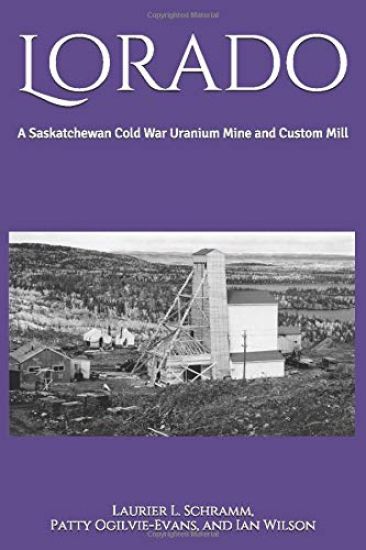
Lorado: A Saskatchewan Cold War Uranium Mine and Custom Mill

Lorado: A Saskatchewan Cold War Uranium Mine and Custom Mill

Patty Ogilvie-Evans; Ian Wilson; Laurier L. Schramm

Saskatchewan Research Council
2019
nidottu
The Lorado deposit was discovered in 1950 in a remote location in northern Saskatchewan, and just north of Lake Athabasca. Subsequent exploration and development led to a mine, mill, and associated campsites being built, all of which were fully operational by 1957. The Lorado mill was unique, having been designed to process ores from smaller, neighbouring mines that would otherwise not have succeeded. This made Lorado the third largest producer of uranium (yellowcake) concentrate in Saskatchewan and one of the top five in Canada during the Cold War era. By 1960 the markets for uranium had crashed and operations were closed but, having produced about 1,210 tonnes of uranium concentrate, Lorado had played a significant role in helping Canada become one of the largest uranium producers in the world. Beyond uranium, the Lorado mine produced about 500,000 m3 of highly acidic tailings, which entered nearby Nero Lake virtually destroying it. Following closure in 1960, the Lorado site stood abandoned for the next twenty years, until the site owners cleaned up most of the mine infrastructure in 1982, and the mill buildings in 1990. Another sixteen years would pass before the government of Saskatchewan stepped in and contracted the management of the rest of the remediation to the Saskatchewan Research Council (SRC). At the time of writing this book essentially all of the Lorado sites' remediation had been completed, with active monitoring in progress subsequent to ultimately releasing them into a long-term management and monitoring program.
Technological Innovation - An Introduction

Technological Innovation - An Introduction

Laurier L. Schramm

De Gruyter
2026
isokokoinen pokkari
The book introduces technological (commercial) innovation, beginning with what it is and is not, and how it is connected to economic growth. It then covers the pathways by which such innovations are created, the origins from which most of them arise, models of innovation generation, enablers and limitations governing success rates, and approaches to integrating innovation into new product development. At the organizational level, the book introduces the management of innovation and innovation culture, barriers, and strategy. At a higher level, the book covers innovation ecosystems, the institutional players and how they can optimally interact, the global eras and waves of innovation, and where they fi t in the technological ages of human history. This all comes together in an overview of innovation outputs and impacts at the organizational, regional, and national levels, and the connections to productivity and competitiveness. This edition also includes an extensive dictionary.
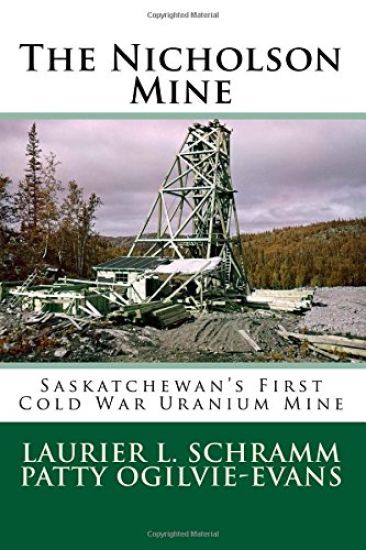
The Nicholson Mine: Saskatchewan's First Cold War Uranium Mine

The Nicholson Mine: Saskatchewan's First Cold War Uranium Mine

Patty Ogilvie-Evans; Laurier L. Schramm

Saskatchewan Research Council
2018
nidottu
The first discovery of uranium in Saskatchewan was at Nicholson Bay, in a remote northern location on the shore of Lake Athabasca. Uranium was first noted at what became the Nicholson site in 1929 when uranium was only of interest as an indicator of radium potential. When uranium ores became of strategic national interest in about 1940, a cross-Canada search was launched to find uranium deposits. The first to be found and developed was in the Northwest Territories. The second arose from a return to exploration at the Nicholson site in the Beaverlodge area in 1944. The Nicholson mine was the first uranium mine to be developed in Saskatchewan and, in 1949 was the only active uranium mine in Canada outside of the Northwest Territories. By 1959 the Nicholson ore body had been essentially depleted, but the Nicholson mine had played its role in helping Canada become one of the largest uranium producers in the world. It produced about 12,800 tonnes of uranium ore, yielding about 50 tonnes of uranium (as U3O8), and an estimated 60- to 90 thousand m3 of waste rock. Following closure in 1960, the Nicholson site was abandoned with little remediation and no reclamation being done. Forty-five years would pass before the governments of Saskatchewan and Canada reached an agreement to fund the remediation (clean-up) of the Nicholson site, and contracted the management of the project to the Saskatchewan Research Council (SRC). At the time of writing this book the clean-up was about to begin, with several years of clean-up activity anticipated, and then a period subsequent monitoring activity, before the site is expected to be released into a long-term management and monitoring program.
Emulsions, Foams, Suspensions, and Aerosols

Emulsions, Foams, Suspensions, and Aerosols

Laurier L. Schramm

Wiley-VCH Verlag GmbH
2014
sidottu
This is the first book to provide an integrated introduction to the nature, formation and occurrence, stability, propagation, and uses of the most common types of colloidal dispersion in the process-related industries. The primary focus is on the applications of the principles, paying attention to practical processes and problems. This is done both as part of the treatment of the fundamentals, where appropriate, and also in the separate sections devoted to specifi c kinds of industries. Throughout, the treatment is integrated, with the principles of colloid and interface science common to each dispersion type presented for each major physical property class, followed by separate treatments of features unique to emulsions, foams, or suspensions. The first half of the book introduces the fundamental principles, introducing readers to suspension formation and stability, characterization, and fl ow properties, emphasizing practical aspects throughout. The following chapters discuss a wide range of industrial applications and examples, serving to emphasize the diff erent methodologies that have been successfully applied. The author assumes no prior knowledge of colloid chemistry and, with its glossary of key terms, complete cross-referencing and indexing, this is a must-have for graduate and professional scientists and engineers who may encounter or use emulsions, foams, or suspensions, or combinations thereof, whether in process design, industrial production, or in related R&D fields.
Dictionary of Nanotechnology, Colloid and Interface Science

Dictionary of Nanotechnology, Colloid and Interface Science

Laurier L. Schramm

Wiley-VCH Verlag GmbH
2008
sidottu
This manageably sized dictionary covers theory, experiment, industrial practice and applications for nanotechnology, colloid, and interface science, as well as much of what is now termed materials science. The comprehensive information is presented in several sections and formats: dictionary of terms, classification tables on colloid and nanomaterial types, and sub-term glossaries for specific phenomena, properties and methods. It offers both newly-coined as well as older terms whose meanings have changed, providing acronyms, synonyms, famous names, selected abbreviations, and cross-references. It also contains a historical overview, units and symbols, and a separate literature section for further reading and following-up on specific topics. An authoritative reference, vital for unhindered communication and knowledge transfer in this fast-growing and broadly interdisciplinary field.
Emulsions, Foams, and Suspensions: Fundamentals and Applications
Until now colloid science books have either been theoretical, or focused on specific types of dispersion, or on specific applications. This then is the first book to provide an integrated introduction to the nature, formation and occurrence, stability, propagation, and uses of the most common types of colloidal dispersion in the process-related industries. The primary focus is on the applications of the principles, paying attention to practical processes and problems. This is done both as part of the treatment of the fundamentals, where appropriate, and also in the separate sections devoted to specific kinds of industries. Throughout, the treatment is integrated, with the principles of colloid and interface science common to each dispersion type presented for each major physical property class, followed by separate treatments of features unique to emulsions, foams, or suspensions. The first half of the book introduces the fundamental principles, introducing readers to suspension formation and stability, characterization, and flow properties, emphasizing practical aspects throughout. The following chapters discuss a wide range of industrial applications and examples, serving to emphasize the different methodologies that have been successfully applied. Overall, the book shows how to approach making emulsions, foams, and suspensions with different useful properties, how to propagate them, and how to prevent their formation or destabilize them if necessary. The author assumes no prior knowledge of colloid chemistry and, with its glossary of key terms, complete cross-referencing and indexing, this is a must-have for graduate and professional scientists and engineers who may encounter or use emulsions, foams, or suspensions, or combinations thereof, whether in process design, industrial production, or in related R&D fields.
Dictionary of Colloid and Interface Science

Dictionary of Colloid and Interface Science

Laurier L. Schramm

John Wiley Sons Inc
2001
sidottu
An indispensable reference for professionals and students alike Dictionary of Colloid and Interface Science includes more than 300 terms, with tables, references, and a biographical section that puts important developments in colloid and interface science into historical perspective. This dictionary is appropriate for professionals and students alike, and proves itself to be a ready reference for navigating the colloidal and interfacial literature. A valuable working resource for chemists and chemical engineers, Dictionary of Colloid and Interface Science contains: * Concise definitions of key terms in colloid and interface science and their synonyms, abbreviations, and acronyms * Key equations and constants * Important named colloids and phenomena * Profiles of over 60 major names in colloid and interface science