Kirjojen hintavertailu. Mukana 12 390 323 kirjaa ja 12 kauppaa.
Kirjailija
Lavinia Cohn-Sherbok
Kirjat ja teokset yhdessä paikassa: 7 kirjaa, julkaisuja vuosilta 1996-2010, suosituimpien joukossa Judaism. Vertaile teosten hintoja ja tarkista saatavuus suomalaisista kirjakaupoista.
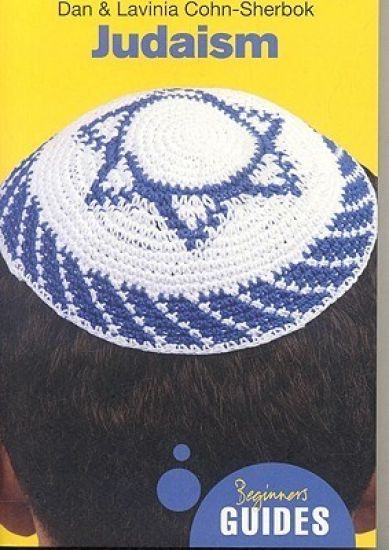
In this clear and authoritative guide, Lavinia and Dan Cohn-Sherbok concisely examine the Jewish faith and its practices and explore what it really means to be a Jew today. From the nature of God to the divisions within Judaism and from worship to everyday customs, this introduction covers all the topics essential to an informed understanding of this highly influential 3000-year-old faith and its enduring traditions.
Who's Who in Christianity is an invaluable reference guide to the leading men and women who have influenced the course of Christian history, including the founding fathers, saints, popes, monarchs, philanthropists, theologians, missionaries and heretics.The book encompasses both Eastern and Western churches and the lives and opinions of personalities who have shaped the past twenty Christian centuries, from Jesus of Galilee to Pope John Paul II, and from Paul of Tarsus to Mother Teresa.
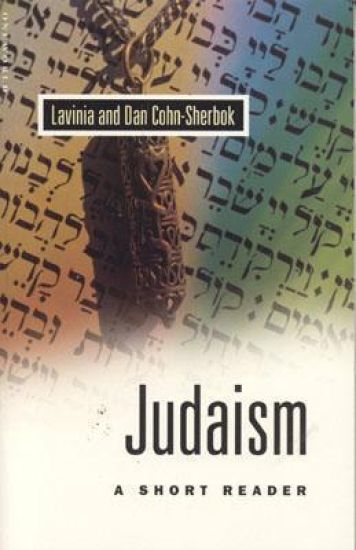
This reader includes extracts from a wide variety of sources, from the Pentateuch and the Talmud of ancient history, through to modern Jewish documents. Among the areas covered by this wide array of literature are the exile of the Jews, Rabbinic Judaism, philosophy, mysticism, Anti-Semitism and Zionism, the Holocaust and its aftermath, and the challenges facing today's Jewish community.
This book covers all the elements of Jewish history, from the times of the Ancient Middle East, Mesopotamia and Babylon, to the Jewish diaspora today. It opens with a consideration of the background to the Jewish faith, and its emergence from the Ancient Middle East. It then considers the Pentateuch, its origins, status, and the various different sources. The book then moves on to the themes of conquest and exile, through the Northern Kingdom, the Babylonian conquest and the Maccabean Revolt. Chapter 5 considers Rabbinic Judaism and the Academy at Javneb, while Chapter 6 examines the dispersion of Jews, in the Roman Empire, under early Islamic rule, and in Christian Europe. Chapter 7 studies the Jewish philosophical tradition, while Chapter 8 outlines the origins of Jewish mysticism, including information on the Kabbalah and the Zohar. Chapter 9 is a study of Jewry in Eastern Europe, while Chapter 10 addresses progressive Judaism and the Reform Movement. Chapters 11 and 12 deal with Anti-Semitism, Zionism and the Holocaust; the book closes with a consideration of the challenges facing the Jewish community today, including coverage of the state of Israel and the role of feminism.
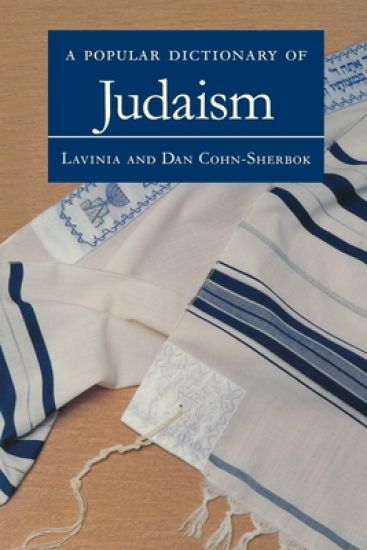
This concise dictionary of Judaism contains over a thousand entries describing all the key aspects of religion, culture and history in the Jewish faith. Designed for the student as well as the general reader, it deserves a place in every library and every Jewish home.
Beginning with the earliest philosopher of the Middle Ages, Saadiah ben Joseph al-Fayyumi, this work surveys the writings of such figures as Solomon ben Joseph ibn Gabirol, Bahya ben Joseph ibn Pakuda, Abraham ben david Halevi ibn Daud, Judah Halevi, Moses Maimonides, Gersonides, Hasdai Crescas, Simon ben Zemah Duran, Joseph Albo, Isaac Arama, and Isaac Abrabanel. Throughout an attempt is made to place these thinkers in an historical context and describe their contributions to the history of Jewish medieval thought in simple and lucid terms. The book is directed to students enrolled in Jewish studies courses as well as to those who seek an awareness and appreciation of the riches of medieval Jewish philosophical tradition.
Beginning with the earliest philosopher of the Middle Ages, Saadiah ben Joseph al-Fayyumi, this work surveys the writings of such figures as Solomon ben Joseph ibn Gabirol, Bahya ben Joseph ibn Pakuda, Abraham ben david Halevi ibn Daud, Judah Halevi, Moses Maimonides, Gersonides, Hasdai Crescas, Simon ben Zemah Duran, Joseph Albo, Isaac Arama, and Isaac Abrabanel. Throughout an attempt is made to place these thinkers in an historical context and describe their contributions to the history of Jewish medieval thought in simple and lucid terms. The book is directed to students enrolled in Jewish studies courses as well as to those who seek an awareness and appreciation of the riches of medieval Jewish philosophical tradition.