Kirjojen hintavertailu. Mukana 12 343 268 kirjaa ja 12 kauppaa.

Kirjailija

Lawrence Block

Kirjat ja teokset yhdessä paikassa: 305 kirjaa, julkaisuja vuosilta 1994-2025, suosituimpien joukossa Have a NYC 3. Vertaile teosten hintoja ja tarkista saatavuus suomalaisista kirjakaupoista.

305 kirjaa

Kirjojen julkaisuhaarukka 1994-2025.

High School Sex Club

High School Sex Club

Lawrence Block

LB Productions
2019
pokkari
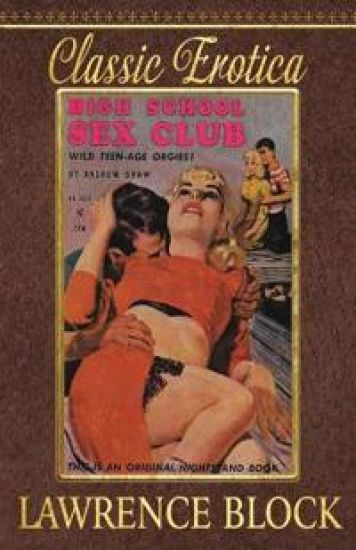
From the author: When I was sifting through copies of my pseudonymous erotic novels of the early 1960s, deciding which books to republish, HIGH SCHOOL SEX CLUB didn't make the initial cut. While it's true that it was once mentioned in the same breath as WAR AND PEACE ("Andrew Shaw's HIGH SCHOOL SEX CLUB is, it must be said, no WAR AND PEACE." --Philomela Triolet, The Hartshorn Review) it could probably disappear forever with the world of American letters being none the poorer for its absence. I know that's hard to believe, given the really classy title I hung on the book, but Im afraid it's true. So why is it here? I guess because of the book's status as an artifact of its time. I'm not entirely sure of this, I can't document it, but I was given to understand back in the day that several booksellers were brought up on charges for selling HIGH SCHOOL SEX CLUB, and one or two of them may even have gone to prison for it. This may well seem incredible in the second decade of the 21st century. The reader will note that the book contains none of the seven words the great George Carlin immortalized as "Words I can't say on TV," and Carlin's list itself is quaint enough now that the only seven words you can't utter on that medium are "Why are we watching all this crap?" Those of us who toiled in this particular vineyard made do without such words, and without precisely describing who was doing what and with which and to whom--and bore this handicap stoically while writing with the singular goal of making our books as erotically stimulating as we possibly could. To what extent HIGH SCHOOL SEX CLUB achieves that goal is not for me to say. The set-up lends itself to that end, with seventeen students and one rich and spoiled libertine ten years their senior organized for weekly orgies. Then--spoiler alert --something goes wrong, and, as I'd have had to say back then, the spit hits the fan. And then the boiler blows up and kills them all. (A story, perhaps apocryphal, to explain that last sentence. There was this brilliantly talented albeit unpublished writer, I'd been given to understand, who would write one novel after another, each building up to the brink of a conclusion, and then ending abruptly with a one-sentence chapter: "And then the boiler blew up and killed them all." They could be out in the middle of the desert, a hundred miles from the nearest boiler. It didn't matter. That's what he wrote, at least according to this tale told in publishing circles, and one can very likely infer what might have been the seminal event in his own unhappy life. Never mind. Something evidently made authorities in various jurisdictions across the country single out HIGH SCHOOL SEX CLUB for censorship and suppression. Really? Hard to say, but it seems to be unarguable that Nightstand Books never did a second printing, or any other sort of latter-day reissue thereof. It couldn't have been good taste or literary sensibilities that kept the book out of print, as neither weighed heavily in their decisions. Perhaps it was the book's own history. In the face of all of the above, could I fail to offer you the opportunity to read the chilling account of Dean Hanson and his adolescent followers? I think not. Here it is, so read it or don't, and make what you will of it.
The Twisted Ones

The Twisted Ones

Lawrence Block

LB Productions
2019
pokkari
From the author: You might be surprised to learn that back in 1961 Nightstand Books published an inquiry into the heartbreak of scoliosis, but--oh, hang on a minute. You say the title refers to characters who are not spinally but psychosexually bent?Oh.Well, never mind.Dave and Nancy Grantland look for all the world like happy couple leading a comfortable suburban lifestyle. And Lucy King, the regular babysitter for the Gavilans next door, looks for all the world like a normal teenager.But Dave's lost interest in sex with his wife, as he increasingly becomes obsessed with the desire for a much younger partner. Not a Lolita, exactly, but someone a few years under the age of consent.And Nancy's recalling her college days as what we've since learned to call a LUG. (That's Lesbian Until Graduation. But you knew that, right?)And Lucy's ready for sexual experience, but with whom? Someone more knowledgable than her oafish boyfriend?Dave finds a caf in the West 20s where a man named Hassan can supply anything he wants. Nancy finds a job working for a woman named Bobbie, who can supply anything she wants. Lucy finds a man who'll teach her what she wants to learn--and what she doesn't.Can you see where this is going? Well, along the way you'll get to look over Dave's shoulder as he watches a pornographic movie, courtesy of Hassan.I'm not sure which book was the first in which I employed this device, but the editors at Nightstand thought it was a great way to spice up the books, and I was encouraged to include such scenarios in future books. Well, you know, you didn't have to tell me twice...A Google search advises me that in 1959, two years before this book appeared, Gold Medal published Marijane Meaker's suspense novel, The Twisted Ones, under her pen name of Vin Packer. My guess is that it's a better book than mine, but who's to say you won't enjoy them both?
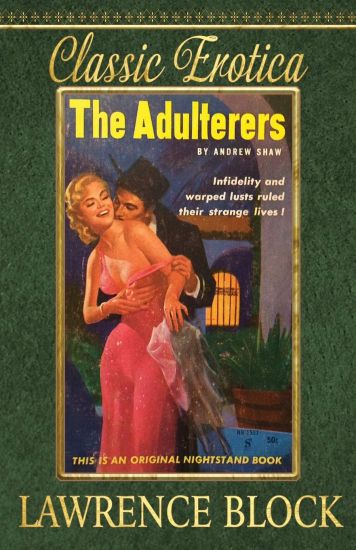
The Adulterers

The Adulterers

Lawrence Block

LB Productions
2019
pokkari
From the author: "Dear Larry, I just finished your The Adulterers. What I found remarkable is that as early as the first few pages, the book read like you, meaning the expository narrative flowed as smoothly as rushing water over rocks. (The only cliche I will allow myself in this short note). And the hooking of the reader into the story, and creating a sense of sympathy for both the husband and the wife, all seemed as effective and effortless as in your (thankfully many) later and better books. Amazingly, you were you, even before Tanner, Bernie, Matthew, or Martin. I found that simply astounding." That's a recent note from a longtime reader and fan. And here's LB's description of the book: "Ah, yes. THE ADULTERATORS, the thrilling account of a couple of desperadoes whose violation of the Pure Food and Drug Act brought a nauseated nation to its knees, and-- "Oh, it's THE ADULTERERS? Oh. Well, never mind. "THE ADULTERERS was my second effort for Bill Hamling's Nightstand Books. Like its predecessor, CAMPUS TRAMP, its cover was the work of Harold W. McCauley. I wrote the book in the fall of 1959, and it's not hard to find its beginning in my own life a little over a year earlier. In May of 1958 I left the employ of Scott Meredith and went home to Buffalo, where I wrote my first novel, STRANGE ARE THE WAYS OF LOVE. Then, with my friend and Antioch roommate Steve Schwerner, I headed to Mexico to devote two months to rest and recreation before returning for another year at the college. "We flew to Houston, hitchhiked to Laredo--and that last empty stretch of road from Freer to Laredo, where the book begins, bas not faded from memory. We were a long time waiting for a ride, and learned later it was because nobody wanted to pick up a hitchhiker on that stretch of highway; if you did and he put you out of the car, you'd die out there. Well, the guys who picked us up weren't worried. They were Tex-Mex gangsters in a block-long Caddy, and the car's welcome A/C was cool, but they were way cooler. "THE ADULTERERS features George and Mona Sutton, a sexually incompatible couple on their way to a Mexican divorce. But they meet a helpful guide named Ernesto, and that changes everything. Now Steve and I had met an Ernesto of our own, and he was helpful enough to steer us to some pot, but this Ernesto took George to a live sex show, and it made an impression on the fellow. And, not too long afterward, Mona drank enough rum and Coca-Cola to float a light cruiser, and wound up as the sex slave of El Tigre, who might have been a narco-trafficker if the career category had existed back then. "So it's a story of evolving depravity. And it's dedicated, you'll note, to Steve and Letitia. You already know who Steve is. Letitia was a young woman at work in one of the establishments we visited, and he became quite fond of her. But, you know, those summer romances never work out..."
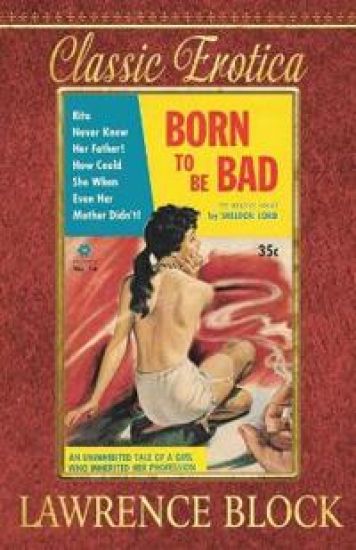
Born to Be Bad

Born to Be Bad

Lawrence Block

LB Productions
2019
pokkari
From the author: When I decided to reissue my early books in the Collection of Classic Erotica, I did so without realizing what I was getting myself into. I would have to read them again. Or, as in the case of BORN TO BE BAD, I'd have to read them for the first time.I remembered just three things about the book. (1) The title, BORN TO BE BAD. (My mother, on hearing about the novel, suggested that BORN TO BE BANGED might have been a superior choice.) (2) The name of the heroine, Rita Morales. (My mother, bless her heart, thought Rita Immorales might better suit the character.) (3) The circumstances of the writing--that it was the fall of 1958, that I had just returned to Antioch College after a gap year with a literary agency, that I wrote it on an office-model Remington typewriter in the office of the Antioch College Record, where I was serving as Managing Editor prior to assuming the full-time editorship the following semester, and that between the newspaper and the books I was writing, I was devoting precious little time to my classes. When I was supposed to be reading PARADISE LOST, by John Milton, and Roderick Random, by Tobias Smollett, I was instead writing BORN TO BE BAD, by Sheldon Lord. It was my third novel for Harry Shorten at Midwood Books, and you'd think I might have a clearer recollection of the circumstances of writing it, if not of the book itself. At the very least, I'd have expected to have a good number of Oh Yeah moments while reading it. "Oh yeah, I remember that character. Oh yeah, I remember that scene. Oh yeah, I remember cooking up that plot twist." Nope. It was all remarkably new to me--and I drew great comfort from the discovery that it was better than I'd expected. It's the story of the daughter of a Cuban prostitute from the slums of Miami who goes to New York, breaks into show business, moves from a Times Square hotel room to a Greenwich Village apartment, and takes aim at a life of middle-class respectability. She meets some unusual people and does some unusual things, and stuff happens. And you know what? It's not bad. Still, let's keep Rita's bildungsroman in perspective. She's no Becky Sharp, and BORN TO BE BAD's not on the same shelf as Vanity Fair. (Uh, that's be the novel, by William Makepeace Thackeray, not the magazine. But you knew that, right?)Never mind. I can but hope you enjoy BORN TO BE BAD as much in your first reading of it as I did just now, in mine. I should mention that the cover is by the great Paul Rader, who did so many outstanding covers for Midwood. The book sported a different cover in 1962, when Midwood reissued it with the title PUTA. Then, five years later, they trotted it out again with a third cover and its original title restored. So I guess they must have sold a few copies over the years, but I never got anything beyond the original $600 advance. But you know what? I'm okay with it.
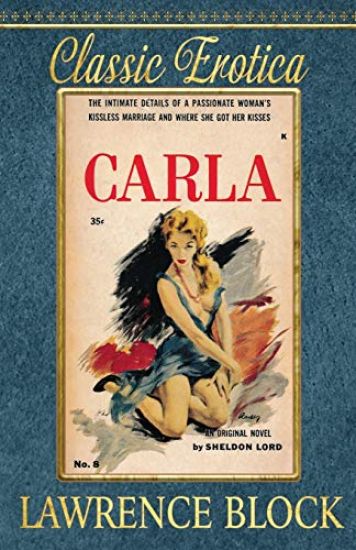
Carla

Carla

Lawrence Block

LB Productions
2019
pokkari
Carla is a beautiful girl. She was plucked from the obscurity of a Polish slum to be the wife of a wealthy man--a man who seemingly gives her everything a wife could want. Except the one thing that she needs most: the pleasure she burns for while he snores beside her, the passion that only a lover can give. But adultery seems impossible until, suddenly, it happens. When she seduces a filling-station attendant, ruining her clothes in the grease of a mechanic's floor, she starts to spin out of control. He is the first but not the last, as Carla learns that infidelity is no work at all.From the author...Carla was my first published novel. In the summer of 1958 I came home from a vacation in Mexico to a note from my agent: Did I know what a sex novel was? Could I write one? We both knew I could write a book, I'd sent him one then under consideration at Gold Medal, and now I sat down and wrote a portion and outline of a book to be set in my hometown of Buffalo, where I was spending what remained of the summer before going back to college in the fall. Midway Tower Books, a new publisher founded by Harry Shorten of Archie Comics, lapped up Carla, so to speak. I met Harry some months later, and all he wanted to talk about was the scene in the grease put at the gas station. I guess it really worked for him. One other thing perhaps worth noting. After my portion and outline had been okayed, I completed the book. Then my agent let me know that it was a little too short. Could I please write another chapter to be inserted anywhere in the book? That was a poser, as the plot--such as it was--didn't have a lot of leftover space in it. But I figured out what to write, and sent along a chapter with the notation that it could indeed be inserted anywhere in the book. My good buddy Don Westlake, who also labored some in the Shorten vineyard, thought this was a remarkable tour de force, but I'm not so sure. I mean, what else was I supposed to do? You can probably spot the chapter in question. As I said, Carla was my first published book, and that's reason enough for me to be pleased by its renewed availability. It may even be reason enough for you to read it. I'd hope, though, that it's not your very first exposure to my work. Still, if it is, there's a bright side. From here on, they get better.
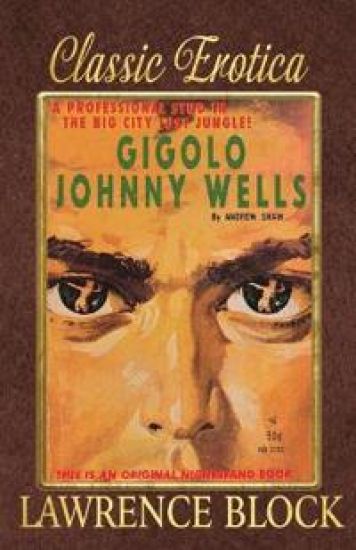
Gigolo Johnny Wells

Gigolo Johnny Wells

Lawrence Block

LB Productions
2019
pokkari
17-year-old Johnny Wells was a very handsome young man, and you'd have called him a babe magnet, but I'm afraid they didn't have that phrase back in 1961. He decided to capitalize on his looks and the response they earned from women, invested in a haircut and a good wardrobe, moved out of his slum apartment and into a budget hotel, and reinvented himself as a gigolo.
21 Gay Street

21 Gay Street

Lawrence Block

LB Productions
2019
pokkari
When Joyce Kendall arrives in New York, fresh out of Clifton College in Iowa, she has a job and an apartment waiting for her. The job's as a first reader for Armageddon Publications. The apartment's at 21 Gay Street, and the small Federal-period house is already home to a lesbian couple, Jean Fitzgerald and Terri Leigh, and an out-of-work newspaperman, Pete Galton. The relationships of these four people under one roof add up to a fast-paced story that is not only satisfying fiction but a rare window on Bohemian life in the late 1950s. A drug-fueled rent-party-turned-orgy at the apartment of one Fred Koans is just link to a world some older readers may recall. Gay Street, in the heart of Greenwich Village, runs for only a single block between Christopher Street and Waverly Place. The 1943 movie A Night to Remember portrays 13 Gay Street as the address of the building where most of the action, including a murder, occurs. In 1996, Sheryl Crow made a video on Gay Street for the song "A Change Would Do You Good." 21 Gay Street, a very early Lawrence Block novel, was originally published under the pen name Sheldon Lord. It was never reprinted after its initial publication in 1960 until now.
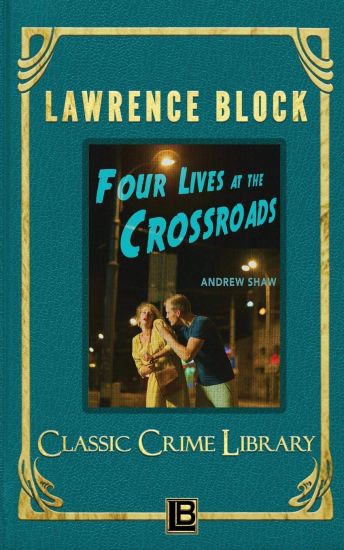
Four Lives at the Crossroads

Four Lives at the Crossroads

Lawrence Block

LB Productions
2019
pokkari
From the author...Back in the late 1950s and early 60s, when I was finding myself as a writer and producing a great quantity of books under pen names, some of the books I wrote were as much crime fiction as they were erotica. Indeed, several of those titles by Andrew Shaw and Sheldon Lord have since been republished under my own name by Hard Case Crime and Subterranean Press--and subsequently astonished me by garnering respectful reviews. BORDERLINE, LUCKY AT CARDS, and A DIET OF TREACLE are examples, and so to a degree is my forthcoming Hard Case title, SINNER MAN. A little light editing made them acceptable crime fiction for a contemporary body of readers. FOUR LIVES AT THE CROSSROADS almost made the cut. After Charles Ardai at Hard Case considered it and ultimately decided against it, I decided to shoehorn it into the Collection of Classic Erotica, but reader reactions have since persuaded me that it's really more a crime novel. A dark, savage tale of an armed robbery gone wrong, It's a better fit in the Classic Crime Library. I did some light editing anyway, much of which consisted of reversing the helpful contributions of some unnamed editor at Nightstand Books. So here's FOUR LIVES AT THE CROSSROADS, available for the first time since its initial appearance in 1962. I can but hope you'll enjoy it.
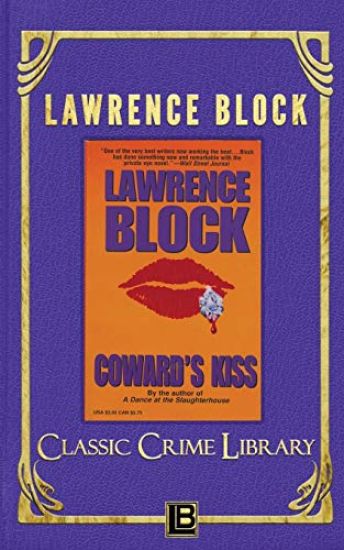
Coward's Kiss

Coward's Kiss

Lawrence Block

LB Productions
2019
pokkari
"Ed London is the kind of private investigator you call to clean up the mess when your mistress turns up dead. But after he dumps a body in Central Park, it appears this case is still alive and kicking. Seems that the dead girl was in possession of something special that some very shady characters want back. Now Ed, along with his actress friend Maddy, will have to crack the case before he ends up dead himself. But there's more than a murder here; there's missing jewels, Israeli intelligence, Nazi spies, and a host of double-dealing, backstabbing thieves." Coward's Kiss started life as a tie-in novel for Belmont Books, linked to the TV series Markham, starring Ray Milland. When a very young Lawrence Block turned in the book, his agent sent it instead to Knox Burger at Gold Medal, who shared the agent's enthusiasm. Block rewrote the book, changing Roy to Ed and Markham to London, and Gold Medal published the book with the unfortunate title of Death Pulls a Doublecross. After fulfilling his assignment by writing another book for Belmont (You Could Call It Murder, Classic Crime Library #12) Block tried to write a second Ed London novel, but somehow never managed it. He did write three magazine novelettes with London, and you can find them in One Night Stands and Lost Weekends, a collection of his earliest pulp work. The legendary Anthony Boucher gave the book a nice review in the New York Times Book Review, and if Lawrence Block had the sense to hang on to things, we'd reproduce it here. But he doesn't, so you'll have to take our word for it.
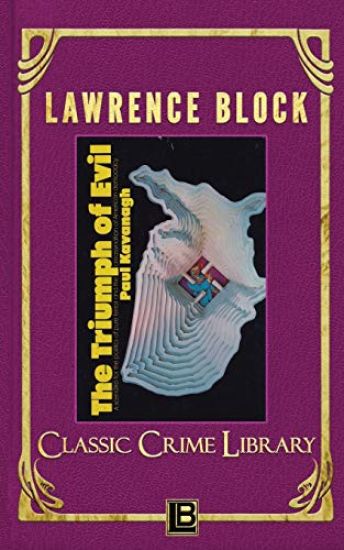
The Triumph of Evil

The Triumph of Evil

Lawrence Block

LB Productions
2019
pokkari
"If you're not part of the solution, you must be part of the problem." You heard that a lot in the early 1970s, when the country seemed to be teetering on the brink of revolutionary upheaval. Miles Dorn, living quietly in retirement in the U.S., had come a long way from his roots in Central Europe, leaving his past as an assassin and agent provocateur behind him. But as soon as he walks into his house and smells the smoke from a Turkish cigarette, he knows nobody can walk away from the past. It's always there, and it can reach out at any moment and get hold of you. He's recruited for a series of assassinations designed to render his adopted country vulnerable to a political coup. Instead of the elaborate web that's the staple of conspiracy theorists, he's one man, working alone. He's also a man falling in love, and with a woman a generation too young for him. "We're the same age, Miles," she insists. "I've known you for exactly as long as you've known me." Of course he likes the sound of that, but he knows better than to believe it. Just as he knows better than to believe that their love affair--or anything else in his life--has a real chance of working out. But what can he do? Is Dorn part of the solution--or a principal part of the problem? The Triumph of Evil is a powerful evocation of perilous time in America's recent past. It's a thriller on a human scale, and you'll be stunned by its plausibility and gripped by its suspense.
Such Men Are Dangerous

Such Men Are Dangerous

Lawrence Block

LB Productions
2019
pokkari
"This goes through you like a dose of salts and stings like iodine." So said Virginia Kirkus Reviews of Such Men Are Dangerous when it first appeared almost fifty years ago, and since then this edge-of-the-chair novel hasn't lost a step. It's the story of Paul Kavanagh, a burnt-out ex-Green Beret who copes with what we've since learned to call PTSD by retiring to a dime-sized islet in the Florida Keys. There he lives a determinedly simple life, his human contact limited to a weekly visit to a storekeeper on a nearby island. Then George Dattner turns up with a plan. A CIA op, he has inside knowledge of a scheduled shipment of military goods from an army base in South Dakota. It's really nasty stuff--atomic grenades, lethal gas, tactical weaponry that could be a game-changer for a border war or insurgency. And he's got a buyer lined up. All he needs is a partner, because the way he's got it figured, hijacking the shipment is a job that the right two men can pull off. Kavanagh signs on. The operation is brilliantly planned and executed, but not without a few surprises along the way. But the greatest surprise of all is a shocking denouement that will hit you as hard as it hit readers half a century ago. This Classic Crime Library ebook edition of Such Men Are Dangerous contains as a bonus the opening chapter of the next book in the series, Not Comin' Home to You.
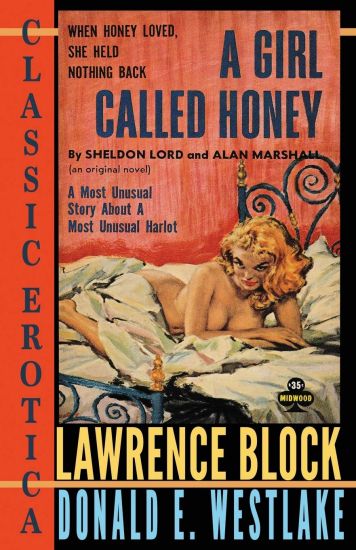
A Girl Called Honey

A Girl Called Honey

Lawrence Block

LB Productions
2019
pokkari
From the author: When Don Westlake and I were starting out as writers, we both served an apprenticeship writing erotic novels for Harry Shorten at Midwood Books and Bill Hamling at Nightstand. (I was Sheldon Lord for Midwood and Andrew Shaw for Nightstand, while Don was Alan Marshall for both publishers. Note though that the presence of either name upon a book is no guarantee that one of us wrote it. Both of us made arrangements whereby lesser writers would submit works under our names--and I know it's hard to believe that any writers were less than we were back then, but it's true.) Well. We'd become friends in the summer of 1959, while we were living a few blocks away from each other in midtown Manhattan. I was at the Hotel Rio, on West 47th between Sixth and Seventh Avenues, and Don was a block south and several blocks west of me. Then I moved back to my parents' house in Buffalo, and Don and his wife and kid moved to Canarsie, and we wrote letters back and forth. And at one point we decided it might be fun to do a novel together. Not by thinking it out and talking through it and, you know, collaborating in a serious artistic manner. Our method was simpler. One of us would write a chapter, and then the other would write a chapter to come after it, and back and forth, like that, until we had a book. It worked, and by God it was fun. The first of our efforts was A GIRL CALLED HONEY, and it started when I wrote a chapter and sent it to Don. And so on, and we left each other cliffhangers and threw each other's characters off those cliffs, and we stopped when we had a book, and sent it to Henry Morrison who sent it to Harry Shorten. We put both our names on the book, our pen names that is to say, and that's how Harry published it: by Sheldon Lord and Alan Marshall. And he included our dedication: "To Don Westlake and Larry Block, who introduced us." It was so much fun that we did it again. This time Don wrote the first chapter, and I wrote the second. Was I still in Buffalo, and did we still send the chapters through the mail? Damned if I can remember. I think I may have been in New York by then, living with my first wife on West 69th Street. But maybe not, and what does it matter? We finished the book, we sent it in, Midwood published it, and we shared the advance, which was probably $600 for A GIRL CALLED HONEY, but may have escalated to $750 by the time we did SO WILLING. So each of us wound up with either $300 or $375 for our trouble, and that's not a lot of money nowadays, and it wasn't a lot of money in 1960 either, but neither was it a lot of trouble. Damn, those were good days. We did a third novel in collaboration, SIN HELLCAT, and I think it may have been the best of the three--but we didn't get to put a joint byline on it. Well, we did--but someone at Nightstand felt free to change it, dropping Alan Marshall from the "by Alan Marshall and Andrew Shaw" byline we'd supplied. Much the same thing happened to CIRCLE OF SINNERS, my collaboration for Nightstand with Hal Dresner; "By Andrew Shaw and Don Holliday" is what we tagged it, and this time it was Andrew Shaw who got bumped. Never mind. Here's the book that started it all, A GIRL CALLED HONEY--and if reading the saga of Honor Mercy Bane brings you a small fraction of the fun we had writing it, you'll be back right away to scoop up SO WILLING and SIN HELLCAT.
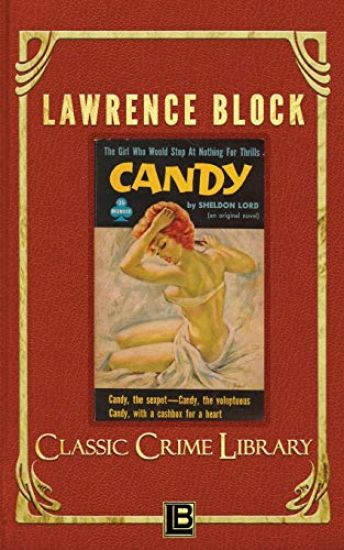
Candy

Candy

Lawrence Block

LB Productions
2019
pokkari
Jeff Flanders has a perfectly good life. Until Candace Cain sashays into it and turns it upside-down.Jeff's got a good-looking wife; he loves her and she loves him. He's got a job, swinging a desk at a semi-shady finance company, signing off on usurious loans to losers; he doesn't love it and it doesn't love him, but it's easy work and it pays the bills. Until a girl called Candy applies for a $1000 loan--with no job, no bank account, no security. Nothing but a beautiful face, an awesome body, and all the nerve in the world.He lends her the money himself. That's a mistake. In return, she takes him to bed. That's a bigger one. All she wants in the world is someone who'll keep her in style. All he wants is more Candy. . .CANDY, first published in 1960, is a noir novel of sexual obsession.
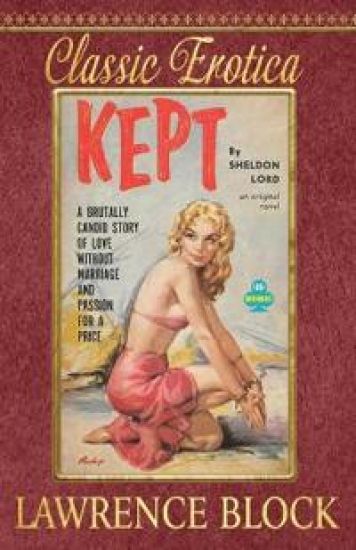
Kept

Kept

Lawrence Block

LB Productions
2019
pokkari
From the author: So you're unemployed, fresh off a construction crew in Albany, and standing on a Thruway ramp trying to thumb a ride, and a babe in a Cadillac convertible stops for you. Hey, these things happen. They never happened to me, but never mind. For you it's different. You're Mark Taggert and you've got the good sense to get in the car, and it changes your life. The girl's Elaine Rice, and she's gorgeous and sexy, and you wind up in her Park Avenue apartment, and you go to bed, and the chemistry is right, and there's only one problem. She's rich. Too rich for you to be comfortable living with her. You're totally lacking in ambition and quite happy drifting, going from town to town and menial job to menial job. It's a life and it's a living and that's enough for you. But if you're going to share Elaine's life, you have to make something of yourself. So you check out the want ads, and you let her buy you a wardrobe, and she fabricates a r sum for you, and you land a job. And you turn out to be remarkably good at it, but she's still got too much money, and you move out. And, you know, stuff happens... Pretty interesting set-up, innit? KEPT was the penultimate book Sheldon Lord wrote for Midwood--CANDY, #2 in the Collection of Classic Erotica, was the last--and it's a shame I stopped there. I understand why I did; I was starting to write crime novels, and didn't want to devote a disproportionate amount of my time to erotica, and Bill Hamling's line, Nightstand Books, was paying me significantly more per book than Harry Shorten at Midwood. Hello, Bill. G'bye, Harry. A pity, though, because Nightstand's artists never came close to the cover art Paul Rader was turning out for Midwood, and his cover for KEPT may be the best of the bunch.
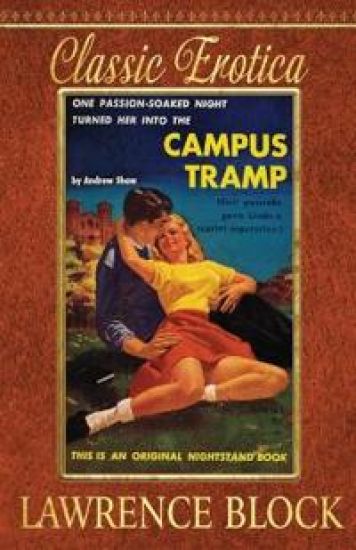
Campus Tramp

Campus Tramp

Lawrence Block

LB Productions
2019
pokkari
From the author: There's a song they used to sing at Antioch College, and it went something like this: "She was just a little freshman Victim of Admission's whim Then she met an upperclassman--we won't name him-- And she had a child by him. "Now he's off in New York City Rescued by the co-op plan While she walks the streets of Yellow Springs, Ohio, Looking for another man." Ah, they don't write 'em like that anymore, and it's not hard to see why. And the sad story recounted in the song is not entirely unlike that of Linda Shepard, titular (so to speak) heroine of CAMPUS TRAMP.The story of the book may be more interesting than the story told in the book. I wrote it in July of 1959, at the Hotel Rio on West 47th Street in New York. I'd just arrived from, yes, Yellow Springs, having spent a year writing books for Harry Shorten, editing the college newspaper, and giving short shrift to my academic studies. (This was my third year at Antioch. I was there for two years, took a year off to work at a literary agency, and then came back, only to discover that, having seen Paree, you couldn't keep me down on the farm. I tried to drop out during the first semester, got manipulated into staying by my parents, and somehow finished the year. Now I was in New York, where I was to spend the summer writing, before returning for what was supposed to be my last year of school.) Well. My agent came up with an assignment. William Hamling, publisher of science fiction and Rogue Magazine, had decided to initiate a line of erotic novels similar to what I'd been writing for Midwood. Could I write one? I could and did, and thought it might be amusing to use Antioch as a setting, and to choose the characters' surnames from the buildings and dormitory units on the Antioch campus. I picked the title CAMPUS TRAMP and sent it off, and they liked it well enough in Hamlingville (that would be Evanston, Illinois, IIRC) to ask for more. Not long after I'd finished the book, I got a letter from Yellow Springs. The Student Personnel Committee, having taken a long look at my academic performance, advised me of their decision that I might be happier elsewhere. I thought this was very perceptive of them, that I would indeed be happier almost anywhere else, and the passive-aggressive lout I was at the time found this an ideal resolution to a situation I seemed incapable of resolving on my own. Their letter had left the door slightly ajar, if not wide open; I sensed I could talk my way back in, but why?Then CAMPUS TRAMP came out, and a copy or two made it all the way to Yellow Springs, and a legend sprang up. I'd written the book as payback, it was said, a way to revenge myself upon the school that had expelled me. Now when I'd written CAMPUS TRAMP I'd still thought I was to return in the fall. And I was if anything profoundly grateful to the school for having cut the umbilical cord and sent me out into the world. No end of people knew better, even as they were sure they knew who the models were for the various characters--but that happens all the time. But never mind. One recalls the newspaperman's line from THE MAN WHO SHOT LIBERTY VALANCE: "When the legend becomes fact, print the legend "
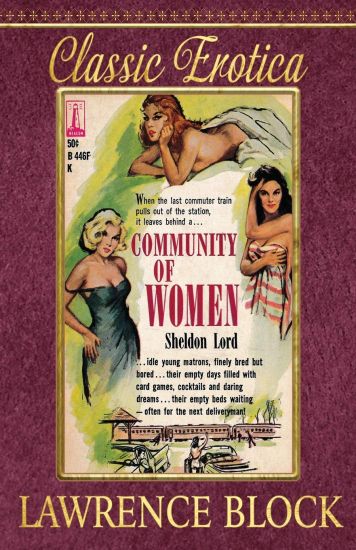
Community of Women

Community of Women

Lawrence Block

LB Productions
2019
pokkari
From the author: Sheldon Lord began his career with CARLA, published by Harry Shorten's Midwood Books in 1958. Just about a year later he wrote CAMPUS TRAMP for William Hamling's Nightstand Books, for whom he'd morphed into Andrew Shaw. And young Mr. Lord's first book for yet a third publisher, Beacon, was APRIL NORTH. Each publisher wanted more from the guy. Beacon's request for a second book was remarkably specific. They had a title in mind--COMMUNITY OF WOMEN--and a theme. Their notion was that no end of interesting and attractive couples lived in the suburbs, and five mornings a week virtually all of the husbands rode into Manhattan on the train, while their wives remained to do presumably wifely things at home. So during daytime hours, Monday through Friday, all of these wives constituted a...Community of Women. Which would make it a hotbed of, um, hot stuff.Duh. Well, it was an okay premise. I remember the occasion when it was delivered to me. I was in Buffalo, my ancestral home, on a brief visit. My agent called and recounted what Beacon had asked for. (That agent believed in keeping writers and publishers far apart. I did meet Harry Shorten once, at Harry's insistence, but never had any direct contact with anyone at Nightstand or Beacon.) "They need this as soon as possible," he added. I fell for this, of course. I always did. About a year earlier I was living on West 69th Street when the same agent told me that Monarch Books had an unfinished novel, the first chapters and outline of which had been written by William Ard, who'd died at what even then seemed like an impossibly young age. (Looking back, I can't avoid the thought that the one thing poor Bill Ard got out of his early death was that he didn't have to finish that goddam book.) So my job was to complete the book, which would put a few dollars in my pocket and a few more in the near-empty purse of Ard's widow. "And they need it right away..."Well, the hell they did. But I bought the notion, moved into a hotel on the corner of Broadway and 69th. I went there every morning and went home every night, and i finished that awful book. Are might have made something of it, he was a pretty good writer, but all I can say for myself is the book got written, and published. And it's not as though Monarch was holding the press for it. They published it whenever they got around to it. Same with Beacon and COMMUNITY OF WOMEN. Nobody there was holding his breath. But I believed what I was told, so I wrote it right there, sitting at a card table in the front room of my mother's house on Starin Avenue. I didn't know much about life in the suburbs, or about people who went to an office every morning and came home every night, but it wasn't hard to come up with characters and find ways for them to interact with one another. If I recall correctly (and how often does that happen?) it took me four or five days. I guess Beacon liked it well enough. They wanted more, and published several more of Sheldon Lord's efforts. And then, when they wanted still more and I had neither time nor inclination to write them, my agent suggested we find writers to ghost the books under Sheldon Lord's name; I'd receive a fee off the top for my involvement, with the balance to go to the actual writers. Consequently there are more than a few Sheldon Lord titles--specifically most of the ones for Beacon--which I neither wrote nor read.And so I've spared you a summary of COMMUNITY OF WOMEN, and gotten off the hook instead by taking this little trip down Memory Lane.
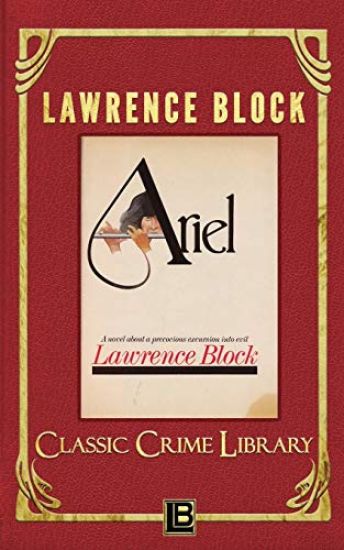
Ariel

Ariel

Lawrence Block

LB Productions
2019
pokkari
"Originally marketed as "occult horror", Ariel is neither. It's a story of the madness that lies just under the surface, and what it takes to bring it out; the need to give evil a face and a name. Who better to scapegoat for unexplainable tragedies than the one who is Different? Ariel is adopted, and looks slightly unusual. Her unstable mother never fails to assume the worst, almost deliberately misreading the girl's ordinary teenage perceptiveness and need for privacy. By the book's end, almost everyone believes that Ariel is a monster -- including Ariel herself. "Great characterizations, wonderful descriptions -- I want to live in Ariel's house. I could wish for a sequel, or just for more books like it." From Lawrence Block: A publisher provided the premise of Ariel--an adoption that went awry. I was in Charleston when I began the book, and chose that extraordinary city as its setting. I don't know to what extent the book works--I should note that not every reader agreed with the one quoted above--but I greatly enjoyed the interplay of Ariel and her friend Erskine, and on certain nights I can still hear her flute off in the distance.
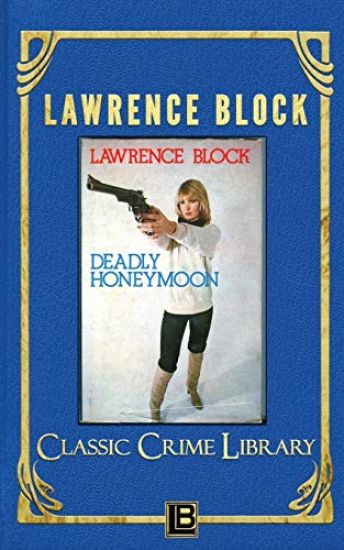
Deadly Honeymoon

Deadly Honeymoon

Lawrence Block

LB Productions
2019
pokkari
"You may rape the bride..." David and Jill Wade wanted a properly traditional start to their marriage. For openers, they decided to delay its consummation until after the ceremony. They planned a perfect honeymoon at a secluded lakeside resort in Pennsylvania's Pocono Mountains. Joe Carroll, the guest in the cabin next door, seemed friendly enough. They took his dinner suggestion, then returned to their cabin and prepared to retire--until a noise alerted them, and they went to the porch and watched a group of men descend on Joe Carroll's cabin. They dragged him out at gunpoint, then executed him in cold blood. And Jill screamed... The men heard her, rushed the Wade's cabin. They took their turns with Jill. Then they left. And the newlyweds barely considered reporting the violation to the police. Instead, with only a name and a few bare clues to steer them, they hunted down the men who'd done the awful deed and the crime boss who'd given them their orders. DEADLY HONEYMOON was Lawrence Block's first hardcover novel. It's a powerful tale of revenge, and of a man and woman far more closely bound by their shared mission than they would have been by a more ordinary honeymoon.
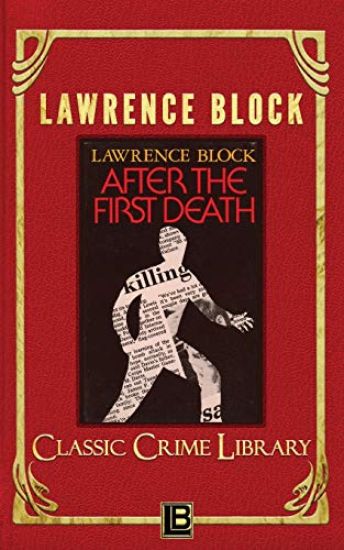
After the First Death

After the First Death

Lawrence Block

LB Productions
2019
pokkari
Alex Penn wakes up in a squalid Times Square hotel room. This is what he sees when he finally opens his eyes: "The floor was a sea of blood. A body floated upon this ocean. A girl--black hair, staring blue eyes, bloodless lips. Naked. Dead. Her throat slashed deeply. "It had to be a dream. It had to, had to be a dream. It was not a dream. It was not a dream at all. "I've done it again, I thought. Sweet Jesus, I've done it again." Years before, Alex Penn woke up in similar circumstances, called the police, went to prison. A technicality freed him--and now there's been another drunken blackout, another dead streetwalker. But something nags at his memory, and he begins to suspect some other hand wielded the knife. And if he didn't murder this woman, maybe he didn't kill the other one, either. So he runs, adrift in an urban jungle, hoping to steer clear of the police long enough to solve the crime. AFTER THE FIRST DEATH is sure to appeal to fans of David Goodis and Cornell Woolrich. And, with its gritty New York setting and its undercurrent of alcoholism, it can be considered a precursor to Lawrence Block's iconic Matthew Scudder series. THE CLASSIC CRIME LIBRARY brings together Lawrence Block's early crime novels, reformatted and with new uniform cover art.
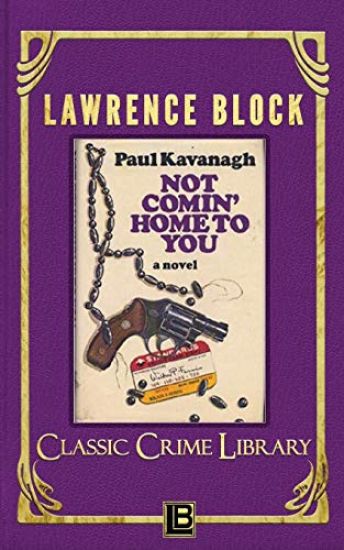
Not Comin' Home to You

Not Comin' Home to You

Lawrence Block

LB Productions
2019
pokkari
Jimmie John Hall wasn't anything until he was a killer, and Betty Dienhardt wasn't anything until she met Jimmie John Hall. When they get together, sparks fly and bullets follow. The first to go are Betty's parents, but Betty isn't bothered. She only wants to be with her man - the first person to ever make her feel special. They set off on a cross-country spree, killing for gas money and food, killing to swap their car for one the police aren't looking for. As the dragnet draws tighter, they only grow closer, riding a road that leads to death because death has surrounded them all the time. This novel derives from and was inspired by the real-life (and real death) rampage of Charles Starkweather and Caryl Fugate in 1950s Nebraska; the novel itself is set fifteen years later, and does not attempt a literal reconstruction of the original case. It's a powerful work of fiction, a penetrating look at two disturbed and disturbing individuals, and a breakneck tear across the American Midwest. Like Such Men Are Dangerous and The Triumph of Evil, it was originally published under LB's Paul Kavanagh pen name, but as soon as he could he resides all three books under his own name, and is pleased to make them available now in the Classic Crime Library.