Kirjojen hintavertailu. Mukana 12 595 353 kirjaa ja 12 kauppaa.

Kirjailija

Lawrence Blum

Kirjat ja teokset yhdessä paikassa: 6 kirjaa, julkaisuja vuosilta 2001-2021, suosituimpien joukossa "I'm not a Racist, but...". Vertaile teosten hintoja ja tarkista saatavuus suomalaisista kirjakaupoista.

6 kirjaa

Kirjojen julkaisuhaarukka 2001-2021.

Integrations

Integrations

Lawrence Blum; Zoë Burkholder

University of Chicago Press
2021
nidottu
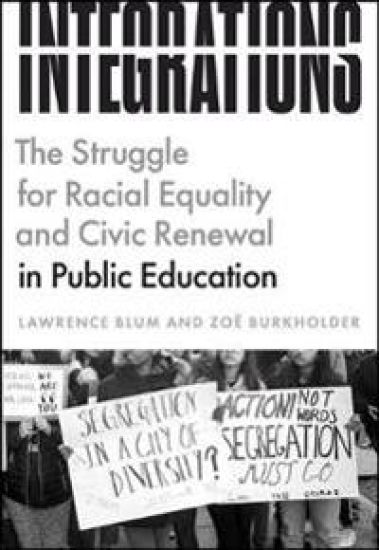
The promise of a free, high-quality public education is supposed to guarantee every child a shot at the American dream. But our widely segregated schools mean that many children of color do not have access to educational opportunities equal to those of their white peers. In Integrations, historian Zoë Burkholder and philosopher Lawrence Blum investigate what this country’s long history of school segregation means for achieving just and equitable educational opportunities in the United States. Integrations focuses on multiple marginalized groups in American schooling: African Americans, Native Americans, Latinxs, and Asian Americans. The authors show that in order to grapple with integration in a meaningful way, we must think of integration in the plural, both in its multiple histories and in the many possible definitions of and courses of action for integration. Ultimately, the authors show, integration cannot guarantee educational equality and justice, but it is an essential component of civic education that prepares students for life in our multiracial democracy.

Integrations

Integrations

Lawrence Blum; Zoë Burkholder

University of Chicago Press
2021
sidottu
The promise of a free, high-quality public education is supposed to guarantee every child a shot at the American dream. But our widely segregated schools mean that many children of color do not have access to educational opportunities equal to those of their white peers. In Integrations, historian Zoë Burkholder and philosopher Lawrence Blum investigate what this country’s long history of school segregation means for achieving just and equitable educational opportunities in the United States. Integrations focuses on multiple marginalized groups in American schooling: African Americans, Native Americans, Latinxs, and Asian Americans. The authors show that in order to grapple with integration in a meaningful way, we must think of integration in the plural, both in its multiple histories and in the many possible definitions of and courses of action for integration. Ultimately, the authors show, integration cannot guarantee educational equality and justice, but it is an essential component of civic education that prepares students for life in our multiracial democracy.
High Schools, Race and America's Future

High Schools, Race and America's Future

Lawrence Blum; Gloria Ladson-Billings

Harvard Educational Publishing Group
2012
nidottu
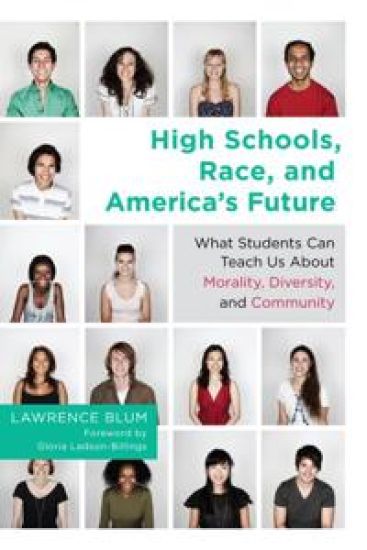
In High Schools, Race, and America’s Future, Lawrence Blum offers a lively account of a rigourous high school course on race and racism. Set in a racially, ethnically, and economically diverse high school, the book chronicles students’ engagement with one another, with a rich and challenging academic curriculum, and with questions that relate powerfully to their daily lives. Blum, an acclaimed moral philosopher whose work focuses on issues of race, reflects with candour, insight, and humour on the challenges and surprises encountered in teaching—the unexpected turns in conversation, the refreshing directness of students’ questions, the “aha” moments and the awkward ones, and the paradoxes of his own role as a white college professor teaching in a multiracial high school classroom. High Schools, Race, and America’s Future provides an invaluable resource for those who want to teach students to think deeply and talk productively about race.
High Schools, Race and America's Future

High Schools, Race and America's Future

Lawrence Blum; Gloria Ladson-Billings

Harvard Educational Publishing Group
2012
sidottu
In High Schools, Race, and America’s Future, Lawrence Blum offers a lively account of a rigourous high school course on race and racism. Set in a racially, ethnically, and economically diverse high school, the book chronicles students’ engagement with one another, with a rich and challenging academic curriculum, and with questions that relate powerfully to their daily lives. Blum, an acclaimed moral philosopher whose work focuses on issues of race, reflects with candour, insight, and humour on the challenges and surprises encountered in teaching—the unexpected turns in conversation, the refreshing directness of students’ questions, the “aha” moments and the awkward ones, and the paradoxes of his own role as a white college professor teaching in a multiracial high school classroom. High Schools, Race, and America’s Future provides an invaluable resource for those who want to teach students to think deeply and talk productively about race.
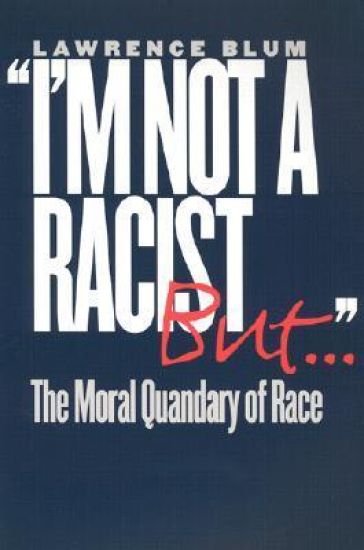
"I'm not a Racist, but..."

"I'm not a Racist, but..."

Lawrence Blum

Cornell University Press
2002
pokkari
Not all racial incidents are racist incidents, Lawrence Blum says. "We need a more varied and nuanced moral vocabulary for talking about the arena of race. We should not be faced with a choice of 'racism' or nothing." Use of the word "racism" is pervasive: An article about the NAACP's criticism of television networks for casting too few "minority" actors in lead roles asks, "Is television a racist institution?" A white girl in Virginia says it is racist for her African-American teacher to wear African attire. Blum argues that a growing tendency to castigate as "racism" everything that goes wrong in the racial domain reduces the term's power to evoke moral outrage. In "I'm Not a Racist, But...", Blum develops a historically grounded account of "racism" as the deeply morally charged notion it has become. He addresses the question whether people of color can be racist, defines types of racism, and identifies debased and inappropriate usages of the term. Though racial insensitivity, racial anxiety, racial ignorance and racial injustice are, in his view, not "racism," they are racial ills that should elicit moral concern. Blum argues that "race" itself, even when not serving distinct racial malfeasance, is a morally destructive idea, implying moral distance and unequal worth. History and genetic science reveal both the avoidability and the falsity of the idea of race. Blum argues that we can give up the idea of race, but must recognize that racial groups' historical and social experience has been shaped by having been treated as if they were races.
"I'm not a Racist, but..."

"I'm not a Racist, but..."

Lawrence Blum

Cornell University Press
2001
sidottu
Not all racial incidents are racist incidents, Lawrence Blum says. "We need a more varied and nuanced moral vocabulary for talking about the arena of race. We should not be faced with a choice of 'racism' or nothing." Use of the word "racism" is pervasive: An article about the NAACP's criticism of television networks for casting too few "minority" actors in lead roles asks, "Is television a racist institution?" A white girl in Virginia says it is racist for her African-American teacher to wear African attire. Blum argues that a growing tendency to castigate as "racism" everything that goes wrong in the racial domain reduces the term's power to evoke moral outrage. In "I'm Not a Racist, But...", Blum develops a historically grounded account of "racism" as the deeply morally charged notion it has become. He addresses the question whether people of color can be racist, defines types of racism, and identifies debased and inappropriate usages of the term. Though racial insensitivity, racial anxiety, racial ignorance and racial injustice are, in his view, not "racism," they are racial ills that should elicit moral concern. Blum argues that "race" itself, even when not serving distinct racial malfeasance, is a morally destructive idea, implying moral distance and unequal worth. History and genetic science reveal both the avoidability and the falsity of the idea of race. Blum argues that we can give up the idea of race, but must recognize that racial groups' historical and social experience has been shaped by having been treated as if they were races.