Kirjojen hintavertailu. Mukana 12 595 353 kirjaa ja 12 kauppaa.

Kirjailija

Lawrence C. Becker

Kirjat ja teokset yhdessä paikassa: 10 kirjaa, julkaisuja vuosilta 1990-2021, suosituimpien joukossa On Justifying Moral Judgements (Routledge Revivals). Vertaile teosten hintoja ja tarkista saatavuus suomalaisista kirjakaupoista.

Mukana myös kirjoitusasut: Lawrence C Becker

10 kirjaa

Kirjojen julkaisuhaarukka 1990-2021.

On Justifying Moral Judgements (Routledge Revivals)
Much discussion of morality presupposes that moral judgments are always, at bottom, arbitrary. Moral scepticism, or at least moral relativism, has become common currency among the liberally educated. This remains the case even while political crises become intractable, and it is increasingly apparent that the scope of public policy formulated with no reference to moral justification is extremely limited.The thesis of On Justifying Moral Judgments insists, on the contrary, that rigorous justifications are possible for moral judgments. Crucially, Becker argues for the coordination of the three main approaches to moral theory: axiology, deontology, and agent morality. A pluralistic account of the concept of value is expounded, and a solution to the problem of ultimate justification is suggested. Analyses of valuation, evaluation, the ‘is-ought’ issue, and the concepts of obligation, responsibility and the good person are all incorporated into the main line of argument.
Does Happiness Write Blank Pages? On Stoicism and Artistic Creativity

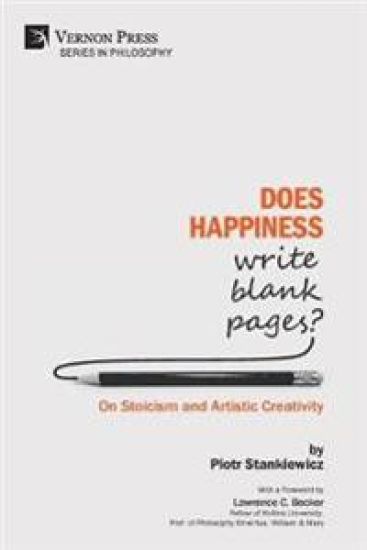
Does Happiness Write Blank Pages? On Stoicism and Artistic Creativity

Piotr Stankiewicz; Lawrence C Becker

Vernon Press
2019
pokkari
Stoicism is coming back in a big way. Seen as a remedy for the craziness of the times we live in, it is experiencing a great surge in academic and cultural interest. Yet, can one live stoically and be a creative artist at the same time? Delving into its underlying tenets, obscure restrictions and limits of applicability, Stankiewicz critically explores Stoicism and its complex association with artistic creativity. Stoicism and artistic creativity are two great displays of the human spirit. Yet, there are multiple reasons to suspect that they are at odds with each other. Popular culture encapsulates this problem in the figure of the rational, yet emotionally remote Stoic, who achieves serenity through withdrawal, and the contrasting figure of the "cursed poet," "tormented artist," or simply a rock star, who lives in a whirl of creative energy, yet falls short of quietude. Is this contrast valid? Other disciplines, including psychology, have explored this problem. But it has never been done philosophically. Pioneering in its philosophical approach, this book discusses how artistic creativity and its problems of identity, expression and self-creation serve as a great testing ground for Stoicism, as well as its theoretical challenges and practical limits. Stankiewicz presents a detailed investigation into the stereotypes of Stoic life that seeks to explain the cause of Stoicism's modern revival. This book is an essential read for anyone captivated by Stoicism's complex allure.
A New Stoicism

A New Stoicism

Lawrence C. Becker

Princeton University Press
2017
pokkari
What would stoic ethics be like today if stoicism had survived as a systematic approach to ethical theory, and if it had coped successfully with the challenges of modern philosophy and experimental science? What would stoic ethics be like today if stoicism had survived as a systematic approach to ethical theory, if it had coped successfully with the challenges of modern philosophy and experimental science? A New Stoicism proposes an answer to that question, offered from within the stoic tradition but without the metaphysical and psychological assumptions that modern philosophy and science have abandoned. Lawrence Becker argues that a secular version of the stoic ethical project, based on contemporary cosmology and developmental psychology, provides the basis for a sophisticated form of ethical naturalism, in which virtually all the hard doctrines of the ancient Stoics can be clearly restated and defended. Becker argues, in keeping with the ancients, that virtue is one thing, not many; that it, and not happiness, is the proper end of all activity; that it alone is good, all other things being merely rank-ordered relative to each other for the sake of the good; and that virtue is sufficient for happiness. Moreover, he rejects the popular caricature of the stoic as a grave figure, emotionally detached and capable mainly of endurance, resignation, and coping with pain. To the contrary, he holds that while stoic sages are able to endure the extremes of human suffering, they do not have to sacrifice joy to have that ability, and he seeks to turn our attention from the familiar, therapeutic part of stoic moral training to a reconsideration of its theoretical foundations.
Reciprocity (Routledge Revivals)

Reciprocity (Routledge Revivals)

Lawrence C. Becker

Routledge
2015
nidottu
The tendency to reciprocate – to return good for good and evil for evil – is a potent force in human life, and the concept of reciprocity is closely connected to fundamental notions of ‘justice’, ‘obligation’ or ‘duty’, ‘gratitude’ and ‘equality’. In Reciprocity, first published in 1986, Lawrence Becker presents a sustained argument about reciprocity, beginning with the strategy for developing a moral theory of the virtues. He considers the concept of reciprocity in detail, contending that it is a basic virtue that provides the basis for parental authority, obligations to future generations, and obedience to law. Throughout the first two parts of the book, Becker intersperses short pieces of his own narrative fiction to enrich reflection on the philosophical arguments. The final part is devoted to extensive bibliographical essays, ranging over anthropology, psychology, political theory and law, as well as the relevant ethics and political philosophy.
Property Rights (Routledge Revivals)

Property Rights (Routledge Revivals)

Lawrence C. Becker

Routledge
2015
nidottu
Property Rights: Philosophic Foundations, first published in 1977, comprehensively examines the general justifications for systems of private property rights, and discusses with great clarity the major arguments as to the rights and responsibilities of property ownership. In particular, the arguments that hold that there are natural rights derived from first occupancy, labour, utility, liberty and virtue are considered, as are the standard anti-property arguments based on disutility, virtue and inequality, and the belief that justice in distribution must take precedence over private ownership. Lawrence Becker goes on to contend that there are four sound lines of argument for private property that, together with what is sound in the anti-property arguments, must be co-ordinated to form the foundations of a new theory. He therefore expounds a concise but sophisticated theory of property that is relevant to the modern world, and concludes by indicating some of the implications of his theory.
Reciprocity (Routledge Revivals)

Reciprocity (Routledge Revivals)

Lawrence C. Becker

Routledge
2014
sidottu
The tendency to reciprocate – to return good for good and evil for evil – is a potent force in human life, and the concept of reciprocity is closely connected to fundamental notions of ‘justice’, ‘obligation’ or ‘duty’, ‘gratitude’ and ‘equality’. In Reciprocity, first published in 1986, Lawrence Becker presents a sustained argument about reciprocity, beginning with the strategy for developing a moral theory of the virtues. He considers the concept of reciprocity in detail, contending that it is a basic virtue that provides the basis for parental authority, obligations to future generations, and obedience to law. Throughout the first two parts of the book, Becker intersperses short pieces of his own narrative fiction to enrich reflection on the philosophical arguments. The final part is devoted to extensive bibliographical essays, ranging over anthropology, psychology, political theory and law, as well as the relevant ethics and political philosophy.
Property Rights (Routledge Revivals)

Property Rights (Routledge Revivals)

Lawrence C. Becker

Routledge
2013
sidottu
Property Rights: Philosophic Foundations, first published in 1977, comprehensively examines the general justifications for systems of private property rights, and discusses with great clarity the major arguments as to the rights and responsibilities of property ownership. In particular, the arguments that hold that there are natural rights derived from first occupancy, labour, utility, liberty and virtue are considered, as are the standard anti-property arguments based on disutility, virtue and inequality, and the belief that justice in distribution must take precedence over private ownership. Lawrence Becker goes on to contend that there are four sound lines of argument for private property that, together with what is sound in the anti-property arguments, must be co-ordinated to form the foundations of a new theory. He therefore expounds a concise but sophisticated theory of property that is relevant to the modern world, and concludes by indicating some of the implications of his theory.
On Justifying Moral Judgements (Routledge Revivals)
Much discussion of morality presupposes that moral judgments are always, at bottom, arbitrary. Moral scepticism, or at least moral relativism, has become common currency among the liberally educated. This remains the case even while political crises become intractable, and it is increasingly apparent that the scope of public policy formulated with no reference to moral justification is extremely limited.The thesis of On Justifying Moral Judgments insists, on the contrary, that rigorous justifications are possible for moral judgments. Crucially, Becker argues for the coordination of the three main approaches to moral theory: axiology, deontology, and agent morality. A pluralistic account of the concept of value is expounded, and a solution to the problem of ultimate justification is suggested. Analyses of valuation, evaluation, the ‘is-ought’ issue, and the concepts of obligation, responsibility and the good person are all incorporated into the main line of argument.
Habilitation, Health, and Agency

Habilitation, Health, and Agency

Lawrence C. Becker

Oxford University Press Inc
2012
sidottu
Lawrence C. Becker introduces an unconventional set of background ideas for future philosophical work on normative theories of basic justice. The organizing concept is habilitation - the process of equipping a person or thing with functional abilities or capacities. The specific proposals drawn from the concept of habilitation are independent of any particular set of distributive principles. The result is a framework for theory that includes a metric for the pursuit of basic justice, but not a normative theory of it. The basic idea is that receiving and providing habilitation is a lifelong necessity for human beings, from the nearly helpless newborn state through the struggle to survive and thrive thereafter, even into the most severe diminishments of old age. This lifelong human necessity underlies all questions about basic justice, and the possibilities for habilitation define the circumstances under which those questions arise. Focusing on the circumstances of habilitation calls attention to the central role of physical and psychological health. Without basic good health in both domains, it is not possible to cope with the habilitative demands of one's physical and psychological endowments, and one's physical and social environments. And for human beings, a particular aspect of human health effectively sums up these matters: namely human agency; the nature and extent of the ability to act effectively. The book proposes, specifically, that normative theories of basic justice adopt the habilitation framework. What then appears to follow is that the most plausible comprehensive metric for assessing progress toward basic justice will be the level and distribution of basic good health. Moreover, achieving robustly healthy agency will be the most plausible tactical target for making progress toward basic justice -no matter what one's favored distributive principles might be.
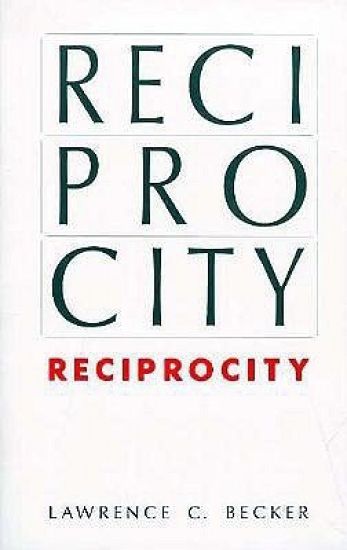
Reciprocity

Reciprocity

Lawrence C. Becker

University of Chicago Press
1990
nidottu
"Reciprocity is an exciting book—it forces its readers to rethink some important issues in recent moral philosophy."—Ruth Anna Putnam, Ethics "By reciprocity Becker understands a complex disposition to make suitable return for the benefit we receive from others, to resist the harm others inflict on us rather than retaliate for it, and to make restitution for the harm we ourselves cause. . . . This is a clearly written book which makes fresh contributions to a number of topics."—A. D. M. Walker, Philosophical Books