Kirjojen hintavertailu. Mukana 12 595 353 kirjaa ja 12 kauppaa.
Kirjailija
Lawrence Freedman
Kirjat ja teokset yhdessä paikassa: 49 kirjaa, julkaisuja vuosilta 1977-2026, suosituimpien joukossa Samhälle i kris : vår förmåga till anpassning och omorientering. Vertaile teosten hintoja ja tarkista saatavuus suomalaisista kirjakaupoista.
Clive Aslet; Philip Bobbitt; Peter Burke; Gillian Clark; Jonathan Fenby; Peter Frankopan; Jessica Frazier; Lawrence Freedman; Matthew Goodwin; Andrew Graham-Dixon; Johan Hakelius; Vanessa Harding; Tom Holland; Mark Honingsbaum; Alex Lee; Tim Marshall; Lincoln Paine; Iskander Rehman; Donald Sassoon; David Seedhouse; Graham Stewart; Hew Strachan; Helen Thompson; Richard Whatmore; Adrian Wooldridge
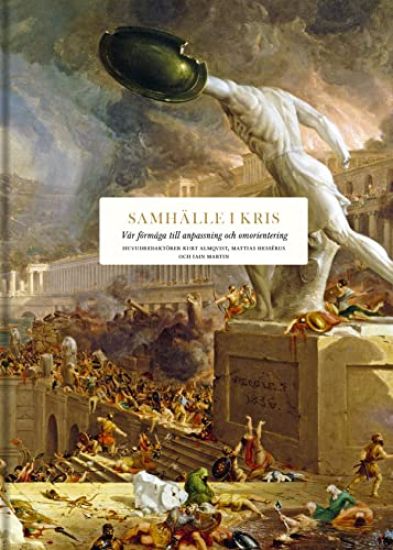
Att lära sig hantera en kris är centralt i människans tillvaro. Krig, revolutioner och pandemier är återkommande företeelser i mänsklighetens historia. I denna antologi undersöker tjugofem världsledande forskare hur olika samhällen reagerar i sådana situationer. De belyser människans unika förmåga till anpassning och omorientering. En kris medför problem men också möjligheter. Antologin utges i en rikt illustrerad utgåva med vackert klotband. Huvudredaktörer är Mattias Hessérus och Iain Martin.
A distinctive collection of essays capturing Lawrence Freedman's insightful analysis across war, strategy, and foreign policy and providing a unique view of the key thinkers that shaped history. One of the world's foremost scholars of warfare, both historical and contemporary, Lawrence Freedman has also played an important role in policymaking, serving as an official historian of both the Falklands War and on the UK inquiry into the 2003 Iraq War. Since the publication of his best-selling Strategy in 2013, Freedman has continued to explore many of the themes he raised in the book while commenting on ongoing conflicts. On Strategists and Strategy combines the best of Freedman's many essays from the past ten years on warfare and foreign policy, alongside more personal pieces on the scholars who influenced him and his own life trajectory. The range of his interests is demonstrated in this lively and engaging collection of essays. They cover a wide range of topics, including Vladimir Putin's strategic fanaticism; arguments on why we don't take tactics seriously enough and why "stalemate" is used incorrectly as a metaphor for deadlock in war; considerations of the dilemmas of nuclear deterrence; and what Covid tells us about crisis management. The material on his own life is richly contextual, attuned to the broader historical trends and social forces in 1960s and 1970s Britain that shaped his experiences. This volume not only provides a broad-ranging sampling of Freedman's most representative work, but also offers a unique window into a half century of world history.
Jak vijskovi komandiri ukhvaljujut rishennja pid chas vijni? Chi mozhut voni ignoruvati politiku? Jak strategichne kerivnitstvo vplivaje na rezultat bojovikh dij? Lourens Fridman prolivaje svitlo na sekreti uspishnogo komanduvannja.Na prikladakh vedennja vojen - vid Korejskoji do vtorgnennja v Ukrajinu - avtor dovodit: efektivnij komandir - ne lishe strateg. Adzhe vijna - tse ne tilki boji, a i spivpratsja mizh riznimi rodami vijsk, strukturami ta sojuznikami.Zi storinok vidannja vi diznajetes:* jak vidbuvajetsja vzajemodija mizh vijskovimi liderami ta politikami;* jak politichni ambitsiji ta strategichni prorakhunki viznachajut khid bojovikh dij u najgarjachishikh konfliktakh svitu;* chi vplivaje osobistist komanduvacha na uspikh jogo vijska;* jakimi mozhut stati vijni u dobu shtuchnogo intelektu.
Lourens Devid Fridman (nar. 1948 r.) - pochesnij profesor vijskovikh doslidzhen Korolivskogo koledzhu Londona, odin z providnikh fakhivtsiv ta vsesvitnikh avtoritetiv u galuzi strategiji z bagatorichnim naukovim i praktichnim dosvidom.Jogo bestseler "Strategija: istorija", viznanij najkraschoju knigoju 2013 roku za versijeju Financial Times, mistit panoramnij ogljad roli strategiji v usij svitovij tsivilizatsiji, vid davnini do sogodennja, ta jiji bliskuchij analiz jak politichnogo, vojennogo ta ekonomichnogo metodu planuvannja. Diapazon opovidi vrazhaje: vid prosunutoji povedinki primativ, protistavlennja Akhilla i Odisseja v "Iliadi" ta Davida i Goliafa v Bibliji - do strategichnikh porad Sun-tszi ta Makiavelli, vijskovikh novovveden barona Anri de Dzhomini ta Karla fon Klauzevitsa, obgruntuvannja revoljutsijnoji strategiji v klasovij borotbi Karla Marksa, rozuminnja korporativnoji strategiji Pitera Drukera ta Alfreda Slouna, a takozh suchasnogo zastosuvannja stratagem i stsenarijiv u sotsiologiji ta vikoristannja teoriji igor v ekonomitsi.PerekladachJulija Semenjuk
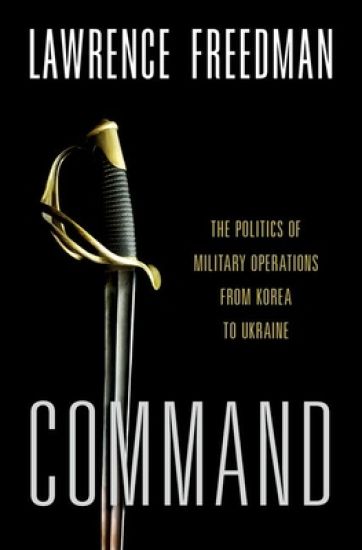
Using examples from a wide variety of conflicts, Lawrence Freedman shows that successful military command depends on the ability not only to use armed forces effectively but also to understand the political context in which they are operating. Command in war is about forging effective strategies and implementing them, making sure that orders are appropriate, well-communicated, and then obeyed. But it is also an intensely political process. This is largely because how wars are fought depends to a large extent on how their aims are set. It is also because commanders in one realm must possess the ability to work with other command structures, including those of other branches of the armed forces and allies. In Command, Lawrence Freedman explores the importance of political as well as operational considerations in command with a series of eleven vivid case studies, all taken from the period after 1945. Over this period, the risks of nuclear escalation led to a shift away from great power confrontations and towards civil wars, and advances in communication technologies made it easier for higher-level commanders to direct their subordinates. Freedman covers defeats as well as victories. Pakistani generals tried to avoid surrender as they were losing the eastern part of their country to India in 1971. Iraq's Saddam Hussein turned his defeats into triumphant narratives of victory. Osama bin Laden escaped the Americans in Afghanistan in 2001. The UK struggled as a junior partner to the US in Iraq after 2003. We come across insubordinate generals, such as Israel's Arik Sharon, and those in the French army in Algeria, so frustrated with their political leadership that they twice tried to change it. At the other end of the scale, Che Guevara in Congo in 1966 and Igor Girkin in Ukraine in 2014 both tried to spark local wars to suit their grandiose objectives. Freedman ends the book with a meditation on the future of command in a world that is becoming increasingly reliant on technologies like artificial intelligence. A wide-ranging and insightful history of the changing nature of command in the postwar era, this will stand as a definitive account of a foundational concept in both military affairs and politics.
Narratives provide the storylines of conflict and in doing so become an arena of conflict themselves. When states mount information campaigns against each other, they are trying to change the narrative. The digital platforms of the new information environment have been identified by various analysts as a significant factor in contemporary strategy and crisis management. But while social media is noisier and more chaotic than traditional media, and unprecedented in its immediacy and accessibility, has it thus far been a game changer in strategic affairs?In this Adelphi book, Sir Lawrence Freedman and Heather Williams examine the impact of state-led digital information – or disinformation – campaigns in four contexts: the India–Pakistan crisis over Kashmir in 2019; the heightened tensions between the United States and Iran following the assassination of Qasem Soleimani in 2020; China’s messaging in response to the COVID-19 pandemic from 2020–22; and the Russia–Ukraine crisis from 2013–23. While noting the meaningful consequences of digital information campaigns, in each case the authors call for a sense of perspective. Such campaigns are only one aspect of wider political struggles. They are also difficult for their initiators to control, and less likely to influence foreign audiences than domestic ones. Overall, the authors argue, there is little evidence so far to suggest such campaigns will have as much influence over contemporary crises as the classical instruments of military and economic power.
A timely history of the interplay between politics and military operations, 'Command is the history of our time' (Guardian)Military command has been reconstructed and revolutionized since the Second World War by nuclear warfare, small-scale guerrilla land operations and cyber interference. Freedman takes a global perspective, systematically investigating its practice and politics since 1945 through a wide range of conflicts from the French Colonial Wars, the Cuban Missile Crisis and the Bangladesh Liberation War to North Vietnam's Easter Offensive of 1972, the Falklands War, the Iraq War and Russia's wars in Chechnya and Ukraine. By highlighting the political nature of strategy, Freedman shows that military decision-making cannot be separated from civilian priorities and that commanders must now have the sensibility to navigate politics as well as warfare.
Armand D'Angour; Peter Frankopan; Jessica Frazier; Lawrence Freedman; Matthew Goodwin; Rob Johnson; Paul Lay; Alexander Lee; Rana Mitter; Andrew Roberts; Graham Stewart; Andrew Wilton; Adrian Wooldridge
Porträttserien från Engelsberg Ideas höjer upp och ger plats åt de sidofigurer som har satt historiens hjul i rullning. Här finns bland andra Churchills halvt bortglämda högra hand, en av La Belle Epoques parisiska ledstjärnor som försvunnit i historiens dunkel och en tidig rymdpionjär som är nästan helt okänd utanför sitt hemland Ryssland. Historien tillhör inte bara de allmänt kända, utan också de andra: de män och kvinnor som plötsligt fann sig framdrivande i en flod av händelser eller som gjorde unika inlägg i sin tids stora debatter.Genom den här serien visar oss ledande skribenter hur individer har format den värld vi känner till, och undersöker deras framgångar lika mycket som deras misslyckanden. Den engelsktyska romanförfattaren W.G. Sebald skrev vid det senaste sekelskiftet "allting faller ständigt i glömska med varje utsläckt liv". I Porträtt ur historien hittar vi de dunkla spåren av spännande liv som levts och rekonstruerar dem omsorgsfullt för att de återigen ska få glänsa, starkt och levande, här och nu.
Originally published in 1986, although the pace of arms control negotiations has been stepped up, there is still little sign of agreement. In this paper the author examines the current negotiating effort, with particular emphasis on its implications for European security. He provides an up-to-date analysis of the superpower discussions on nuclear arms control, including the impact of ‘star wars’, and also of the talks at Vienna on conventional force reductions and at Stockholm on confidence-building measures. He notes a shift in emphasis from ‘parity’ to ‘transparency’ in Western proposals, and questions whether this promises greater results than were achieved from earlier approaches. He also warns of the risks of arms control arrangements obstructing possibilities for reforming the European security system.
Alexey Arbatov; David J. Betz; Philip Bobbitt; Christopher Coker; Rolf Ekéus; Richard J. Evans; Gregory Feifer; Lawrence Freedman; Janne Haaland Matláry; Dick Harrison; Tom Holland; Rob Johnson; Frederick Kagan; Kimberly Kagan; Elisabeth Kendall; Fredrik Logevall; Rana Mitter; Peter Pomerantsev; Andrew Preston; Malise Ruthven; Charly Salonius-Pasternak; Hew Strachan; Nathan Shachar; Lilia Shevtsova; Jessica Stern; Pascal Vennesson
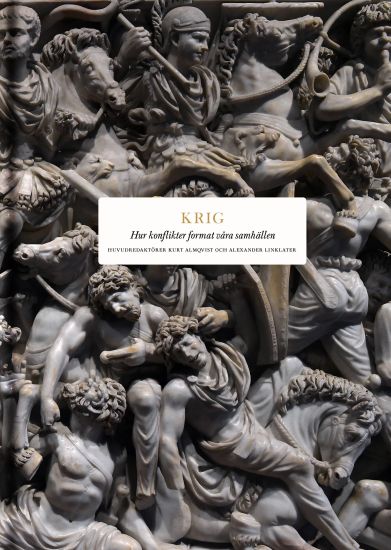
Det påstås att ungefär 14 500 krig har utkämpats sedan år 3 500 f.Kr. Mänskligheten har bara erfarit 300 år av fred på jorden. Under 1900-talet dödades fler människor i krig än något tidigare sekel. Relativt sett dödar vi dock varandra mer sällan. Håller vi gradvis på att bli mer fredliga? Oavsett hur många som dödas, och med vilken metod, kan vi vara säkra på att krig kommer att fortsätta utkämpas. Ligger orsakerna till krig i samhället eller i biologin, i tävlan om ekonomiska resurser eller sexuella, i historiska omständigheter eller i en universell våldsinstinkt? Allt sedan antiken fram till dagens terrorism har krig varit förstörare och skapare av stater och civilisationer. Essäerna i denna antologi har sitt ursprung i det internationellt välrenommerade Engelsbergsseminariet 2015 och är skrivna av historiker, journalister, tänkare, forskare och författare från hela världen. Huvudredaktörer är Kurt Almqvist och Alexander Linklater.
Using examples from a wide variety of conflicts, Lawrence Freedman shows that successful military command depends on the ability not only to use armed forces effectively but also to understand the political context in which they are operating. Command in war is about forging effective strategies and implementing them, making sure that orders are appropriate, well-communicated, and then obeyed. But it is also an intensely political process. This is largely because how wars are fought depends to a large extent on how their aims are set. It is also because commanders in one realm must possess the ability to work with other command structures, including those of other branches of the armed forces and allies. In Command, Lawrence Freedman explores the importance of political as well as operational considerations in command with a series of eleven vivid case studies, all taken from the period after 1945. Over this period, the risks of nuclear escalation led to a shift away from great power confrontations and towards civil wars, and advances in communication technologies made it easier for higher-level commanders to direct their subordinates. Freedman covers defeats as well as victories. Pakistani generals tried to avoid surrender as they were losing the eastern part of their country to India in 1971. Iraq's Saddam Hussein turned his defeats into triumphant narratives of victory. Osama bin Laden escaped the Americans in Afghanistan in 2001. The UK struggled as a junior partner to the US in Iraq after 2003. We come across insubordinate generals, such as Israel's Arik Sharon, and those in the French army in Algeria, so frustrated with their political leadership that they twice tried to change it. At the other end of the scale, Che Guevara in Congo in 1966 and Igor Girkin in Ukraine in 2014 both tried to spark local wars to suit their grandiose objectives. Freedman ends the book with a meditation on the future of command in a world that is becoming increasingly reliant on technologies like artificial intelligence. A wide-ranging and insightful history of the changing nature of command in the postwar era, this will stand as a definitive account of a foundational concept in both military affairs and politics.
Originally published in 1986, although the pace of arms control negotiations has been stepped up, there is still little sign of agreement. In this paper the author examines the current negotiating effort, with particular emphasis on its implications for European security. He provides an up-to-date analysis of the superpower discussions on nuclear arms control, including the impact of ‘star wars’, and also of the talks at Vienna on conventional force reductions and at Stockholm on confidence-building measures. He notes a shift in emphasis from ‘parity’ to ‘transparency’ in Western proposals, and questions whether this promises greater results than were achieved from earlier approaches. He also warns of the risks of arms control arrangements obstructing possibilities for reforming the European security system.
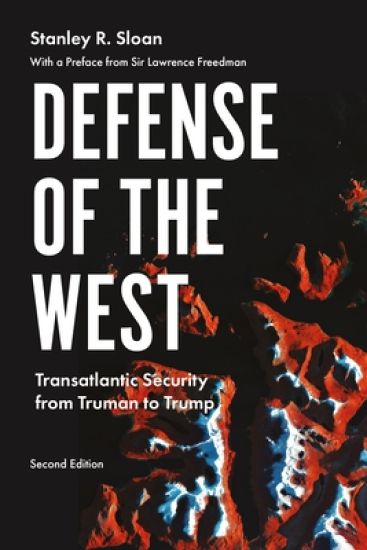
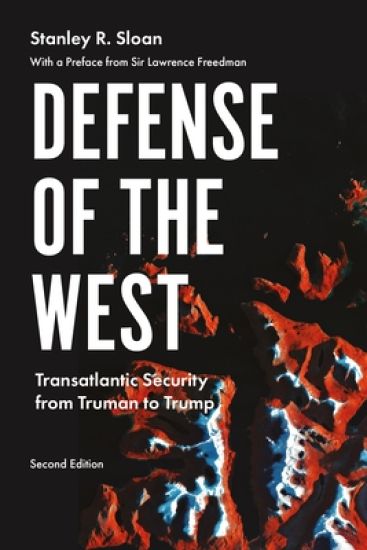
Written in a lively and readable style by the world’s leading authority on the North Atlantic Treaty Organization and US-European relations, Defense of the West is the history of a transatlantic security relationship that has endured for over seventy years.This latest edition of a classic work looks at how developments inside NATO and European Union member states affect their ability to defend against external threats while preserving Western values, in the era of Trump and Brexit. Sloan frankly addresses the failures and shortcomings of Western institutions and member states. But the book emphasizes the continuing importance of value-based transatlantic security cooperation as a vital element of the defense and foreign policies of NATO and EU member states.At a time of heightened tension and political turmoil, at home and abroad, Stan Sloan’s lucid and far-sighted analysis is more necessary than ever.
Written in a lively and readable style by the world’s leading authority on the North Atlantic Treaty Organization and US-European relations, Defense of the West is the history of a transatlantic security relationship that has endured for over seventy years.This latest edition of a classic work looks at how developments inside NATO and European Union member states affect their ability to defend against external threats while preserving Western values, in the era of Trump and Brexit. Sloan frankly addresses the failures and shortcomings of Western institutions and member states. But the book emphasizes the continuing importance of value-based transatlantic security cooperation as a vital element of the defense and foreign policies of NATO and EU member states.At a time of heightened tension and political turmoil, at home and abroad, Stan Sloan’s lucid and far-sighted analysis is more necessary than ever.
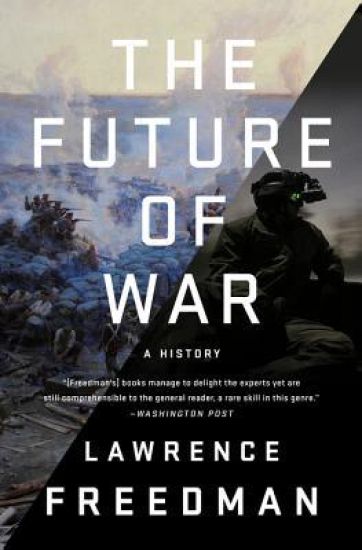
An award-winning military historian, professor, and political adviser delivers the definitive story of warfare in all its guises and applications, showing what has driven and continues to drive this uniquely human form of political violence. Questions about the future of war are a regular feature of political debate, strategic analysis, and popular fiction. Where should we look for new dangers? What cunning plans might an aggressor have in mind? What are the best forms of defense? How might peace be preserved or conflict resolved? From the French rout at Sedan in 1870 to the relentless contemporary insurgencies in Iraq and Afghanistan, Lawrence Freedman, a world-renowned military thinker, reveals how most claims from the military futurists are wrong. But they remain influential nonetheless. Freedman shows how those who have imagined future war have often had an idealized notion of it as confined, brief, and decisive, and have regularly taken insufficient account of the possibility of long wars-hence the stubborn persistence of the idea of a knockout blow, whether through a dashing land offensive, nuclear first strike, or cyberattack. He also notes the lack of attention paid to civil wars until the West began to intervene in them during the 1990s, and how the boundaries between peace and war, between the military, the civilian, and the criminal are becoming increasingly blurred. Freedman's account of a century and a half of warfare and the (often misconceived) thinking that precedes war is a challenge to hawks and doves alike, and puts current strategic thinking into a bracing historical perspective.
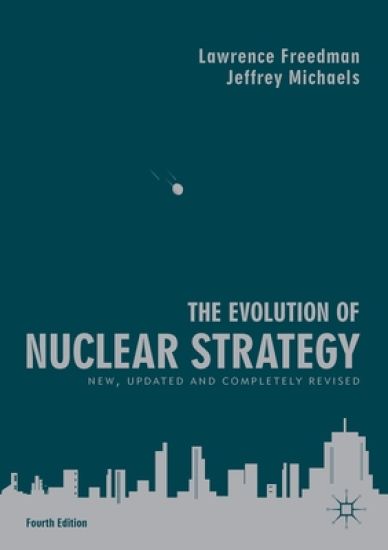
“The Evolution of Nuclear Strategy quickly established itself as a classic when it first appeared in 1981. This edition makes it even better, incorporating as it does new material about the Cold War and up-dating to include subsequent developments. Filled with insights and penetrating analysis, this volume is truly indispensable.”—Robert Jervis, Author of How Statesmen Think"Freedman and Michaels have written a thorough and thought-provoking guide to nuclear strategy. The authors analyze the causes of both wise and unwise strategic decisions in the past and thereby shine a bright light on dilemmas we face in our common nuclear future."—Scott Sagan, Stanford University, USA “With its comprehensive coverage, clear and direct language, and judicious summaries of a vast literature, this new and wholly revised edition of The Evolution of Nuclear Strategywill be essential reading for any student of nuclear history, strategic studies, or contemporary international relations.”—Matthew Jones, London School of Economics and Political Science, UK“Sir Lawrence Freedman’s The Evolution of Nuclear Strategy has been the first port of call for three generations of academics and policy-makers wanting to familiarize themselves with the subject matter. The success of this book could have led Professor Freedman to satisfy himself with regular updates or afterwords. But the tireless author is now gracing us with an entirely revised edition of his masterpiece nearly forty years after its initial publication, taking into account findings from archives and declassified documents. At the same time, The Evolution of Nuclear Strategy remains true to its original purpose and spirit: an easy to read manual, light with footnotes, focusing on policy rather than on theory, and thus the best possible introduction to an arcane subject. In an era when nuclear strategy issues seem to be becoming relevant again, its historical scope and breadth will make its reading or re-reading even more useful – if only because knowing about the absurdity of the Cold war arms race is a prerequisite if one does not want to repeat its mistakes.”—Bruno Tertrais, Deputy Director, Fondation pour la Recherche Stratégique, France“This updated and improved edition of the classic text on the evolution of nuclear strategy is a must read for anyone attempting to understand the nuclear predicament and where it is heading. Impressive in every respect!”—T.V. Paul, James McGill Professor of International Relations, McGill University, Canada, and the author of The Traditon of Non-Use of Nuclear Weapons“After the end of the Cold War, we hoped for a world in which nuclear weapons would have ‘low salience’, or might even disappear into virtual, non-assembled arsenals. Alas, they are coming to the fore again. With changes in political context and technology, it is thus pressing that ‘the Bible’ on the Evolution of Nuclear Strategy should be updated. Lawrence Freedman’s great classic has been admirably updated with the help of Jeff Michaels. The work, just as its previous editions, thus remains the definitive and authoritative point of reference on nuclear strategy in the twenty-first century.”—Beatrice Heuser, Chair of International Relations, University of Glasgow, ScotlandFirst published in 1981, Lawrence Freedman's The Evolution of Nuclear Strategy was immediately acclaimed as the standard work on the history of attempts to cope militarily and politically with the terrible destructive power of nuclear weapons. It has now been completely rewritten, drawing on a wide range of new research, and updated to take account of the period following the end of the cold war, and covering all nuclear powers.
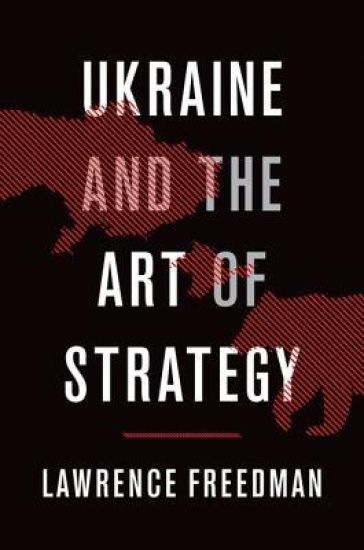
One of the most serious crises since the end of the Cold War began with Russia's seizure and annexation of Crimea in March 2014 and subsequent 'secret' war in Eastern Ukraine. As more territory was taken from Eastern Ukraine, Western countries countered with economic sanctions directed against Russia. While the conflict did not escalate to the levels originally feared, over time, it became apparent that President Putin had failed to affect the regime change intended in Ukraine, and Russia's economy had been damaged. In Ukraine and the Art of Strategy, Sir Lawrence Freedman provides an account of the origins and course of the Russia-Ukraine conflict through the lens of the theory and practice of strategy. That is, he explores Putin's near, medium, and long-term strategies when he decided to initiate the conflict. How successful has he been? In contrast to many who see Putin as a master operator who has resuscitated a supine Russia against all odds, Freedman is less impressed with his strategic acumen in terms of the long-term fallout. By exploring concepts such as coercive diplomacy, limited war, escalation and information operations, Freedman brings the story up to the present, where a low-level conflict between Ukrainian and breakaway rebel forces in the east grinds on, and illuminates the external challenges faced by the governments' involved. Freedman's application of his unique strategic perspective to this supremely important conflict has the potential to reshape our understanding of it, and his analysis of the likely outcomes will force readers to reconsider the idea that Vladimir Putin is unmatched as a strategic mastermind.
Part of the new Ladybird Expert series, Nuclear Deterrence is an accessible and authoritative introduction to the deterrent tactics employed to prevent war, drawing on the unprecedented power of nuclear weapons. Written by celebrated historian and professor of War Studies Sir Lawrence Freedman, Nuclear Deterrence explores the history behind the world's most lethal weapon. You'll learn about the history of the arms race, the implications of mutual assured destruction, the consequences of nuclear proliferation, and why disarmament proved to be so difficult. Written by the leading lights and most outstanding communicators in their fields, the Ladybird Expert books provide clear, accessible and authoritative introductions to subjects drawn from science, history and culture.For an adult readership, the Ladybird Expert series is produced in the same iconic small hardback format pioneered by the original Ladybirds. Each beautifully illustrated book features the first new illustrations produced in the original Ladybird style for nearly forty years.
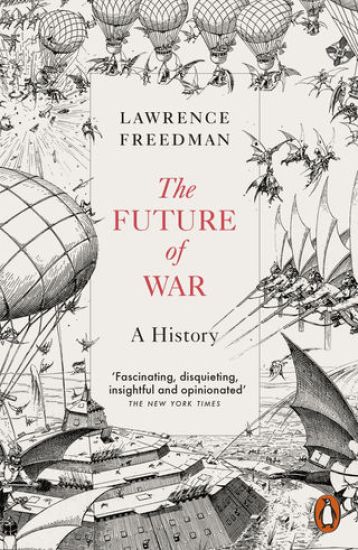
For as long as there have been wars there have been fears about the next war. Where are the new dangers? What is the best defence? How might peace come about? This is the history of how over the last 150 years we have tried - rightly and wrongly - to predict war's future. 'Britain's leading academic strategist ... read this book' Economist'Insightful and opinionated ... expertly covers centuries of evolving mayhem' Gary J. Bass, The New York Times'A bonfire of predictions ... Freedman's purpose in this wise book is to discern patterns in the way we have thought about war's future' Shashank Joshi, Financial Times'It reflects the author's immense knowledge and wisdom. It should feed our humility, because it reminds us of mankind's unlimited capacity for folly' Max Hastings, The Times
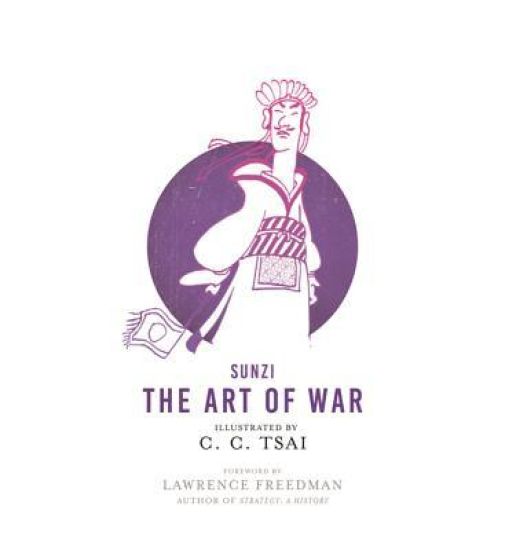
A delightfully illustrated version of Sunzi’s classic The Art of War by bestselling cartoonist C. C. TsaiC. C. Tsai is one of Asia's most popular cartoonists, and his editions of the Chinese classics have sold more than 40 million copies in over twenty languages. This volume presents Tsai's delightful graphic adaptation of Sunzi's Art of War, the most profound book on warfare and strategy ever written--a work that continues to be read as a handbook for success not just by military commanders but also by leaders in politics, business, and many other fields.Conceived by a Chinese warrior-philosopher some 2,500 years ago, The Art of War speaks to those aspiring to rise through the ranks and help build successful countries. How can that goal best be achieved, and what is the role of warfare, if any, in the process? What are the powers and limits of the general in command? How can you win without going to war? Sunzi's answers to these and other questions are brought to life as never before by Tsai's brilliant cartoons, which show Sunzi fighting on dangerous ground, launching a surprise attack, spying on his enemies, and much more.A marvelously rich introduction to a timeless classic, this book also features a foreword by Lawrence Freedman, one of the world's leading authorities on military strategy, which illuminates how The Art of War has influenced Western strategic thought. In addition, Sunzi's original Chinese text is artfully presented in narrow sidebars on each page, enriching the books for readers and students of Chinese without distracting from the self-contained English-language cartoons. The text is skillfully translated by Brian Bruya, who also provides an introduction.