Kirjojen hintavertailu. Mukana 12 390 323 kirjaa ja 12 kauppaa.

Kirjailija

Lawrence Grossberg

Kirjat ja teokset yhdessä paikassa: 22 kirjaa, julkaisuja vuosilta 1989-2027, suosituimpien joukossa Popular Culture. Vertaile teosten hintoja ja tarkista saatavuus suomalaisista kirjakaupoista.

22 kirjaa

Kirjojen julkaisuhaarukka 1989-2027.

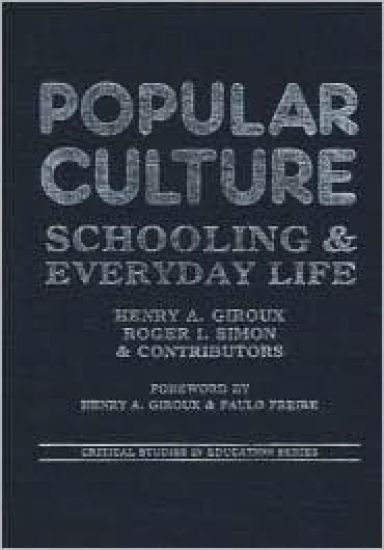
Popular Culture

Popular Culture

Stanley Aronowitz; Robert W. Connell; Philip Corrigan; Elizabeth Ellsworth; Henry A. Giroux; Lawrence Grossberg; Peter McLaren; Roger Simon; Paul Smith; Richard Smith; Mimi White; Paul Willis

Praeger Publishers Inc
1989
sidottu
Illuminating one of the most pervasive issues of our time, Popular Culture is the first book to link the importance and implications of popular culture with pedagogical practice. It shows how cultural forms such as Hollywood films, pop music, soap operas, and televangelism are organized by gender, age, class, race, and ethnicity, thus providing the contradictory text that both enables and disables emancipatory interest, so fundamental to the formation of self and society. What emerges is a redefinition of the very notion of popular culture.

What's Going On?

What's Going On?

Lawrence Grossberg

TAYLOR FRANCIS LTD
2025
sidottu
Exploring the backstory of contemporary political polarization, What’s Going On? recognizes that simple stories of blame and uncontested stories of polarization prove themselves to be bad stories that produce bad politics.This book argues that stories have increasingly become matters of affect rather than meaning – instead of asking what stories mean, we are likely to ask how they make people feel. These stories are cultural tendencies that define the possibilities and limits of political action and behavior, and the book tells its own story about how the stories of America’s crises have defined our political culture as they struggle over questions of ideology, identity, and social belonging. It lays out a theoretical position that recognizes the need for complicated stories and rigorous thought, pointing a way forward, out of the chaos, seeking to repair the world and offer better stories and more humane political possibilities.This work is a vital resource for students and instructors in sociology, political science, cultural studies, media studies, and communication, in such courses as contemporary social theory, contemporary political theory, media, politics and society, social movements and resistance.The book will be an important guide for activists, organizers, and community field workers, and for anyone else who wishes to have a better understanding of the contemporary political moment and how to mobilize towards building a better future.
What's Going On?

What's Going On?

Lawrence Grossberg

TAYLOR FRANCIS LTD
2025
nidottu
Exploring the backstory of contemporary political polarization, What’s Going On? recognizes that simple stories of blame and uncontested stories of polarization prove themselves to be bad stories that produce bad politics.This book argues that stories have increasingly become matters of affect rather than meaning – instead of asking what stories mean, we are likely to ask how they make people feel. These stories are cultural tendencies that define the possibilities and limits of political action and behavior, and the book tells its own story about how the stories of America’s crises have defined our political culture as they struggle over questions of ideology, identity, and social belonging. It lays out a theoretical position that recognizes the need for complicated stories and rigorous thought, pointing a way forward, out of the chaos, seeking to repair the world and offer better stories and more humane political possibilities.This work is a vital resource for students and instructors in sociology, political science, cultural studies, media studies, and communication, in such courses as contemporary social theory, contemporary political theory, media, politics and society, social movements and resistance.The book will be an important guide for activists, organizers, and community field workers, and for anyone else who wishes to have a better understanding of the contemporary political moment and how to mobilize towards building a better future.
On the Way to Theory

On the Way to Theory

Lawrence Grossberg

DUKE UNIVERSITY PRESS
2024
pokkari
In On the Way to Theory, Lawrence Grossberg introduces the major ways of thinking that provide the backstory for contemporary Western theory. Asking readers to think about thinking, Grossberg traces cultural and critical theory’s foundations from the contested enlightenments to modern and postmodern conceptualizations of power, experience, language, and existence. He introduces key figures as historical characters and lays out the unique set of tools for thought that their “deep theories” offer. Through finely tuned and accessible descriptions of their concepts and logics, Grossberg highlights thinkers including Spinoza, Kant, Hegel, Marx, Nietzsche, Wittgenstein, Heidegger, Derrida, Foucault, Deleuze, and Hall, defining the possibilities of their thought. This book is essential for those interested in how theories shape our understanding of the world, influence our choices, and define our realities. It challenges us to recognize the multiplicity and complexities of ways of thinking in our quest for knowledge and understanding. By setting out a story of theoretical foundations, Grossberg invites readers to think toward the future of theory and expand conversations around theoretical scrutiny and criticism.
On the Way to Theory

On the Way to Theory

Lawrence Grossberg

DUKE UNIVERSITY PRESS
2024
sidottu
In On the Way to Theory, Lawrence Grossberg introduces the major ways of thinking that provide the backstory for contemporary Western theory. Asking readers to think about thinking, Grossberg traces cultural and critical theory’s foundations from the contested enlightenments to modern and postmodern conceptualizations of power, experience, language, and existence. He introduces key figures as historical characters and lays out the unique set of tools for thought that their “deep theories” offer. Through finely tuned and accessible descriptions of their concepts and logics, Grossberg highlights thinkers including Spinoza, Kant, Hegel, Marx, Nietzsche, Wittgenstein, Heidegger, Derrida, Foucault, Deleuze, and Hall, defining the possibilities of their thought. This book is essential for those interested in how theories shape our understanding of the world, influence our choices, and define our realities. It challenges us to recognize the multiplicity and complexities of ways of thinking in our quest for knowledge and understanding. By setting out a story of theoretical foundations, Grossberg invites readers to think toward the future of theory and expand conversations around theoretical scrutiny and criticism.
The Audience And Its Landscape

The Audience And Its Landscape

John Hay; Lawrence Grossberg; Ellen Wartella; James Hay

Routledge
2019
sidottu
This book offers a major reconceptualization of the term ?audience,? including the landscape of a given audience?the situated and territorializing features of any way of seeing and defining the world. Given de Certeau's hypothesis that listening, watching, and reading all occur in places and result in produce transformed paths or spaces, the contri
Under the Cover of Chaos

Under the Cover of Chaos

Lawrence Grossberg

Pluto Press
2018
sidottu
Are Donald Trump's irrationality, cruelty, and bombast symptoms of his personality? Is the chaos surrounding him a sign of his incompetence? Are his populism, illiberalism and nationalism just cynical appeals to existing feelings of abandonment, resentment and rage? Lawrence Grossberg shows that the truth is bigger and more frightening. Locating Trumpism in the long struggle among traditional conservatism, the new right and the reactionary right, he suggests that the chaos is far more significant and strategic ... and dangerous. Taking the arguments of the reactionary right seriously, he projects a possible, nightmarish future: a cultural nationalism governed by a popular corporatocracy. He lays bare how contemporary political struggles are being shaped by a changing national landscape of moods and feelings, marked by a growing absolutism of judgement and belief, and new forms of anxiety, alienation and narcissism.
Under the Cover of Chaos

Under the Cover of Chaos

Lawrence Grossberg

Pluto Press
2018
pokkari
Are Donald Trump's irrationality, cruelty, and bombast symptoms of his personality? Is the chaos surrounding him a sign of his incompetence? Are his populism, illiberalism and nationalism just cynical appeals to existing feelings of abandonment, resentment and rage? Lawrence Grossberg shows that the truth is bigger and more frightening. Locating Trumpism in the long struggle among traditional conservatism, the new right and the reactionary right, he suggests that the chaos is far more significant and strategic ... and dangerous. Taking the arguments of the reactionary right seriously, he projects a possible, nightmarish future: a cultural nationalism governed by a popular corporatocracy. He lays bare how contemporary political struggles are being shaped by a changing national landscape of moods and feelings, marked by a growing absolutism of judgement and belief, and new forms of anxiety, alienation and narcissism.
Cultural Studies in the Future Tense

Cultural Studies in the Future Tense

Lawrence Grossberg

Duke University Press
2010
sidottu
Lawrence Grossberg is one of the leading figures in cultural studies internationally. In Cultural Studies in the Future Tense, he offers a powerful critique of the present state of cultural studies and, more broadly, of the intellectual left, especially in the Anglo-American academy. He develops a vision for the future of cultural studies as conjunctural analysis, a radically contingent and contextual study of the articulations of lived, discursive, and material contexts. Proposing a compelling analysis of the contemporary political problem space as a struggle over modernity, he suggests the possibility of multiple ways of being modern as an analytic and imaginative frame. He elaborates an ontology of the modern as the potentialities of multiple configurations of temporalities and spatialities, differences, territorialities, and powers, and argues that euro-modernity is a specific geohistorical realization of this complex diagram. Challenging the euro-modern fragmentation of the social formation, he discusses the rigorous conceptual and empirical work that cultural studies must do-including rethinking fundamental concepts such as economy, culture, and politics as well as modernity-to reinvent itself as an effective political intellectual project. This book offers a vision of a contemporary cultural studies that embraces complexity, rigorous interdisciplinary practice and experimental collaborations in an effort to better explain the present in the service of the imagination of other futures and the struggles for social transformation.
Cultural Studies in the Future Tense

Cultural Studies in the Future Tense

Lawrence Grossberg

Duke University Press
2010
pokkari
Lawrence Grossberg is one of the leading figures in cultural studies internationally. In Cultural Studies in the Future Tense, he offers a powerful critique of the present state of cultural studies and, more broadly, of the intellectual left, especially in the Anglo-American academy. He develops a vision for the future of cultural studies as conjunctural analysis, a radically contingent and contextual study of the articulations of lived, discursive, and material contexts. Proposing a compelling analysis of the contemporary political problem space as a struggle over modernity, he suggests the possibility of multiple ways of being modern as an analytic and imaginative frame. He elaborates an ontology of the modern as the potentialities of multiple configurations of temporalities and spatialities, differences, territorialities, and powers, and argues that euro-modernity is a specific geohistorical realization of this complex diagram. Challenging the euro-modern fragmentation of the social formation, he discusses the rigorous conceptual and empirical work that cultural studies must do-including rethinking fundamental concepts such as economy, culture, and politics as well as modernity-to reinvent itself as an effective political intellectual project. This book offers a vision of a contemporary cultural studies that embraces complexity, rigorous interdisciplinary practice and experimental collaborations in an effort to better explain the present in the service of the imagination of other futures and the struggles for social transformation.
Caught in the Crossfire

Caught in the Crossfire

Lawrence Grossberg

Paradigm
2005
sidottu
Caught in the Crossfire reveals how the United States has been gradually changing from a society that celebrates childhood into one that is hostile to and afraid of its own children. Today kids are often seen as a threat to our social and moral values. In schools, some behavior is criminalized, and growing numbers of kids find themselves in penal and psychiatric confinement. This breakdown is often too readily attributed to bad parenting, the crisis of the family, or the greed of capitalism. Grossberg offers a new and original understanding of the changes transforming contemporary America, and of the choices Americans face about their future. He documents the relations between economic ideologies and economic realities and explores what is going on in the "culture wars" as well as on the Internet and other new media. Caught in the Crossfire argues that all of these changes and tn struggles, including those involving the state of kids, only make sense as integral parts of a larger transformation to define America's uniqueness and to develop its own sense of modern culture. Part of the Cultural Politics and the Promise of Democracy Series.
Caught in the Crossfire

Caught in the Crossfire

Lawrence Grossberg

Paradigm
2005
nidottu
Caught in the Crossfire reveals how the United States has been gradually changing from a society that celebrates childhood into one that is hostile to and afraid of its own children. Today kids are often seen as a threat to our social and moral values. In schools, some behavior is criminalized, and growing numbers of kids find themselves in penal and psychiatric confinement. This breakdown is often too readily attributed to bad parenting, the crisis of the family, or the greed of capitalism. Grossberg offers a new and original understanding of the changes transforming contemporary America, and of the choices Americans face about their future. He documents the relations between economic ideologies and economic realities and explores what is going on in the "culture wars" as well as on the Internet and other new media. Caught in the Crossfire argues that all of these changes and tn struggles, including those involving the state of kids, only make sense as integral parts of a larger transformation to define America's uniqueness and to develop its own sense of modern culture. Part of the Cultural Politics and the Promise of Democracy Series.
Bringing It All Back Home

Bringing It All Back Home

Lawrence Grossberg

Duke University Press
1997
pokkari
As one of the founding figures of cultural studies, Lawrence Grossberg was an early participant in the Birmingham Centre for Contemporary Cultural Studies’ project, one which sought to develop a critical practice adequate to the complexities of contemporary culture. The essays in Bringing It All Back Home bring a sense of history, depth, and contestation to the current success of cultural studies while charting Grossberg’s intellectual and theoretical developments from his time at Birmingham to the present day. Written over a twenty-year period, these essays-which helped introduce British cultural studies to the United States-reflect Grossberg’s ongoing effort to find a way of theorizing politics and politicizing theory.The essays collected here recognize both the specificity of cultural studies, by locating it in a range of alternative critical perspectives and practices, and its breadth, by mapping the extent of its diversity. By discussing American scholars’ initial reception of cultural studies, its relation to communication studies, and its origins in leftist politics, Grossberg grounds the development of cultural studies in the United States in specific historical and theoretical context. His criticism of "easy" identification of cultural studies with the theories, models, and issues of communications and his challenge to some of cultural studies’ current directions and preoccupations indicates what may lie ahead for this dynamic field of study. Bringing together the Gramscian tradition of British cultural studies with the antimodernist philosophical positions of Foucault, Deleuze, and Guattari, Grossberg articulates an original and important vision of the role of the political intellectual in the contemporary world and offers an essential overview of the emerging field of cultural studies by one of its leading practitioners and theorists.
Bringing It All Back Home

Bringing It All Back Home

Lawrence Grossberg

Duke University Press
1997
sidottu
As one of the founding figures of cultural studies, Lawrence Grossberg was an early participant in the Birmingham Centre for Contemporary Cultural Studies’ project, one which sought to develop a critical practice adequate to the complexities of contemporary culture. The essays in Bringing It All Back Home bring a sense of history, depth, and contestation to the current success of cultural studies while charting Grossberg’s intellectual and theoretical developments from his time at Birmingham to the present day. Written over a twenty-year period, these essays-which helped introduce British cultural studies to the United States-reflect Grossberg’s ongoing effort to find a way of theorizing politics and politicizing theory.The essays collected here recognize both the specificity of cultural studies, by locating it in a range of alternative critical perspectives and practices, and its breadth, by mapping the extent of its diversity. By discussing American scholars’ initial reception of cultural studies, its relation to communication studies, and its origins in leftist politics, Grossberg grounds the development of cultural studies in the United States in specific historical and theoretical context. His criticism of "easy" identification of cultural studies with the theories, models, and issues of communications and his challenge to some of cultural studies’ current directions and preoccupations indicates what may lie ahead for this dynamic field of study. Bringing together the Gramscian tradition of British cultural studies with the antimodernist philosophical positions of Foucault, Deleuze, and Guattari, Grossberg articulates an original and important vision of the role of the political intellectual in the contemporary world and offers an essential overview of the emerging field of cultural studies by one of its leading practitioners and theorists.
Dancing in Spite of Myself

Dancing in Spite of Myself

Lawrence Grossberg

Duke University Press
1997
pokkari
In Dancing in Spite of Myself, Lawrence Grossberg-well known as a pioneering figure in cultural studies-has collected essays written over the past twenty years that have also established him as one of the leading theorists of popular culture and, specifically, of rock music. Grossberg offers an original and sophisticated view of the growing power of popular culture and its increasing inseparability from contemporary structures of economic and political power and from our everyday lives.In the course of conducting this exploration into the meaning of "popularity," he investigates the nature of fandom, the social effects of rock music and youth culture, and the possibilities for understanding the history of popular texts and practices. Describing what he calls "the postmodernity of everyday life," Grossberg offers important insights into the relation of pop music to issues of postmodernity and inton the growing power of the new cultural conservatism and its relationship to "the popular." Exploring the limits of existing theories of hegemony in cultural studies, Grossberg reveals the ways in which popular culture is being mobilized in the service of economic and political struggles. In articulating his own critical practice, Grossberg surveys and challenges some of the major assumptions of popular culture studies, including notions of domination and resistance, mainstream and marginality, and authenticity and incorporation.Dancing in Spite of Myself provides an introduction to contemporary theories of popular culture and a clear statement of relationships among theories of the nature of rock music, postmodernity, and conservative hegemony.
Dancing in Spite of Myself

Dancing in Spite of Myself

Lawrence Grossberg

Duke University Press
1997
sidottu
In Dancing in Spite of Myself, Lawrence Grossberg-well known as a pioneering figure in cultural studies-has collected essays written over the past twenty years that have also established him as one of the leading theorists of popular culture and, specifically, of rock music. Grossberg offers an original and sophisticated view of the growing power of popular culture and its increasing inseparability from contemporary structures of economic and political power and from our everyday lives.In the course of conducting this exploration into the meaning of "popularity," he investigates the nature of fandom, the social effects of rock music and youth culture, and the possibilities for understanding the history of popular texts and practices. Describing what he calls "the postmodernity of everyday life," Grossberg offers important insights into the relation of pop music to issues of postmodernity and inton the growing power of the new cultural conservatism and its relationship to "the popular." Exploring the limits of existing theories of hegemony in cultural studies, Grossberg reveals the ways in which popular culture is being mobilized in the service of economic and political struggles. In articulating his own critical practice, Grossberg surveys and challenges some of the major assumptions of popular culture studies, including notions of domination and resistance, mainstream and marginality, and authenticity and incorporation.Dancing in Spite of Myself provides an introduction to contemporary theories of popular culture and a clear statement of relationships among theories of the nature of rock music, postmodernity, and conservative hegemony.
The Audience And Its Landscape

The Audience And Its Landscape

John Hay; Lawrence Grossberg; Ellen Wartella; James Hay

Westview Press Inc
1996
nidottu
This book offers a major reconceptualization of the term ?audience,? including the landscape of a given audience?the situated and territorializing features of any way of seeing and defining the world. Given de Certeau's hypothesis that listening, watching, and reading all occur in places and result in produce transformed paths or spaces, the contributors to this landmark volume have provided innovative essays analyzing the transformations that take place in the geography between sender and receiver. The book acknowledges, in the face of conventional ?discourse analysis,? the contextual features of discourse, to produce a complex and textured understanding of the concept of audience.The Audience and Its Landscape, presents the work of a vital cross-section of international scholars including Sweden's Karl Erik Rosengren, the UK's Jay G. Blumler and Roger Silverstone, Australia's Tony Bennett, Israel's Elihu Katz, Canada's Martin Allor, and the United States's Janice Radway, Byron Reeves, and John Fisk, to name a few. This book is truly groundbreaking in its depth and scope, and will speak to students of rhetoric, mass communication, cultural studies, anthropology, and sociology alike.
Cultural Studies

Cultural Studies

Lawrence Grossberg; Janice Radway

Routledge
1995
nidottu
First published in 1995. Cultural Studies is an international journal committed to exploring the relationships between cultural practices and everyday life, economic relations, the material world, the State, and historical forces and contexts.