Kirjojen hintavertailu. Mukana 12 192 102 kirjaa ja 12 kauppaa.

Kirjailija

Lawrence M Hanser

Kirjat ja teokset yhdessä paikassa: 15 kirjaa, julkaisuja vuosilta 2007-2024, suosituimpien joukossa Final Report of the Panel on the Department of Defense Human Capital Strategy. Vertaile teosten hintoja ja tarkista saatavuus suomalaisista kirjakaupoista.

Mukana myös kirjoitusasut: Lawrence M. Hanser

15 kirjaa

Kirjojen julkaisuhaarukka 2007-2024.

Enhancing Professionalism in the U.S. Air Force

Enhancing Professionalism in the U.S. Air Force

Jennifer J Li; Tracy C McCausland; Lawrence M Hanser

RAND
2017
nidottu
This report considers the U.S. Air Force definition of professionalism--"A personal commitment and loyalty to Air Force standards and expectations framed within an environment of shared trust, guided by Air Force Core Values"--as a starting point to address the question: What can the Air Force do to increase the professionalism of its personnel?
Final Report of the Panel on the Department of Defense Human Capital Strategy

Final Report of the Panel on the Department of Defense Human Capital Strategy

Lawrence M Hanser; John Campbell; Kenneth Pearlman; Frank Petho; Tom Plewes

RAND
2008
pokkari
In response to the 2006 QDR, DoD created a human capital strategy (HCS) that could provide more flexibility in quickly accessing the right skills at the right place. It called for three initiatives: competency-based occupational planning, performance-based management, and enhanced opportunities for personal and professional growth. A panel of experts convened by RAND reviewed the HCS. This report presents the panel's conclusions and recommendations.
Absorbing and Developing Qualified Fighter Pilots

Absorbing and Developing Qualified Fighter Pilots

Richard S Marken; William W Taylor; John A Ausink; Lawrence M Hanser; C R Anderegg

RAND
2007
pokkari
What qualifications determine whether a fighter pilot is experienced? Surveys of expert pilots revealed that, while flying time is an element of the experience needed for both combat and staff jobs, other things are also important. The Air Force needs to measure and credit different types of experience-including time spent in advanced simulator systems-when revising its definitions of pilot experience.
Can a Daf-Wide Approach to Talent Management Meet the Needs of the Ussf and USAF Acquisition Workforce?

Can a Daf-Wide Approach to Talent Management Meet the Needs of the Ussf and USAF Acquisition Workforce?

Kirsten M Keller; Laurinda L Rohn; Lawrence M Hanser; Brady M Cillo; Ginger Groeber; Devon Hill; Megan McKernan; Isabelle Winston

RAND Corporation
2024
pokkari
The Department of the Air Force (DAF) manages the acquisition workforce as a whole in the U.S. Space Force (USSF) and the U.S. Air Force (USAF). The authors assess whether the DAF's current acquisition workforce management and development structures can meet the needs of both services. They pinpoint potential misalignments and make recommendations to address them.
The Training Needs of the Aircrew Flight Equipment Career Field

The Training Needs of the Aircrew Flight Equipment Career Field

Chaitra M Hardison; Tara L Terry; Lawrence M Hanser

RAND Corporation
2023
pokkari
Aircrew flight equipment (AFE) personnel inspect, repair, maintain, pack, and adjust aircrew flight equipment, which is vital to the safety of the aircrews. In response to U.S. Air Force concerns about proficiency in the career field, the authors conducted a survey of more than 1,000 AFE enlisted personnel to help the career field better justify specific changes to training and personnel management policies.
Career Paths in the Army Civilian Workforce

Career Paths in the Army Civilian Workforce

Shanthi Nataraj; Lawrence M Hanser

RAND
2019
nidottu
This report examines what the career of a "typical" Army civilian looks like. Using a statistical clustering technique to group career trajectories together by length of service, promotion frequency and timing, and transfers between the Army and other Department of Defense components, the researchers identified common career patterns among individuals who entered the Army civilian workforce between 1981 and 2000 as General Schedule employees.
Recruiting Policies and Practices for Women in the Military

Recruiting Policies and Practices for Women in the Military

Douglas Yeung; Christina E Steiner; Chaitra M Hardison; Lawrence M Hanser; Kristy N Kamarck

RAND
2017
nidottu
This report helps inform strategies to recruit women through the results of focus groups with recent recruits and recruiters. We recommend that resources be set aside to specifically target outreach to women, that the services increase the proportion of recruiters who are women and increase their visibility at recruiting events, and that the services work to reduce administrative burdens on recruiters and recruits.
Improving Development Teams to Support Deliberate Development of Air Force Officers

Improving Development Teams to Support Deliberate Development of Air Force Officers

Lawrence M. Hanser; Nelson Lim; Douglas Yeung; Eric Cring

RAND
2015
pokkari
Air Force officers progress in their careers by holding positions of increasing responsibility and by participating in developmental opportunities. Development teams (DTs) assist officers professional development by reviewing their plans and performance assessments, assessing career field requirements, and recommending education or special duties accordingly."
The Future of the Army's Civilian Workforce

The Future of the Army's Civilian Workforce

Shanthi Nataraj; Lawrence M. Hanser; Frank Camm; Jessica Yeats

RAND
2014
pokkari
The DoD is planning to scale back its civilian workforce in the next few years. To help the Army participate in this reduction, the authors examined how the Army might manage supply to meet changes in demand for civilians, and projected where cuts and growth are likely to occur. For projected requirements based on the FY 2014 President s Budget, nominal costs will remain stable, with expected civilian pay raises offsetting workforce reductions."
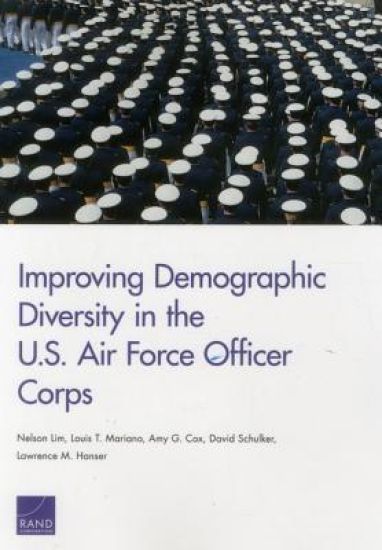
Improving Demographic Diversity in the U.S. Air Force Officer Corps

Improving Demographic Diversity in the U.S. Air Force Officer Corps

Nelson Lim; Louis T. Mariano; Amy G. Cox; David Schulker; Lawrence M. Hanser

RAND
2014
pokkari
Despite the Air Force s efforts to create a force that mirrors the racial, ethnic, and gender differences of the nation s population, minority groups and women are underrepresented in the active-duty line officer population, especially at senior levels (i.e., colonel and above). This report examines the reasons for this, with the goal of identifying potential policy responses."
Evaluation of the New York City Police Department Firearm Training and Firearm-discharge Review Process

Evaluation of the New York City Police Department Firearm Training and Firearm-discharge Review Process

Bernard D. Rostker; Lawrence M. Hanser; William Michael Hix; Carl Jensen; Andrew R. Morral; Greg Ridgeway; Terry L. Schell

RAND
2008
pokkari
In January 2007, New York City Police Commissioner Raymond W. Kelly asked the RAND Corporation to examine the quality and completeness of the New York City Police Department's firearm-training program and identify potential improvements in it and in the police department's firearm-discharge review process. This monograph reports the observations, findings, and recommendations of that study.In January 2007, New York City Police Commissioner Raymond W. Kelly asked the RAND Corporation to examine his department's firearm training and firearm-discharge review. This monograph reports the authors' observations, findings, and recommendations.
Developing Senior Navy Leaders

Developing Senior Navy Leaders

Lawrence M. Hanser; Louis W. Miller; Herbert J. Shukiar; Bruce Newsome

RAND
2008
pokkari
Could U.S. Navy officers be better prepared to become flag officers? This study examines the kinds of expertise required for successful performance in Navy flag billets, and whether recent pools of officers possess this experience. The authors also examine Navy trends over the past decade to identify the types of expertise likely to become more important for Navy leaders in the future.Identifies the expertise requirements of senior Navy leadership positions, as well as the types of experience likely to become more important in the future, to better understand how the Navy should develop its officers.