Kirjailija
Lawrence R. Jacobs
Kirjat ja teokset yhdessä paikassa: 13 kirjaa, julkaisuja vuosilta 2000-2024, suosituimpien joukossa Who Governs?. Vertaile teosten hintoja ja tarkista saatavuus suomalaisista kirjakaupoista.
13 kirjaa
Kirjojen julkaisuhaarukka 2000-2024.
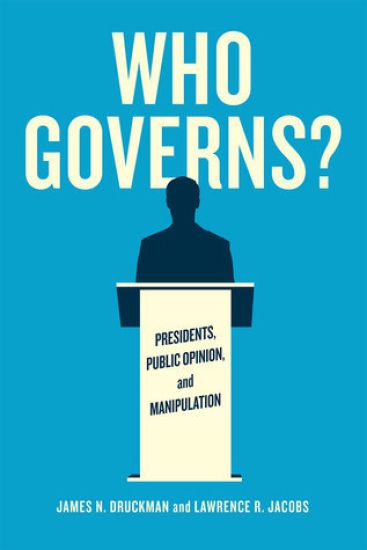
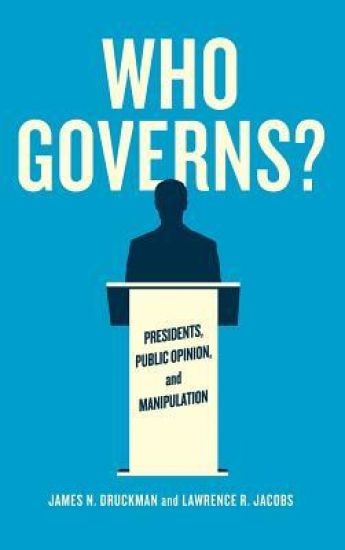
America's model of representational government rests on the premise that elected officials respond to the opinions of citizens. This is a myth, however, say James N. Druckman and Lawrence R. Jacobs. In Who Governs?, Druckman and Jacobs combine existing research with novel data from US presidential archives to show that presidents make policy by largely ignoring the views of most citizens in favor of affluent and well-connected political insiders. Presidents treat the public as pliable, priming it to focus on personality traits and often ignoring it on issues that fail to become salient. Melding big debates about democratic theory with existing research on American politics and innovative use of the archives of three modern presidents-Johnson, Nixon, and Reagan-Druckman and Jacobs deploy lively and insightful analysis to show that the conventional model of representative democracy bears little resemblance to the actual practice of American politics. The authors conclude by arguing that polyarchy and the promotion of accelerated citizen mobilization and elite competition can improve democratic responsiveness. An incisive study of American politics and the flaws of representative government, this book will be warmly welcomed by readers interested in US politics, public opinion, democratic theory, and the fecklessness of American leadership and decision-making.
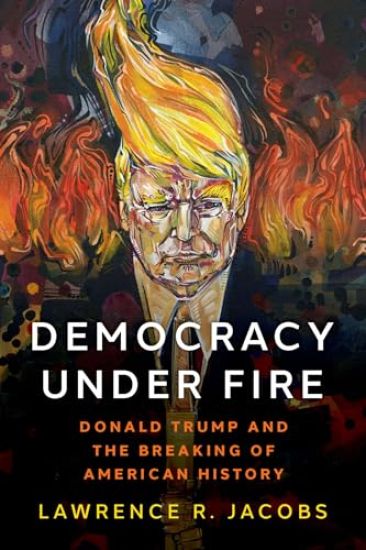
Donald Trump's presidency offered Americans a dire warning regarding the vulnerabilities in their democracy, but the threat is broader and deeper-and looms still. "January 6th was a disgrace," Senate Republican Leader Mitch McConnell solemnly intoned at the end of Donald Trump's second impeachment trial on February 13, 2021. As to the culprit, Senator McConnell declared that "there is no question that President Donald Trump is practically and morally responsible." Before Trump even ran for President, his disdain for the rules, procedures, and norms of American democracy and the US Constitution was well-known and led prominent Republicans to repudiate him as "unfit" for the GOP nomination. Given the clear-eyed assessment of candidate Trump, why did the Republican Party nominate him as its presidential candidate in 2016 and then stand by him during the next eight years, nominating him three times? Much of the attention paid to Trump's rise to power has focused on his corrosive personality and divisive style of governing. But he alone is not the problem. The vulnerability is much broader and deeper. The ascendance of Trump is the culmination of nearly 250 years of political reforms that gradually ceded party nominations to small cliques of ideologically motivated party activists, interest groups, and donors able to exploit the more open primary system that began in the 1970s?. Trump's rise is not an aberration, but a predictable outcome of trends deeply rooted in American history that have only accelerated in the last few decades. In the updated paperback edition of Democracy under Fire, Lawrence Jacobs provides a highly engaging, if disturbing, history of political reforms since the late-eighteenth century that over time dangerously weakened democracy, widened political inequality as well as racial disparities, and rewarded toxic political polarization. Jacobs' searing indictment of political reformers concludes with recommendations to restrain the unbridled ambition of politicians who thrive on division and instead generate broad citizen engagement with tangible policy making.
Donald Trump's presidency offered Americans a dire warning regarding the vulnerabilities in their democracy, but the threat is broader and deeper-and looms still. "January 6th was a disgrace," Senate Republican Leader Mitch McConnell solemnly intoned at the end of Donald Trump's second impeachment trial on February 13, 2021. As to the culprit, Senator McConnell declared that "there is no question that President Donald Trump is practically and morally responsible." Before Trump even ran for President, his disdain for the rules, procedures, and norms of American democracy and the US Constitution was well-known and led prominent Republicans to repudiate him as "unfit" for the GOP nomination. Given the clear-eyed assessment of candidate Trump, why did the Republican Party nominate him as its presidential candidate in 2016 and then stand by him during the next four years? Much of the attention paid to Trump's rise to power has focused on his corrosive personality and divisive style of governing. But he alone is not the problem. The vulnerability is much broader and deeper. The ascendance of Trump is the culmination of nearly 250 years of political reforms that gradually ceded party nominations to small cliques of ideologically-motivated party activists, interest groups, and donors. Trump's rise is not an aberration but a predictable outcome of trends deeply rooted in American history but which accelerated in the last few decades. In Democracy under Fire, Lawrence Jacobs provides a highly engaging, if disturbing, history of political reforms since the late-eighteenth century that over time dangerously weakened democracy, widened political inequality as well as racial disparities, and rewarded toxic political polarization. Jacobs' searing indictment of political reformers concludes with recommendations to restrain the unbridled ambition of politicians who thrive on division and instead generate broad citizen engagement with tangible policy making.
America's model of representational government rests on the premise that elected officials respond to the opinions of citizens. This is a myth, however, say James N. Druckman and Lawrence R. Jacobs. In Who Governs?, Druckman and Jacobs combine existing research with novel data from US presidential archives to show that presidents make policy by largely ignoring the views of most citizens in favor of affluent and well-connected political insiders. Presidents treat the public as pliable, priming it to focus on personality traits and often ignoring it on issues that fail to become salient. Melding big debates about democratic theory with existing research on American politics and innovative use of the archives of three modern presidents - Johnson, Nixon, and Reagan - Druckman and Jacobs deploy lively and insightful analysis to show that the conventional model of representative democracy bears little resemblance to the actual practice of American politics. The authors conclude by arguing that polyarchy and the promotion of accelerated citizen mobilization and elite competition can improve democratic responsiveness. An incisive study of American politics and the flaws of representative government, this book will be warmly welcomed by readers interested in US politics, public opinion, democratic theory, and the fecklessness of American leadership and decision-making.
Obama at the Crossroads
Lawrence R. Jacobs; Desmond S. King
Oxford University Press Inc
2012
nidottu
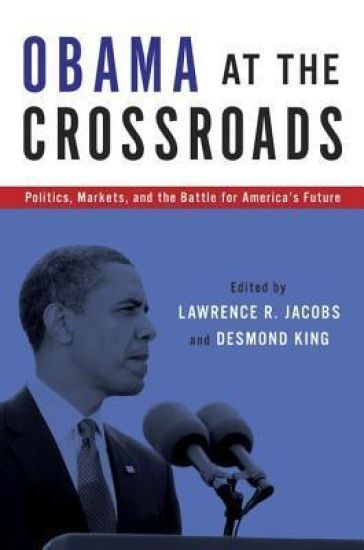
The 2010 election serves as a bookend to one of the remarkable political periods in recent U.S. history. Amidst a profound economic crisis, Americans elected an African American to the presidency and massive Democratic majorities to Congress. Beginning in 2009, the President and Congress put forward a sweeping agenda to both address the economic crisis and enact progressive policies that liberals had been advocating for decades. Within a year and a half, they would pass health care reform and financial reform alongside a stimulus package of nearly a trillion dollars. Democrats also rescued the auto industry via a partial government takeover and expanded the Bush administration's incipient program for saving the banking sector by pouring hundreds of billions of dollars into it. Finally, the Obama administration dramatically increased our commitment in Afghanistan while simultaneously winding down our presence in Iraq. In Obama at the Crossroads, eminent political scientists Desmond King and Larry Jacobs have gathered some of the best scholars in American politics to take stock of this extraordinary period. Covering the financial crisis, health care reform, racial politics, foreign policy, the nature of Obama's leadership, and the relationship between the administration's agenda and broader progressive goals, this will serve as a comprehensive overview of the key issues facing the Obama administration as it entered office.
Talking Together – Public Deliberation and Political Participation in America
Lawrence R. Jacobs; Fay Lomax Cook; Michael X. Dell Carpini
University of Chicago Press
2009
sidottu
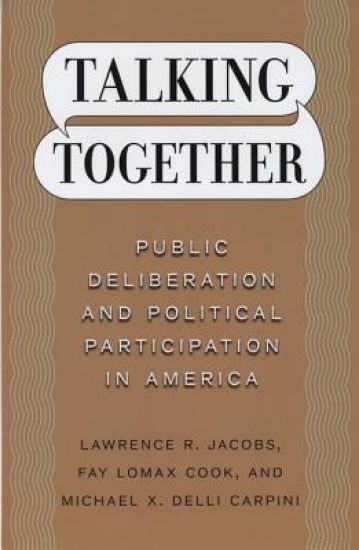
Challenging the conventional wisdom that Americans are less engaged than ever in national life and the democratic process, "Talking Together" paints the most comprehensive portrait available of public deliberation in the United States and explains why it is important to America's future. The authors' original and extensive research reveals how, when, and why citizens talk to each other about the issues of the day. They find that - in settings ranging from one-on-one conversations to e-mail exchanges to larger and more formal gatherings - a surprising two-thirds of Americans regularly participate in public discussions about such pressing issues as the Iraq War, economic development, and race relations. Pinpointing the real benefits of public discourse while considering arguments that question its importance, "Talking Together" presents an authoritative and clear-eyed assessment of deliberation's function in American governance. In the process, it offers concrete recommendations for increasing the power of talk to foster political action.
Talking Together
Lawrence R. Jacobs; Fay Lomax Cook; Michael X. Dell Carpini
University of Chicago Press
2009
nidottu
Challenging the conventional wisdom that Americans are less engaged than ever in national life and the democratic process, "Talking Together" paints the most comprehensive portrait available of public deliberation in the United States and explains why it is important to America's future. The authors' original and extensive research reveals how, when, and why citizens talk to each other about the issues of the day. They find that - in settings ranging from one-on-one conversations to e-mail exchanges to larger and more formal gatherings - a surprising two-thirds of Americans regularly participate in public discussions about such pressing issues as the Iraq War, economic development, and race relations. Pinpointing the real benefits of public discourse while considering arguments that question its importance, "Talking Together" presents an authoritative and clear-eyed assessment of deliberation's function in American governance. In the process, it offers concrete recommendations for increasing the power of talk to foster political action.
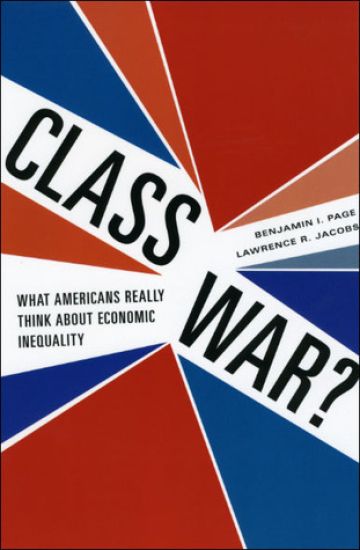
Recent battles in Washington over how to fix America's fiscal failures strengthened the widespread impression that economic issues sharply divide average citizens. Indeed, many commentators split Americans into two opposing groups: uncompromising supporters of unfettered free markets and advocates for government solutions to economic problems. But such dichotomies, Benjamin I. Page and Lawrence R. Jacobs contend, ring false. In "Class War?" they present compelling evidence that most Americans favor free enterprise and practical government programs to distribute wealth more equitably. At every income level and in both major political parties, majorities embrace conservative egalitarianism - a philosophy that prizes individualism and self-reliance as well as public intervention to help Americans pursue these ideals on a level playing field. Drawing on hundreds of opinion studies spanning more than seventy years, including a new comprehensive survey, Page and Jacobs reveal that this worldview translates to broad support for policies aimed at narrowing the gap between rich and poor and creating genuine opportunity for all. They find, for example, that across economic, geographical, and ideological lines, most Americans support higher minimum wages, improved public education, wider access to universal health insurance coverage, and the use of tax dollars to fund these programs. In this surprising and heartening assessment, Page and Jacobs provide our new administration with a popular mandate to combat the economic inequity that plagues our nation.
The Private Abuse of the Public Interest – Market Myths and Policy Muddles
Lawrence D. Brown; Lawrence Jacobs; Lawrence R. Jacobs
University of Chicago Press
2008
sidottu
Despite George W. Bush's professed opposition to big government, federal spending has increased under his watch more quickly than it did during the Clinton administration, and demands on government have continued to grow. Why? Lawrence D. Brown and Lawrence R. Jacobs show that conservative efforts to expand markets and shrink government often have the ironic effect of expanding government's reach by creating problems that force legislators to enact new rules and regulations. Dismantling the flawed reasoning behind these attempts to cast markets and public power in opposing roles, "The Private Abuse of the Public Interest" urges citizens and policy makers to recognize that properly functioning markets presuppose the government's ability to create, sustain, and repair them over time.The authors support their pragmatic approach with evidence drawn from in-depth analyses of education, transportation, and health care policies. In each policy area, initiatives such as school choice, deregulation of airlines and other carriers, and the promotion of managed care have introduced or enlarged the role of market forces with the aim of eliminating bureaucratic inefficiency. But in each case, the authors show, reality proved to be much more complex than market models predicted. This complexity has resulted in a political cycle - strikingly consistent across policy spheres - that culminates in public interventions to sustain markets while protecting citizens from their undesirable effects. Situating these case studies in the context of more than two hundred years of debate about the role of markets in society, Brown and Jacobs call for a renewed focus on public-private partnerships that recognize and respect both sectors' vital - and fundamentally complementary - roles.
The Private Abuse of the Public Interest
Lawrence D. Brown; Lawrence Jacobs; Lawrence R. Jacobs
University of Chicago Press
2008
nidottu
Despite George W. Bush's professed opposition to big government, federal spending has increased under his watch more quickly than it did during the Clinton administration, and demands on government have continued to grow. Why? Lawrence D. Brown and Lawrence R. Jacobs show that conservative efforts to expand markets and shrink government often have the ironic effect of expanding government's reach by creating problems that force legislators to enact new rules and regulations. Dismantling the flawed reasoning behind these attempts to cast markets and public power in opposing roles, "The Private Abuse of the Public Interest" urges citizens and policy makers to recognize that properly functioning markets presuppose the government's ability to create, sustain, and repair them over time.The authors support their pragmatic approach with evidence drawn from in-depth analyses of education, transportation, and health care policies. In each policy area, initiatives such as school choice, deregulation of airlines and other carriers, and the promotion of managed care have introduced or enlarged the role of market forces with the aim of eliminating bureaucratic inefficiency. But in each case, the authors show, reality proved to be much more complex than market models predicted. This complexity has resulted in a political cycle - strikingly consistent across policy spheres - that culminates in public interventions to sustain markets while protecting citizens from their undesirable effects. Situating these case studies in the context of more than two hundred years of debate about the role of markets in society, Brown and Jacobs call for a renewed focus on public-private partnerships that recognize and respect both sectors' vital - and fundamentally complementary - roles.
Politicians Don't Pander
Lawrence R. Jacobs; Robert Y. Shapiro
University of Chicago Press
2000
nidottu
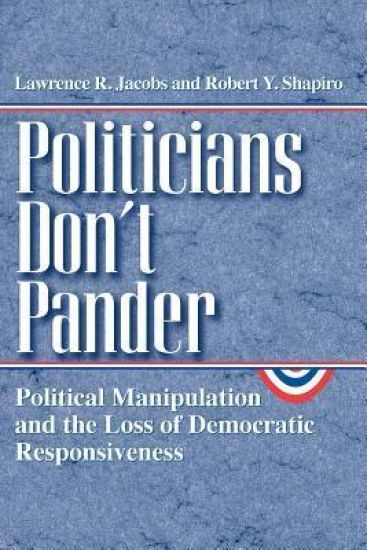
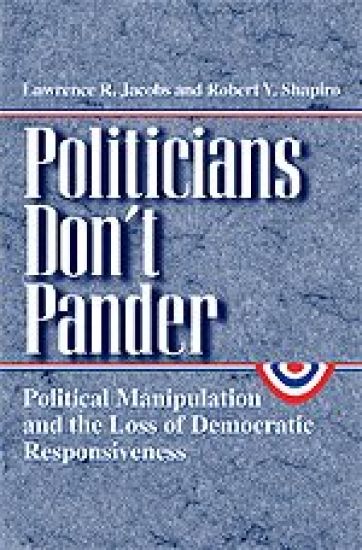
Public opinion polls are everywhere. Journalists report their results without hesitation, and political activists of all kinds spend millions of dollars on them, fuelling the widespread assumption that elected officials "pander" to public opinion -that they tailor their policy decisions to the results of polls. In this provocative and engagingly written book, the authors argue that the reality is quite the opposite. In fact, when not facing election, contemporary presidents and members of Congress routinely ignore the public's policy preferences and follow their own political philosophies, as well as those of their party's activists, their contributors and their interest group allies. Politicians devote substantial time, effort and money to tracking public opinion, not for the purposes of policymaking, but to change public opinion - to determine how to craft their public statements and actions to win support for the policies they and their supporters want. Taking two recent, dramtic episodes - President Clinton's failed health care reform campaign and Newt Gingrich's "Contract with America" - as examples, the authors show how both used public opinion research and the media to change the public's mind. Such orchestrated displays help explain the media's preoccupation with political conflict strategy and, the authors argue, have propelled levels of public distrust and fear of government to record highs. Revisiting the fundamental premises of representative democracy, this accessible book asks us to reexamine whether our government really responds to the broad public or to the narrower interests and values of certain groups. And with the 2000 campaign season heating up, "Politicians Don't Pander" could not be more timely.
Politicians Don't Pander
Lawrence R. Jacobs; Robert Y. Shapiro
University of Chicago Press
2000
sidottu
Public opinion polls are everywhere. Journalists report their results without hesitation, and political activists of all kinds spend millions of dollars on them, fuelling the widespread assumption that elected officials "pander" to public opinion -that they tailor their policy decisions to the results of polls. In this provocative and engagingly written book, the authors argue that the reality is quite the opposite. In fact, when not facing election, contemporary presidents and members of Congress routinely ignore the public's policy preferences and follow their own political philosophies, as well as those of their party's activists, their contributors and their interest group allies. Politicians devote substantial time, effort and money to tracking public opinion, not for the purposes of policymaking, but to change public opinion - to determine how to craft their public statements and actions to win support for the policies they and their supporters want. Taking two recent, dramtic episodes - President Clinton's failed health care reform campaign and Newt Gingrich's "Contract with America" - as examples, the authors show how both used public opinion research and the media to change the public's mind. Such orchestrated displays help explain the media's preoccupation with political conflict strategy and, the authors argue, have propelled levels of public distrust and fear of government to record highs. Revisiting the fundamental premises of representative democracy, this accessible book asks us to reexamine whether our government really responds to the broad public or to the narrower interests and values of certain groups. And with the 2000 campaign season heating up, "Politicians Don't Pander" could not be more timely.