Kirjojen hintavertailu. Mukana 12 409 052 kirjaa ja 12 kauppaa.

Kirjailija

Lawrence R. Samuel

Kirjat ja teokset yhdessä paikassa: 33 kirjaa, julkaisuja vuosilta 2002-2025, suosituimpien joukossa The American Private School. Vertaile teosten hintoja ja tarkista saatavuus suomalaisista kirjakaupoista.

Mukana myös kirjoitusasut: Lawrence R Samuel

33 kirjaa

Kirjojen julkaisuhaarukka 2002-2025.

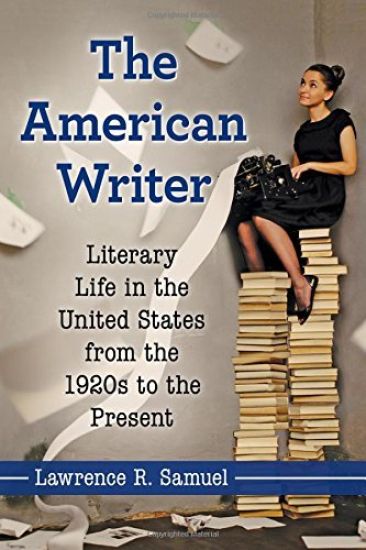
The American Writer

The American Writer

Lawrence R. Samuel

McFarland Co Inc
2017
pokkari
The American writer--both real and fictitious, famous and obscure--has traditionally been situated on the margins of society, an outsider looking in. From The Great Gatsby's Nick Carraway to the millions of bloggers today, writers are generally seen as onlookers documenting the human condition. Yet their own collective story has largely gone untold. Tracing the role of the writer in the United States over the last century, this book describes how those who use language as a creative medium have held a special place in our collective imagination.
Boomers 3.0

Boomers 3.0

Lawrence R. Samuel

Praeger Publishers Inc
2017
sidottu
Capitalizing on what is arguably the most important social phenomenon of our time and place—the aging of America—this book shows organizations how to market specifically to baby boomers in their third act of life.The graying of America is undeniable, with an estimated 10,000 boomers turning 65 every day. But to dismiss the baby boomer generation as a group no longer worth marketing to would be foolish. According to the Census Bureau, in 2029—the year when the last boomer will have turned 65—there will still be more than 61 million boomers, roughly 17 percent of the projected population of the United States. Boomers will still be the wealthiest generation in the United States until at least 2030, according to the Deloitte Center for Financial Services, with their share of net household wealth to peak at 50.2 percent by 2020.Boomers 3.0: Marketing to Baby Boomers in Their Third Act of Life describes how to market to baby boomers from a cultural perspective, specifically addressing the demographic group of baby boomers in their later adulthood—a period that will continue for the next two to three decades. The author uses the term "3.0" to indicate the baby boomers' third phase of life and explains how this third act of life will differ from earlier periods; accordingly, organizations should take a different approach to marketing to them than in the past. This book offers a way to contextualize business objectives within a culturally based, forward-thinking framework that fully leverages the opportunities presented by what is perhaps the biggest and most affluent customer base in history. Readers will be able to use the strategies described to map territories to stake and mine in targeting boomers, create meaningful relationships with individuals in this group, and communicate effectively with boomers to offer them products and services.
The American Way of Life

The American Way of Life

Lawrence R. Samuel

Fairleigh Dickinson University Press
2017
sidottu
Telling the full story of the American Way of Life (or more simply the American Way) in the United States over the course of the last century reveals key insights that add to our understanding of American culture. Lawrence R. Samuel argues that since the term was popularized in the 1930s, the American Way has served as the primary guiding mythology or national ethos of the United States. More than that, however, this work shows that the American Way has represented many things to many people, making the mythology a useful device for anyone wishing to promote a particular agenda that serves his or her interests. A consumerist lifestyle supported by a system based in free enterprise has been the ideological backbone of the American Way, but the term has been attached to everything from farming to baseball to barbecue. There really is no single, identifiable American Way and never has been—it becomes clear after tracing its history—making it a kind of Zelig of belief systems. If our underlying philosophy or set of values is amorphous and nebulous, then so is our national identity and character, Samuel concludes, implying that the meaning of America is elastic and accommodating to many interpretations. This unique thesis sets off this work from other books and helps establish it as a seminal resource within the fields of American history and American studies.
Aging in America

Aging in America

Lawrence R. Samuel

University of Pennsylvania Press
2017
sidottu
Aging is a preoccupation shared by beauty bloggers, serious journalists, scientists, doctors, celebrities-arguably all of adult America, given the pervasiveness of the crusade against it in popular culture and the media. We take our youth-oriented culture as a given but, as Lawrence R. Samuel argues, this was not always the case. Old age was revered in early America, in part because it was so rare. Indeed, it was not until the 1960s, according to Samuel, that the story of aging in America became the one we are most familiar with today: aging is a disease that science will one day cure, and in the meantime, signs of aging should be prevented, masked, and treated as a source of shame. By tracing the story of aging in the United States over the course of the last half century, Samuel vividly demonstrates the ways in which getting older tangibly contradicts the prevailing social values and attitudes of our youth-obsessed culture. As a result, tens of millions of adults approaching their sixties and seventies in this decade do not know how to age, as they were never prepared to do so. Despite recent trends that suggest a more positive outlook, getting old is still viewed in terms of physical and cognitive decline, resulting in discrimination in the workplace and marginalization in social life. Samuels concludes Aging in America by exhorting his fellow baby boomers to use their economic clout and sheer numbers to change the narrative of aging in America.
American Fatherhood

American Fatherhood

Lawrence R. Samuel

Rowman Littlefield
2015
sidottu
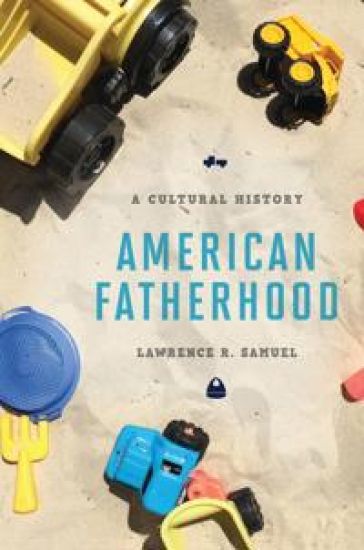
American Fatherhood: A Cultural History traces changes in what it means to be a dad in America, from the 1960s through today. The book begins with an overview of fatherhood in America from the “founding fathers” through the 1950s and progresses to the role of fathers as they were encouraged to move beyond being simply providers to becoming more engaged parents, navigating complex and changing gender and family expectations. By tracing the story of fatherhood in the United States over the course of the last half-century, American Fatherhood reveals key insights that add to our understanding of American culture. The book argues that, for most of the twentieth century, male parents were urged to embrace the values and techniques of motherhood. In recent years, however, fathers have rejected this model in place of one that affirms and even celebrates their maleness and their relationships with their children. After decades of attempting to adopt the parenting styles of women, in other words, men have finally forged a form of child-raising that is truer to themselves. In short, fatherhood has become a means of asserting, rather than denying or suppressing, masculinity—an original and counterintuitive argument that makes us rethink the idea and practice of being a dad today.
Remembering America

Remembering America

Lawrence R. Samuel

University of Nebraska Press
2015
sidottu
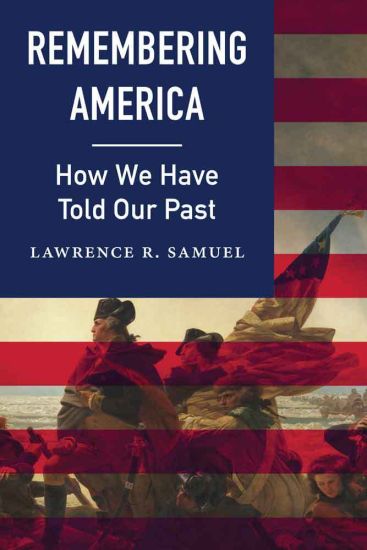
American history is ubiquitous, underscoring everything from food to travel to architecture and design. It is also emotionally charged, frequently crossing paths with political and legal issues. In Remembering America, Lawrence R. Samuel examines the place that American history has occupied within education and popular culture and how it has continually shaped and reflected our cultural values and national identity. The story of American history, Samuel explains, is not a straight line but rather one filled with twists and turns and ups and downs, its narrative path as winding as that of the United States as a whole. Organized around six distinct eras of American history ranging from the 1920s to the present, Samuel shows that our understanding of American history has often generated struggle and contention as ideologically opposed groups battled over ownership of the past. As women and minorities gained greater power and a louder voice in the national conversation, our perspectives on American history became significantly more multicultural, bringing race, gender, and class issues to the forefront. These new interpretations of our history helped to reshape our identity on both a national and an individual level. Samuel argues that the fight for ownership of our past, combined with how those owners have imparted history to our youth, crucially affects who we are. Our interpretation and expression of our country’s past reflects how that self-identity has changed over the last one hundred years and created a strong sense of our collective history-one of the few things Americans all have in common.
New York City 1964

New York City 1964

Lawrence R. Samuel

McFarland Co Inc
2014
nidottu
New York City 1964: A Cultural History is, as the title makes clear, a cultural history of New York City in the year 1964. The book focuses on five seminal events that occurred in the city that pivotal year: (1) the ""British Invasion,"" i.e., arrival of The Beatles in New York in February; (2) the murder of Kitty Genovese in Queens in March; (3) the world's fair that ran in Queens between April and October; (4) the ""race riots"" in Brooklyn and Harlem in July; and (5) the world series in the Bronx between the New York Yankees and the St. Louis Cardinals. Via an exploration of these five events - the biggest (and to some most threatening) thing to happen in pop culture since Elvis's appearance on The Ed Sullivan Show, a shocking crime that reportedly went ignored, the last great world's fair, a key, disturbing moment of the civil rights movement and a legendary contest in sports that represented the end of an era - readers will have a much better understanding and appreciation of the social turbulence taking place in New York City and the United States in the mid-1960s.
Shrink

Shrink

Lawrence R. Samuel

University of Nebraska Press
2013
sidottu
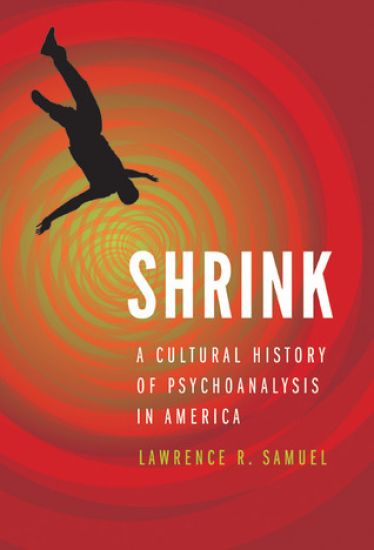
“Psychology has stepped down from the university chair into the marketplace” was how the New York Times put it in 1926. Another commentator in 1929 was more biting. Psychoanalysis, he said, had over a generation, “converted the human scene into a neurotic.” Freud first used the word around 1895, and by the 1920s psychoanalysis was a phenomenon to be reckoned with in the United States. How it gained such purchase, taking hold in virtually every aspect of American culture, is the story Lawrence R. Samuel tells in Shrink, the first comprehensive popular history of psychoanalysis in America.Arriving on the scene at around the same time as the modern idea of the self, psychoanalysis has both shaped and reflected the ascent of individualism in American society. Samuel traces its path from the theories of Freud and Jung to the innermost reaches of our current me-based, narcissistic culture. Along the way he shows how the arbiters of culture, high and low, from public intellectuals, novelists, and filmmakers to Good Housekeeping and the Cosmo girl, mediated or embraced psychoanalysis (or some version of it), until it could be legitimately viewed as an integral feature of American consciousness.
Sexidemic

Sexidemic

Lawrence R. Samuel

Rowman Littlefield
2013
sidottu
Sexidemic is the first real cultural history of sexuality in the United States since the end of World War II. For a people who supposedly love sex, the author argues, Americans have had no shortage of problems with it. Since the end of World War II, in fact, we’ve had a contentious relationship with sexuality, the subject a source of considerable tension and controversy on both an individual and societal level. Rather than being a simple pleasure of life, something to be enjoyed, sex has served as a challenging and disruptive force in many Americans’ everyday lives for the last two-thirds of a century. Our love affair with sex has thus been a rocky one, filled with bumps in the road that have caused major instability across our cultural landscape. Our individualistic, competitive, consumerist, and anxious national character is both reflected in and reinforced by this “sexidemic,” something few have recognized or perhaps want to admit. By charting the cultural trajectory of sex in America since the end of World War II, Sexidemic reveals how the nation’s continual woes with sexuality helped make us an anxious, insecure people. The sex lives of many, perhaps most Americans have been in a perpetual state of crisis, a constant source of concern. We’ve fretted over every dimension of it, with problems in both quality and quantity. With this unhealthy view of sexuality, it was not surprising that we felt we needed a variety of potions and gadgets to make it happen or be pleasurable. In tracing the cultural trajectory of sex in our society, Samuel illustrates our bipolar approach to sexuality: low libido and sex addiction emerged as common disorders, and sex scandal after sex scandal has made headlines, especially over the last couple of years. Only money has surpassed sex as a source of stress for Americans; indeed, sex has come to be seen and treated as a commodity. In this timely work, the author traces the role sex plays in our society, how it shapes us and the world around us, and how we got where we are today in our views, treatment, and practice of sex and sexuality in our everyday lives.
Freud on Madison Avenue

Freud on Madison Avenue

Lawrence R. Samuel

University of Pennsylvania Press
2013
pokkari
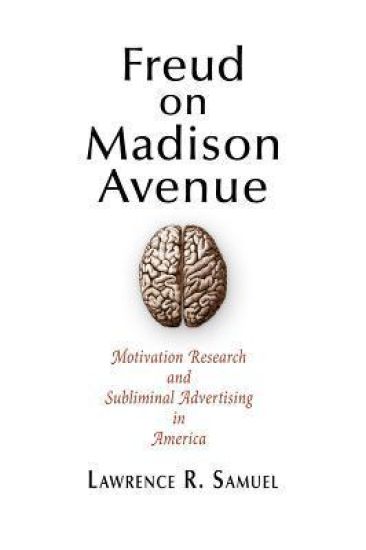
What do consumers really want? In the mid-twentieth century, many marketing executives sought to answer this question by looking to the theories of Sigmund Freud and his followers. By the 1950s, Freudian psychology had become the adman's most powerful new tool, promising to plumb the depths of shoppers' subconscious minds to access the irrational desires beneath their buying decisions. That the unconscious was the key to consumer behavior was a new idea in the field of advertising, and its impact was felt beyond the commercial realm. Centered on the fascinating lives of the brilliant men and women who brought psychoanalytic theories and practices from Europe to Madison Avenue and, ultimately, to Main Street, Freud on Madison Avenue tells the story of how midcentury advertisers changed American culture. Paul Lazarsfeld, Herta Herzog, James Vicary, Alfred Politz, Pierre Martineau, and the father of motivation research, Viennese-trained psychologist Ernest Dichter, adapted techniques from sociology, anthropology, and psychology to help their clients market consumer goods. Many of these researchers had fled the Nazis in the 1930s, and their decidedly Continental and intellectual perspectives on secret desires and inner urges sent shockwaves through WASP-dominated postwar American culture and commerce. Though popular, these qualitative research and persuasion tactics were not without critics in their time. Some of the tools the motivation researchers introduced, such as the focus group, are still in use, with "consumer insights" and "account planning" direct descendants of Freudian psychological techniques. Looking back, author Lawrence R. Samuel implicates Dichter's positive spin on the pleasure principle in the hedonism of the Baby Boomer generation, and he connects the acceptance of psychoanalysis in marketing culture to the rise of therapeutic culture in the United States.
Supernatural America

Supernatural America

Lawrence R. Samuel

Praeger Publishers Inc
2011
sidottu
This book is much more than an authoritative and compelling look at the cultural history of the supernatural over the last century in America—it also explains why we want to believe.The supernatural—psychic phenomena (telepathy, clairvoyance, or ESP), communicating with the dead, and the sighting and tracking of ghosts—has played an integral role in American culture across the last century. In fact, attention and interest in the supernatural has increased, despite our society's reliance upon and enthusiasm for science and technology. Even some top scholars, officials from the military and police, and public figures in places as high as the Oval Office have believed in at least some aspects of the supernatural.Supernatural America: A Cultural History is the first book to examine the cultural history of the supernatural in the United States, documenting how the expansion of science and technology coincided with a rise in supernatural/paranormal beliefs. From the flourishing of "spiritism" in the 1920s to the early 21st century, when the paranormal is bigger than ever, this entertaining and educational book explains the irresistible allure of the supernatural in America.
Future

Future

Lawrence R. Samuel

University of Texas Press
2009
pokkari
The future is not a fixed idea but a highly variable one that reflects the values of those who are imagining it. By studying the ways that visionaries imagined the future-particularly that of America-in the past century, much can be learned about the cultural dynamics of the time. In this social history, Lawrence R. Samuel examines the future visions of intellectuals, artists, scientists, businesspeople, and others to tell a chronological story about the history of the future in the past century. He defines six separate eras of future narratives from 1920 to the present day, and argues that the milestones reached during these years-especially related to air and space travel, atomic and nuclear weapons, the women's and civil rights movements, and the advent of biological and genetic engineering-sparked the possibilities of tomorrow in the public's imagination, and helped make the twentieth century the first century to be significantly more about the future than the past. The idea of the future grew both in volume and importance as it rode the technological wave into the new millennium, and the author tracks the process by which most people, to some degree, have now become futurists as the need to anticipate tomorrow accelerates.