Kirjojen hintavertailu. Mukana 12 595 353 kirjaa ja 12 kauppaa.

Kirjailija

Lawrence Weschler

Kirjat ja teokset yhdessä paikassa: 29 kirjaa, julkaisuja vuosilta 1996-2023, suosituimpien joukossa Robert Irwin Getty Garden - Revised Edition. Vertaile teosten hintoja ja tarkista saatavuus suomalaisista kirjakaupoista.

29 kirjaa

Kirjojen julkaisuhaarukka 1996-2023.

And How Are You, Dr. Sacks?

And How Are You, Dr. Sacks?

Lawrence Weschler

Picador USA
2020
nidottu
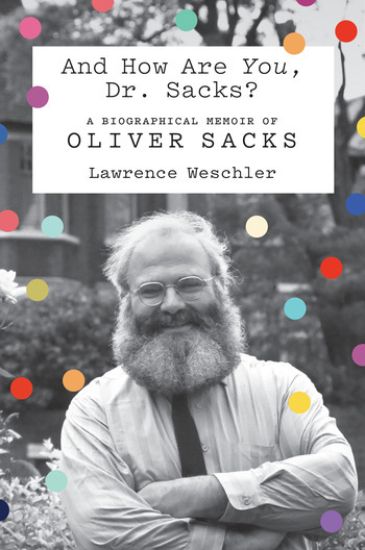
The author Lawrence Weschler began spending time with Oliver Sacks in the early 1980s, when he set out to profile the neurologist for his own new employer, The New Yorker. Almost a decade earlier, Dr. Sacks had published his masterpiece Awakenings - the account of his long-dormant patients miraculous but troubling return to life in a Bronx hospital ward. But the book had hardly been an immediate success, and the rumpled clinician was still largely unknown. Over the ensuing four years, the two men worked closely together until, for wracking personal reasons, Sacks asked Weschler to abandon the profile, a request to which Weschler acceded. The two remained close friends, however, across the next thirty years and then, just as Sacks was dying, he urged Weschler to take up the project once again. This book is the result of that entreaty. Weschler sets Sacks’s brilliant table talk and extravagant personality in vivid relief, casting himself as a beanpole Sancho to Sacks’s capacious Quixote. We see Sacks rowing and ranting and caring deeply; composing the essays that would form The Man Who Mistook His Wife for a Hat; recalling his turbulent drug-fueled younger days; helping his patients and exhausting his friends; and waging intellectual war against a medical and scientific establishment that failed to address his greatest concern: the spontaneous specificity of the individual human soul. And all the while he is pouring out a stream of glorious, ribald, hilarious, and often profound conversation that establishes him as one of the great talkers of the age. Here is the definitive portrait of Sacks as our preeminent romantic scientist, a self-described “clinical ontologist” whose entire practice revolved around the single fundamental question he effectively asked each of his patients: How are you? Which is to say, How do you be? A question which Weschler, with this book, turns back on the good doctor himself.
Robert Irwin Getty Garden - Revised Edition

Robert Irwin Getty Garden - Revised Edition

Lawrence Weschler

Getty Publications
2020
sidottu
Among the most beloved sites at the Getty Center, the Central Garden has aroused intense interest from the moment artist Robert Irwin was awarded the commission. First published in 2002, 'Robert Irwin Getty Garden' is comprised of a series of discussions between noted author Lawrence Weschler and Irwin, providing a lively account of what Irwin has playfully termed "a sculpture in the form of a garden aspiring to be art." The text revolves around four garden walks: extended conversations in which the artist explains the critical choices he made - from plant materials to steel - in the creation of a living work of art that has helped to redefine what a modern garden can and should be. This updated edition features new photography of the Central Garden in a smaller, more accessible format.
A Trove of Zohars

A Trove of Zohars

Lawrence Weschler

Hat Beard Press
2023
sidottu
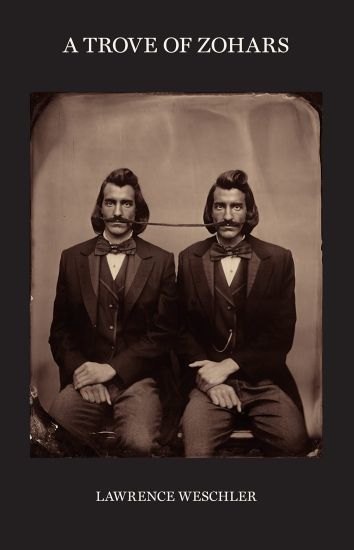
So Lawrence Weschler was minding his own business, as all his stories begin, when he got a call from Gravity Goldberg. Gravity (her real name ) introduced herself as the Director of Public Programs and Visitor Experience at The Contemporary Jewish Museum in San Francisco. She was calling, she told him, to apprise him of an upcoming show--an inaugural exhibition, that is, of a recently uncovered trove of work by Shimmel Zohar, a mid-19th-century Lithuanian immigrant photographer (contemporary of Mathew Brady), who had chronicled the Jewish immigrant community of the Lower East Side of 1860s-1870s Manhattan in unparalleled detail, compiling a complete inventory of professions and types. Or not. There was, she suggested, some slippage in the whole story, and they were trying to find someone who might be willing to investigate things, and they were wondering, might he be interested? Thus begins an antic tale of investigative perplex and vertiginous inquiry, as Weschler tracks down Stephen Berkman, the wet-collodion devotee who claims to have discovered the trove in question, but it's a long and loopy story. And indeed, Weschler's account evolves into the fourth volume of his ongoing "Chronicles of Slippage" series, doing for the early history of photography and the long heritance of Judaism what the series' first volume, the Pulitzer-shortlisted Mr. Wilson's Cabinet of Wonder, once did for the history of museums and the phenomenology of marvel. And that's just the half of it, for the main text sprouts a veritable delirium of digressive footnotes (taking up more than half the book), constituting what may be the closest we are going to ever get by way of memoir from this confounding and beloved writer.
Station to Station

Station to Station

Lawrence Weschler

Daylight Books
2022
sidottu
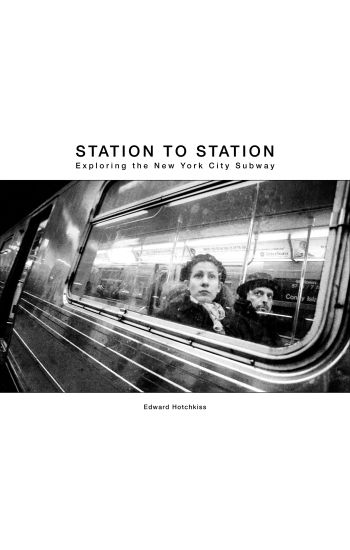
Photographer Ed Hotchkiss traveled to neighborhoods from the north Bronx to Rockaway; from the teeming center of Queens to the western edge of midtown. This unexpected odyssey resulted in a group of photographs that reveals the true humanity on the NYC subway.
Bruce Beasley

Bruce Beasley

Bruce Beasley; Tom Moran; Marlena Doktorczyk-Donohue; Lawrence Weschler

Scala Arts Heritage Publishers Ltd
2022
sidottu
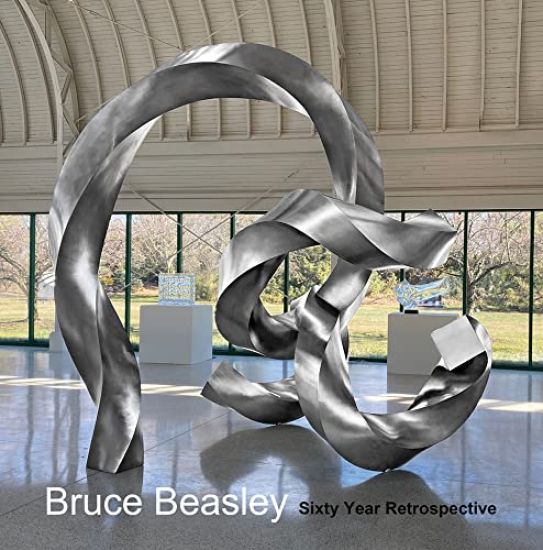
For six decades, sculptor Bruce Beasley has worked in a range of media to build complex, resonant sculptures that communicate the primacy of form and express the emotional language of shape. Bruce Beasley: Sixty Year Retrospective is an elegant survey of his illustrious career: from early experiments in scrap iron during the 1960s; aluminum works of the 1970s; cast acrylic sculptures of the 1970s and 80s; and stone, stainless steel and bronze works of the 1990s to the present day. The catalogue also features Beasley’s latest venture into two-dimensional media. This richly illustrated book includes Beasley’s reflections on his career. In a conversation, Beasley and Lawrence Weschler discuss art and activism. Essays discussing his processes and appraising his impact are written by curator Tom Moran and Marlena Doktorczyk-Donohue, Director of the Bruce Beasley Foundation and Professor of Art History at Otis College of Art and Design, Los Angeles.
Konspira

Konspira

Maciej Lopinski; Marcin Moskit; Mariusz Wilk; Lawrence Weschler

University of California Press
2021
sidottu
This title is part of UC Press's Voices Revived program, which commemorates University of California Press’s mission to seek out and cultivate the brightest minds and give them voice, reach, and impact. Drawing on a backlist dating to 1893, Voices Revived makes high-quality, peer-reviewed scholarship accessible once again using print-on-demand technology. This title was originally published in 1990.
Konspira

Konspira

Maciej Lopinski; Marcin Moskit; Mariusz Wilk; Lawrence Weschler

University of California Press
2021
pokkari
This title is part of UC Press's Voices Revived program, which commemorates University of California Press’s mission to seek out and cultivate the brightest minds and give them voice, reach, and impact. Drawing on a backlist dating to 1893, Voices Revived makes high-quality, peer-reviewed scholarship accessible once again using print-on-demand technology. This title was originally published in 1990.
This Land

This Land

Lawrence Weschler; David Opdyke; Maya Wiley

Monacelli Press
2020
sidottu
David Opdyke's massive collage This Land (as elucidated in this book by award-winning author Lawrence Weschler) presents a slow-burning satire of the American Dream as it blunders into the reality of climate change This Land is an epic mural fashioned by New York artist David Opdyke out of vintage American postcards which he then treated with disconcerting painted interventions. What at first reads as a panoramic bird's-eye view of an idyllic alpine valley reveals itself, upon closer examination, to be an array of connected scenes and vignettes. Across more than five hundred postcards, each one portraying a distinct slice of idealized Americana (town squares, mountain highways, main streets and county seats), Opdyke's acerbic, emotionally jarring alterations gradually become evident. In this prophetic refashioning, forests are aflame, tornadoes torque from one card into the next, a steamboat gets swallowed up whole by some sort of new megafauna, frogs fall like Biblical hail from the sky. The human responses form a cacophony of desires and demands, panic and denial. Biplanes trail banners urging Repent Now!, others insist Legislative Action Would Be Premature, while still others advertise seats on an actual Ark. The book This Land affords readers a closer and closer viewing of Opdyke’s devastatingly sardonic take on our impending ecological future, one in turn enlivened by Lawrence Weschler's vividly sly blend of artist profile and critical interpretation. Featuring introductory essays providing background on the artist and the project as a whole, This Land also divides the sprawling mural into eight sections to allow for a more intimate viewing. Interspersed among the detailed visual sections are insightful thematic essays by Lawrence Weschler and an afterword that serves as a stirring call to action by civil rights attorney Maya Wiley. Additionally, the book's jacket is printed on both sides, folding out to reveal the work in its full grandeur.
And How Are You, Dr. Sacks?

And How Are You, Dr. Sacks?

Lawrence Weschler

Farrar, Straus Giroux Inc
2019
sidottu
The author Lawrence Weschler began spending time with Oliver Sacks in the early 1980s, when he set out to profile the neurologist for his own new employer, The New Yorker. Almost a decade earlier, Dr. Sacks had published his masterpiece Awakenings - the account of his long-dormant patients’ miraculous but troubling return to life in a Bronx hospital ward. But the book had hardly been an immediate success, and the rumpled clinician was still largely unknown. Over the ensuing four years, the two men worked closely together until, for wracking personal reasons, Sacks asked Weschler to abandon the profile, a request to which Weschler acceded. The two remained close friends, however, across the next thirty years and then, just as Sacks was dying, he urged Weschler to take up the project once again. This book is the result of that entreaty. Weschler sets Sacks’s brilliant table talk and extravagant personality in vivid relief, casting himself as a beanpole Sancho to Sacks’s capacious Quixote. We see Sacks rowing and ranting and caring deeply; composing the essays that would form The Man Who Mistook His Wife for a Hat; recalling his turbulent drug-fueled younger days; helping his patients and exhausting his friends; and waging intellectual war against a medical and scientific establishment that failed to address his greatest concern: the spontaneous specificity of the individual human soul. And all the while he is pouring out a stream of glorious, ribald, hilarious, and often profound conversation that establishes him as one of the great talkers of the age. Here is the definitive portrait of Sacks as our preeminent romantic scientist, a self-described “clinical ontologist” whose entire practice revolved around the single fundamental question he effectively asked each of his patients: How are you? Which is to say, How do you be? A question which Weschler, with this book, turns back on the good doctor himself.
Waves Passing in the Night

Waves Passing in the Night

Lawrence Weschler

Bloomsbury USA
2017
sidottu
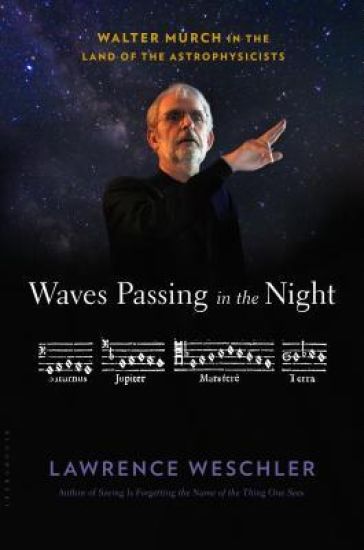
For film aficionados, Walter Murch is legendary--a three-time Academy Award winner, arguably the most admired sound and film editor in the world for his work on Apocalypse Now, The Godfather trilogy, The English Patient, and many others. Outside of the studio, his mind is wide-ranging; his passion, pursued for several decades, has been astrophysics, in particular the rehabilitation of Titius-Bode, a long-discredited 18th century theory regarding the patterns by which planets and moons array themselves in gravitational systems across the universe. Though as a consummate outsider he's had a hard time attracting any sort of comprehensive hearing from professional astrophysicists, Murch has made advances that even some of them find intriguing, including a connection between Titius Bode and earlier notions--going back past Kepler and Pythagorus--of musical harmony in the heavens. Unfazed by rejection, ever probing, Murch perseveres in the highest traditions of outsider science.Lawrence Weschler brings Murch's quest alive in all its seemingly quixotic, yet still plausible, splendor, probing the basis for how we know what we know, and who gets to say. "The wholesale rejection of alternative theories has repeatedly held back the progress of vital science," Weschler observes, citing early twentieth-century German amateur Alfred Wegener, whose speculations about continental drift were ridiculed at first, only to be accepted as fact decades later. Theoretical physicist Lee Smolin says "It is controversy that brings science alive"--and Murch's quest does that in spades. His fascination with the way the planets and their moons are arranged opens up the field of celestial mechanics for general readers, sparking an awareness of the vast and (to us) invisible forces constantly at play in the universe.
Wonder

Wonder

Nicholas Bell; Lawrence Weschler

D Giles Ltd
2015
sidottu
"Wonder" celebrates the reopening of the Smithsonian s Renwick Gallery following a major renovation of its historic landmark building, the first purpose-built art museum in the United States. Nine major contemporary artists, including Maya Lin, Tara Donovan, Leo Villareal, Patrick Dougherty, and Janet Echelman, were invited to take over the Renwick s galleries, transforming the whole of the museum into an immersive cabinet of wonders. Mundane materials such as index cards, marbles, sticks, and thread are conjured into strange new worlds that demonstrate the qualities uniting these artists: a sensitivity to site and the ways we experience place, a passion for making and materiality, and a desire to provoke awe.A wide-ranging essay by Nicholas R. Bell connects these artworks to wonder s role throughout Western culture, to the question of how museums have evolved as places to encounter wondrous things, and to the symbolic weight of the moment as this building is dedicated to art for the third instance in three centuries. It is of no small consequence, writes Bell, that we, as a public, commit to the perpetuation of spaces that harbor the potential for subjective and intensive encounters with art. That we maintain museums for this purpose reveals wonder to be fundamental in our quest to establish who we are, and to grasp the universe beyond."
Strange Pilgrims

Strange Pilgrims

The Contemporary Austin; Heather Pesanti; Ann Reynolds; Lawrence Weschler; Alva Noë

University of Texas Press
2015
sidottu
In the past fifty years, contemporary artistic practice has witnessed a surge in phenomenological types of artistic intent and methodology, represented by divergent impulses sharing a desire to channel ephemeral elements, resist categorization, and defy the rarified museum experience. Time-based work is now widely accepted as primary exhibition matter, and in the past ten years, performance art has risen to the mainstream. Defining “experiential art” as work that is immersive, participatory, performative, and kinetic, Strange Pilgrims is an exhibition and accompanying catalogue organized by The Contemporary Austin, weaving fourteen artists into a loose collection of propositions occupying unconventional spaces and formats. The title comes from Gabriel García Márquez’s collection of twelve short stories of the same name, riffing on the wandering protagonist as a metaphor for an open-ended journey through strange and unfamiliar spaces.Created in tandem with the exhibition on view in fall 2015 and winter 2016 at The Contemporary Austin’s two sites, as well as a third venue, the Visual Arts Center at the University of Texas at Austin, this catalogue presents a parallel but stand-alone assemblage of ideas and concepts that respond to and resonate with one another under the broad umbrella of experience and perception. The book features an essay by the curator Heather Pesanti, a guest essay by the scholar Ann Reynolds, and an interview between author and critic Lawrence Weschler and the philosopher Alva Noë. All fourteen artists are represented through individual sections with color plates and explicatory text. In addition, Artist’s Voice sections have been contributed by Roger Hiorns, Trisha Baga and Jessie Stead, and Lakes Were Rivers.
Liminal Infrastructure – The Optics Division of the Metabolic Studio

Liminal Infrastructure – The Optics Division of the Metabolic Studio

Lauren Bon; Lawrence Weschler; Gregory J. Harris; Optics Division Optics Division

DePaul University Art Museum
2015
nidottu
Led by artists Lauren Bon, Richard Nielsen, and Tristan Duke, the Optics Division of the Metabolic Studio is a team devoted to exploring and expanding the photographic medium. Working with the Liminal Camera, a massive, portable camera obscura fashioned from a shipping container, the Optics Division uses experimental technology in an ongoing effort to map and depict the American landscape. From the arid West to New York's waterways, the camera has captured dramatic scenes of regions in transition. As part of this project, The Liminal Camera presents newly commissioned photographs made in and around Chicago. Though enormous in size, the camera, transported on a semi-trailer truck, was unobtrusive from an outsider's perspective, allowing the artists to work without drawing attention. Photographs could be developed from within the shipping container, blending the image's subject with the process of photography itself. The resulting large-scale prints not only highlight the evolving history of photographic imaging, but also locate the city within a complex global network of transportation systems, industry, and commerce.
Strandbeest. The Dream Machines of Theo Jansen
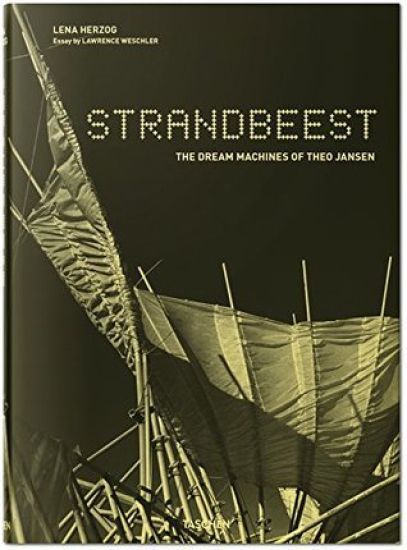
For seven years, photographer and artist Lena Herzog followed the evolution of a new kinetic species. Intricate as insects but with bursts of equine energy, the “Strandbeests,” or “beach creatures,” are the creation of Dutch artist Theo Jansen, who has been working for nearly two decades to generate these new life-forms that move, and even survive, on their own. Set to roam the beaches of Holland, the Strandbeests pick up the wind in their gossamer wings and spring, as if by metamorphosis, into action. As if it were blood, not the breeze, running through their delicate forms, they quiver, cavort, and trot against the sun and sea, pausing to change direction if they sense loose sand or water that might destabilize their movement. Coinciding with a traveling exhibition, Herzog’s photographic tribute captures Jansen’s menagerie in a meditative black and white, showcasing Jansen’s imaginative vision, as well as the compelling intersection of animate and inanimate in his creatures. The result is a work of art in its own right and a mesmerizing encounter not only with a very surrealist brand of marvelous, but also with whole new ideas of existence.
The Bird That Swallowed Its Cage

The Bird That Swallowed Its Cage

Walter Murch; Lawrence Weschler

Counterpoint
2014
nidottu
Walter Murch first came across Curzio Malaparte's writings in a chance encounter in a French book about cosmology, where one of Malaparte's stories was retold to illustrate a point about conditions shortly after the creation of the universe. Murch was so taken by the strange, utterly captivating imagery he went to find the book from which the story was taken. The book was Kaputt, Malaparte's autobiographical novel about the frontlines of World War II.Curzio Malaparte, an Italian born with a German heritage, was a journalist, dramatic, novelist and diplomat. When he wrote a book attacking totalitarianism and Hitler's reign, Mussolini, in no position to support such a body of work, stripped him of his National Fascist Party membership and sent him to internal exile on the island of Lipari. In 1941, he was sent to cover the Eastern Front as a correspondent for Corriere della Sera, the Milano daily newspaper. His dispatches from the next three years would be largely suppressed by the Italian government, but reverberated among readers as painfully real depictions of a landscape at war.The film editor, fluent in translating the written word over to the languages of sight and sound, began slowly translating Malaparte's writings from World War II. The density and intricacy of his stories compelled Murch to adapt many of them into prose or blank verse poems. The result is a book of surprising insight and strange beauty.
Uncanny Valley

Uncanny Valley

Lawrence Weschler

Counterpoint
2012
nidottu
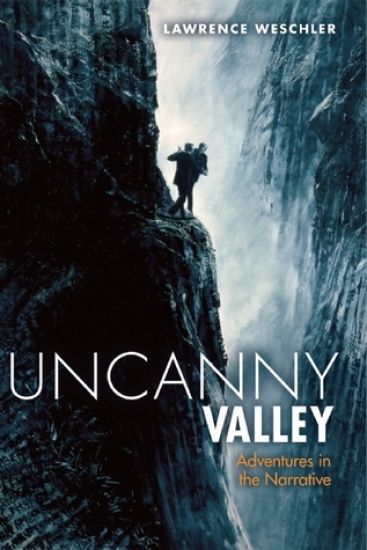
Shuttling between cultural comedies and political tragedies, Lawrence Weschler's articles have intrigued readers throughout his long career. He examines everything, from the ordinary to the extraordinary, and his insights are illuminating. Uncanny Valley continues the page-turning conversation as Weschler collects the best of his narrative nonfiction from the past fifteen years. The title piece surveys the hapless efforts of digital animators to fashion a credible human face, the endlessly elusive gold standard of the profession. Other highlights include profiles of novelist Mark Salzman, as he wrestles with a hilariously harrowing bout of writer's block; the legendary film and sound editor Walter Murch, as he is forced to revisit his work on Apocalypse Now in the context of the more recent Iraqi war film Jarhead; and the artist Vincent Desiderio, as he labors over an epic canvas portraying no less than a dozen sleeping figures. With his signature style and endless ability to wonder, Weschler proves yet again that the  world is strange, beautiful, and connected" (The Globe and Mail). Uncanny Valley demonstrates his matchless ability to analyze the marvels he finds in places and people and offers us a new, sublime way of seeing the world.
Uncanny Valley

Uncanny Valley

Lawrence Weschler

Counterpoint
2011
sidottu
Shuttling between cultural comedies and political tragedies, Lawrence Weschler's articles have throughout his long career intrigued readers with his unique insight into everything he examines, from the ordinary to the extraordinary.Uncanny Valley continues the page-turning conversation as Weschler collects the best of his narrative nonfiction from the past fifteen years. The title piece surveys the hapless efforts of digital animators to fashion a credible human face, the endlessly elusive gold standard of the profession. Other highlights include profiles of novelist Mark Salzman, as he wrestles with a hilariously harrowing bout of writer's block; the legendary film and sound editor Walter Murch, as he is forced to revisit his work on Apocalypse Now in the context of the more recent Iraqi war film Jarhead; and the artist Vincent Desiderio, as he labors over an epic canvas portraying no less than a dozen sleeping figures.With his signature style and endless ability to wonder, Weschler proves yet again that the  world is strange, beautiful, and connected" (The Globe and Mail). Uncanny Valley demonstrates his matchless ability to analyze the marvels he finds in places and people and offers us a new, sublime way of seeing the world.
Seeing Is Forgetting the Name of the Thing One Sees

Seeing Is Forgetting the Name of the Thing One Sees

Lawrence Weschler

University of California Press
2009
pokkari
When this book first appeared in 1982, it introduced readers to Robert Irwin, the Los Angeles artist 'who one day got hooked on his own curiosity and decided to live it'. Now expanded to include six additional chapters and twenty-four pages of color plates, "Seeing Is Forgetting the Name of the Thing One Sees" chronicles three decades of conversation between Lawrence Weschler and light and space master Irwin. It surveys many of Irwin's site-conditioned projects - in particular the Central Gardens at the Getty Museum (the subject of an epic battle with the site's principal architect, Richard Meier) and the design that transformed an abandoned Hudson Valley factory into Dia's new Beacon campus - enhancing what many had already considered the best book ever on an artist.