Kirjojen hintavertailu. Mukana 12 595 353 kirjaa ja 12 kauppaa.

Kirjailija

Lawrence Wilde

Kirjat ja teokset yhdessä paikassa: 9 kirjaa, julkaisuja vuosilta 1998-2016, suosituimpien joukossa Erich Fromm and the Quest for Solidarity. Vertaile teosten hintoja ja tarkista saatavuus suomalaisista kirjakaupoista.

9 kirjaa

Kirjojen julkaisuhaarukka 1998-2016.

Thomas More's Utopia

Thomas More's Utopia

Lawrence Wilde

Routledge
2016
sidottu
The 500th anniversary of the first publication of Thomas More’s Utopia invites a reappraisal of its significance, not just as an ironic and playful fiction, but as a serious contribution to social and political thought. More delivers a searing critique of the injustices of his time and imagines a radical alternative based on common ownership and representative government. In this new interpretation, Wilde surveys the context from which Utopia emerged and analyses its key themes – politics, economics, social relations, crime and punishment, war and religion. Although the society of the Utopians is created as a remedy to the ailments of the old world, there are restrictions on individual freedom which reflect More’s suspicion of human nature’s innate fragility. Wilde argues that this should not detract from the power of the book in challenging the root causes of inequality and oppression. The true legacy of Utopia lies in its plea for social justice in the face of a world driven by greed and the lust for power. A compelling case is made for the continued relevance of this masterpiece, a legacy that should not be diminished by attempts to discredit More’s character, which are dealt with here in the epilogue. Offering a new perspective on this important historical text, this book is essential reading for students and scholars working in radical politics, the history of social thought and literature, as well as anyone interested in learning more about this fascinating work.

Thomas More's Utopia

Thomas More's Utopia

Lawrence Wilde

Routledge
2016
nidottu
The 500th anniversary of the first publication of Thomas More’s Utopia invites a reappraisal of its significance, not just as an ironic and playful fiction, but as a serious contribution to social and political thought. More delivers a searing critique of the injustices of his time and imagines a radical alternative based on common ownership and representative government. In this new interpretation, Wilde surveys the context from which Utopia emerged and analyses its key themes – politics, economics, social relations, crime and punishment, war and religion. Although the society of the Utopians is created as a remedy to the ailments of the old world, there are restrictions on individual freedom which reflect More’s suspicion of human nature’s innate fragility. Wilde argues that this should not detract from the power of the book in challenging the root causes of inequality and oppression. The true legacy of Utopia lies in its plea for social justice in the face of a world driven by greed and the lust for power. A compelling case is made for the continued relevance of this masterpiece, a legacy that should not be diminished by attempts to discredit More’s character, which are dealt with here in the epilogue. Offering a new perspective on this important historical text, this book is essential reading for students and scholars working in radical politics, the history of social thought and literature, as well as anyone interested in learning more about this fascinating work.
Global Solidarity

Global Solidarity

Lawrence Wilde

Edinburgh University Press
2013
nidottu
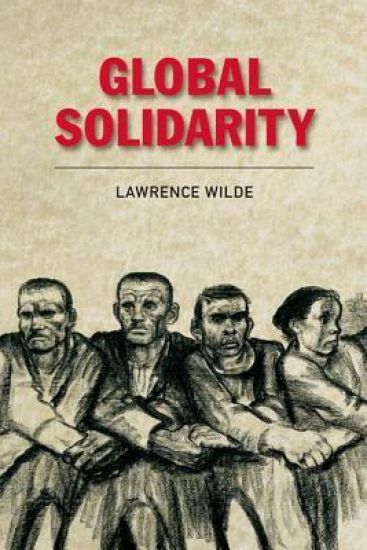
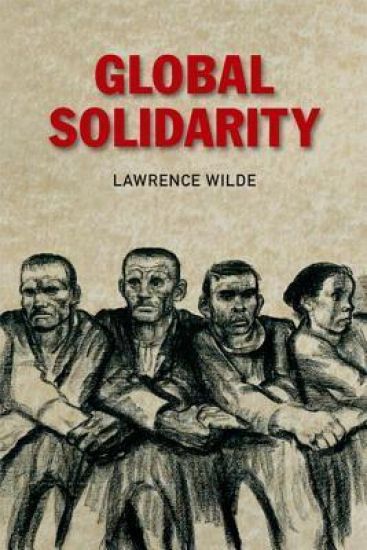
Can globalisation provide the conditions for a harmonious global community? 'Solidarity' has been a mobilising word since the mid-19th century, conjuring images of united action in pursuit of social justice. Lawrence Wilde explores this concept and raises the question of whether solidarity among strangers is a meaningful aspiration in our globalising age. Looking to the future, he explores the politics of global solidarity and the conditions required for its development. It distinguishes between various conceptualisations of solidarity. It critically examines the work of Rorty, Honneth, Touraine, Habermas and Fraser. It argues for a radical humanist alternative grounded in virtue ethics. It examines areas of social division - nationalism, gender, religion and culture - and suggests how to reconcile them.
Global Solidarity

Global Solidarity

Lawrence Wilde

Edinburgh University Press
2013
sidottu
Can globalisation provide the conditions for a harmonious global community? 'Solidarity' has been a mobilising word since the mid-19th century, conjuring images of united action in pursuit of social justice. Lawrence Wilde explores this concept and raises the question of whether solidarity among strangers is a meaningful aspiration in our globalising age. Looking to the future, he explores the politics of global solidarity and the conditions required for its development. It distinguishes between various conceptualisations of solidarity. It critically examines the work of Rorty, Honneth, Touraine, Habermas and Fraser. It argues for a radical humanist alternative grounded in virtue ethics. It examines areas of social division - nationalism, gender, religion and culture - and suggests how to reconcile them.
The Marx Dictionary

The Marx Dictionary

Ian Fraser; Lawrence Wilde

Continuum Publishing Corporation
2012
nidottu
This is a concise and accessible dictionary of the key terms and concepts in Marx's writings, his major works and influences, from a philosophical perspective. "The Marx Dictionary" is a comprehensive and accessible guide to the world of Karl Marx. Meticulously researched and extensively cross-referenced, this unique book covers all his major works, ideas and influences and provides a firm grounding in the central themes of Marx's thought from a philosophical perspective. Students will discover a wealth of useful information, analysis and criticism. A-Z entries include clear definitions of all the key terms used in Marx's writings, coverage of their German origins, and detailed synopses of all his key works. The Dictionary also includes entries on Marx's major philosophical and political influences and contemporaries. It covers everything that is essential to a sound understanding of Marx's work, offering clear and accessible explanations of often complex terminology. "The Marx Dictionary" is the ideal resource for anyone reading or studying Marx or Nineteenth-Century Political Thought more generally. "The Continuum Philosophy Dictionaries" offer clear and accessible guides to the work of some of the more challenging thinkers in the history of philosophy. A-Z entries provide clear definitions of key terminology, synopses of key works, and details of each thinker's major themes, ideas and philosophical influences. The Dictionaries are the ideal resource for anyone reading or studying these key philosophers.
Erich Fromm and the Quest for Solidarity

Erich Fromm and the Quest for Solidarity

Lawrence Wilde

Palgrave Macmillan
2004
nidottu
Erich Fromm and the Quest for Solidarity argues that Fromm's humanistic ethics provides a framework for the analysis of alienation in affluent societies and his exploration of the social forces capable of challenging that alienation. It examines his work on authoritarianism, the experience of work, the struggle against patriarchy, the dangers of consumerism and the manipulation of needs, the urgent need to revive democracy, and the challenge of the emerging 'one world'. Never losing sight of the ancient dream of human solidarity, Fromm's explicitly ethical approach exerts a compelling relevance to a range of issues in contemporary social and political theory.
Erich Fromm and the Quest for Solidarity

Erich Fromm and the Quest for Solidarity

Lawrence Wilde

Palgrave Macmillan
2004
sidottu
Erich Fromm and the Quest for Solidarity argues that Fromm's humanistic ethics provides a framework for the analysis of alienation in affluent societies and his exploration of the social forces capable of challenging that alienation. It examines his work on authoritarianism, the experience of work, the struggle against patriarchy, the dangers of consumerism and the manipulation of needs, the urgent need to revive democracy, and the challenge of the emerging 'one world'. Never losing sight of the ancient dream of human solidarity, Fromm's explicitly ethical approach exerts a compelling relevance to a range of issues in contemporary social and political theory.
Ethical Marxism and its Radical Critics

Ethical Marxism and its Radical Critics

Lawrence Wilde

Palgrave Macmillan
1998
nidottu
Ethical Marxism and its Radical Critics argues that Marx's conception of human essence is the foundation for an ethic of liberation which permeates his social theory. It testifies to his significant debt to Greek philosophy and culture. Wilde examines how his humanistic ethic was developed by Marcuse and Fromm, and how it has been rejected by Habermas and Gorz. He also explores reservations expressed from feminist and ecological standpoints. The book has been revised in the light of these criticisms, and offers insights into how progress may be made towards a socialist ethical community.
Ethical Marxism and its Radical Critics

Ethical Marxism and its Radical Critics

Lawrence Wilde

Palgrave Macmillan
1998
sidottu
Ethical Marxism and its Radical Critics argues that Marx's conception of human essence is the foundation for an ethic of liberation which permeates his social theory. It testifies to his significant debt to Greek philosophy and culture. Wilde examines how his humanistic ethic was developed by Marcuse and Fromm, and how it has been rejected by Habermas and Gorz. He also explores reservations expressed from feminist and ecological standpoints. The book has been revised in the light of these criticisms, and offers insights into how progress may be made towards a socialist ethical community.