
Kirjailija
Lea Ypi
Kirjat ja teokset yhdessä paikassa: 33 kirjaa, julkaisuja vuosilta 2011-2026, suosituimpien joukossa Democracy. Vertaile teosten hintoja ja tarkista saatavuus suomalaisista kirjakaupoista.
33 kirjaa
Kirjojen julkaisuhaarukka 2011-2026.
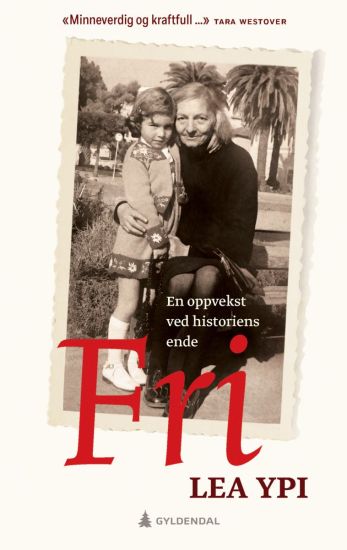
Elleve år gamle Lea elsker hjemlandet Albania. For henne er sosialismen ensbetydende med trygghet, sikkerhet og en lys fremtid blant likesinnede kamerater. Men en dag på vei hjem fra skolen blir hun skremt av et opptog protesterende studenter. I neste øyeblikk klamrer hun seg gråtende til en halshugget statue av Josef Stalin.I løpet av noen få dager raser hele hennes verden sammen. Foreldrene har løyet for henne og snakket i koder hele livet. Familiebakgrunnen er ikke hva Lea trodde den var. Alt som før var trygt, er brått ukjent og uforståelig.Fri handler om hva som skjedde da Europas siste sosialistiske fyrtårn sluknet: hvordan overgangen fra en sosialistisk stat til et fritt marked førte til korrupsjon, kaos og kriminalitet. Den handler om hva frihet er, og om hva som skjer når et ungt menneske får hele sitt verdigrunnlag, sin identitet og sannhet revet vekk under føttene.Denne prisvinnende boken er under utgivelse i 25 land.
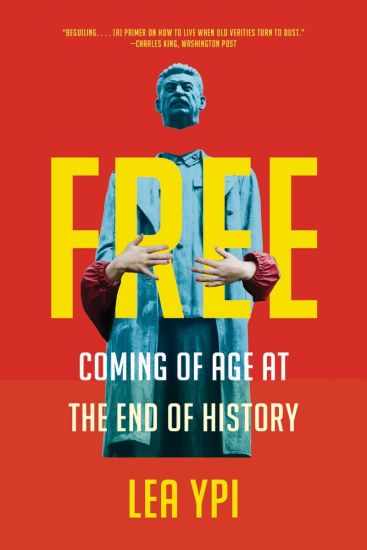
Family and nation formed a reliable bedrock of security for precocious 11-year-old Lea Ypi. She was a Young Pioneer, helping to lead her country toward the future of perfect freedom promised by the leaders of her country, the People's Socialist Republic of Albania. Then, almost overnight, the Berlin Wall fell and the pillars of her society toppled. The local statue of Stalin, whom she had believed to be a kindly leader who loved children, was beheaded by student protestors.Uncomfortable truths about her family's background emerged. Lea learned that when her parents and neighbors had spoken in whispers of friends going to "university" or relatives "dropping out," they meant something much more sinister. As she learned the truth about her family's past, her best friend fled the country. Together with neighboring post-Communist states, Albania began a messy transition to join the "free markets" of the Western world: a dystopia of pyramid schemes, organized crime, and sex trafficking. Her father, despite his radical left-wing convictions, was forced to fire workers; her mother became a conservative politician on the model of Margaret Thatcher. Lea's typical teen concerns about relationships and the future were shot through with the existential: the nation was engulfed in civil war.Ypi's outstanding literary gifts enable her to weave together this colorful, tumultuous coming-of-age story in a time of social upheaval with thoughtful, fresh, and invigorating perspective on the relation between the personal and the political, and on deep questions about freedom: What does freedom consist of, and for whom? What conditions foster it? Who among us is truly free?

Lea växer upp i det stalinistiska Albanien. Det är en tillvaro präglad av isolering, övervakning och umbäranden. Men Lea anar inget av detta. Hon är stolt över sitt fria och jämlika land, och helt ovetande om det pris hennes familj betalat för att överleva. År 1990 ändras allt. Regimen faller, men den nyvunna friheten visar snart ett annat ansikte, också det brutalt och skoningslöst.Fri – En uppväxt vid historiens slut är en överväldigande och knivskarp berättelse om att växa upp i skiftet mellan kommunism och kapitalism.
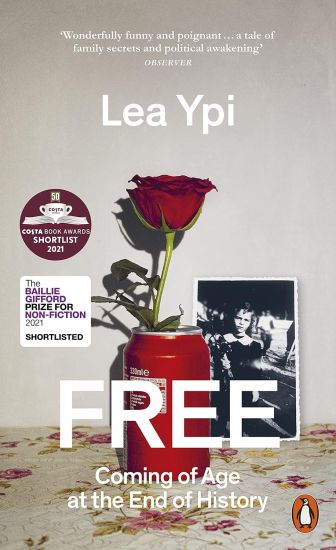
THE SUNDAY TIMES BESTSELLER WINNER OF THE ONDAATJE PRIZE 'The best book I read last year by a mile. . . so beautifully written that anyone would be hooked' Laura Hackett, Sunday Times, Best Summer Books'Wonderfully funny and poignant. . . a tale of family secrets and political awakening amid a crumbling regime' Luke Harding, Observer 'We never lose our inner freedom; the freedom to do what is right' Lea Ypi grew up in one of the most isolated countries on earth, a place where communist ideals had officially replaced religion. Albania, the last Stalinist outpost in Europe, was almost impossible to visit, almost impossible to leave. It was a place of queuing and scarcity, of political executions and secret police. To Lea, it was home. People were equal, neighbours helped each other, and children were expected to build a better world. There was community and hope. Then, in December 1990, everything changed. The statues of Stalin and Hoxha were toppled. Almost overnight, people could vote freely, wear what they liked and worship as they wished. There was no longer anything to fear from prying ears. But factories shut, jobs disappeared and thousands fled to Italy on crowded ships, only to be sent back. Predatory pyramid schemes eventually bankrupted the country, leading to violent conflict. As one generation's aspirations became another's disillusionment, and as her own family's secrets were revealed, Lea found herself questioning what freedom really meant. Free is an engrossing memoir of coming of age amid political upheaval. With acute insight and wit, Lea Ypi traces the limits of progress and the burden of the past, illuminating the spaces between ideals and reality, and the hopes and fears of people pulled up by the sweep of history. THE SUNDAY TIMES MEMOIR OF THE YEAR WINNER OF THE SLIGHTLY FOXED BEST FIRST BIOGRAPHY RIZE SHORTLISTED FOR THE COSTA BIOGRAPHY AWARD SHORTLISTED FOR THE BAILLIE GIFFORD PRIZE FOR NON-FICTION LONGLISTED FOR THE GORDON BURN PRIZE CHOSEN AS A BOOK OF THE YEAR BY THE GUARDIAN, FINANCIAL TIMES, SUNDAY TIMES, TLS, DAILY MAIL, NEW STATESMAN AND SPECTATOR
Family and nation formed a reliable bedrock of security for precocious 11-year-old Lea Ypi. She was a Young Pioneer, helping to lead her country toward the future of perfect freedom promised by the leaders of her country, the People's Socialist Republic of Albania. Then, almost overnight, the Berlin Wall fell and the pillars of her society toppled. The local statue of Stalin, whom she had believed to be a kindly leader who loved children, was beheaded by student protestors.Uncomfortable truths about her family's background emerged. Lea learned that when her parents and neighbors had spoken in whispers of friends going to "university" or relatives "dropping out," they meant something much more sinister. As she learned the truth about her family's past, her best friend fled the country. Together with neighboring post-Communist states, Albania began a messy transition to join the "free markets" of the Western world: a dystopia of pyramid schemes, organized crime, and sex trafficking. Her father, despite his radical left-wing convictions, was forced to fire workers; her mother became a conservative politician on the model of Margaret Thatcher. Lea's typical teen concerns about relationships and the future were shot through with the existential: the nation was engulfed in civil war.Ypi's outstanding literary gifts enable her to weave together this colorful, tumultuous coming-of-age story in a time of social upheaval with thoughtful, fresh, and invigorating perspective on the relation between the personal and the political, and on deep questions about freedom: What does freedom consist of, and for whom? What conditions foster it? Who among us is truly free?
Lea Ypi er vokset op i det kommunistiske Albanien. Det var et land præget af knaphed, politiske henrettelser og hemmeligt politi. Og der, Ypi havde hjemme. Folk var lige, naboer hjalp hinanden, og man forventede, at de nye generationer ville skabe en bedre fremtid. Efter murens fald forandrede alt sig. Statuerne af Stalin og Hoxha blev væltet, og folk kunne nu stemme og tilbede de guder, de ville. Men arbejdspladser forsvandt og tusinder forsøgte at flygte til Italien. Pyramidespil fik landet til at gå statsbankerot og ledte til voldelig konflikt. Efterhånden som en generations forhåbninger blev afløst af en ny generations desillusion, begyndte Ypi at sætte spørgsmålstegn ved, hvad frihed overhovedet vil sige. Fri er et fængslende erindringsværk om at blive voksen midt i voldsomme politiske omvæltninger. Lea Ypi (f. 1979) er professor i politisk teori ved London School of Economics. Hun har udgivet en lang rækkebøger om kapitalisme, globalisering, migration og kolonialisme. Hun har modtaget adskillige priser for sin forskning og skriver politiske analyser for The Guardian.Anmeldelser:"Forbløffende øjenåbnende og dybt rørende… Ypi væver magi ind i denne bog: Jeg var fortryllet fra start til slut." - The Sunday Times"Vidunderligt sjov og bevægende… en fortælling om familiehemmeligheder og politisk opvågning i et smuldrende regime. En af årets fagbøger." - The Guardian"Det er pendulering mellem flot leveret historieundervisning og et virkelig interessant selvportræt af en identitets- og ståstedssøgende kvinde, der gør Fri til en fornøjelse at bruge tid på." - ???? Berlingske"Glimrende… Det giver forbløffende meget mening at læse om den nyere albanske historie lige nu her i en omvæltningernes tid." - Information"Medrivende og detaljerig." - Weekendavisen"Lea Ypi skriver fabelagtigt om, hvordan frigørelse kan munde ud i ufrihed." - Djøfbladet
The Architectonic of Pure Reason, one of the most important sections of Kant's first Critique, raises three fundamental questions. What can I know? What should I do? What may I hope? Taken together these questions converge on a fourth one, which is at the centre of philosophy as a whole: what is the human being? Lea Ypi suggests that the answer to this question is tied to a particular account of the unity of reason - one that stresses its purposive character. By focusing on the sources, evolution and function of Kant's concept of purposiveness, this book shows that the idea of purposiveness that Kant endorses in the Critique of Pure Reason is a concept of purposiveness as intelligent design, quite different from the concept of purposiveness as normativity that will become central to his later works. In the case of purposiveness as design, the relationship between reason and nature is anchored to the idea of God. In the case of purposiveness as normativity, it is anchored to the concept of reflexive judgment, and grounded on transcendental freedom. Understanding this shift has important implications for some of the most difficult questions that confront the Kantian system: the passage from the system of nature to that of freedom, the relation between faith and knowledge, the philosophical defence of progress in history, and the role of religion. It is also crucial to shed light on the way in which Kant's critique has shaped the successive German philosophical tradition.
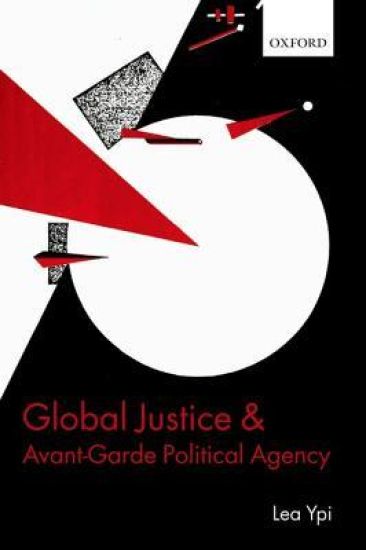
Why should states matter and how do relations between fellow-citizens affect what is owed to distant strangers? How, if at all, can demanding egalitarian principles inform political action in the real world? This book proposes a novel solution through the concept of avant-garde political agency. Ypi grounds egalitarian principles on claims arising from conflicts over the distribution of global positional goods, and illustrates the role of avant-garde agents in shaping these conflicts and promoting democratic political transformations in response to them. Against statists, she defends the global scope of equality, and derives remedial cosmopolitan principles from global responsibilities to relieve absolute deprivation. Against cosmopolitans, she shows that associative political relations play an essential role and that blanket condemnation of the state is unnecessary and ill-directed. Advocating an approach to global justice whereby domestic avant-garde agents intervene politically so as to constrain and motivate fellow-citizens to support cosmopolitan transformations, this book offers a fresh and nuanced example of political theory in an activist mode. Setting the contemporary debate on global justice in the context of recent methodological disputes on the relationship between ideal and nonideal theorizing, Ypi's dialectical account illustrates how principles and agency can genuinely interact.
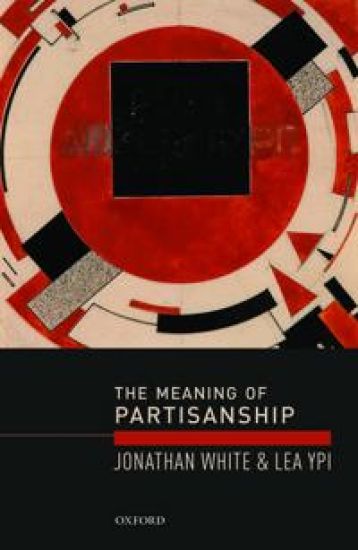
For a century at least, parties have been central to the study of politics. Yet their typical conceptual reduction to a network of power-seeking elites has left many to wonder why parties were ever thought crucial to democracy. This book seeks to retrieve a richer conception of partisanship, drawing on modern political thought and extending it in the light of contemporary democratic theory and practice. Looking beyond the party as organization, the book develops an original account of what it is to be a partisan. It examines the ideas, orientations, obligations, and practices constitutive of partisanship properly understood, and how these intersect with the core features of democratic life. Such an account serves to underline in distinctive fashion why democracy needs its partisans, and puts in relief some of the key trends of contemporary politics.
Why should states matter and how do relations between fellow-citizens affect what is owed to distant strangers? How, if at all, can demanding egalitarian principles inform political action in the real world? This book proposes a novel solution through the concept of avant-garde political agency. Ypi grounds egalitarian principles on claims arising from conflicts over the distribution of global positional goods, and illustrates the role of avant-garde agents in shaping these conflicts and promoting democratic political transformations in response to them. Against statists, she defends the global scope of equality, and derives remedial cosmopolitan principles from global responsibilities to relieve absolute deprivation. Against cosmopolitans, she shows that associative political relations play an essential role and that blanket condemnation of the state is unnecessary and ill-directed. Advocating an approach to global justice whereby domestic avant-garde agents intervene politically so as to constrain and motivate fellow-citizens to support cosmopolitan transformations, this book offers a fresh and nuanced example of political theory in an activist mode. Setting the contemporary debate on global justice in the context of recent methodological disputes on the relationship between ideal and nonideal theorizing, Ypi's dialectical account illustrates how principles and agency can genuinely interact.
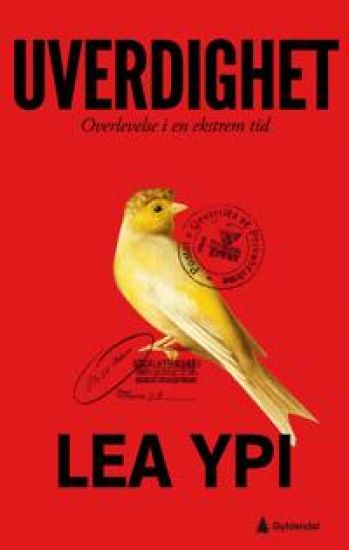
I forsøket på å forstå sin egen familie tvinges Lea til å stille seg selv ubehagelige spørsmål: Hva vet vi egentlig om de menneskene som står oss nærmest, og med hvilken moralsk autoritet kan vi dømme handlingene til tidligere generasjoner? Da Lea Ypi oppdager et bilde av bestemoren Leman på bryllupsreise i Alpene i 1941, begynner hun å tvile på familiens offisielle historie. Hele livet har hun fått høre at alle dokumenter fra bestemorens ungdomstid gikk tapt i kommunismens første år i Albania. Men på bildet smiler Leman side om side med ektemannen mens verdenskrigen raser. Kan det være at kvinnen på bildet i virkeligheten var hemmelig agent for nazistene? Lea reiser til Tirana i Albania og får tillatelse til å søke i etterretningstjenestens hemmelige arkiv. Gjennom avhørsprotokoller, rapporter og egne minner skaper Lea Ypi en fortelling om et liv og en skjebne som er tett knyttet sammen med verdenshistoriens store hendelser i første halvdel av 1900-tallet.