Kirjojen hintavertailu. Mukana 12 562 867 kirjaa ja 12 kauppaa.
Kirjailija
Leah Libresco Sargeant
Kirjat ja teokset yhdessä paikassa: 5 kirjaa, julkaisuja vuosilta 2020-2025, suosituimpien joukossa Plough Quarterly No. 37 – The Enemy. Vertaile teosten hintoja ja tarkista saatavuus suomalaisista kirjakaupoista.
Benjamin Crosby; Archbishop Angaelos; Zena Hitz; Leah Libresco Sargeant; Nathan Beacom; Susannah Black Roberts; Mary Townsend; Sarah Clarkson; Antoine E. Davis; Aaron Edward Olson; Maria Novella De Luca; Rachel Cañon Naffziger; Stephen Edgar; Oddny Gumaer; Kathleen A. Mulhern
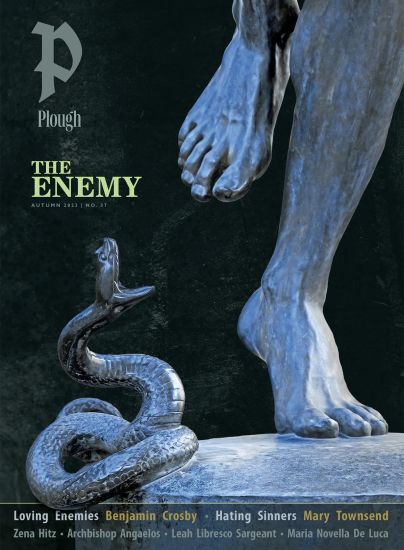
What should we do with enemies?Jesus challenges us to love our enemies. In today’s swirl of hatemongering, political polarization, and online nastiness, even Christians have skirted this command or given it up as impossible or foolish. What does it really mean to love our enemies? And how might our lives and our world change if we did? In this issue we apply these tough questions to real situations, and hear from people who have put this command into practice in some of the toughest circumstances.On this theme: - Can we afford to love our enemies in a cancel culture?- What sort of enemies did Jesus expect us to love? - The problem with "love the sinner, hate the sin"- Channeling outrage while working with children displaced by war- What Coptic Christians know about praying for their persecutors- Two incarcerated friends defy a racist prison culture.- What about mental illness, when your mind becomes your enemy? - Students find ways to debate tough issues constructively.- A Russian Christian speaks out against the war in Ukraine.Also in the issue:- Maria Novella De Luca photographs Algerian women demining the Sahara.- Dana Wiser remembers civil rights activist Staughton Lynd.- Zena Hitz asks what we’d do with our time if we weren’t so busy.- Kathleen A. Mulhern gives advice for keeping the faith afterhours.- Susannah Black Roberts celebrates the life and example of Tim Keller.- Nathan Beacom call for reestablishing Lyceums in working-class towns.- Maureen swinger recounts the exploits of Monsignor Hugh O’Flaherty.Plough Quarterly features stories, ideas, and culture for people eager to apply their faith to the challenges we face. Each issue includes in-depth articles, interviews, poetry, book reviews, and art.
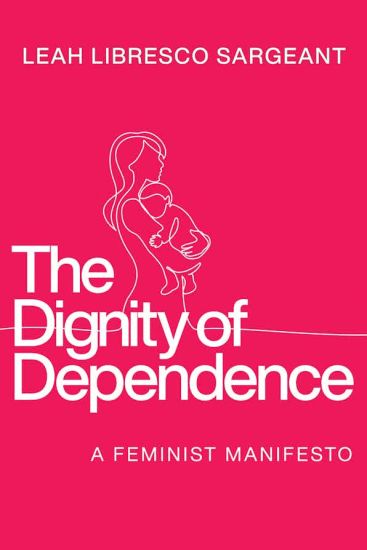
The Dignity of Dependence argues that women's equal rights depend on advocating for women as women. The world is not ready to welcome women as women; a culture that fears dependence and asks everyone to aim for autonomy and independence will always be a society hostile to women. Women are expected to care for those around them while living in a society that despises need and penalizes those who care for the weak. The Dignity of Dependence aims to liberate women and men from this corrosive and false ideal of the human person as strongest alone. Leah Libresco Sargeant argues that to thrive, human beings need to exist in webs of mutual dependence, not in isolating, radical autonomy. Women's equal dignity doesn't require women to deny biological reality or attempt to be interchangeable with men. Sargeant advocates for building a culture that accepts and celebrates women as they are rather than demanding that women keep their relationships and their bodies in check. The fight for women's dignity is a fight for a full, human dignity—a dignity that isn't threatened by dependence. It is our need for each other that makes us human.
Molly McCully Brown; Victoria Reynolds Farmer; Edwidge Danticat; Stephanie Saldaña; Kelsey Osgood; Christian Wiman; Amy Julia Becker; Ross Douthat; Eugene Vodolazkin; Sarah C. Williams; Isaac T. Soon; Leah Libresco Sargeant
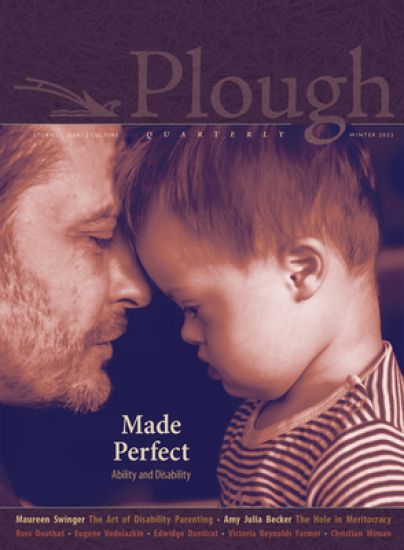
Whose lives count as fully human? The answer matters for everyone, disabled or not.The ancient Greek ideal linked physical wholeness to moral wholeness – the virtuous citizen was “beautiful and good.” It’s an ideal that has all too often turned deadly, casting those who do not measure up as less than human. In the pre-Christian era, infants with disabilities were left on the rocks; in modern times, they have been targeted by eugenics.Much has changed, thanks to the tenacious advocacy of the disability rights movement. Yesteryear’s hellish institutions have given way to customized educational programs and assisted living centers. Public spaces have been reconfigured to improve access. Therapies and medical technology have advanced rapidly in sophistication and effectiveness. Protections for people with disabilities have been enshrined in many countries’ antidiscrimination laws.But these victories, impressive as they are, mask other realities that collide awkwardly with society’s avowals of equality. Why are parents choosing to abort a baby likely to have a disability? Why does Belgian law allow for euthanasia in cases of disability, even absent a terminal diagnosis or physical pain? Why, when ventilators were in short supply during the first Covid wave, did some states list disability as a reason to deny care?On this theme: - Heonju Lee tells how his son with Down syndrome saved another child’s life.- Molly McCully Brown and Victoria Reynolds Farmer recount their personal experiences with disability.- Amy Julia Becker says meritocracies fail because they value the wrong things.- Maureen Swinger asks six mothers around the world about raising a child with disabilities.- Joe Keiderling documents the unfinished struggle for disability rights.- Isaac T. Soon wonders if Saint Paul’s “thorn in the flesh” was a disability.- Leah Libresco Sargeant reviews What Can a Body Do? and Making Disability Modern.- Sarah C. Williams says testing for fetal abnormalities is not a neutral practice.Also in the issue: - Ross Douthat is brought low by intractable Lyme disease.- Edwidge Danticat flees an active shooter in a packed mall.- Eugene Vodolazkin finds comic relief at funerals, including his own father’s.- Kelsey Osgood discovers that being an Orthodox Jew is strange, even in Brooklyn.- Christian Wiman pens three new poems.- Susannah Black profiles Flannery O’Conner.- Our writers review Eyal Press’s Dirty Work, Steve Coll’s Directorate S, and Millennial Nuns by the Daughters of Saint Paul.Plough Quarterly features stories, ideas, and culture for people eager to apply their faith to the challenges we face. Each issue includes in-depth articles, interviews, poetry, book reviews, and art.
Adam Nicolson; Gracy Olmstead; Christian Wiman; Kelsey Osgood; John Kempf; Leah Libresco Sargeant; Ian Marcus Corbin; Iván Bernal Marín; Phil Klay; Edmund Waldstein; Alfred Nicol
When we read the book of nature, what do we read there? “All things bright and beautiful, all creatures great and small, all things wise and wonderful, the Lord God made them all,” says a well-known hymn. This issue of Plough celebrates the creatures of our planet – plant, animal, and human – and the implications of humankind’s relationship to nature. But if nature can be read as a book that reveals the wisdom of its Creator, it also reveals things less lovely than stars and singing birds – a world of desperate competition for survival, mass extinctions, and deadly viruses. Is such a world a convincing argument for the Creator’s goodness? Turns out Christians and skeptics alike have been asking such questions since long before Darwin added a twist. Are we moderns out of practice at reading the book of nature? And if we forget how, will we fail to read human nature as well – what rights or purposes our Creator may have endowed us with? What then is there to limit the bounds of technological manipulation of humankind? This issue of Plough explores these and other fascinating questions about the natural world and our place in it. In this issue: - Sussex farmer Adam Nicholson evokes centuries of handwork that shaped the landscape of the Weald. - Gracy Olmstead revisits the land her forebears farmed in Idaho. - Ian Marcus Corbin tries walking phoneless to better note the beauty of the natural world. - Amish farmer John Kempf, a leader in regenerative agriculture, foresees a healthier future for farming. - Leah Libresco Sargeant offers a feminist critique of society’s war on women’s bodies. - Iván Bernal Marín visits Panama City’s traditional fishermen. - Maureen Swinger recalls to triumphs of second grade in forest school. - Edmund Waldstein questions head transplants and the limits of medical science. - Kelsey Osgood says it’s natural to fear death, and to transcend that fear through faith. - Tim Maendel lifts the veil on urban beekeeping along the Manhattan skyline. You’ll also find: - An essay by Christian Wiman on the poetry of doubt and faith - New poems by Alfred Nicol - A profile of Amazon activist nun Dorothy Stang - An appreciation of Keith Green’s songs - Insights on creation from Blaise Pascal, Julian of Norwich, Francis of Assisi, Mechthild of Magdeburg, Christopher Smart, Augustine of Hippo, The Book of Job, and Sadhu Sundar Singh - Reviews of The Opening of the American Mind, and Kazuo Ishiguro’s Klara and the Sun Plough Quarterly features stories, ideas, and culture for people eager to put their faith into action. Each issue brings you in-depth articles, interviews, poetry, book reviews, and art to help you put Jesus’ message into practice and find common cause with others.
Ross Douthat; Edwidge Danticat; Sarah C. Williams; Rabbi Jonathan Sacks; Cardinal Christoph Schönborn; Leah Libresco Sargeant; Gina Dalfonzo; Zito Madu; Norann Voll; Noah Van Niel
What is a family and what is it good for? Story 1: Families are in crisis, and the cause is moral breakdown. We urgently need a deep renewal of our family culture, supported by public policies that strengthen traditional marriage and encourage childbearing. Story 2: Families are in crisis, and the cause is capitalism. We need structural changes in society so that all families can flourish: parental leave, guaranteed healthcare, flexible work hours for parents, restorative justice. What if both these stories are true? This issue of Plough reflects on what a family is and what it is for, so that the transformations needed to solve the crisis of the family start from a firm basis, not a nostalgic ideal or progressive theorizing. As always, we take as a starting point the teachings of Jesus. It turns out his idea of family values might not be what people think. He calls us to extend our natural love for our biological family to a vast new throng of siblings – a family of many ethnicities and cultures that includes the widowed, the unmarried, the outsider, and the stranger. In this issue: - Ross Douthat asks what is stopping people from having the one more child they desire. - Edwidge Danticat says families are not nuclear. - Gina Dalfonzo reveals what singles know best about the church as family. - Norann Voll remembers a Jewish woman who escaped the Holocaust and married a German. - W. Bradford Wilcox and Alysse ElHage report on how the Covid pandemic has impacted the family. - Noah Van Niel asks whether masculinity is OK anymore. - Cardinal Christoph Schönborn reflects the burden of family history, celibacy, and monument toppling. - Sarah C. Williams pinpoints the source of feminist pioneer Josephine Butler’s daring. - Rabbi Jonathan Sacks begins the story of marriage 385 million years ago in a lake in Scotland. - Zito Madu recalls how his father’s amazing storytelling saved the past from oblivion. You’ll also find: - M. M. Townsend on what Louisa May Alcott and Simone de Beauvoir had in common - A special announcement about Plough’s new poetry contest: the Rhina Espaillat Poetry Award - A reading from G. K. Chesterton - Two new poems by Rachel Hadas - Reviews of Eric Edstrom’s Un-American, Maya Schenwar and Victoria Law’s Prison by Any Other Name, Brian Doyle’s One Long River of Song, and Martín Caparrós’s Hunger Plough Quarterly features stories, ideas, and culture for people eager to put their faith into action. Each issue brings you in-depth articles, interviews, poetry, book reviews, and art to help you put Jesus’ message into practice and find common cause with others.