Kirjojen hintavertailu. Mukana 12 595 353 kirjaa ja 12 kauppaa.

Kirjailija

Lee Alan Dugatkin

Kirjat ja teokset yhdessä paikassa: 13 kirjaa, julkaisuja vuosilta 2006-2025, suosituimpien joukossa Power in the Wild: The Subtle and Not-So-Subtle Ways Animals Strive for Control Over Others. Vertaile teosten hintoja ja tarkista saatavuus suomalaisista kirjakaupoista.

13 kirjaa

Kirjojen julkaisuhaarukka 2006-2025.

Principles of Animal Behavior, 5th Edition

Principles of Animal Behavior, 5th Edition

Lee Alan Dugatkin

THE UNIVERSITY OF CHICAGO PRESS
2025
nidottu
Incorporating essential revisions to reflect the latest scientific advancements, a celebrated author and scientist offers a leading textbook on animal behavior. So much has happened in the field of animal behavior since the last edition of this definitive textbook was published in 2020. In this fifth edition, Lee Alan Dugatkin continues to draw on cutting-edge new research not only to update and expand on the studies presented, but also to reinforce the previous editions’ focus on ultimate and proximate causation, as well as the book’s unique emphasis on natural selection, learning, and cultural transmission in nonhuman animals. The result is an essential update on the leading textbook on animal behavior that explains underlying concepts accessibly and with scientific rigor. Completely new features include: Anthropogenic Connection Boxes. Humans are changing the planet. We are clearing forests, polluting the oceans, irrigating deserts, poisoning the soils, and driving a dramatic increase in global temperatures. All of these changes alter both the habitats where animals live and the species themselves as they evolve in response to our impact on their surroundings. Students will dig deep into how anthropogenic evolution affects animal behavior. Social Network Connection Boxes. Researchers have discovered that social networks play a critical role in almost every aspect of animal life: what they eat, how they protect themselves, who they mate with, the dynamics of parent-offspring relations, aggression, navigation, communication, play, cooperation, culture, and more. Students will discover how social network studies enrich our understanding of the wondrous complexity of animal behavior. As Principles of Animal Behavior makes clear, the tapestry of animal behavior is created from weaving all of these components into a beautiful whole. In this lavishly illustrated, comprehensive, and up-to-date edition, we can admire that beauty anew.
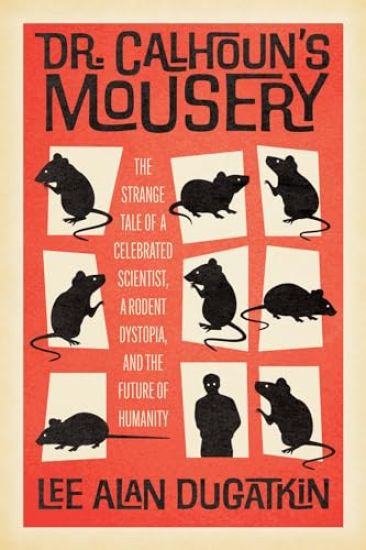
Dr. Calhoun's Mousery

Dr. Calhoun's Mousery

Lee Alan Dugatkin

THE UNIVERSITY OF CHICAGO PRESS
2024
sidottu
“Brilliant. . . . An absorbing read and a potent lesson in moral behavior—both of rodents and of humans.”—Deborah Blum, Pulitzer Prize–winning author of The Poison Squad • “A fascinating read about an immensely influential scientist.”—Robert M. Sapolsky, author of the New York Times–bestseller Determined • “Stimulating scientific history. . . . Colorful accounts. . . . This fascinates.”—Publishers Weekly A bizarre and compelling biography of a scientist and his work, using rodent cities to question the potential catastrophes of human overpopulation. It was the strangest of experiments. What began as a utopian environment, where mice had sumptuous accommodations, had all the food and water they could want, and were free from disease and predators, turned into a mouse hell. Science writer and animal behaviorist Lee Alan Dugatkin introduces readers to the peculiar work of rodent researcher John Bumpass Calhoun. In this enthralling tale, Dugatkin shows how an ecologist-turned-psychologist-turned-futurist became a science rock star embedded in the culture of the 1960s and 1970s. As interest grew in his rodent cities, Calhoun was courted by city planners and his work was reflected in everything from Tom Wolfe’s hard-hitting writing to the children’s book Mrs. Frisby and the Rats of NIMH. He was invited to meetings with the Royal Society and the pope and taken seriously when he proposed a worldwide cybernetic brain—a decade before others made the internet a reality. Readers see how Calhoun’s experiments—rodent apartment complexes like “Mouse Universe 25”—led to his concept of “behavioral sinks” with real effects on public policy discussions. Overpopulation in Calhoun’s mouse (and rat) complexes led to the loss of sex drive, the absence of maternal care, and a class of automatons that included “the beautiful ones,” who spent their time grooming themselves while shunning socialization. Calhoun—and those who followed his work—saw the collapse of this mouse population as a harbinger of the ill effects of an overpopulated human world. Drawing on previously unpublished archival research and interviews with Calhoun’s family and former colleagues, Dugatkin offers a riveting account of an intriguing scientific figure. Considering Dr. Calhoun’s experiments, he explores the changing nature of scientific research and delves into what the study of animal behavior can teach us about ourselves.
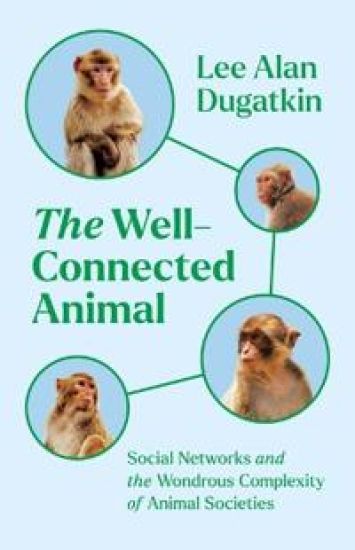
The Well-Connected Animal

The Well-Connected Animal

Lee Alan Dugatkin

THE UNIVERSITY OF CHICAGO PRESS
2024
sidottu
“Combines accessible prose with solid science.”—Wall Street Journal • “Demonstrates that whatever creature you are—from a giraffe to a Tasmanian devil—life is all about who you know.”—New Scientist • “Fascinating. . . . Easily the most intriguing, thorough explanation of animal behavior ever produced.”—Library Journal (starred review) • “This book makes a fitting companion to Ed Yong’s An Immense World. An entertaining tour of what we learn as we eavesdrop on the non-human conversations all around us.”—Kirkus Reviews • “Terrific.”—Booklist An engaging exploration of the wondrous social webs that permeate life in animal societies around the world. It’s all about who you know. Whether vampire bats sharing blood meals for survival, field crickets remembering champion fighters, macaque monkeys forming grooming pacts after a deadly hurricane, or great tit birds learning the best way to steal milk—it pays to be well connected. In this tour of the animal kingdom, evolutionary biologist Lee Alan Dugatkin reveals a new field of study, uncovering social networks that existed long before the dawn of human social media. He accessibly describes the latest findings from animal behavior, evolution, computer science, psychology, anthropology, genetics, and neurobiology, and incorporates interviews and insights from researchers he finds swimming with manta rays, avoiding pigeon poop, and stopping monkeys from stealing iPads. With Dugatkin as our guide, we investigate social networks in giraffes, elephants, kangaroos, Tasmanian devils, whales, bats, and more. From animal networks in Australia and Asia to Africa, Europe, and the Americas, The Well-Connected Animal is an eye-opening exposé of wild friends, enemies, and everything in between.
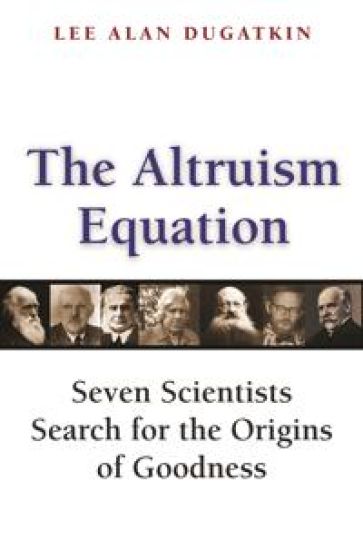
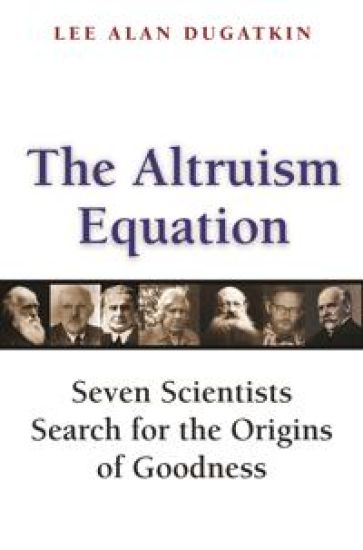
The Altruism Equation

The Altruism Equation

Lee Alan Dugatkin

PRINCETON UNIVERSITY PRESS
2022
pokkari
In a world supposedly governed by ruthless survival of the fittest, why do we see acts of goodness in both animals and humans? This problem plagued Charles Darwin in the 1850s as he developed his theory of evolution through natural selection. Indeed, Darwin worried that the goodness he observed in nature could be the Achilles heel of his theory. Ever since then, scientists and other thinkers have engaged in a fierce debate about the origins of goodness that has dragged politics, philosophy, and religion into what remains a major question for evolutionary biology.The Altruism Equation traces the history of this debate from Darwin to the present through an extraordinary cast of characters-from the Russian prince Petr Kropotkin, who wanted to base society on altruism, to the brilliant biologist George Price, who fell into poverty and succumbed to suicide as he obsessed over the problem. In a final surprising turn, William Hamilton, the scientist who came up with the equation that reduced altruism to the cold language of natural selection, desperately hoped that his theory did not apply to humans.Hamilton's Rule, which states that relatives are worth helping in direct proportion to their blood relatedness, is as fundamental to evolutionary biology as Newton's laws of motion are to physics. But even today, decades after its formulation, Hamilton's Rule is still hotly debated among those who cannot accept that goodness can be explained by a simple mathematical formula. For the first time, Lee Alan Dugatkin brings to life the people, the issues, and the passions that have surrounded the altruism debate. Readers will be swept along by this fast-paced tale of history, biography, and scientific discovery.
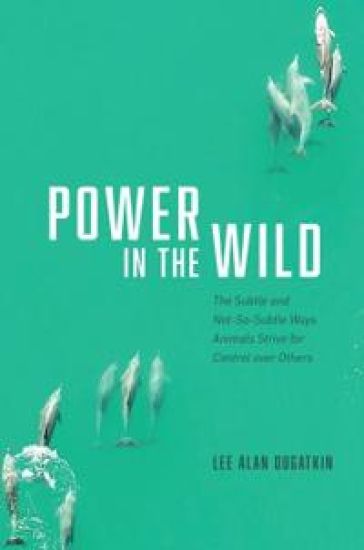
Power in the Wild

Power in the Wild

Lee Alan Dugatkin

THE UNIVERSITY OF CHICAGO PRESS
2022
sidottu
From the shell wars of hermit crabs to little blue penguins spying on potential rivals, power struggles in the animal kingdom are as diverse as they are fascinating, and this book illuminates their surprising range and connections. The quest for power in animals is so much richer, so much more nuanced than who wins what knock-down, drag-out fight. Indeed, power struggles among animals often look more like an opera than a boxing match. Tracing the path to power for over thirty different species on six continents, writer and behavioral ecologist Lee Alan Dugatkin takes us on a journey around the globe, shepherded by leading researchers who have discovered that in everything from hyenas to dolphins, bonobos to field mice, cichlid fish to cuttlefish, copperhead snakes to ravens, and meerkats to mongooses, power revolves around spying, deception, manipulation, forming alliances, breaking up alliances, complex assessments of potential opponents, building social networks, and more. Power pervades every aspect of the social life of animals: what they eat, where they eat, where they live, who they mate with, how many offspring they produce, who they join forces with, and who they work to depose. In some species, power can even change an animal's sex. Nor are humans invulnerable to this magnificently intricate melodrama: Dugatkin's tales of the researchers studying power in animals are full of unexpected pitfalls, twists and turns, serendipity, and the pure joy of scientific discovery.
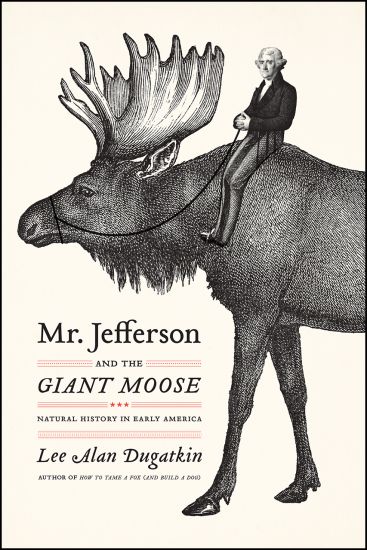
Mr. Jefferson and the Giant Moose

Mr. Jefferson and the Giant Moose

Lee Alan Dugatkin

University of Chicago Press
2019
pokkari
In the years after the Revolutionary War, the fledgling republic of America was viewed by many Europeans as a degenerate backwater, populated by subspecies weak and feeble. Chief among these naysayers was the French Count and world-renowned naturalist Georges-Louis Leclerc de Buffon, who wrote that the flora and fauna of America (humans included) were inferior to European specimens. Thomas Jefferson--author of the Declaration of Independence, U.S. president, and ardent naturalist--spent years countering the French conception of American degeneracy. His Notes on Virginia systematically and scientifically dismantled Buffon's case through a series of tables and equally compelling writing on the nature of his home state. But the book did little to counter the arrogance of the French and hardly satisfied Jefferson's quest to demonstrate that his young nation was every bit the equal of a well-established Europe. Enter the giant moose. The American moose, which Jefferson claimed was so enormous a European reindeer could walk under it, became the cornerstone of his defense. Convinced that the sight of such a magnificent beast would cause Buffon to revise his claims, Jefferson had the remains of a seven-foot ungulate shipped first class from New Hampshire to Paris. Unfortunately, Buffon died before he could make any revisions to his Histoire Naturelle, but the legend of the moose makes for a fascinating tale about Jefferson's passion to prove that American nature deserved prestige. In Mr. Jefferson and the Giant Moose, Lee Alan Dugatkin vividly recreates the origin and evolution of the debates about natural history in America and, in so doing, returns the prize moose to its rightful place in American history.
Principles of Animal Behavior, 4th Edition

Principles of Animal Behavior, 4th Edition

Lee Alan Dugatkin

University of Chicago Press
2019
pokkari
Since the last edition of this definitive textbook was published in 2013, much has happened in the field of animal behavior. In this fourth edition, Lee Alan Dugatkin draws on cutting-edge, new work not only to update and expand on the studies presented, but also to reinforce the previous editions' focus on ultimate and proximate causation, as well as the book's unique emphasis on natural selection, learning, and cultural transmission. The result is a state-of-the art textbook on animal behavior that explains underlying concepts in a way that is both scientifically rigorous and accessible to students. Each chapter in the book provides a sound theoretical and conceptual basis upon which the empirical studies rest. A completely new feature in this edition are the Cognitive Connection boxes in Chapters 2-17, designed to dig deep into the importance of the cognitive underpinnings to many types of behaviors. Each box focuses on a specific issue related to cognition and the particular topic covered in that chapter. As Principles of Animal Behavior makes clear, the tapestry of animal behavior is created from weaving all of these components into a beautiful whole. With Dugatkin's exquisitely illustrated, comprehensive, and up-to-date fourth edition, we are able to admire that beauty anew.
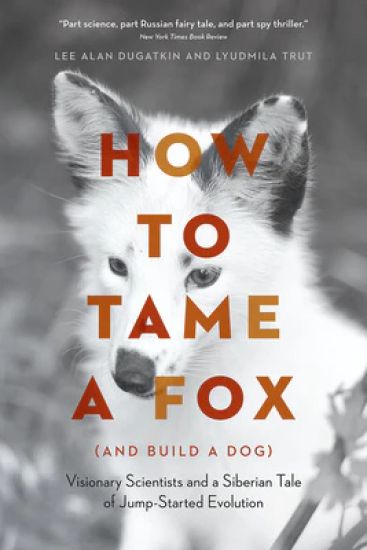
How to Tame a Fox (and Build a Dog)

How to Tame a Fox (and Build a Dog)

Lee Alan Dugatkin; Lyudmila Trut

University of Chicago Press
2018
pokkari
Tucked away in Siberia, there are furry, four-legged creatures with wagging tails and floppy ears that are as docile and friendly as any lapdog. But, despite appearances, these are not dogs—they are foxes. They are the result of the most astonishing experiment in breeding ever undertaken—imagine speeding up thousands of years of evolution into a few decades. In 1959, biologists Dmitri Belyaev and Lyudmila Trut set out to do just that, by starting with a few dozen silver foxes from fox farms in the USSR and attempting to recreate the evolution of wolves into dogs in real time in order to witness the process of domestication. This is the extraordinary, untold story of this remarkable undertaking. Most accounts of the natural evolution of wolves place it over a span of about 15,000 years, but within a decade, Belyaev and Trut’s fox breeding experiments had resulted in puppy-like foxes with floppy ears, piebald spots, and curly tails. Along with these physical changes came genetic and behavioral changes, as well. The foxes were bred using selection criteria for tameness, and with each generation, they became increasingly interested in human companionship. Trut has been there the whole time, and has been the lead scientist on this work since Belyaev’s death in 1985, and with Lee Dugatkin, biologist and science writer, she tells the story of the adventure, science, politics, and love behind it all. In How to Tame a Fox, Dugatkin and Trut take us inside this path-breaking experiment in the midst of the brutal winters of Siberia to reveal how scientific history is made and continues to be made today. To date, fifty-six generations of foxes have been domesticated, and we continue to learn significant lessons from them about the genetic and behavioral evolution of domesticated animals. How to Tame a Fox offers an incredible tale of scientists at work, while also celebrating the deep attachments that have brought humans and animals together throughout time.
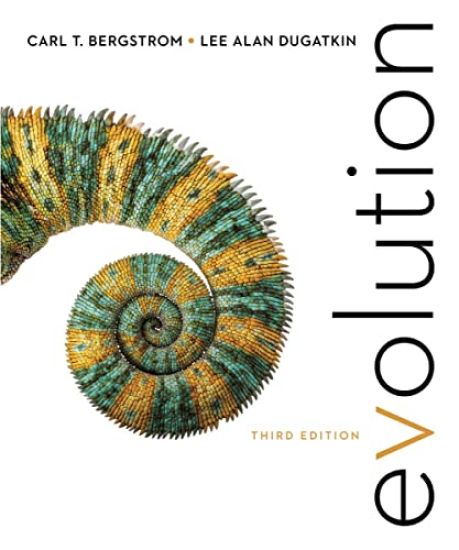
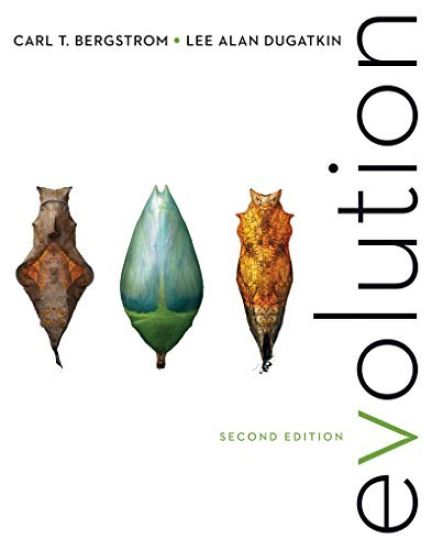
Evolution

Evolution

Bergstrom Carl T.; Lee Alan Dugatkin

WW Norton Co
2015
sidottu
Evolution presents foundational concepts through a contemporary framework of population genetics and phylogenetics that is enriched by current research and stunning art. In every chapter, new critical thinking questions and expanded end-of-chapter problems emphasising data interpretation reinforce the second edition’s focus on helping students think like evolutionary biologists.
The Altruism Equation

The Altruism Equation

Lee Alan Dugatkin

PRINCETON UNIVERSITY PRESS
2006
sidottu
In a world supposedly governed by ruthless survival of the fittest, why do we see acts of goodness in both animals and humans? This problem plagued Charles Darwin in the 1850s as he developed his theory of evolution through natural selection. Indeed, Darwin worried that the goodness he observed in nature could be the Achilles heel of his theory. Ever since then, scientists and other thinkers have engaged in a fierce debate about the origins of goodness that has dragged politics, philosophy, and religion into what remains a major question for evolutionary biology. The Altruism Equation traces the history of this debate from Darwin to the present through an extraordinary cast of characters-from the Russian prince Petr Kropotkin, who wanted to base society on altruism, to the brilliant biologist George Price, who fell into poverty and succumbed to suicide as he obsessed over the problem. In a final surprising turn, William Hamilton, the scientist who came up with the equation that reduced altruism to the cold language of natural selection, desperately hoped that his theory did not apply to humans. Hamilton's Rule, which states that relatives are worth helping in direct proportion to their blood relatedness, is as fundamental to evolutionary biology as Newton's laws of motion are to physics. But even today, decades after its formulation, Hamilton's Rule is still hotly debated among those who cannot accept that goodness can be explained by a simple mathematical formula. For the first time, Lee Alan Dugatkin brings to life the people, the issues, and the passions that have surrounded the altruism debate. Readers will be swept along by this fast-paced tale of history, biography, and scientific discovery.