Kirjojen hintavertailu. Mukana 12 595 353 kirjaa ja 12 kauppaa.

Kirjailija

Lee H Butler

Kirjat ja teokset yhdessä paikassa: 4 kirjaa, julkaisuja vuosilta 2006-2021, suosituimpien joukossa A Lynched Black Wall Street. Vertaile teosten hintoja ja tarkista saatavuus suomalaisista kirjakaupoista.

Mukana myös kirjoitusasut: Lee H. Butler

4 kirjaa

Kirjojen julkaisuhaarukka 2006-2021.

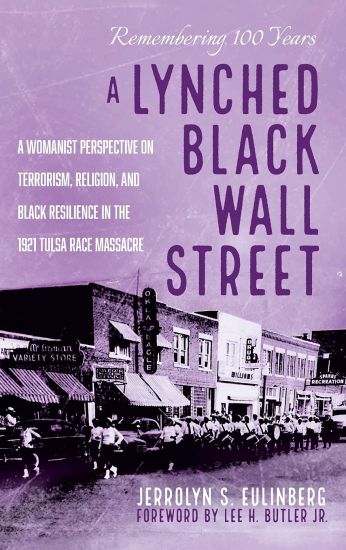
A Lynched Black Wall Street

A Lynched Black Wall Street

Jerrolyn S Eulinberg; Lee H Butler

Cascade Books
2021
sidottu
This book remembers one hundred years since Black Wall Street and it reflects on the 1921 Tulsa Race Massacre. Black Wall Street was the most successful Black business district in the United States; yet, it was isolated from the blooming white oil town of Tulsa, Oklahoma, because of racism. During the early twentieth century African-Americans lived in the constant threat of extreme violence by white supremacy, lynching, and Jim and Jane Crow laws. The text explores, through a Womanist lens, the moral dilemma of Black ontology and the existential crisis of living in America as equal human beings to white Americans. This prosperous Black business district and residential community was lynched by white terror, hate, jealousy, and hegemonic power, using unjust laws and a legally sanctioned white mob. Terrorism operated historically based on the lies of Black inferiority with the support of law and white supremacy. Today this same precedence continues to terrorize the life experiences of African-Americans. The research examines Native Americans and African-Americans, the Black migration west, the role of religion, Black women's contributions, lynching, and the continued resilience of Black Americans.
A Lynched Black Wall Street

A Lynched Black Wall Street

Jerrolyn S Eulinberg; Lee H Butler

Wipf Stock Publishers
2021
pokkari
This book remembers one hundred years since Black Wall Street and it reflects on the 1921 Tulsa Race Massacre. Black Wall Street was the most successful Black business district in the United States; yet, it was isolated from the blooming white oil town of Tulsa, Oklahoma, because of racism. During the early twentieth century African-Americans lived in the constant threat of extreme violence by white supremacy, lynching, and Jim and Jane Crow laws. The text explores, through a Womanist lens, the moral dilemma of Black ontology and the existential crisis of living in America as equal human beings to white Americans.This prosperous Black business district and residential community was lynched by white terror, hate, jealousy, and hegemonic power, using unjust laws and a legally sanctioned white mob. Terrorism operated historically based on the lies of Black inferiority with the support of law and white supremacy. Today this same precedence continues to terrorize the life experiences of African-Americans. The research examines Native Americans and African-Americans, the Black migration west, the role of religion, Black women's contributions, lynching, and the continued resilience of Black Americans.
A Loving Home

A Loving Home

Lee H Butler

Augsburg Fortress
2007
nidottu
When one journeys to Ghana, one is confronted with the origins of the European-driven slave industry, symbolized by the dungeons of Elmina and Cape Coast.... Each time I have made the pilgrimage to these dungeons ... what came to me as tears ran down my face was the realization that this is probably where the difficulties in our collective relational history between African American women and men began. What stands between us? Lee Butler sends out a clarion call for us to come home. He sees our African understandings of God and humanity as foundational to our fully embracing who we are as an African (American) people -- as the whole people of God. -- The Rev. Dr. Marsha Foster Boyd, President of Ecumenical Theological Seminary, Detroit, Michigan Dr. Lee Butler has written an important work that every minister engaged in Pastoral Care needs to read. He provides culturally specific tools, hints, suggestions, and resources for working with families using love as the guiding principle and the foundation upon which meaningful Pastoral Care is built. His book is a must read for any and everyone in ministry who is serious about working with families from a position of cultural strengths and not from the usual 'deficit' model that has crippled so many African American families. I highly endorse his work, his scholarship, his insights, his sensitivity, his experience, and his expertise as a minister of the Gospel whose integrity is awesome. -- The Rev. Dr. Jeremiah A. Wright Jr., Senior Pastor, Trinity United Church of Christ, Chicago, Illinois.