Kirjojen hintavertailu. Mukana 12 390 323 kirjaa ja 12 kauppaa.

Kirjailija

Lee Martin McDonald

Kirjat ja teokset yhdessä paikassa: 13 kirjaa, julkaisuja vuosilta 2006-2025, suosituimpien joukossa The Biblical Canon – Its Origin, Transmission, and Authority. Vertaile teosten hintoja ja tarkista saatavuus suomalaisista kirjakaupoista.

13 kirjaa

Kirjojen julkaisuhaarukka 2006-2025.

The Formation of the Biblical Canon: Volume 2

The Formation of the Biblical Canon: Volume 2

Lee Martin McDonald

BLOOMSBURY PUBLISHING PLC
2025
nidottu
Lee Martin McDonald provides a magisterial overview of the development of the biblical canon --- the emergence of the list of individual texts that constitutes the Christian bible. In these two volumes -- in sum more than double the length of his previous works -- McDonald presents his most in-depth overview to date. McDonald shows students and researchers how the list of texts that constitute 'the bible' was once far more fluid than it is today and guides readers through the minefield of different texts, different versions, and the different lists of texts considered 'canonical' that abounded in antiquity. Questions of the origin and transmission of texts are introduced as well as consideration of innovations in the presentation of texts, collections of documents, archaeological finds and Church councils.In the first volume McDonald reexamines issues of canon formation once considered settled, and sets the range of texts that make up the Hebrew Bible (or Old Testament) in their broader context. Each indidvidual text is discussed, as are the cultural, political and historical situations surrounding them.This second volume considers the New Testament, and the range of so-called 'apocryphal' gospels that were written in early centuries, and used by many Christian groups before the canon was closed. Also included are comprehensive appendices which show various canon lists for both Old and New Testaments and for the bible as a whole.
The Formation of the Biblical Canon: Volume 1

The Formation of the Biblical Canon: Volume 1

Lee Martin McDonald

BLOOMSBURY PUBLISHING PLC
2025
nidottu
Lee Martin McDonald provides a magisterial overview of the development of the biblical canon --- the emergence of the list of individual texts that constitutes the Christian bible. In these two volumes -- in sum more than double the length of his previous works -- McDonald presents his most in-depth overview to date. McDonald shows students and researchers how the list of texts that constitute 'the bible' was once far more fluid than it is today and guides readers through the minefield of different texts, different versions, and the different lists of texts considered 'canonical' that abounded in antiquity. Questions of the origin and transmission of texts are introduced as well as consideration of innovations in the presentation of texts, collections of documents, archaeological finds and Church councils.In this first volume McDonald reexamines issues of canon formation once considered settled, and sets the range of texts that make up the Hebrew Bible (or Old Testament) in their broader context. Each indidvidual text is discussed, as are the cultural, political and historical situations surrounding them.The second volume considers the New Testament, and the range of so-called 'apocryphal' gospels that were written in early centuries, and used by many Christian groups before the canon was closed. Also included are comprehensive appendices which show various canon lists for both Old and New Testaments and for the bible as a whole.
Before There Was a Bible

Before There Was a Bible

Lee Martin McDonald

BLOOMSBURY PUBLISHING PLC
2023
sidottu
How did authority function before the bible as we know it emerged? Lee Martin McDonald examines the authorities that existed from the Church’s beginning: the appeal to the texts containing the words of Jesus, and that would become the New Testament, the not yet finalized Hebrew Scriptures (referred to mostly in Greek) and the apostolic leadership of the churches.McDonald traces several sacred core traditions that broadly identified the essence of Christianity before there was a bible summarized in early creeds, hymns and spiritual songs, baptismal and Eucharistic affirmations, and in lectionaries and catalogues from the fourth century and following. McDonald shows how those traditions were included in the early Christian writings later recognized as the New Testament. He also shows how Christians were never fully agreed on the scope of their Old Testament canon (Hebrew scriptures) and that it took centuries before there was universal acceptance of all of the books now included in the Christian bible. Further, McDonald shows that whilst writings such as the canonical gospels were read as authoritative texts likely from their beginning, they were not yet called or cited as scripture. What was cited in an authoritative manner were the words of Jesus in those texts, alongside the multiple affirmations and creeds that were circulated in the early Church and formed its key authorities and core sacred traditions.
Before There Was a Bible

Before There Was a Bible

Lee Martin McDonald

BLOOMSBURY PUBLISHING PLC
2023
nidottu
How did authority function before the bible as we know it emerged? Lee Martin McDonald examines the authorities that existed from the Church’s beginning: the appeal to the texts containing the words of Jesus, and that would become the New Testament, the not yet finalized Hebrew Scriptures (referred to mostly in Greek) and the apostolic leadership of the churches.McDonald traces several sacred core traditions that broadly identified the essence of Christianity before there was a bible summarized in early creeds, hymns and spiritual songs, baptismal and Eucharistic affirmations, and in lectionaries and catalogues from the fourth century and following. McDonald shows how those traditions were included in the early Christian writings later recognized as the New Testament. He also shows how Christians were never fully agreed on the scope of their Old Testament canon (Hebrew scriptures) and that it took centuries before there was universal acceptance of all of the books now included in the Christian bible. Further, McDonald shows that whilst writings such as the canonical gospels were read as authoritative texts likely from their beginning, they were not yet called or cited as scripture. What was cited in an authoritative manner were the words of Jesus in those texts, alongside the multiple affirmations and creeds that were circulated in the early Church and formed its key authorities and core sacred traditions.
The Formation of the Biblical Canon: Volume 2

The Formation of the Biblical Canon: Volume 2

Lee Martin McDonald

T. T.Clark Ltd
2021
sidottu
Lee Martin McDonald provides a magisterial overview of the development of the biblical canon --- the emergence of the list of individual texts that constitutes the Christian bible. In these two volumes -- in sum more than double the length of his previous works -- McDonald presents his most in-depth overview to date. McDonald shows students and researchers how the list of texts that constitute 'the bible' was once far more fluid than it is today and guides readers through the minefield of different texts, different versions, and the different lists of texts considered 'canonical' that abounded in antiquity. Questions of the origin and transmission of texts are introduced as well as consideration of innovations in the presentation of texts, collections of documents, archaeological finds and Church councils.In the first volume McDonald reexamines issues of canon formation once considered settled, and sets the range of texts that make up the Hebrew Bible (or Old Testament) in their broader context. Each indidvidual text is discussed, as are the cultural, political and historical situations surrounding them.This second volume considers the New Testament, and the range of so-called 'apocryphal' gospels that were written in early centuries, and used by many Christian groups before the canon was closed. Also included are comprehensive appendices which show various canon lists for both Old and New Testaments and for the bible as a whole.
The Formation of the Biblical Canon: Volume 1

The Formation of the Biblical Canon: Volume 1

Lee Martin McDonald

T. T.Clark Ltd
2021
sidottu
Lee Martin McDonald provides a magisterial overview of the development of the biblical canon --- the emergence of the list of individual texts that constitutes the Christian bible. In these two volumes -- in sum more than double the length of his previous works -- McDonald presents his most in-depth overview to date. McDonald shows students and researchers how the list of texts that constitute 'the bible' was once far more fluid than it is today and guides readers through the minefield of different texts, different versions, and the different lists of texts considered 'canonical' that abounded in antiquity. Questions of the origin and transmission of texts are introduced as well as consideration of innovations in the presentation of texts, collections of documents, archaeological finds and Church councils.In this first volume McDonald reexamines issues of canon formation once considered settled, and sets the range of texts that make up the Hebrew Bible (or Old Testament) in their broader context. Each indidvidual text is discussed, as are the cultural, political and historical situations surrounding them.The second volume considers the New Testament, and the range of so-called 'apocryphal' gospels that were written in early centuries, and used by many Christian groups before the canon was closed. Also included are comprehensive appendices which show various canon lists for both Old and New Testaments and for the bible as a whole.
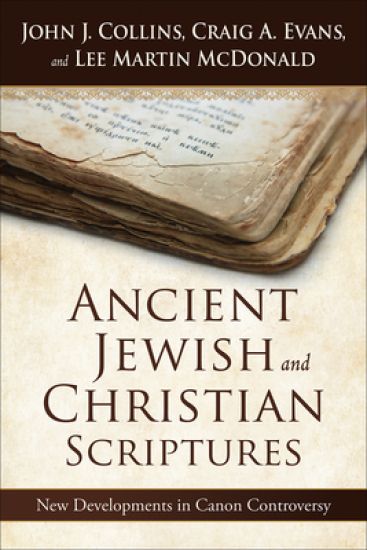
Ancient Jewish and Christian Scriptures

Ancient Jewish and Christian Scriptures

John J. Collins; Craig A. Evans; Lee Martin McDonald

Westminster/John Knox Press,U.S.
2020
nidottu
Ancient Jewish and Christian Scriptures examines the writings included in and excluded from the Jewish and Christian canons of Scripture and explores the social settings in which some of this literature was viewed as authoritative and some was viewed either as uninspired or as heretical. John J. Collins, Craig A. Evans, and Lee Martin McDonald examine how those noncanonical writings demonstrate the historical, literary, and religious aspects of the culture that gave rise to the writings. They also show how literature excluded from the Jewish and Christian canons of Scripture remains valuable today for understanding the questions and conflicts that early Jewish and Christian faith communities faced. Through this discussion, contemporary readers acquire a broader understanding of biblical Scripture and of Jewish and Christian faith inspired by Scripture.
The Canon Debate

The Canon Debate

Lee Martin Mcdonald; James A. Sanders

Baker Academic, Div of Baker Publishing Group
2019
nidottu
What does it mean to speak of a "canon" of scripture? How, when, and where did the canon of the Hebrew Bible come into existence? Why does it have three divisions? What canon was in use among the Jews of the Hellenistic diaspora? At Qumran? In Roman Palestine? Among the rabbis? What Bible did Jesus and his disciples know and use? How was the New Testament canon formed and closed? What role was played by Marcion? By gnostics? By the church fathers? What did the early church make of the apocrypha and pseudepigrapha? By what criteria have questions of canonicity been decided? Are these past decisions still meaningful faith communities today? Are they open to revision?These and other debated questions are addressed by an international roster of outstanding experts on early Judaism and early Christianity, writing from diverse affiliations and perspectives, who present the history of discussion and offer their own assessments of the current status.ContributorsWilliam Adler, Peter Balla, John Barton, Joseph Blenkinsopp, François Bovon, Kent D. Clarke, Philip R. Davies, James D. G. Dunn, Eldon Jay Epp, Craig A. Evans, William R. Farmer, Everett Ferguson, Robert W. Funk, Harry Y. Gamble, Geoffrey M. Hahneman, Daniel J. Harrington, Everett R. Kalin, Robert A. Kraft, Jack P. Lewis, Jack N. Lightstone, Steve Mason, Lee M. McDonald, Pheme Perkins, James A. Sanders, Daryl D. Schmidt, Albert C. Sundberg Jr., Emanuel Tov, Julio Trebolle-Barrera, Eugene Ulrich, James C. VanderKam, Robert W. Wall.
The World of the New Testament – Cultural, Social, and Historical Contexts

The World of the New Testament – Cultural, Social, and Historical Contexts

Joel B. Green; Lee Martin Mcdonald

Baker Academic, Div of Baker Publishing Group
2017
nidottu
This volume addresses the most important issues related to the study of New Testament writings. Two respected senior scholars have brought together a team of distinguished specialists to introduce the Jewish, Hellenistic, and Roman backgrounds necessary for understanding the New Testament and the early church. Contributors include renowned scholars such as Lynn H. Cohick, David A. deSilva, James D. G. Dunn, and Ben Witherington III. The book includes seventy-five photographs, fifteen maps, numerous tables and charts, illustrations, and bibliographies. All students of the New Testament will value this reliable, up-to-date, comprehensive textbook and reference volume on the New Testament world.
The Origin of the Bible: A Guide For the Perplexed

The Origin of the Bible: A Guide For the Perplexed

Lee Martin McDonald

T. T.Clark Ltd
2011
nidottu
Just how did the Jewish and Christian Bibles come together? Why were some ancient texts excluded? Or included and later rejected? What were the criteria? This volume deals with a significant issue in light of the many and significant discoveries of ancient sacred or religious texts that were not included in the Jewish or Christian Bibles. Because of the focus in the news media in recent years on those "extra-canonical" books that have come to light in the last century - and even more recently, there is need for clarification of the processes involved in the formation of the Jewish and Christian Bibles. Why were some books included and others excluded? Why were some included initially and subsequently rejected? Was there a church cover-up as some in the media have suggested? As a result of all of this and more, considerable attention is now focused on the use and function of the so-called non-canonical religious texts that are not now a part of the Bibles of various religious communities. Why did the Bible come together? What criteria were used in making decisions about inclusion and exclusion? The proposed volume addresses these questions and others that are critical to a careful understanding of the Jewish and Christian Bibles. The methodology employed in the writing of this book is described below. It is important to take this discussion outside of the scholars' guild and into the hands of the laity, especially those educated college graduates and undergraduates whose interest in this subject has grown over the past twenty or more years. Currently there are no useful volumes on this subject that is geared to them. Scholars continue to talk past them and all too often only to each other about these matters. This volume is designed to fill this void and make the topic more clear for those without the technical academic skills to explore these matters in the ancient languages. "Continuum's Guides for the Perplexed" are clear, concise and accessible introductions to thinkers, writers and subjects that students and readers can find especially challenging - or indeed downright bewildering. Concentrating specifically on what it is that makes the subject difficult to grasp, these books explain and explore key themes and ideas, guiding the reader towards a thorough understanding of demanding material.
The Origin of the Bible: A Guide For the Perplexed

The Origin of the Bible: A Guide For the Perplexed

Lee Martin McDonald

T. T.Clark Ltd
2011
sidottu
Just how did the Jewish and Christian Bibles come together? Why were some ancient texts excluded? Or included and later rejected? What were the criteria? This volume deals with a significant issue in light of the many and significant discoveries of ancient sacred or religious texts that were not included in the Jewish or Christian Bibles. Because of the focus in the news media in recent years on those "extra-canonical" books that have come to light in the last century - and even more recently, there is need for clarification of the processes involved in the formation of the Jewish and Christian Bibles. Why were some books included and others excluded? Why were some included initially and subsequently rejected? Was there a church cover-up as some in the media have suggested? As a result of all of this and more, considerable attention is now focused on the use and function of the so-called non-canonical religious texts that are not now a part of the Bibles of various religious communities. Why did the Bible come together? What criteria were used in making decisions about inclusion and exclusion? The proposed volume addresses these questions and others that are critical to a careful understanding of the Jewish and Christian Bibles. The methodology employed in the writing of this book is described below. It is important to take this discussion outside of the scholars' guild and into the hands of the laity, especially those educated college graduates and undergraduates whose interest in this subject has grown over the past twenty or more years. Currently there are no useful volumes on this subject that is geared to them. Scholars continue to talk past them and all too often only to each other about these matters. This volume is designed to fill this void and make the topic more clear for those without the technical academic skills to explore these matters in the ancient languages. "Continuum's Guides for the Perplexed" are clear, concise and accessible introductions to thinkers, writers and subjects that students and readers can find especially challenging - or indeed downright bewildering. Concentrating specifically on what it is that makes the subject difficult to grasp, these books explain and explore key themes and ideas, guiding the reader towards a thorough understanding of demanding material.
Forgotten Scriptures

Forgotten Scriptures

Lee Martin McDonald

Westminster/John Knox Press,U.S.
2009
nidottu
We know that the early Christian church had a variety of scriptures and other source material that informed their faith and shaped their thinking. We also know that after a few centuries the church decided to keep the twenty-seven books of our present New Testament and to treat them as canonical in faith and practice. But the other books did not simply disappear. In fact, many of them remain valuable for understanding the diversity of the early Christian church and the astounding claims of faith on which the church was founded. Learning about these ancient documents need not threaten the church's current orthodoxy and authority; in fact, learning about these texts can help today's Christians form a deeper understanding of the early church.
The Biblical Canon – Its Origin, Transmission, and Authority

The Biblical Canon – Its Origin, Transmission, and Authority

Lee Martin McDonald

Baker Academic, Div of Baker Publishing Group
2006
nidottu
Selected for inclusion in Preaching magazine's "Annual Review of Outstanding Books for Preachers 2006"This is the thoroughly updated and expanded third edition of the successful The Formation of the Christian Biblical Canon. It represents a fresh attempt to understand some of the many perplexing questions related to the origins and canonicity of the Bible.