Kirjojen hintavertailu. Mukana 12 290 671 kirjaa ja 12 kauppaa.

Kirjailija

Lee Palmer Wandel

Kirjat ja teokset yhdessä paikassa: 9 kirjaa, julkaisuja vuosilta 1990-2025, suosituimpien joukossa Reading Catechisms, Teaching Religion. Vertaile teosten hintoja ja tarkista saatavuus suomalaisista kirjakaupoista.

9 kirjaa

Kirjojen julkaisuhaarukka 1990-2025.

The Reformation of Liturgy

The Reformation of Liturgy

Lee Palmer Wandel

Cambridge University Press
2025
sidottu
Why were sixteenth-century Europeans willing to risk their lives to attack 'mere matter' - images, lamps, altars, vestments? The most influential medieval liturgical commentary, William Durand's Rationale divinorum officiorum, offers an answer. Reading Durand to excavate the meaning of churches, altars, vestments, this book reveals the stunning scope of Reformation reconceptualization of worship, time, and matter. For Durand, liturgy was an ongoing praxis in which Scripture and Creation were in constant dialogue, leading to an ever-richer understanding of divine revelation. In attacking the made world - what human beings had fashioned from prime matter - Protestants sundered Creation from the liturgy and fundamentally changed how liturgy was understood, and what both Protestants and Catholics held the relationship between divine revelation and matter to be. Altars and vestments became 'objects' to which human beings gave meaning. As the sixteenth century redefined liturgy as a verbal practice, time, matter, and worship were realigned.
Reading Catechisms, Teaching Religion
Reading Catechisms, Teaching Religion makes two broad arguments. First, the sixteenth century witnessed a fundamental transformation in Christians’, Catholic and Evangelical, conceptualization of the nature of knowledge of Christianity and the media through which that knowledge was articulated and communicated. Christians had shared a sense that knowledge might come through visions, images, liturgy; catechisms taught that knowledge of ‘Christianity’ began with texts printed on a page. Second, codicil catechisms sought not simply to dissolve the material distinction between codex and person, but to teach catechumens to see specific words together as texts. The pages of catechisms were visual—they confound precisely that constructed modern bipolarity, word/image, or, conversely, that modern bipolarity obscures what sixteenth-century catechisms sought to do.
The Reformation

The Reformation

Lee Palmer Wandel

Cambridge University Press
2011
sidottu
This book recasts the story of the Reformation by bringing together two histories: the Encounter between Europe and the western hemisphere beginning in 1492; and the fragmentation of European Christendom in the sixteenth century. In so doing, it restores resonance to 'idolatry', 'cannibal', 'barbarian', even as it moves past such polemics to trace multiple understandings of divinity, matter and human nature. So many aspects of human life, from marriage and family through politics to ways of thinking about space and time, were called into question. Debates on human nature and conversion forged new understandings of religious identity. Debates on the relationship of humanity to the material world forged new understandings of image and ritual, new understandings of physics. By the end of the century, there was not one 'Christian religion', but many, and many understandings of the Christian in the world.
The Reformation

The Reformation

Lee Palmer Wandel

Cambridge University Press
2011
pokkari
This book recasts the story of the Reformation by bringing together two histories: the Encounter between Europe and the western hemisphere beginning in 1492; and the fragmentation of European Christendom in the sixteenth century. In so doing, it restores resonance to 'idolatry', 'cannibal', 'barbarian', even as it moves past such polemics to trace multiple understandings of divinity, matter and human nature. So many aspects of human life, from marriage and family through politics to ways of thinking about space and time, were called into question. Debates on human nature and conversion forged new understandings of religious identity. Debates on the relationship of humanity to the material world forged new understandings of image and ritual, new understandings of physics. By the end of the century, there was not one 'Christian religion', but many, and many understandings of the Christian in the world.
The Eucharist in the Reformation

The Eucharist in the Reformation

Lee Palmer Wandel

Cambridge University Press
2005
sidottu
The Eucharist in the Reformation: Incarnation and Liturgy takes up the words, 'this is my body', 'this do', and 'remembrance of me' that divided Christendom in the sixteenth century. It traces the different understandings of these simple words and the consequences of those divergent understandings in the delineation of the Lutheran, Reformed, and Catholic traditions: the different formulations of liturgy with their different conceptualizations of the cognitive and collective function of ritual; the different conceptualizations of the relationship between Christ and the living body of the faithful; the different articulations of the relationship between the world of matter and divinity; and the different epistemologies. It argues that the incarnation is at the center of the story of the Reformation and suggests how divergent religious identities were formed.
Always among Us

Always among Us

Lee Palmer Wandel

Cambridge University Press
2003
pokkari
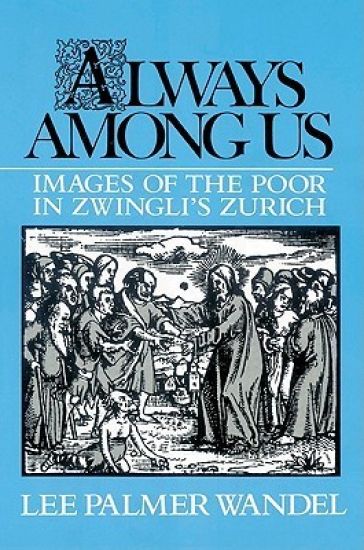
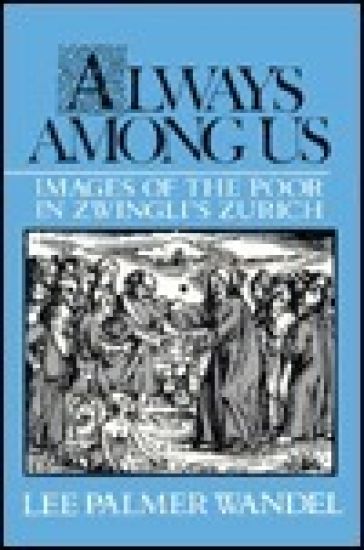
In this elegantly written book, Lee Wandel discusses the relationship between the reform of poor relief and the Protestant Reformation in early sixteenth-century Zurich. In the introduction she traces the various ways that poverty had been evaluated, and its social and religious connotations, up to the sixteenth century. The first chapter provides a portrait of sixteenth-century Zurich. The next three chapters explore the discussion of the poor in various media of the town. The second chapter examines the sermons and pamphlets of Huldrych Zwingli, who was preaching that the poor were the true images of God. The third chapter addresses printed images depicting Christ calling beggars and other poor folk to Him, which appeared on title pages of Zwingli’s pamphlets. The fourth chapter turns to the language of legislation, and in particular the poor ordinances of 1520 and 1525.
Voracious Idols and Violent Hands

Voracious Idols and Violent Hands

Lee Palmer Wandel

Cambridge University Press
1999
pokkari
This 1995 book is an effort to recover the participation of ordinary Christians in the enterprise of Reformation through an exploration of the meaning of acts of iconoclasm: what they tell us about the role of images in Christianity and about ordinary people's theologies. Its focus, on ordinary Christians, distinguishes it from other studies of Reformation iconoclasm. Its concern, to recover their agency in Reformation and to discern their theology in acts, may be of interest to scholars in American history, anthropology, and religious studies. Its analysis of images in Christianity will be of interest to art historians.
Voracious Idols and Violent Hands

Voracious Idols and Violent Hands

Lee Palmer Wandel

Cambridge University Press
1994
sidottu
This 1995 book is an effort to recover the participation of ordinary Christians in the enterprise of Reformation through an exploration of the meaning of acts of iconoclasm: what they tell us about the role of images in Christianity and about ordinary people's theologies. Its focus, on ordinary Christians, distinguishes it from other studies of Reformation iconoclasm. Its concern, to recover their agency in Reformation and to discern their theology in acts, may be of interest to scholars in American history, anthropology, and religious studies. Its analysis of images in Christianity will be of interest to art historians.
Always among Us

Always among Us

Lee Palmer Wandel

Cambridge University Press
1990
sidottu
In this elegantly written book, Lee Wandel discusses the relationship between the reform of poor relief and the Protestant Reformation in early sixteenth-century Zurich. In the introduction she traces the various ways that poverty had been evaluated, and its social and religious connotations, up to the sixteenth century. The first chapter provides a portrait of sixteenth-century Zurich. The next three chapters explore the discussion of the poor in various media of the town. The second chapter examines the sermons and pamphlets of Huldrych Zwingli, who was preaching that the poor were the true images of God. The third chapter addresses printed images depicting Christ calling beggars and other poor folk to Him, which appeared on title pages of Zwingli's pamphlets. The fourth chapter turns to the language of legislation, and in particular the poor ordinances of 1520 and 1525.