Kirjojen hintavertailu. Mukana 12 390 323 kirjaa ja 12 kauppaa.

Kirjailija

Leeann Lane

Kirjat ja teokset yhdessä paikassa: 3 kirjaa, julkaisuja vuosilta 2010-2025, suosituimpien joukossa Mary MacSwiney. Vertaile teosten hintoja ja tarkista saatavuus suomalaisista kirjakaupoista.

3 kirjaa

Kirjojen julkaisuhaarukka 2010-2025.

Mary MacSwiney

Mary MacSwiney

Leeann Lane

UNIVERSITY COLLEGE DUBLIN PRESS
2025
nidottu
Until now, in-depth analysis of key female figures in Irish republicanism in the early twentieth century has been limited. Mary MacSwiney was one of the most single-minded anti-Treaty women, leading Eamon de Valera to describe her as 'incorrigible'. Rather than just dismiss MacSwiney as one-dimensional in her opposition to the Treaty and in her continued political intractability, this biography seeks to place her political life within the centre of the turn of the twentieth-century republican narrative and understand why she was increasingly viewed as a virago. To say contemporary gender roles played a part in reducing MacSwiney to a cipher for extreme republicanism limits a fuller understanding of her political life. Her uncompromising stance against the evils of compromise during the Treaty negotiations was indelibly formed by the experience of watching her brother Terence MacSwiney die on hunger strike in Brixton Jail in 1920, and the trauma she experienced. She witnessed an intimate act of self-sacrifice which bound her to a belief that her task was to continue her brother's fidelity to a separatist republic. Betrayal of the republic, for her, would have meant betrayal of a brother she loved and admired. Mary MacSwiney situates this standout figure in the context of her tightly knit family, tracing her political evolution from suffrage and cultural revival activism to advanced nationalism. While the focus of MacSwiney's political action was Cork, from 1920 onwards she began to assume a progressively more important role in Irish politics at a national and international level, including American tours, a central role during the Civil War and within Sinn Fein and a close political relationship with de Valera. From 1926 onward, she was increasingly politically isolated and marginalised as she sparred with members of Fianna Fail in the press, seeking to justify her continued refusal to engage with the reality of the Irish Free State. Leading biographer of women in twentieth-century Irish history, Leeann Lane delves into newly discovered archival material to interrogate MacSwiney's oppositional stance to the establishment of the Irish Free State in 1922. Mary MacSwiney offers a comprehensive understanding of a misrepresented and marginalised voice in early twentieth-century Irish politics.
Dorothy Macardle

Dorothy Macardle

Leeann Lane

University College Dublin Press
2019
nidottu
Dorothy Macardle - literary teacher, propagandist journalist, political playwright, gothic fiction novelist - is a multi-faceted woman who has remained too often below the radar of historical recognition. In Dorothy Macardle Leeann Lane intends to change this. She is most remembered as the author of The Irish Republic (1937): a full-scale history of the revolutionary period from an anti-Treaty perspective commissioned by de Valera. A bestseller, it became the definitive book of the period fixing Macardle's reputation for too long as merely de Valera's mouthpiece. Yet, as Leann Lane puts forth, Macardle was much more than its author. An intellectually strong, politically persuasive and stoically independent woman: Macardle was beholden to no one. From Sinn Fein propagandist to the gradualist republicanism of Fianna Fail to ardent feminist and gothic novelist, Macardle's personal and political evolution is mapped out for us by Lane in the pages of this book. Exploring her Jail Journal as first-hand source material, the early evolution of Macardle's political thought and action is revealed to us. The wealth of new archival material in the Bureau of Military History Witness Statements and the Military Service Pension Collection is deeply examined, presenting a who's who of Irish republican history as we learn about the many people and events that influenced Macardle's life. Central to the story is an analysis of the commitment of Macardle to female activist politics as she moves further from de Valera's reach, often expressed in subterranean or subversive ways. Macardle's opposition to the position of women in the 1936 Conditions of Employment Act and, most particularly, in the 1937 Constitution was not overt on political platforms but Lane reveals to us that a deep criticism is contained within the pages of her gothic novels published in the 1940s. Insightful readings of her later writing, including her most influential novels The Uninvited (1942) and The Unforeseen (1946), showcases Macardle as a short story writer, playwright and gothic novelist of republican and feminist intent. This is a rich biographical journey through Dorothy Macardle's writing as propagandist, social commentator, republican and feminist. It affirms Macardle's place as one of the foremost activist polemicists as the new Irish State unchained itself from its colonial past and asserted an independent political and cultural identity to be reckoned with.
Rosamond Jacob

Rosamond Jacob

Leeann Lane

University College Dublin Press
2010
nidottu
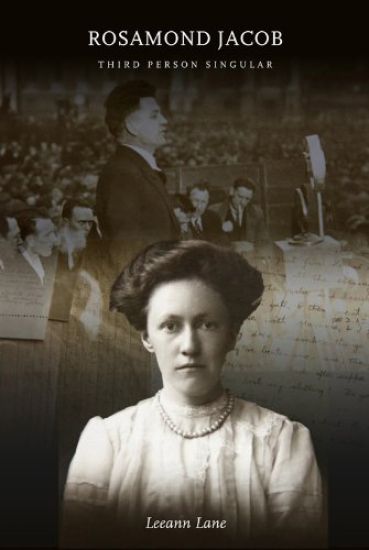
Born in Waterford in 1888 Rosamond Jacob, of Quaker background, was in many cases a crowd member rather than a leader in the campaigns in which she participated - the turn of the century language revival, the suffrage campaign, the campaigns of the revolutionary period. She adopted an anti-Treaty stance in the 1920s, moving towards a fringe involvement in the activities of socialist republicanism in the early 1930s while continuing to vote Fianna Fail. Her commitment to feminist concerns was life long but at no point did she take or was capable of a leadership role. However, it was Jacob's failure to carve out a strong place in history as an activist which makes her interesting as a subject for biography. Her 'ordinariness' offers an alternative lens on the biographical project. By failing to marry, by her inability to find meaningful paid work, by her countless refusals from publishers, by the limited sales of what work was published, Jacob offers a key into lives more ordinary within the urban middle classes of her time, and suggests a new perspective on female lives. Jacob's life, galvanised at all times by political and feminist debate, offers a means of exploring how the central issues which shaped Irish politics and society in the first half of the twentieth century were experienced and digested by those outside the leadership cadre.