Kirjojen hintavertailu. Mukana 12 657 676 kirjaa ja 12 kauppaa.

Kirjailija

Leila Zakhirova

Kirjat ja teokset yhdessä paikassa: 8 kirjaa, julkaisuja vuosilta 2018-2026, suosituimpien joukossa The Geography of Power. Vertaile teosten hintoja ja tarkista saatavuus suomalaisista kirjakaupoista.

8 kirjaa

Kirjojen julkaisuhaarukka 2018-2026.

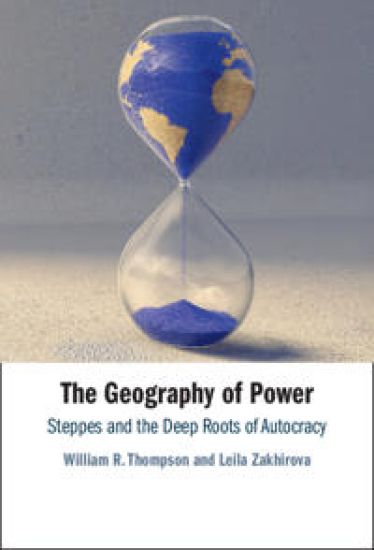
The Geography of Power

The Geography of Power

William R. Thompson; Leila Zakhirova

Cambridge University Press
2026
pokkari
Why are most contemporary autocracies concentrated between Siberia and Central Africa while other regions remain largely democratic? This book uncovers the deep historical forces behind that divide, tracing how geography-particularly the vast steppe grasslands-and political-economic conflicts between nomadic and sedentary societies shaped enduring patterns of power. These structured conflicts reinforced authoritarian persistence across half the globe, creating a binary world with starkly different opportunities and threats. The result is a long-standing geopolitical fault line that continues to shape global politics today, exemplified by the autocratic axis of China, Russia, Iran, and North Korea. Combining insights from geography, history, and political economy, this book offers a compelling explanation of why authoritarianism thrives -and why democracy prevails elsewhere.
The Geography of Power

The Geography of Power

William R. Thompson; Leila Zakhirova

Cambridge University Press
2026
sidottu
Why are most contemporary autocracies concentrated between Siberia and Central Africa while other regions remain largely democratic? This book uncovers the deep historical forces behind that divide, tracing how geography-particularly the vast steppe grasslands-and political-economic conflicts between nomadic and sedentary societies shaped enduring patterns of power. These structured conflicts reinforced authoritarian persistence across half the globe, creating a binary world with starkly different opportunities and threats. The result is a long-standing geopolitical fault line that continues to shape global politics today, exemplified by the autocratic axis of China, Russia, Iran, and North Korea. Combining insights from geography, history, and political economy, this book offers a compelling explanation of why authoritarianism thrives -and why democracy prevails elsewhere.
Regions, Power, and Conflict

Regions, Power, and Conflict

William R. Thompson; Thomas J. Volgy; Paul Bezerra; Jacob Cramer; Kelly Marie Gordell; Manjeet Pardesi; Karen Rasler; J. Patrick Rhamey Jr.; Kentaro Sakuwa; Rachel Van Nostrand; Leila Zakhirova

SPRINGER VERLAG, SINGAPORE
2023
nidottu
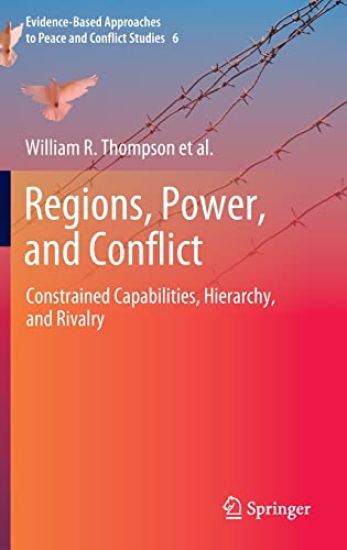
The three main levels of analysis in international relations have been the systemic, the national, and the individual. A fourth level that falls between the systemic and the national is the region. It is woefully underdeveloped in comparison to the attention afforded the other three. Yet regions tend to be distinctive theaters for international politics. Otherwise, we would not recognize that Middle Eastern interstate politics somehow does not resemble Latin American interstate politics or interstate politics in Southern Africa (although once the Middle East and Southern Africa may have seemed more similar in their mutual fixation with opposition to domestic policies in Israel and South Africa, respectively). This book, divided into three parts, first makes a case for studying regional politics even though it must also be appreciated that regional boundaries are also hazy and not always easy to pin down empirically. The second part examines power distributions within regions as an important entry point to studying regional similarities and differences. Two emphases are stressed. One is that regional power assessments need to be conditioned by controlling for weak states which are more common in some regions than they are in others. The other emphasis is on regional power hierarchies. Some regions have strong regional hierarchies while others do not. Regions with strong hierarchies operate much differently from those without them in the sense that the former are more pacific than the latter. The third part of the book focuses on regional differences in terms of conflict behavior, order preferences, rivalries, and rivalry termination.
Regions, Power, and Conflict

Regions, Power, and Conflict

William R. Thompson; Thomas J. Volgy; Paul Bezerra; Jacob Cramer; Kelly Marie Gordell; Manjeet Pardesi; Karen Rasler; J. Patrick Rhamey Jr.; Kentaro Sakuwa; Rachel Van Nostrand; Leila Zakhirova

SPRINGER VERLAG, SINGAPORE
2022
sidottu
The three main levels of analysis in international relations have been the systemic, the national, and the individual. A fourth level that falls between the systemic and the national is the region. It is woefully underdeveloped in comparison to the attention afforded the other three. Yet regions tend to be distinctive theaters for international politics. Otherwise, we would not recognize that Middle Eastern interstate politics somehow does not resemble Latin American interstate politics or interstate politics in Southern Africa (although once the Middle East and Southern Africa may have seemed more similar in their mutual fixation with opposition to domestic policies in Israel and South Africa, respectively). This book, divided into three parts, first makes a case for studying regional politics even though it must also be appreciated that regional boundaries are also hazy and not always easy to pin down empirically. The second part examines power distributions within regions as an important entry point to studying regional similarities and differences. Two emphases are stressed. One is that regional power assessments need to be conditioned by controlling for weak states which are more common in some regions than they are in others. The other emphasis is on regional power hierarchies. Some regions have strong regional hierarchies while others do not. Regions with strong hierarchies operate much differently from those without them in the sense that the former are more pacific than the latter. The third part of the book focuses on regional differences in terms of conflict behavior, order preferences, rivalries, and rivalry termination.
Climate Change in the Middle East and North Africa

Climate Change in the Middle East and North Africa

William R. Thompson; Leila Zakhirova

Routledge
2021
sidottu
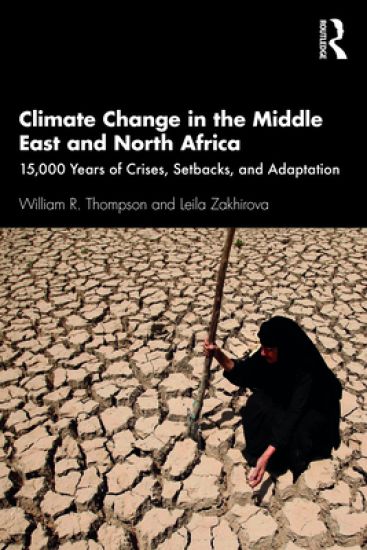
Environmental factors in the Middle East and North Africa (MENA) have played a crucial role in the historical and social development of the region. The book delves into a broad set of historical literature from the past 15,000 years that neglected to consider environmental factors to their full effect. Beyond the broad historic analysis, the chapters derive conclusions for today’s debate on whether climate change leads to more social conflict and violence. Introducing a theoretical framework focused on adaptive cycling, this book probes and refines the role of climate in ancient and modern political-economic systems in the MENA region. It also underscores just how bad the 21st-century environment may become thanks to global warming. While the MENA region may not survive the latest onslaught of deteriorating climate, there is also some interest in how a region that once led the world in introducing all sorts of innovations thousands of years ago has evolved into a contemporary setting characterized by traditional conservatism, poverty, and incessant strife. Emphasizing regional dynamics, the book's central question deals with the role of climate change in the rise and decline of the MENA region. The book will be a key resource to students and readers interested in global warming, including academics and policymakers.
Climate Change in the Middle East and North Africa

Climate Change in the Middle East and North Africa

William R. Thompson; Leila Zakhirova

Routledge
2021
nidottu
Environmental factors in the Middle East and North Africa (MENA) have played a crucial role in the historical and social development of the region. The book delves into a broad set of historical literature from the past 15,000 years that neglected to consider environmental factors to their full effect. Beyond the broad historic analysis, the chapters derive conclusions for today’s debate on whether climate change leads to more social conflict and violence. Introducing a theoretical framework focused on adaptive cycling, this book probes and refines the role of climate in ancient and modern political-economic systems in the MENA region. It also underscores just how bad the 21st-century environment may become thanks to global warming. While the MENA region may not survive the latest onslaught of deteriorating climate, there is also some interest in how a region that once led the world in introducing all sorts of innovations thousands of years ago has evolved into a contemporary setting characterized by traditional conservatism, poverty, and incessant strife. Emphasizing regional dynamics, the book's central question deals with the role of climate change in the rise and decline of the MENA region. The book will be a key resource to students and readers interested in global warming, including academics and policymakers.
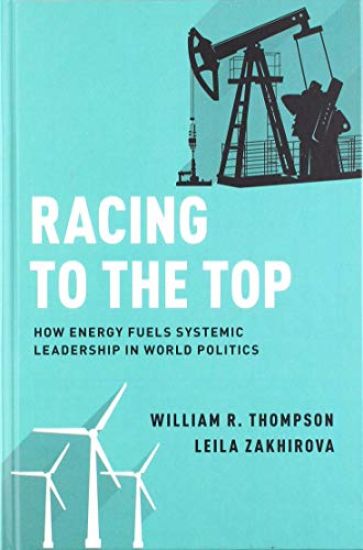
Racing to the Top

Racing to the Top

William R. Thompson; Leila Zakhirova

Oxford University Press Inc
2018
nidottu
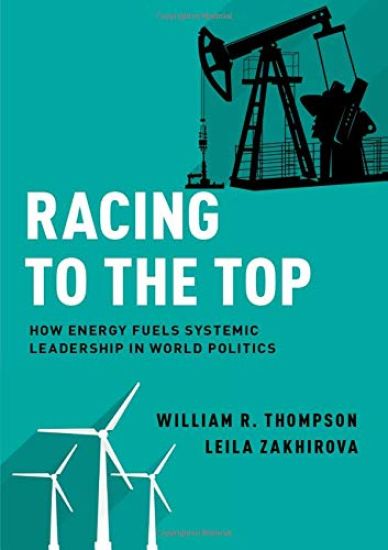
In the international political economy of the last two millennia, there tends to be one state leading the world as the foremost producer of energy and new technology. In Racing to the Top, William R. Thompson and Leila Zakhirova argue that the US and China, like previous leading countries, rely on energy transition, or the development of alternative energy, in order to make new technology relatively inexpensive to develop and to fuel. While the US has historically held the lead, its edge in the global energy economy appears to be eroding, and as energy leadership diminishes, so does the country's position in world politics. Thompson and Zakhirova take a long view in order to show what will be necessary for a new power to emerge as the system leader, then map a path forward for energy policy. Informed by a deep knowledge of world history, political economy, and environmental technology, this book is the first complete overview of energy transitions over the past thousand years.
Racing to the Top

Racing to the Top

William R. Thompson; Leila Zakhirova

Oxford University Press Inc
2018
sidottu
In the international political economy of the last two millennia, there tends to be one state leading the world as the foremost producer of energy and new technology. In Racing to the Top, William R. Thompson and Leila Zakhirova argue that the US and China, like previous leading countries, rely on energy transition, or the development of alternative energy, in order to make new technology relatively inexpensive to develop and to fuel. While the US has historically held the lead, its edge in the global energy economy appears to be eroding, and as energy leadership diminishes, so does the country's position in world politics. Thompson and Zakhirova take a long view in order to show what will be necessary for a new power to emerge as the system leader, then map a path forward for energy policy. Informed by a deep knowledge of world history, political economy, and environmental technology, this book is the first complete overview of energy transitions over the past thousand years.