Kirjojen hintavertailu. Mukana 12 595 353 kirjaa ja 12 kauppaa.

Kirjailija

Len Unsworth

Kirjat ja teokset yhdessä paikassa: 12 kirjaa, julkaisuja vuosilta 2005-2024, suosituimpien joukossa Literacy for Digital Futures. Vertaile teosten hintoja ja tarkista saatavuus suomalaisista kirjakaupoista.

12 kirjaa

Kirjojen julkaisuhaarukka 2005-2024.

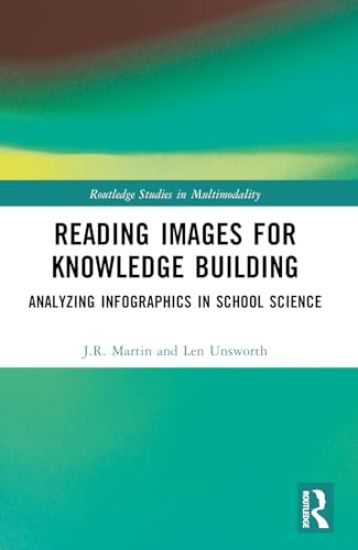
Reading Images for Knowledge Building

Reading Images for Knowledge Building

J.R. Martin; Len Unsworth

TAYLOR FRANCIS LTD
2024
nidottu
This innovative volume provides a new analytic framework for understanding how meaning-making resources are deployed in images designed for knowledge building in school science.The framework enables analyses of science images from the perspectives of both their complexity and recognizability. Complexity deals with the technical and abstract knowledge of school science (technicality), evaluative dispositions in relation to that knowledge (iconization) and the condensation of the technical and dispositional meanings as ‘synoptic eyefuls’ in discipline-specific infographics (aggregation). Recognizability concerns the relationship between the appearance of phenomena in reality and the reconfiguration of this reality in images (congruence), the perceptibility or discernibility of the features and contexts of phenomena in images (explicitness), and how images engage their viewers (affiliation). The framework is illustrated by more than 100 images in colour in the e-book and black and white in the paper version and will inform research into multimodal literacy pedagogy that incorporates an understanding of the role of images in the teaching and learning of school science.This book will be of particular interest to scholars in multimodality, semiotics, literacy education and science education.
Multimodal Literacy in School Science

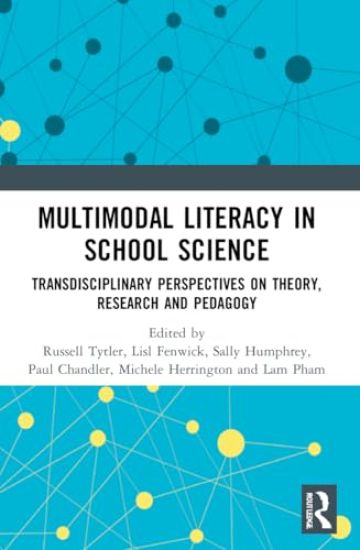
Multimodal Literacy in School Science

Len Unsworth; Russell Tytler; Lisl Fenwick; Sally Humphrey; Paul Chandler; Michele Herrington; Lam Pham

TAYLOR FRANCIS LTD
2024
nidottu
This book establishes a new theoretical and practical framework for multimodal disciplinary literacy (MDL) fused with the subject-specific science pedagogies of senior high school biology, chemistry and physics. It builds a compatible alignment of multiple representation and representation construction approaches to science pedagogy with the social semiotic, systemic functional linguistic-based approaches to explicit teaching of disciplinary literacy. The early part of the book explicates the transdisciplinary negotiated theoretical underpinning of the MDL framework, followed by the research-informed repertoire of learning experiences that are then articulated into a comprehensive framework of options for the planning of classroom work. Practical adoption and adaptation of the framework in biology, chemistry and physics classrooms are detailed in separate chapters. The latter chapters indicate the impact of the collaborative research on teachers' professional learning and students’ multimodal disciplinary literacy engagement, concluding with proposals for accommodating emerging developments in MDL in an ever-changing digital communication world. The MDL framework is designed to enable teachers to develop all students' disciplinary literacy competencies. This book will be of interest to researchers, teacher educators and postgraduate students in the field of science education. It will also have appeal to those in literacy education and social semiotics.The Open Access version of this book, available at www.taylorfrancis.com, has been made available under a Creative Commons Attribution-Non Commercial-No Derivatives 4.0 license.
Reading Images for Knowledge Building

Reading Images for Knowledge Building

J.R. Martin; Len Unsworth

TAYLOR FRANCIS LTD
2023
sidottu
This innovative volume provides a new analytic framework for understanding how meaning-making resources are deployed in images designed for knowledge building in school science.The framework enables analyses of science images from the perspectives of both their complexity and recognizability. Complexity deals with the technical and abstract knowledge of school science (technicality), evaluative dispositions in relation to that knowledge (iconization) and the condensation of the technical and dispositional meanings as ‘synoptic eyefuls’ in discipline-specific infographics (aggregation). Recognizability concerns the relationship between the appearance of phenomena in reality and the reconfiguration of this reality in images (congruence), the perceptibility or discernibility of the features and contexts of phenomena in images (explicitness), and how images engage their viewers (affiliation). The framework is illustrated by more than 100 images in colour in the e-book and black and white in the paper version and will inform research into multimodal literacy pedagogy that incorporates an understanding of the role of images in the teaching and learning of school science.This book will be of particular interest to scholars in multimodality, semiotics, literacy education and science education.
Literacy for Digital Futures

Literacy for Digital Futures

Kathy A. Mills; Len Unsworth; Laura Scholes

TAYLOR FRANCIS LTD
2022
sidottu
The unprecedented rate of global, technological, and societal change calls for a radical, new understanding of literacy. This book offers a nuanced framework for making sense of literacy by addressing knowledge as contextualised, embodied, multimodal, and digitally mediated.In today’s world of technological breakthroughs, social shifts, and rapid changes to the educational landscape, literacy can no longer be understood through established curriculum and static text structures. To prepare teachers, scholars, and researchers for the digital future, the book is organised around three themes – Mind and Materiality; Body and Senses; and Texts and Digital Semiotics – to shape readers’ understanding of literacy. Opening up new interdisciplinary themes, Mills, Unsworth, and Scholes confront emerging issues for next-generation digital literacy practices. The volume helps new and established researchers rethink dynamic changes in the materiality of texts and their implications for the mind and body, and features recommendations for educational and professional practice.
Literacy for Digital Futures

Literacy for Digital Futures

Kathy A. Mills; Len Unsworth; Laura Scholes

TAYLOR FRANCIS LTD
2022
nidottu
The unprecedented rate of global, technological, and societal change calls for a radical, new understanding of literacy. This book offers a nuanced framework for making sense of literacy by addressing knowledge as contextualised, embodied, multimodal, and digitally mediated.In today’s world of technological breakthroughs, social shifts, and rapid changes to the educational landscape, literacy can no longer be understood through established curriculum and static text structures. To prepare teachers, scholars, and researchers for the digital future, the book is organised around three themes – Mind and Materiality; Body and Senses; and Texts and Digital Semiotics – to shape readers’ understanding of literacy. Opening up new interdisciplinary themes, Mills, Unsworth, and Scholes confront emerging issues for next-generation digital literacy practices. The volume helps new and established researchers rethink dynamic changes in the materiality of texts and their implications for the mind and body, and features recommendations for educational and professional practice.
Multimodal Literacy in School Science

Multimodal Literacy in School Science

Len Unsworth; Russell Tytler; Lisl Fenwick; Sally Humphrey; Paul Chandler; Michele Herrington; Lam Pham

TAYLOR FRANCIS LTD
2022
sidottu
This book establishes a new theoretical and practical framework for multimodal disciplinary literacy (MDL) fused with the subject-specific science pedagogies of senior high school biology, chemistry and physics. It builds a compatible alignment of multiple representation and representation construction approaches to science pedagogy with the social semiotic, systemic functional linguistic-based approaches to explicit teaching of disciplinary literacy. The early part of the book explicates the transdisciplinary negotiated theoretical underpinning of the MDL framework, followed by the research-informed repertoire of learning experiences that are then articulated into a comprehensive framework of options for the planning of classroom work. Practical adoption and adaptation of the framework in biology, chemistry and physics classrooms are detailed in separate chapters. The latter chapters indicate the impact of the collaborative research on teachers' professional learning and students’ multimodal disciplinary literacy engagement, concluding with proposals for accommodating emerging developments in MDL in an ever-changing digital communication world. The MDL framework is designed to enable teachers to develop all students' disciplinary literacy competencies. This book will be of interest to researchers, teacher educators and postgraduate students in the field of science education. It will also have appeal to those in literacy education and social semiotics.The Open Access version of this book, available at www.taylorfrancis.com, has been made available under a Creative Commons Attribution-Non Commercial-No Derivatives 4.0 license.
Functional Grammatics

Functional Grammatics

Mary Macken-Horarik; Kristina Love; Carmel Sandiford; Len Unsworth

Routledge
2017
nidottu
This book provides a re-conceptualization of grammar in a period of change in the communication landscape and widening disciplinary knowledge. Drawing on resources in systemic functional linguistics, the book envisions a ‘functional grammatics’ relevant to disciplinary domains such as literary study, rhetoric and multimodality. It re-imagines the possibilities of grammar for school English through Halliday’s notion of grammatics. Functional Grammatics is founded on decades of research inspired by systemic functional linguistics, and includes studies of grammatical tools useful to teachers of English, research into visual and multimodal literacies and studies of the genre–grammar connection. It aims to be useful to the interpretation and composition of texts in school English, portable in design across texts and contexts and beneficial for language development. The book will be of interest to researchers and teacher educators, as well as undergraduate and postgraduate students and practicing teachers committed to evidence-based professional development.
Functional Grammatics

Functional Grammatics

Mary Macken-Horarik; Kristina Love; Carmel Sandiford; Len Unsworth

Routledge
2017
sidottu
This book provides a re-conceptualization of grammar in a period of change in the communication landscape and widening disciplinary knowledge. Drawing on resources in systemic functional linguistics, the book envisions a ‘functional grammatics’ relevant to disciplinary domains such as literary study, rhetoric and multimodality. It re-imagines the possibilities of grammar for school English through Halliday’s notion of grammatics. Functional Grammatics is founded on decades of research inspired by systemic functional linguistics, and includes studies of grammatical tools useful to teachers of English, research into visual and multimodal literacies and studies of the genre–grammar connection. It aims to be useful to the interpretation and composition of texts in school English, portable in design across texts and contexts and beneficial for language development. The book will be of interest to researchers and teacher educators, as well as undergraduate and postgraduate students and practicing teachers committed to evidence-based professional development.
Reading Visual Narratives

Reading Visual Narratives

Clare Painter; J.R. Martin; Len Unsworth

Equinox Publishing Ltd
2013
sidottu
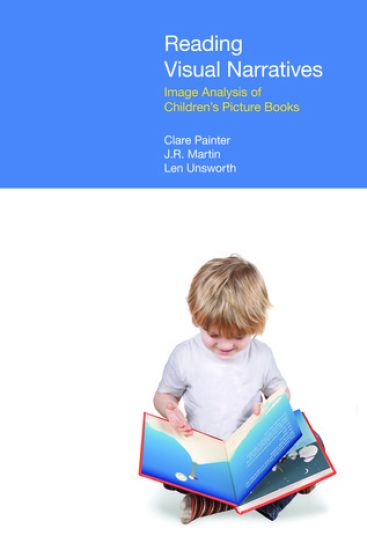
Contemporary children's picture books provide a rich domain for developing theory and analysis of visual meaning and its relation to accompanying verbal text. This book offers new descriptions of the visual strand of meaning in picture book narratives as a way of furthering the project of 'multimodal' discourse analysis and of explaining the literacy demands and apprenticing techniques of children's earliest literature. The book uses the principles of systemic-functional theory to organise an explicit account of visual meaning in relation to three perspectives: the visual construction of the narrative events and characters (ideational meaning), the visual positioning of the reader through choices related to focalisation and appraisal (interpersonal meaning) and The book uses the principles of systemic-functional theory to organise an explicit account of visual meaning in relation to three perspectives: the visual construction of the narrative events and characters (ideational meaning), the visual positioning of the reader through choices related to focalisation and appraisal (interpersonal meaning) and the discourse organization of visual meanings through choices in framing and composition (compositional meaning). The descriptions throughout are illustrated with examples from highly regarded children's picture books. This book extends previous social-semiotic accounts of the 'grammar' of the image, by focussing attention on discourse level meanings and on semantic relationships created by sequences of images. At the same time, it extends current understandings of how picture books work through its explicit and systematic account of the visual meanings and their integration with verbal aspects of the texts. It will be of interest to researchers in (multimodal) discourse analysis, systemic-functional theory and children's literature and literacy.
Reading Visual Narratives

Reading Visual Narratives

Clare Painter; J.R. Martin; Len Unsworth

Equinox Publishing Ltd
2013
pokkari
Contemporary children's picture books provide a rich domain for developing theory and analysis of visual meaning and its relation to accompanying verbal text. This book offers new descriptions of the visual strand of meaning in picture book narratives as a way of furthering the project of 'multimodal' discourse analysis and of explaining the literacy demands and apprenticing techniques of children's earliest literature. Reading Visual Narratives uses the principles of systemic-functional theory to organise an explicit account of visual meaning in relation to three perspectives: the visual construction of the narrative events and characters (ideational meaning), the visual positioning of the reader through choices related to focalisation and appraisal (interpersonal meaning) and the discourse organization of visual meanings through choices in framing and composition (textual meaning). The descriptions throughout are illustrated with examples from highly regarded children's picture books. Reading Visual Narratives extends previous social-semiotic accounts of the 'grammar' of the image, by focussing attention on discourse level meanings and on semantic relationships created by sequences of images. At the same time, it extends current understandings of how picture books work through its explicit and systematic account of the visual meanings and their integration with verbal aspects of the texts. It will be of interest to researchers in multimodal discourse analysis, systemic-functional theory, and children's literature and literacy.
E-literature for Children

E-literature for Children

Len Unsworth

Routledge
2005
sidottu
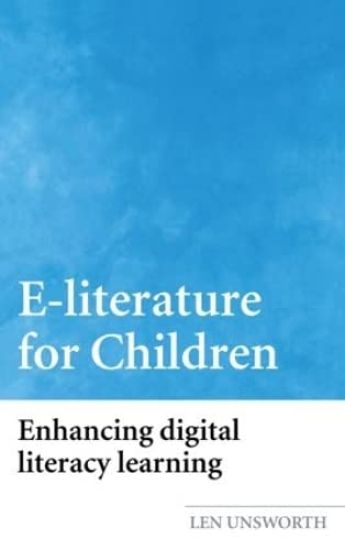
As ICT continues to grow as a key resource in the classroom, this book helps students and teachers to get the best out of e-literature, with practical ideas for work schemes for children at all levels. Len Unsworth draws together functional analyses of language and images and applies them to real-life classroom learning environments, developing pupils’ understanding of ‘text’. The main themes include:What kinds of literary narratives can be accessed electronically?How can language, pictures, sound and hypertext be analysed to highlight the story?How can digital technology enhance literary experiences through web-based 'book talk' and interaction with publishers' websites?How do computer games influence the reader/ player role in relation to how we understand stories?
E-literature for Children

E-literature for Children

Len Unsworth

Routledge
2005
nidottu
As ICT continues to grow as a key resource in the classroom, this book helps students and teachers to get the best out of e-literature, with practical ideas for work schemes for children at all levels. Len Unsworth draws together functional analyses of language and images and applies them to real-life classroom learning environments, developing pupils’ understanding of ‘text’. The main themes include:What kinds of literary narratives can be accessed electronically?How can language, pictures, sound and hypertext be analysed to highlight the story?How can digital technology enhance literary experiences through web-based 'book talk' and interaction with publishers' websites?How do computer games influence the reader/ player role in relation to how we understand stories?