Kirjojen hintavertailu. Mukana 12 595 353 kirjaa ja 12 kauppaa.

Kirjailija

Lennard J. Davis

Kirjat ja teokset yhdessä paikassa: 14 kirjaa, julkaisuja vuosilta 1995-2025, suosituimpien joukossa Enforcing Normalcy. Vertaile teosten hintoja ja tarkista saatavuus suomalaisista kirjakaupoista.

Mukana myös kirjoitusasut: Lennard J Davis

14 kirjaa

Kirjojen julkaisuhaarukka 1995-2025.

Enforcing Normalcy

Enforcing Normalcy

Lennard J Davis

Verso Books
2025
nidottu
In this highly original study of the cultural assumptions governing our conception of people with disabilities, Lennard J. Davis argues forcefully against "ableist" discourse and for a complete recasting of the category of disability itself.Enforcing Normalcy surveys the emergence of a cluster of concepts around the term "normal" as these matured in western Europe and the United States over the past 250 years. Linking such notions to the concurrent emergence of discourses about the nation, Davis shows how the modern nation-state constructed its identity on the backs not only of colonized subjects, but of its physically disabled minority. In a fascinating chapter on contemporary cultural theory, Davis explores the pitfalls of privileging the figure of sight in conceptualizing the nature of textuality. And in a treatment of nudes and fragmented bodies in Western art, he shows how the ideal of physical wholeness is both demanded and denied in the classical aesthetics of representation.Enforcing Normalcy redraws the boundaries of political and cultural discourse. By insisting that disability be added to the familiar triad of race, class and gender, the book challenges progressives to expand the limits of their thinking about human oppression.
Poor Things

Poor Things

Lennard J. Davis

DUKE UNIVERSITY PRESS
2024
pokkari
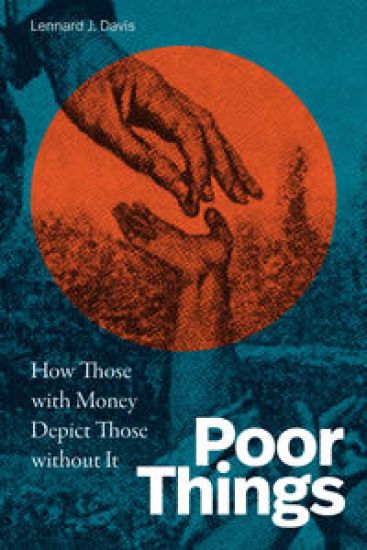
For generations most of the canonical works that detail the lives of poor people have been created by rich or middle-class writers like Charles Dickens, John Steinbeck, or James Agee. This has resulted in overwhelming depictions of poor people as living abject, violent lives in filthy and degrading conditions. In Poor Things, Lennard J. Davis labels this genre “poornography”: distorted narratives of poverty written by and for the middle and upper classes. Davis shows how poornography creates harmful and dangerous stereotypes that build barriers to social justice and change. To remedy this, Davis argues, poor people should write realistic depictions of themselves, but because of representational inequality they cannot. Given the obstacles to the poor accessing the means of publication, Davis suggests that the work should, at least for now, be done by “transclass” writers who were once poor and who can accurately represent poverty without relying on stereotypes and clichés. Only then can the lived experience of poverty be more fully realized.
Poor Things

Poor Things

Lennard J. Davis

DUKE UNIVERSITY PRESS
2024
sidottu
For generations most of the canonical works that detail the lives of poor people have been created by rich or middle-class writers like Charles Dickens, John Steinbeck, or James Agee. This has resulted in overwhelming depictions of poor people as living abject, violent lives in filthy and degrading conditions. In Poor Things, Lennard J. Davis labels this genre “poornography”: distorted narratives of poverty written by and for the middle and upper classes. Davis shows how poornography creates harmful and dangerous stereotypes that build barriers to social justice and change. To remedy this, Davis argues, poor people should write realistic depictions of themselves, but because of representational inequality they cannot. Given the obstacles to the poor accessing the means of publication, Davis suggests that the work should, at least for now, be done by “transclass” writers who were once poor and who can accurately represent poverty without relying on stereotypes and clichés. Only then can the lived experience of poverty be more fully realized.
Resisting Novels (Routledge Revivals)

Resisting Novels (Routledge Revivals)

Lennard J. Davis

Routledge
2015
nidottu
"By making friends with signs", Lennard Davis argues, "we are weakening the bond that anchors us to the social world, the world of action, and binding ourselves to the ideological." For the reader, this power of the novel needs to be resisted. But there is a double resistance at work: the novel is also a defensive structure positioning us against alienation and loneliness: the dehumanising symptoms of modern life. While discussions surrounding ideology in novels traditionally concentrate on thematics, in this study – first published in 1987 - Davis approaches the subject through such structural features as location, character, dialogue and plot. Drawing on a wide range of novels from the seventeenth century to the present day, and on psychoanalysis as well as philosophy, Resisting Novels explores how fiction works subliminally to resist change and to detach the reader from the world of lived experience. This controversial critique will engage students and academics with a particular interest in literary theory.
Resisting Novels (Routledge Revivals)

Resisting Novels (Routledge Revivals)

Lennard J. Davis

Routledge
2014
sidottu
"By making friends with signs", Lennard Davis argues, "we are weakening the bond that anchors us to the social world, the world of action, and binding ourselves to the ideological." For the reader, this power of the novel needs to be resisted. But there is a double resistance at work: the novel is also a defensive structure positioning us against alienation and loneliness: the dehumanising symptoms of modern life. While discussions surrounding ideology in novels traditionally concentrate on thematics, in this study – first published in 1987 - Davis approaches the subject through such structural features as location, character, dialogue and plot. Drawing on a wide range of novels from the seventeenth century to the present day, and on psychoanalysis as well as philosophy, Resisting Novels explores how fiction works subliminally to resist change and to detach the reader from the world of lived experience. This controversial critique will engage students and academics with a particular interest in literary theory.
Obsession

Obsession

Lennard J. Davis

University of Chicago Press
2009
nidottu
We live in an age of obsession. Not only are we hopelessly devoted to our work, strangely addicted to our favorite television shows, and desperately impassioned about our cars, we admire obsession in others: we demand that lovers be infatuated with one another in films, we respond to the passion of single-minded musicians, we cheer on driven athletes. To be obsessive is to be American; to be obsessive is to be modern. But obsession is not only a phenomenon of modern existence: it is a medical category - both a pathology and a goal. Behind this paradox lies a fascinating history, which Lennard J. Davis tells in "Obsession". Beginning with the roots of the disease in demonic possession and its secular successors, Davis traces the evolution of obsessive behavior from a social and religious fact of life into a medical and psychiatric problem. From obsessive aspects of professional specialization to obsessive compulsive disorder and nymphomania, no variety of obsession eludes Davis' graceful analysis.
Obsession

Obsession

Lennard J. Davis

University of Chicago Press
2008
sidottu
We live in an age of obsession. Not only are we hopelessly devoted to our work, strangely addicted to our favorite television shows, and desperately impassioned about our cars, we admire obsession in others: we demand that lovers be infatuated with one another in films, we respond to the passion of single-minded musicians, we cheer on driven athletes. To be obsessive is to be American; to be obsessive is to be modern. But obsession is not only a phenomenon of modern existence: it is a medical category - both a pathology and a goal. Behind this paradox lies a fascinating history, which Lennard J. Davis tells in "Obsession". Beginning with the roots of the disease in demonic possession and its secular successors, Davis traces the evolution of obsessive behavior from a social and religious fact of life into a medical and psychiatric problem. From obsessive aspects of professional specialization to obsessive compulsive disorder and nymphomania, no variety of obsession eludes Davis' graceful analysis.
My Sense of Silence

My Sense of Silence

Lennard J. Davis

University of Illinois Press
2008
nidottu
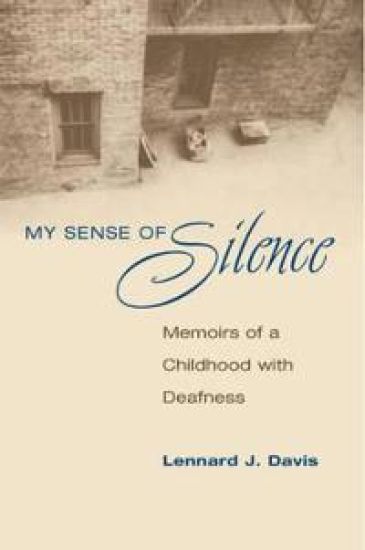
Selected as an "Editors Choice" by the Chicago Tribune Lennard J. Davis grew up as the hearing child of deaf parents. In this candid, affecting, and often funny memoir, he recalls the joys and confusions of this special world, especially his complex and sometimes difficult relationships with his working-class Jewish immigrant parents. Gracefully slipping through memory, regret, longing, and redemption, My Sense of Silence is an eloquent remembrance of human ties and human failings.
Bending Over Backwards

Bending Over Backwards

Lennard J. Davis; Michael Bérubé

New York University Press
2002
sidottu
With the advent of the human genome, cloning, stem-cell research and many other developments in the way we think of the body, disability studies provides an entirely new way of thinking about the body in its relation to politics, the environment, the legal system, and global economies. Bending Over Backwards reexamines issues concerning the relationship between disability and normality in the light of postmodern theory and political activism. Davis takes up homosexuality, the Americans with Disabilities Act, the legal system, the history of science and medicine, eugenics, and genetics. Throughout, he maintains that disability is the prime category of postmodernity because it redefines the body in relation to concepts of normalcy, which underlie the very foundations of democracy and humanistic ideas about the body. Bending Over Backwards argues that disability can become the new prism through which postmodernity examines and defines itself, supplanting the categories of race, class, gender, and sexual orientation.
Bending Over Backwards

Bending Over Backwards

Lennard J. Davis; Michael Bérubé

New York University Press
2002
pokkari
With the advent of the human genome, cloning, stem-cell research and many other developments in the way we think of the body, disability studies provides an entirely new way of thinking about the body in its relation to politics, the environment, the legal system, and global economies. Bending Over Backwards reexamines issues concerning the relationship between disability and normality in the light of postmodern theory and political activism. Davis takes up homosexuality, the Americans with Disabilities Act, the legal system, the history of science and medicine, eugenics, and genetics. Throughout, he maintains that disability is the prime category of postmodernity because it redefines the body in relation to concepts of normalcy, which underlie the very foundations of democracy and humanistic ideas about the body. Bending Over Backwards argues that disability can become the new prism through which postmodernity examines and defines itself, supplanting the categories of race, class, gender, and sexual orientation.
The Sonnets

The Sonnets

Lennard J. Davis

State University of New York Press
2001
sidottu
In this darkly satirical novel, a Columbia University English professor's life is turned upside down when it starts to follow the plot of Shakespeare's sonnets.What if Shakespeare found himself living in modern-day Manhattan? The Sonnets follows Will Marlowe, a Columbia University English professor, who, while teaching a class on Shakespeare, realizes that his life is beginning to parallel the Bard's sonnets. Although married to a woman named Anne, Will falls for a handsome young man who inspires him, and becomes involved with a dark, mysterious, feminist graduate student. Nudging into the fray is the university poet, a rival of Will's, who tries to steal the young man away. Will is now forced to face the funny and disastrous consequences of these contending forces. This darkly erotic and humorous novel satirizes academia, contemporary love and sex, and the world of urban cool.
Factual Fictions

Factual Fictions

Lennard J. Davis

University of Pennsylvania Press
1997
pokkari
"Nowadays, most readers take the intersection between fiction and fact for granted. We've developed a faculty for pretending that even the most bizarre literary inventions are, for the nonce, real...The value of Davis's book is that it explores the h
Enforcing Normalcy

Enforcing Normalcy

Lennard J Davis

Verso Books
1995
nidottu
In this highly original study of the cultural assumptions governing our conception of people with disabilities, Lennard J. Davis argues forcefully against "ableist" discourse and for a complete recasting of the category of disability itself.Enforcing Normalcy surveys the emergence of a cluster of concepts around the term "normal" as these matured in western Europe and the United States over the past 250 years. Linking such notions to the concurrent emergence of discourses about the nation, Davis shows how the modern nation-state constructed its identity on the backs not only of colonized subjects, but of its physically disabled minority. In a fascinating chapter on contemporary cultural theory, Davis explores the pitfalls of privileging the figure of sight in conceptualizing the nature of textuality. And in a treatment of nudes and fragmented bodies in Western art, he shows how the ideal of physical wholeness is both demanded and denied in the classical aesthetics of representation.Enforcing Normalcy redraws the boundaries of political and cultural discourse. By insisting that disability be added to the familiar triad of race, class and gender, the book challenges progressives to expand the limits of their thinking about human oppression.