Kirjojen hintavertailu. Mukana 12 288 957 kirjaa ja 12 kauppaa.

Kirjailija

Leo Marriott

Kirjat ja teokset yhdessä paikassa: 17 kirjaa, julkaisuja vuosilta 2004-2023, suosituimpien joukossa Naval Battles of the Second World War. Vertaile teosten hintoja ja tarkista saatavuus suomalaisista kirjakaupoista.

17 kirjaa

Kirjojen julkaisuhaarukka 2004-2023.

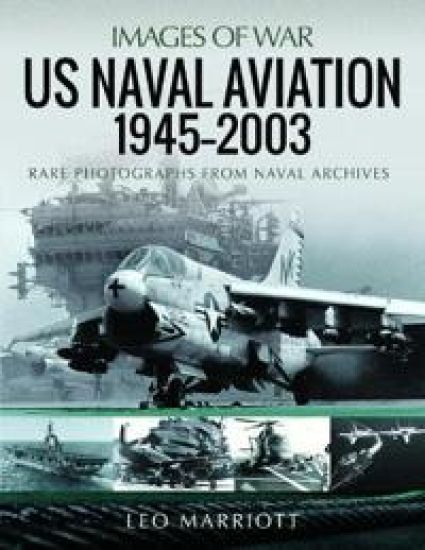
US Naval Aviation, 1945 2003

US Naval Aviation, 1945 2003

Leo Marriott

PEN SWORD BOOKS LTD
2023
nidottu
In this the highly illustrated second volume of his history of US naval aviation, Leo Marriott takes the reader through the extraordinary developments in design and capability that transformed American aircraft and aircraft carriers after the Second World War, and he describes the succession of conflicts in which they were deployed. Increasingly, advanced jets replaced propeller-driven aircraft and nuclearpowered carriers allowed the US Navy to project American military power across the world. As the many remarkable photographs in this book show, wherever naval aviation was involved, it played a crucial role, especially in the wars in Korea and Vietnam. The vessels built in the 1940s to fight in the war against Japan gave way to a new generation of super carriers. Supersonic fighters and strike aircraft entered service - the F-8 Crusaders and F-4 Phantoms of the Vietnam era, then the F-14 Tomcat, F/A-18 Hornet and S-3 Viking of more recent times. Carrier-based helicopters became more important, first for search-and-rescue missions, then for anti-submarine warfare and for landing assault forces. Throughout this period of the Cold War the US Navy's carriers and aviation served to demonstrate American power worldwide and to counter the threat represented by the Soviet Union's challenge to US mastery of the seas.
First Canadian Army

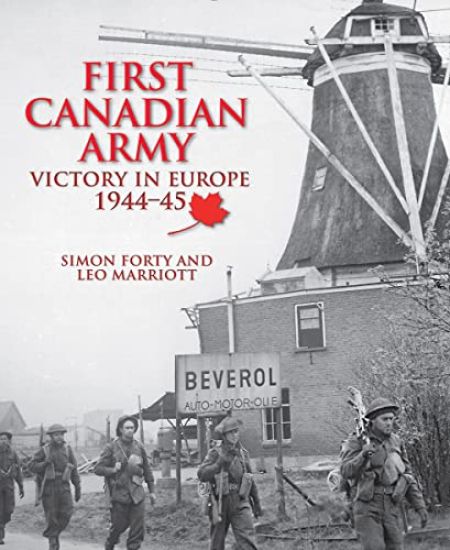
First Canadian Army

Simon Forty; Leo Marriott

FIREFLY BOOKS LTD
2022
nidottu
“It’s rare for a book to capture your attention from the very first sentence, but kudos to the authors of First Canadian Army for doing just that... I, too, feel that Canada’s contributions to victory in both world wars have unfortunately been downplayed or ignored over the decades by the country’s allies.” — Canada’s History Magazine. A pictorial history of the decisive role played by Canada in the final year of World War II. After Dunkirk, as the tattered remnants of Britain’s best troops returned home without their heavy weapons, Canadian troops moved in to defend northwest Europe, sending in virtually all of its disposable weapon resources and 368,000 soldiers. The majority of these were to be part of the First Canadian Army, which would play a key role leading to the unconditional surrender by Nazi Germany on May 9, 1945. This book is a pictorial history of the First Canadian Army in northwest Europe during the final year of the war. It concentrates not just on the events of 75 years ago but also what can be seen on the ground today. The illustrations, over 350 of them, include battle, landing and assault maps; photographs of soldiers in action and resting, aerial photographs of key sites of action then and now; battlefield survivors such as Sherman tanks; memorials to individuals and units; and, of course, the cemeteries of Canadian, Polish and British soldiers. In ten parts and 60 chapters featuring 350 illustrations and maps, the book covers: The Bridgehead; The Battles Around Caen; Clearing the Coast; Clearing The Scheldt; Winter on the Maas; The Rhineland; Advance to the Sea; I Corps in The West Netherlands; The German Surrender. Military history buffs will enjoy this book for its focus on a specific battalion and its actions at a decisive moment in the war. The archival photographs are important records and reminders of this watershed moment in World War II’s European theater.
Naval Battles of the Second World War

Naval Battles of the Second World War

Leo Marriott

PEN SWORD BOOKS LTD
2022
sidottu
The Second World War was a truly global conflict and maritime power played a major role in every theatre of operations. Land campaigns depended on supplies transported by sea, and victory or defeat depended on the outcome of naval battles. So Leo Marriott's highly illustrated two-volume account of the struggle sets naval actions in the wider strategic context as well as giving graphic accounts of what happened in each engagement. This second volume concentrates on the epic struggle between the Americans and the Japanese in the vast expanses of the Pacific where for almost four years a great maritime campaign ebbed and flowed and some of the most famous naval battles of the conflict took place. The first part of the book covers the period from Pearl Harbor to Midway while the second covers the long and bloody campaign in the south-west Pacific where the US Navy honed its skills and turned a bloody defeat into a hard-won victory. The final section focuses on naval operations during the American advance across the central Pacific up to the Battle of Leyte Gulf - the greatest naval battle ever fought. Included are other actions involving the Royal Navy which, after early setbacks, would go on to play a major supporting role alongside the US Navy in the Pacific This concise but wide-ranging introduction to the naval war emphasizes the sheer scale of the conflict in every sea and shows the direct impact of each naval battle on the course of the war.
Naval Battles of the Second World War

Naval Battles of the Second World War

Leo Marriott

PEN SWORD BOOKS LTD
2022
sidottu
The Second World War was a truly global conflict and maritime power played a major role in every theatre of operations. Land campaigns depended on supplies transported by sea, and victory or defeat depended on the outcome of naval battles. So Leo Marriott's highly illustrated two-volume account of the struggle sets naval actions in the wider strategic context as well as giving graphic accounts of what happened in each engagement. This first volume concentrates on the Royal Navy's confrontation with the ships and submarines of the German Kriegsmarine during the Battle of the Atlantic, the Arctic convoys and the struggle across the Mediterranean against the Italian navy to supply the opposing armies in North Africa. The Battle of the River Plate, the pursuit of the Bismarck, the PQ17 convoy to the Soviet Union and Operation Pedestal, the most famous convoy sent to relieve Malta, are among the episodes described in vivid detail and illustrated with a selection of striking photographs. This concise but wide-ranging introduction to the naval war emphasizes the sheer scale of the conflict in every sea and shows the direct impact of each naval battle on the course of the war .
US Naval Aviation 1898-1945: The Pioneering Years to the Second World War
The Japanese attack on Pearl Harbor on 7 December 1941 sank or crippled almost all of the battleships belonging to the US Navy's Pacific Fleet, but the fleet's aircraft carriers survived to demonstrate that naval aviation was now the dominant factor in the struggle at sea, turning the tide of the Pacific War. That the US Navy had the necessary ships, aircraft and crews was the result of pioneering, far-sighted decisions made in the pre-war years. Before the First World War the navy had recognised the potential of aircraft at sea, and it went on to develop the techniques and equipment that contributed so much to the defeat of the Japanese. This is the fascinating story Leo Marriott tells in this photographic history. In a selection of over 200 rare photographs he traces the growth of US naval aviation from the flimsy seaplanes of the first years of the twentieth century to the mighty armadas that challenged those of the Japanese and, after the carrier battles at Coral Sea and Midway, led the advance across the Pacific. Key aspects of the history are the navy's first aircraft carriers of the 1920s and the tremendous progress made in the decades between the wars in tactics and strategy as well as in the design of ships and aircraft.
Essex Class Aircraft Carriers, 1943-1991

Essex Class Aircraft Carriers, 1943-1991

Leo Marriott

Pen Sword Maritime
2020
nidottu
Essex-class aircraft carriers played an essential role in the victory of the United States over Japan in the Second World War, and Leo Marriott's photographic history is a fascinating introduction to them. Without these remarkable ships, the island-hopping campaign of American forces across the Pacific towards Japan would not have been possible. They also took part in the Korean and Vietnam wars that followed. During the Second World War they were at the centre of the powerful task groups that could put up hundreds of aircraft to support forces on the ground. They were also prime targets for Japanese air attacks, in particular the kamikaze suicide missions. A total of twenty-four were eventually commissioned including several after the end of the war. The selection of rare photographs and the expert text cover the evolution of US aircraft carrier design prior to the Second World War and look at the factors which shaped the design and construction of the Essex class. Included are dramatic action shots of the new breed of naval aircraft that were launched from their flight decks, including Hellcat and Corsair fighters that took on the Japanese and the carrier-borne jets that flew over Korea and Vietnam.
Early Jet Bombers 1944-1954

Early Jet Bombers 1944-1954

Leo Marriott

Pen Sword Aviation
2019
nidottu
In a companion volume to his Early Jet Fighters: British and American 1944-1954, Leo Marriott describes, using over 200 archive photographs, the first decade in the development of the jet bomber. This was a time of intense technical innovation which transformed the design and capabilities of the bomber and gave birth to a range of classic military aircraft in the USA, Great Britain, France and the Soviet Union. The photographs take the story from the earliest jet bombers constructed in Germany towards the end of the Second World War to the successful designs both sides depended on through the first phase of the Cold War. The pace of development was rapid and remarkable, from initial prototypes built in Germany - the Arado 234 and the Junkers Ju. 287 - to the fleets of advanced jet bombers like the British Canberra and V-bombers, the American B-47 and B-52 and the Soviet Il-28 Beagle and Tu-16 Badger. The images of the prototypes give a fascinating insight into the extraordinary technical challenges and the ambition and inventiveness of the designers and manufacturers who overcame them. Leo Marriott's vivid selection of photographs and his lucid historical narrative offer the reader an overview of a dynamic stage in the evolution of the design of military aircraft.
Early Jet Fighters

Early Jet Fighters

Leo Marriott

Pen Sword Aviation
2018
nidottu
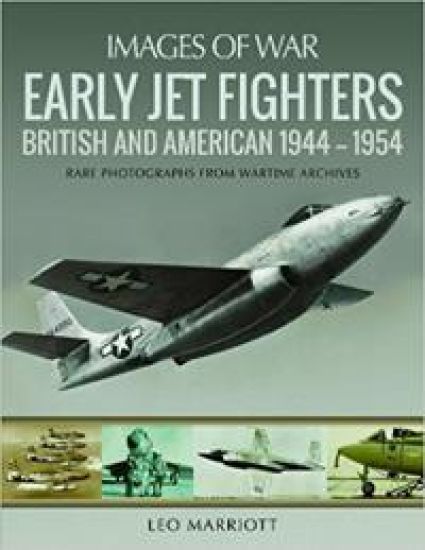
In almost 200 archive photographs Leo Marriott traces the course of the development of British and American jet fighters during the first pioneering decade of their production. In many ways the period from 1944 to 1954 was one of the most exciting and innovative in the history of military aviation. Rare images show the first jet fighters flown by the RAF towards the end of the Second World War and takes the story forward to the most advanced designs that played a key role in the war in Korea. The range of experimental and operational warplanes that were conceived and built during this short time was remarkable. The initial straight-wing jets began with the Gloster Meteor and Lockheed P-80 Shooting Star which were later superseded by the first operational swept-wing fighters such as the Hawker Hunter, North American F-86 Sabre and Grumman F9F-6 Cougar. Development of all these benefited greatly from German Second World War advances in aerodynamics that were exploited by the British and Americans when the war ended. Progress was so swift that, by the mid-1950s, the prototypes of the next generation of truly supersonic fighters were starting to appear, and these are featured in Leo Marriott's fascinating selection of images. He even includes a variety of prototypes which for various reasons did not result in production orders, as well as several unusual concepts such as flying boat fighters and mixed-power designs. Early Jet Fighters: British and American 1944-1954 is a graphic and informative introduction to an extraordinary stage in the evolution of the modern warplane.
The Ardennes Battlefields

The Ardennes Battlefields

Simon Forty; Leo Marriott

Casemate Publishers
2017
sidottu
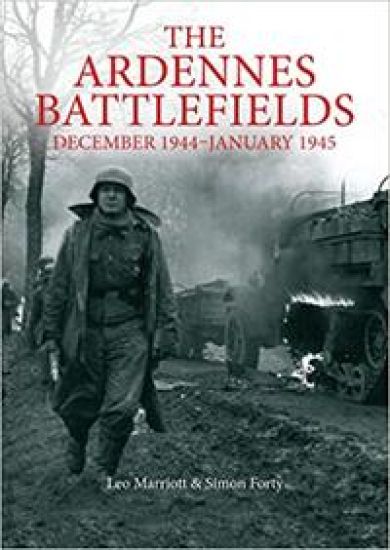
Just after its seventieth anniversary, the Battle of the Bulge has lost none of its impact. The largest battle fought by US troops on the continent of Europe started in a surprise attack on December 16, 1944, by four German armies, spearheaded by the cream of the German Panzer forces. Under the cover of bad weather and heavy snow, Hitler’s last roll of the dice was intended to retake Antwerp, split the Allies, divide their political leadership, and force peace in the West, thus allowing the German forces to concentrate on defeating the Red Army. Strategic pipedream or not, the attack was furious and drained the Eastern Front of reinforcements: 12 armored and 29 infantry divisions, some 2,000 tanks and assault guns—mainly PzKpfw IVs (800), Panthers (750) and Tigers (250 including some of the new King Tigers)— spearheaded the assault, which smashed into the American First and Ninth Armies.Near-complete surprise was achieved thanks to a combination of Allied overconfidence, preoccupation with offensive plans, and poor reconnaissance. The Germans attacked where least expected—the forested Ardennes—a weakly defended section of the Allied line, taking advantage of the weather conditions, which grounded the Allies’ overwhelmingly superior air forces. The Allied response was magnificent. Initial reverses brought out the best of Eisenhower’s armies, which fought with determination and grit against the enemy and the elements. The harsh battles are best summed up by the defense of the northern shoulder around the Elsenborn Ridge, the battle for St. Vith, and in the south the siege of Bastogne, where the town’s commander, Gen. McAuliffe, rejected German calls for surrender with the pithy reply: “Nuts.”Within ten days the German attack had been nullified. Patton, at the time planning an attack further south, wheeled his Third Army round in a brilliant maneuver that relieved Bastogne and set up a counterattack which would drive the Germans back behind the Rhine. The Ardennes Battlefields includes details of what can be seen on the ground today—hardware, memorials, museums, and cemeteries—using a mixture of media to provide an overview of the campaign: maps old and new highlight what has survived and what hasn’t; then and now photography allows fascinating comparisons with the images taken at the time; aerial photos give another angle to the story. The fifth book by Leo Marriott and Simon Forty provides a different perspective to this crucial battlefield.
The Falaise Gap Battles

The Falaise Gap Battles

Simon Forty; Leo Marriott

Casemate Publishers
2017
nidottu
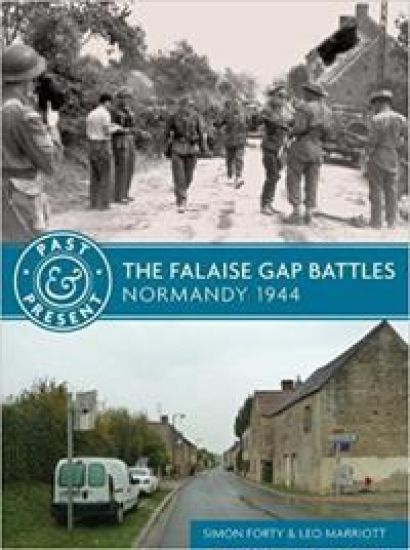
The denouement of the battle of Normandy, the fighting around Falaise and Chambois in August 1944 and the pursuit of the retreating German armies to the Seine provided the Allies with an immense victory. After ten weeks of hard attritional fighting, the Allies had broken loose from the bocage and the Germans’ deep defenses around Caen: by the end of September they would be close to the German border. As US First Army and British Second Army squeezed the western and northern edges of the German salient, so Third Army rushed headlong eastwards and then north to create the lower of two pincers—the other formed as the Canadian First Army and the Polish 1st Armoured Division pushed south of Caen. As could be expected, the Germans did not simply give up: they fought furiously to keep the pincers from closing. When they did, attacks from inside the pocket to break out and outside the pocket to break in led to fierce fighting between Chambois and Argentan. When the dust settled, between 80,000 and 100,000 troops had been trapped by the Allied encirclement. Estimates vary considerably, but it seems safe to say that at least 10,000 of the German forces were killed and around 50,000 became PoWs. The rest, however, escaped, but without most of their equipment, destroyed in the battle or abandoned in the retreat over the Seine. Those that did were subsequently to reform, rearm and conduct an effective defense into late 1944.The Past & Present Series reconstructs historical battles by using photography, juxtaposing modern views with those of the past together with concise explanatory text. It shows how much infrastructure has remained and how much such as outfits, uniforms, and ephemera has changed, providing a coherent link between now and then.
1st Airborne

1st Airborne

Simon Forty; Leo Marriott

Casemate Publishers
2017
nidottu
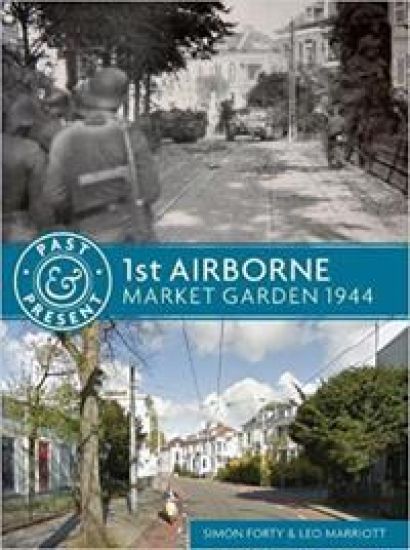
While the 6th Airborne Division had landed in France on D-Day and covered itself in glory, its counterpart, the 1st Airborne Division, had last seen action during an amphibious assault at Taranto on September 9, 1943, as part of the invasion of Italy. Returned to the UK in December 1943, it was held in reserve during the battle of Normandy and spent three months waiting for action, as plan after plan was proposed and then discarded, such was the speed of the Allied pursuit of the Germans.In September 1944, however, 1st Airborne played a leading role in Operation Market—the air component of Operation Market Garden, an audacious attempt by the Allies to bypass the Siegfried Line and advance into the Ruhr. It was to be 1st Airborne’s last action of the war. Encountering more resistance than expected, including II SS Panzer Corps, the division landed too far from Arnhem bridge, and fought bravely but in vain. Held up en route, particularly at Nijmegen, XXX Corps’ advance to Arnhem stuttered and ran late.After nine days of fighting, 1st Airborne had lost 8,000 men around Arnhem when the survivors retreated across the Lower Rhine to safety. During those nine days, however, they had created a legend: first as the small unit under Lt-Col John Frost held the “bridge too far” and then as the Oosterbeek perimeter came under sustained attack waiting for XXX Corps to arrive.The Past & Present Series reconstructs historical battles by using photography, juxtaposing modern views with those of the past together with concise explanatory text. It shows how much infrastructure has remained and how much such as outfits, uniforms, and ephemera has changed, providing a coherent link between now and then.
The Normandy Battlefields

The Normandy Battlefields

Leo Marriott; Simon Forty

Casemate Publishers
2017
sidottu
The Normandy Battlefields: D-Day & the Bridgehead ended as the Allies fought to expand their D-Day foothold. In Bocage and Breakout, Leo Marriott and Simon Forty take the story forward as the success of the invasion continued into the Cotentin, with Cherbourg falling on 29 June, before it bogged down in face of determined German defense and the bocage countryside—innumerable small fields surrounded by hedgerows, each one hiding anti-tank weapons, mortars and machine guns. As US First Army fought its way south, on the eastern edges of the bridgehead, British and Canadian forces were fighting a war of attrition around Caen facing the bulk of the German armor as division after division was fed into Normandy. Like a pressure cooker, the fighting intensified until, seven weeks after D-Day, Operation ‘Cobra’ broke the German line. Quickly Patton’s Third Army, operational from 1 August, flooded through the gap exploiting the German confusion, encircling what was left of the German armies in the Falaise Pocket and advancing quickly through into Brittany. Three weeks later, the Battle of Normandy was over, the routed German Army—without most of its heavy weapons left in the Falaise Pocket or on the banks of the Seine—was retreating helter skelter back towards Germany and the Low Countries pursued by the Allies in a reverse of the 1940 Blitzkrieg campaign.The three months of war in June–July 1944 were brutal, with losses of front-line troops as heavy as in World War I. The German defense was tenacious, particularly in face of Allied air supremacy. The Allies struggled to get into a position to allow their more mobile forces room for maneuver and and the fighting was ferocious.When victory came, it came at a cost: 209,672 casualties among the ground forces, including 36,976 killed and 19,221 missing. The Allied air forces lost 16,714 airmen. The corresponding German losses were even more significant: some 450,000 men, of whom 240,000 were killed or wounded. More important to the Germans were the losses of heavy equipment—tanks, assault guns, artillery, personnel carriers. As an example, 12th SS Panzer Division had lost 94% of its armor, nearly all of its artillery and 70% of its vehicles. With c20,000 men and 150 tanks before the campaign, after Falaise it had 300 men and 10 tanks.Mixing text, maps and images, many of them specially commissioned including aerial photography, The Normandy Battlefields: Bocage and Breakout explains and interprets the complexities of the Normandy campaign in an original and cohesive package.
Omaha Beach

Omaha Beach

Leo Marriott; Simon Forty

Casemate Publishers
2016
nidottu
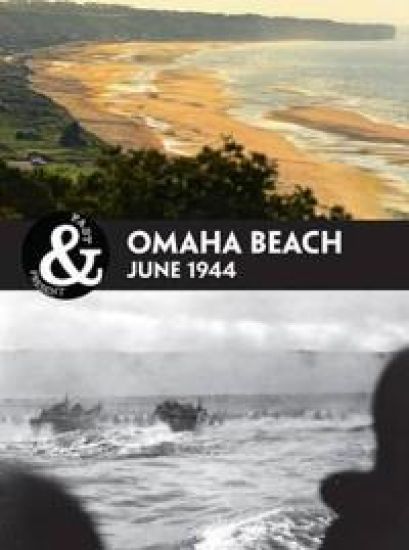
Of the five beaches attacked on 6 June, Omaha saw the sternest fighting. Well-placed defenders on the high ground and extensive beach defenses did their job. On top of this, so much had gone wrong with the first wave: many of the amphibious DD Sherman tanks didn’t reach the beach. They were released from their landing craft too far away where the greater swell swamped them and the troops landing on Omaha missed their firepower. Another problem was that many units landed in the wrong place. Strong tides and winds carried the landing craft off line and led to confusion. Finally, the German emplacements and defenses were well-placed on high ground and the only cover on the beach face=Calibri>– the seawal – was over a killing ground. There were 32 fortified areas located between the Vire River and Port-en-Bessin: in all, 12 of these strongpoints were able to direct fire on Omaha Beach. The attacking forcesface=Calibri>–units of the US 29th and 1st Inf Divs – suffered over 2,000 casualties, many of them drowned during the approach, but led by US Rangers, themselves misplaced (they were the follow-up troops to Rudder’s Rangers who had scaled the Pointe du Hoc) the American troops pushed forward and by nightfall, they had gained hold of the beach and its immediate hinterland. Despite the casualties, 34,000 troops had been landed by the end of the day.
6th Airborne

6th Airborne

Leo Marriott; Simon Forty

Casemate Publishers
2016
nidottu
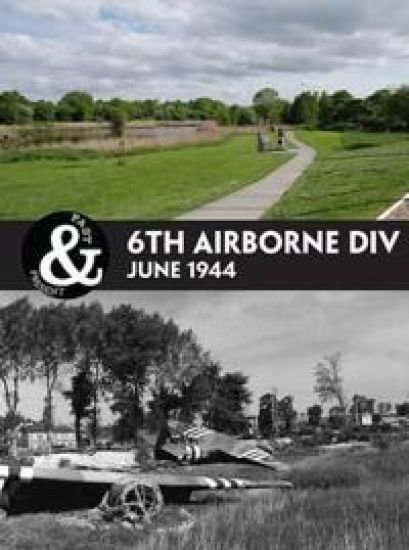
Operation Tonga began at 22:56 on the night of 5 June, when six Halifax heavy bombers took off from Tarrant Rushton towing six Horsas carrying a coup–de–main force consisting of D Coy, Ox and Bucks LI reinforced with two extra platoons from B Coy and a party of sappers, who were tasked with capturing the bridges over the Caen Canal and the River Orne. 6th Airborne Division—which included 1st Canadian Para Bn–had been allotted three specific tasks to achieve, apart from protecting the eastern flank of the Allied seaborne landings. First, it was to capture intact the two bridges over the Caen Canal and the Orne River at Benouville and Ranville. Second, the division was to destroy the heavily fortified Merville coastal artillery battery located at Franceville Plage, to ensure that it could not shell the British forces landing on Sword Beach. A third task was to destroy several bridges spanning the River Dives–at Varaville, Robehomme, Bures, and Troarn. The division would then hold the territory that it had seized until it could be relieved by advancing Allied ground forces.
Hitler’S Atlantic Wall

Hitler’S Atlantic Wall

George Forty; Leo Marriott; Simon Forty

Casemate Publishers
2016
sidottu
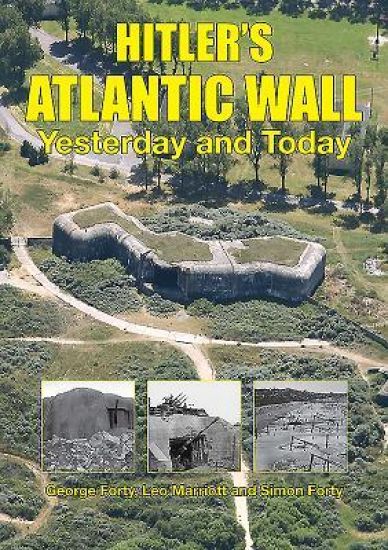
Masters of the continent, the Nazis realized that they would have to defend their gains, and once the United States entered the war, redoubled their efforts. Using forced and slave labor they built a chain of defensive positions, coastal batteries, and beach defenses from the top of Norway to the Franco-Spanish border. However, as was so typical of the Nazis, while the bunkers and batteries seem impressively constructed, and the Atlantic Wall has left a permanent reminder of the years of Nazi domination, it was crippled by lack of strategic planning, internal bickering, and a multitude of command structures that did not communicate with each other effectively. In June 1944 the Allies burst through the wall, and while it took many lives to break the crust of the German defenses, the vaunted Atlantic Wall proved ineffective save for the fortresses the Allies bypassed and subdued later. Using the same formula as in their books on The Normandy Battlefields and Race to the Rhine, Leo Marriott and Simon Forty combine bespoke aerial photography with old photographs, maps, and current illustrations to provide a pictorial analysis of the subject—Around 500 illustrations ensure the subject is well covered. After opening sections on the construction of the wall, the defensive plan, and the different structures that were built, Hitler’s Atlantic Wall yesterday and today provides a survey of the key locations and what can be seen today—including many of the museums that interpret them. The bulk of the book is divided geographically by country, dealing with France, Belgium, the Netherlands, Denmark, and Norway. After 70 years, the Atlantic Wall is still a remarkable reminder of the war years, and one that continues to fascinate.
Race to the Rhine

Race to the Rhine

Leo Marriott; Simon Forty

Casemate Publishers
2015
sidottu
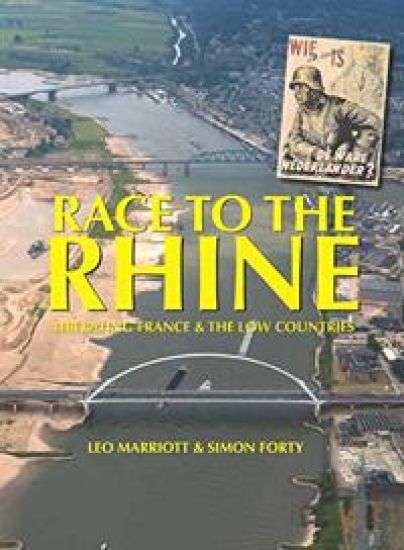
The speed of the German Blitzkrieg in 1940 and the relative ease with which they brushed aside Allied defenses meant four years of occupation. But in June 1944—this time with American forces—the Allies finally returned for a rematch. The destruction of German forces in Normandy’s Falaise pocket, on August 14,was as quick as the Blitzkrieg had been: by September British troops were in Ghent and Liege; Canadian forces liberated Ostend, and in northeast France Patton's Third Army was moving rapidly to the German border, taking Rheims on August 29 and Verdun on the 30th. Paris was liberated on August 25th. The liberation of the Low Countries would not prove as straightforward, however. Operation Market Garden—Montgomery's brave thrust toward the Rhine at Arnhem—started on September 17 and hoped to end German resistance at a stroke. But it ended in failure on the 25th with over 6,000 paratroopers captured. V-1 flying bombs had meantime been launched from northern France and the Low Countries from August 1944. During September the more frightening German V-2s began raining in. In late October, belated operations began to clear the Scheldt Estuary and open the port of Antwerp to the Allies, and took nearly a month. Belgium was almost free of the Nazi yoke and the Netherlands looked likely to be cleared before Christmas. Then, on December 16, came Hitler's last roll of the dice: a major German counter-offensive in the Ardennes aiming to split the Allied armies and retake Antwerp. It turned out to be their last try: the American defenders held, and finally with better weather, Patton's army and Allied air superiority told. With the Germans having shot their last bolt, in the spring the Rhine was gained. Race to the Rhine, a companion volume to The Normandy Battlefields, links modern aerial photography with contemporary illustrations to provide a modern interpretation of the battles, replete with maps, diagrams and photos. It is now 70 years since Western Europe was freed from its occupation, and this book provides a graphic view of how it was accomplished. For those interested in visiting the sites, it supplies a guide to the places that best represent the battles today.