
Kirjailija
Leo Spitzer
Kirjat ja teokset yhdessä paikassa: 18 kirjaa, julkaisuja vuosilta 1910-2022, suosituimpien joukossa Sprachwandel und Kulturwandel. Vertaile teosten hintoja ja tarkista saatavuus suomalaisista kirjakaupoista.
18 kirjaa
Kirjojen julkaisuhaarukka 1910-2022.

Renowned philologist Leo Spitzer's multitudinous contributions to the fields of etymology and stylistics in many of the Romance languages are widely acknowledged and highly valued. Less well known, but equally engaging, is his extensive work in what he referred to as "historical semantics"-a study exemplified in his treatise, Classical and Christian Ideas of World Harmony. Key to this study is Spitzer's use of the term Geist, which he prefers over more mundane descriptors such as "intellectual history" or "history of ideas." For Spitzer, Geist represents the "unity of feeling and thought," "atmosphere," or "climate of opinion" after which he is searching. The present work represents, however, more than a chance example of Spitzer's method, for its very topic-Stimmung or "world harmony"-is perfectly emblematic of Spitzer's understanding of Geist; that is, his conception of the unity of the European spirit, the old world's feeling for an ordered, even musically ordered, universe. This uniquely fascinating volume is not merely a learned treatise in historical semantics; it is itself a stupendous display of world harmony as a creed-a vivid demonstration that "all is all," that everything is related to everything: the planets and the lute, the colors heard and sounds seen, rhyme and nature, the echo and the birds' song.

Renowned philologist Leo Spitzer's multitudinous contributions to the fields of etymology and stylistics in many of the Romance languages are widely acknowledged and highly valued. Less well known, but equally engaging, is his extensive work in what he referred to as "historical semantics"-a study exemplified in his treatise, Classical and Christian Ideas of World Harmony. Key to this study is Spitzer's use of the term Geist, which he prefers over more mundane descriptors such as "intellectual history" or "history of ideas." For Spitzer, Geist represents the "unity of feeling and thought," "atmosphere," or "climate of opinion" after which he is searching. The present work represents, however, more than a chance example of Spitzer's method, for its very topic-Stimmung or "world harmony"-is perfectly emblematic of Spitzer's understanding of Geist; that is, his conception of the unity of the European spirit, the old world's feeling for an ordered, even musically ordered, universe. This uniquely fascinating volume is not merely a learned treatise in historical semantics; it is itself a stupendous display of world harmony as a creed-a vivid demonstration that "all is all," that everything is related to everything: the planets and the lute, the colors heard and sounds seen, rhyme and nature, the echo and the birds' song.

School Photos in Liquid Time
Marianne Hirsch; Leo Spitzer
University of Washington Press
2019
sidottu
From clandestine images of Jewish children isolated in Nazi ghettos and Japanese American children incarcerated in camps to images of Native children removed to North American boarding schools, classroom photographs of schoolchildren are pervasive even in repressive historical and political contexts. School Photos in Liquid Time offers a closer look at this genre of vernacular photography, tracing how photography advances ideologies of social assimilation as well as those of hierarchy and exclusion. In Marianne Hirsch and Leo Spitzer's deft analysis, school photographs reveal connections between the histories of persecuted subjects in different national and imperial centers.Exploring what this ubiquitous and mundane but understudied genre tells us about domination as well as resistance, the authors examine school photos as documents of social life and agents of transformation. They place them in dialogue with works by contemporary artists who reframe, remediate, and elucidate them. Ambitious yet accessible, School Photos in Liquid Time presents school photography as a new access point into institutions of power, revealing the capacity of past and present actors to disrupt and reinvent them.
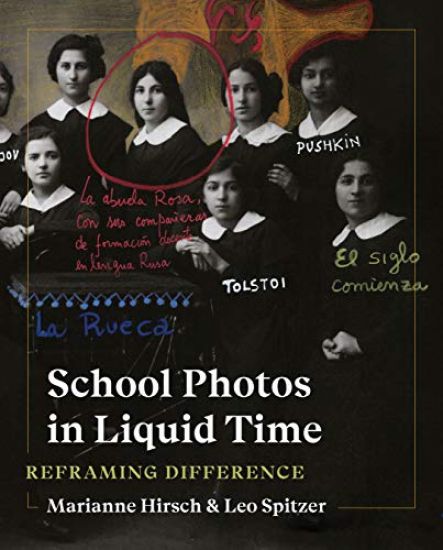
School Photos in Liquid Time
Marianne Hirsch; Leo Spitzer
University of Washington Press
2019
pokkari
From clandestine images of Jewish children isolated in Nazi ghettos and Japanese American children incarcerated in camps to images of Native children removed to North American boarding schools, classroom photographs of schoolchildren are pervasive even in repressive historical and political contexts. School Photos in Liquid Time offers a closer look at this genre of vernacular photography, tracing how photography advances ideologies of social assimilation as well as those of hierarchy and exclusion. In Marianne Hirsch and Leo Spitzer's deft analysis, school photographs reveal connections between the histories of persecuted subjects in different national and imperial centers.Exploring what this ubiquitous and mundane but understudied genre tells us about domination as well as resistance, the authors examine school photos as documents of social life and agents of transformation. They place them in dialogue with works by contemporary artists who reframe, remediate, and elucidate them. Ambitious yet accessible, School Photos in Liquid Time presents school photography as a new access point into institutions of power, revealing the capacity of past and present actors to disrupt and reinvent them.

The late Leo Spitzer enjoyed a reputation as one of the twentieth century's outstanding philologists and linguists. His writings in the field of the romance languages and of comparative philology have been always stimulating, often controversial. This collection presents his essays in English and American literature which appeared in various journals and other publications during his lifetime. They range from an explication de texte of three great Middle English poems, through close scrutiny of writings of Donne, Milton, Keats, to a consideration of Edgar Allan Poe and Whitman, and, finally, to one of Yeats' poems. Each of the essays in this collection is illuminated and heightened by Professor Spitzer's careful and imaginative exegesis. The delightful "American Advertising Explained as Popular Art" is included as a sample of Professor Spitzer's commentary on American culture. Originally published in 1962. The Princeton Legacy Library uses the latest print-on-demand technology to again make available previously out-of-print books from the distinguished backlist of Princeton University Press. These editions preserve the original texts of these important books while presenting them in durable paperback and hardcover editions. The goal of the Princeton Legacy Library is to vastly increase access to the rich scholarly heritage found in the thousands of books published by Princeton University Press since its founding in 1905.

Spitzer discusses the method he evolved for bringing together the two disciplines, linguistics and literary history, and examines the work of Cervantes, Racine, Diderot, and Claudel in the light of this theory. Originally published in 1967. The Princeton Legacy Library uses the latest print-on-demand technology to again make available previously out-of-print books from the distinguished backlist of Princeton University Press. These editions preserve the original texts of these important books while presenting them in durable paperback and hardcover editions. The goal of the Princeton Legacy Library is to vastly increase access to the rich scholarly heritage found in the thousands of books published by Princeton University Press since its founding in 1905.

Spitzer discusses the method he evolved for bringing together the two disciplines, linguistics and literary history, and examines the work of Cervantes, Racine, Diderot, and Claudel in the light of this theory. Originally published in 1967. The Princeton Legacy Library uses the latest print-on-demand technology to again make available previously out-of-print books from the distinguished backlist of Princeton University Press. These editions preserve the original texts of these important books while presenting them in durable paperback and hardcover editions. The goal of the Princeton Legacy Library is to vastly increase access to the rich scholarly heritage found in the thousands of books published by Princeton University Press since its founding in 1905.

The late Leo Spitzer enjoyed a reputation as one of the twentieth century's outstanding philologists and linguists. His writings in the field of the romance languages and of comparative philology have been always stimulating, often controversial. This collection presents his essays in English and American literature which appeared in various journals and other publications during his lifetime. They range from an explication de texte of three great Middle English poems, through close scrutiny of writings of Donne, Milton, Keats, to a consideration of Edgar Allan Poe and Whitman, and, finally, to one of Yeats' poems. Each of the essays in this collection is illuminated and heightened by Professor Spitzer's careful and imaginative exegesis. The delightful "American Advertising Explained as Popular Art" is included as a sample of Professor Spitzer's commentary on American culture. Originally published in 1962. The Princeton Legacy Library uses the latest print-on-demand technology to again make available previously out-of-print books from the distinguished backlist of Princeton University Press. These editions preserve the original texts of these important books while presenting them in durable paperback and hardcover editions. The goal of the Princeton Legacy Library is to vastly increase access to the rich scholarly heritage found in the thousands of books published by Princeton University Press since its founding in 1905.

Lives in Between: The Predicament of Marginality in a Century of Emancipation
Leo Spitzer
Createspace Independent Publishing Platform
2015
nidottu

Hotel Bolivia: The Culture of Memory in a Refuge From Nazism
Leo Spitzer
Createspace Independent Publishing Platform
2013
nidottu
In the 1930s, many tens of thousands of people fleeing Nazi-dominated Europe found refuge in Latin America. And in the short, terrifying months between the Anschluss and Kristallnacht in 1938 and the outbreak of World War II, Bolivia was one of the few remaining places in the entire world to accept Jewish refugees; more than twenty thousand Central Europeans were soon remaking their lives in this unknown land. Their story was largely overlooked until Leo Spitzer began his pathbreaking work for Hotel Bolivia; their extraordinary experiences have never been examined in such touching, memorable detail. But Hotel Bolivia is more than a colorful chapter in the history of the Jewish diaspora, and more than another effort to document the life stories, and reclaim the memories, of ordinary people who have been hidden from history. Leo Spitzer-whose Viennese Jewish family arrived in La Paz in 1939 and who lived in Bolivia for almost ten years-is a historian with a special interest in the interdependence of, and tension between, memory and history. With a subtle use of oral-history sources-interviews with survivors who left Bolivia and now live in Israel, the United States, Europe, and elsewhere-and unusual archival illustrations and photographs, he examines the effects of displacement on the experiences of people remaking their lives in a country so strange to them-effects on their European culture and memories, on their Jewish identities, and on Bolivia's politics and society. His beautifully written book is a personal testament to the diverse cultures that shaped him and a haunting consideration of the ways we make meaning out of the cultural baggage we carry with us wherever we go.
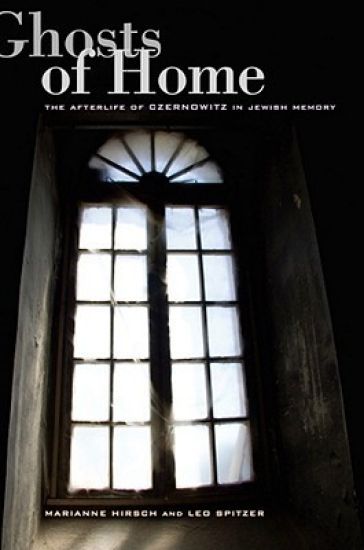
In modern-day Ukraine, east of the Carpathian Mountains, there is an invisible city. Known as Czernowitz, the 'Vienna of the East' under the Habsburg empire, this vibrant Jewish-German Eastern European culture vanished after World War II - yet an idealized version lives on, suspended in the memories of its dispersed people and passed down to their children like a precious and haunted heirloom. In this original blend of history and communal memoir, Marianne Hirsch and Leo Spitzer chronicle the city's survival in personal, familial, and cultural memory. They find evidence of a cosmopolitan culture of nostalgic lore - but also of oppression, shattered promises, and shadows of the Holocaust in Romania. Hirsch and Spitzer present the first historical account of Jewish Czernowitz in the English language and offer a profound analysis of memory's echo across generations.

In modern-day Ukraine, east of the Carpathian Mountains, there is an invisible city. Known as Czernowitz, the 'Vienna of the East' under the Habsburg empire, this vibrant Jewish-German Eastern European culture vanished after World War II - yet an idealized version lives on, suspended in the memories of its dispersed people and passed down to their children like a precious and haunted heirloom. In this original blend of history and communal memoir, Marianne Hirsch and Leo Spitzer chronicle the city's survival in personal, familial, and cultural memory. They find evidence of a cosmopolitan culture of nostalgic lore - but also of oppression, shattered promises, and shadows of the Holocaust in Romania. Hirsch and Spitzer present the first historical account of Jewish Czernowitz in the English language and offer a profound analysis of memory's echo across generations.

1912 sucht der junge sozialistische jüdische Wiener Dozent Leo Spitzer (1887-1960) Kontakt zum alten charismatischen, aber konservativen Professor Hugo Schuchardt (1842-1927), woraus sich eine für beide Beteiligten intensive Korrespondenz bis ins hohe Alter des Letzteren ergibt. Obwohl Gegenbriefe Schuchardts nicht erhalten sind, geben doch die hier veröffentlichten nahezu 250 Schreiben Leo Spitzers ein auch stilistisch eindrucksvolles Zeugnis von Welten, die aufeinander prallen, aber - nicht ohne Skepsis - wieder zueinander finden. In ihnen offenbaren sich eine Welt und ein akademisches Getriebe, in denen sich zunehmend Antisemitismus breit macht, sowie der sprachforschende, kulturelle, politische und menschliche Alltag. Kaum einer verstand es, bis ins hohe Alter Besonderheiten und Alltäglichkeiten so sehr in seiner eigenen wissenschaftlichen Forschung zu vermitteln wie Leo Spitzer.

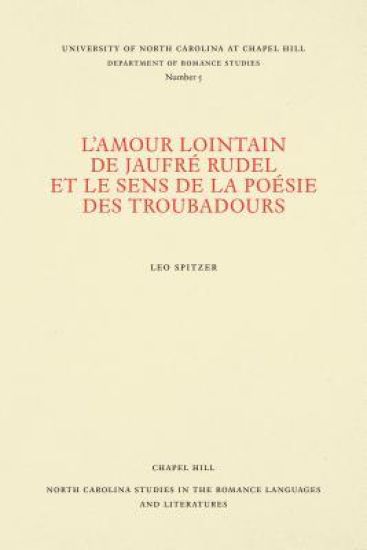
L'amour lointain de Jaufré Rudel et le sens de la poésie des troubadours
Leo Spitzer
The University of North Carolina Press
1944
nidottu
Spitzer, refuting ideas set forth by Grace Frank, redefines l'amour lointain as the result of the ""paradox amoureux,"" which is the base of all troubadour poetry. This is a forty-four page article with extensive notes.

Die Umschreibungen Des Begriffes "Hunger" Im Italienischen: Stilistisch-Onomasiologische Studie Auf Grund Von Unveröffentlichtem Zensurmaterial
Leo Spitzer
De Gruyter
1920
sidottu
The book series Beihefte zur Zeitschrift f r romanische Philologie, founded by Gustav Gr ber in 1905, is among the most renowned publications in Romance Studies. It covers the entire field of Romance linguistics, including the national languages as well as the lesser studied Romance languages. The editors welcome submissions of high-quality monographs and collected volumes on all areas of linguistic research, on medieval literature and on textual criticism. The publication languages of the series are French, Spanish, Portuguese, Italian and Romanian as well as German and English. Each collected volume should be as uniform as possible in its contents and in the choice of languages.

Die Wortbildung ALS Stilistisches Mittel Exemplifiziert an Rabelais: Nebst Einem Anhang Über Die Wortbildung Bei Balzac in Seinen "Contes Drolatiques"
Leo Spitzer
De Gruyter
1910
sidottu
The book series Beihefte zur Zeitschrift f r romanische Philologie, founded by Gustav Gr ber in 1905, is among the most renowned publications in Romance Studies. It covers the entire field of Romance linguistics, including the national languages as well as the lesser studied Romance languages. The editors welcome submissions of high-quality monographs and collected volumes on all areas of linguistic research, on medieval literature and on textual criticism. The publication languages of the series are French, Spanish, Portuguese, Italian and Romanian as well as German and English. Each collected volume should be as uniform as possible in its contents and in the choice of languages.