Kirjojen hintavertailu. Mukana 12 595 353 kirjaa ja 12 kauppaa.

Kirjailija

Leo Strauss

Kirjat ja teokset yhdessä paikassa: 45 kirjaa, julkaisuja vuosilta 1965-2026, suosituimpien joukossa The Concept of the Political – Expanded Edition. Vertaile teosten hintoja ja tarkista saatavuus suomalaisista kirjakaupoista.

45 kirjaa

Kirjojen julkaisuhaarukka 1965-2026.

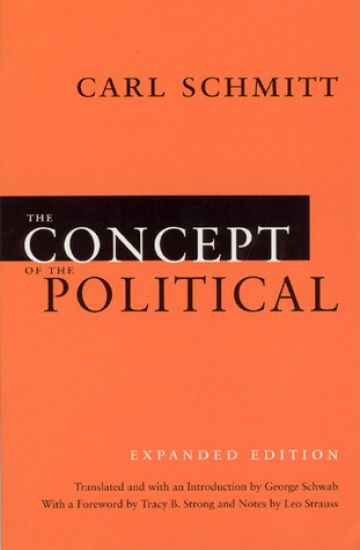
The Concept of the Political – Expanded Edition

The Concept of the Political – Expanded Edition

Carl Schmitt; George Schwab; Tracy B. Strong; Leo Strauss

University of Chicago Press
2007
nidottu
In this, his most influential work, legal theorist and political philosopher Carl Schmitt argues that liberalism's basis in individual rights cannot provide a reasonable justification for sacrificing one-self for the state - a critique as cogent today as when it first appeared. George Schwab's introduction to his translation of the 1932 German edition highlights Schmitt's intellectual journey through the turbulent period of German history leading to the Hitlerian one-party state. In addition to analysis by Leo Strauss and a foreword by Tracy B. Strong placing Schmitt's work into contemporary context, this expanded edition also includes a translation of Schmitt's 1929 lecture "The Age of Neutralizations and Depoliticizations," which the author himself added to the 1932 edition of the book. An essential update of a modern classic, "The Concept of the Political, Expanded Edition" belongs on the bookshelf of anyone interested in political theory or philosophy.
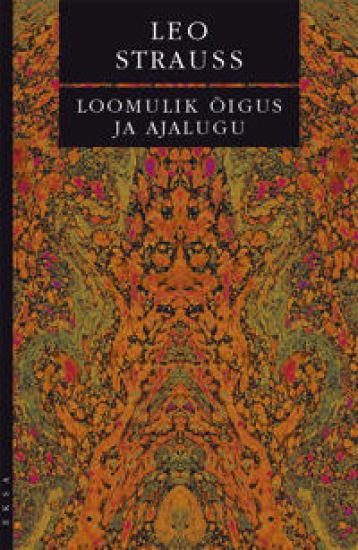
Loomulik õigus ja ajalugu
Saksamaal sündinud ja õppinud ning USA-s tegutsenud Leo Strauss (1899-1973) on üks intrigeerivamaid poliitilisi mõtlejaid pärast Teist maailmasõda. Tema peateos "Loomulik õigus ja ajalugu" (1953) annab sissejuhatuse poliitilise filosoofia ajalukku. Raamat keskendub küsimusele, kuidas Lääne traditsioon on mõistnud õige ja väära eristuse vahekorda loodusega. Kas arusaamad heast ja kurjast, paremast ja halvemast elust on kokkuleppelised ja sõltuvad kultuurist või tulenevad millestki loomulikust, loodusest? Raamat käsitleb ajaloolist relativismi, Max Weberi väärtusvaba sotsiaalteadust, loomuliku õiguse idee päritolu ning Platoni, Aristotelese ja Cicero ideid. Süvenetakse Hobbesi, Locke'i, Rousseauja Edmund Burke'i katsetesse loomulikku õigust au sisse tõsta, mis siiski süvendasid filosoofia allakäiku. Tõlkija järelsõna avab Straussi mõtlemise tagamaid ja postuumset mõju USA poliitikale.
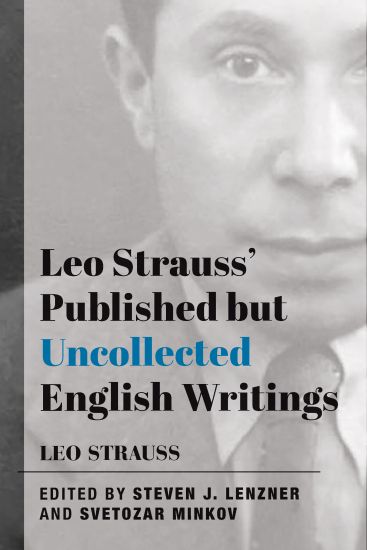
Leo Strauss` Published but Uncollected English Writings

Leo Strauss` Published but Uncollected English Writings

Leo Strauss; Steven J. Lenzner; Svetozar Minkov

ST AUGUSTINE'S PRESS
2024
nidottu
Any presentation of political philosophy in the 20th century is radically incomplete without Leo Strauss. The appearance of this collection is particularly important given the relentless but shifting interest in his influence and thought in recent years. Lenzner and Minkov contend that in order to evaluate Strauss’s achievement properly, one must do so chiefly with reference to the works by which Strauss sought to establish his legacy–i.e., those he chose to submit for the consideration of future readers. The most complete record of Strauss's thought includes his books together with his other published and unpublished writings and lectures. The achievement of this volume is to present in one collection every piece Strauss chose to publish in English that he did not himself include in a collection or a book. The material is arranged chronologically so as to avoid undue categorization by the editors. Among the highlights of these works published between 1937 and 1972 are striking formulations not to be found in his books on the relationship between philosophy and society, which is perhaps the most prominent theme in Strauss’s corpus taken as a whole; rare ‘personal’ statements that shed light on his self-understanding as a philosopher; his first writing devoted solely to a classical thinker (“The Spirit of Sparta or the Taste of Xenophon”); his first piece devoted to Plato, “On a New Interpretation of Plato’s Political Philosophy,” his most searching engagement with Jean-Jacques Rousseau; his first treatment of the thought of Niccolò Machiavelli and a wonderful, later treatment of Machiavelli’s relation to ancient writers; and a critical review of a book on Xenophon’s Hellenica. This complete collection of Strauss’s scattered work in English is invaluable for those interested in the political philosopher, to be sure. But it is also an important contribution to the field in general as well as the history of philosophy.
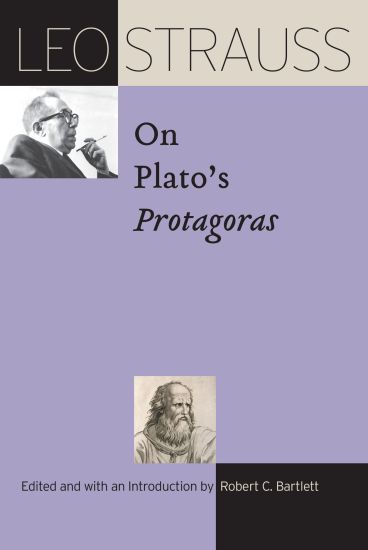
Leo Strauss on Plato’s "Protagoras"

Leo Strauss on Plato’s "Protagoras"

Leo Strauss

THE UNIVERSITY OF CHICAGO PRESS
2022
sidottu
A transcript of Leo Strauss’s key seminars on Plato’s Protagoras. This book offers a transcript of Strauss’s seminar on Plato’s Protagoras taught at the University of Chicago in the spring quarter of 1965, edited and introduced by renowned scholar Robert C. Bartlett. These lectures have several important features. Unlike his published writings, they are less dense and more conversational. Additionally, while Strauss regarded himself as a Platonist and published some work on Plato, he published little on individual dialogues. In these lectures Strauss treats many of the great Platonic and Straussian themes: the difference between the Socratic political science or art and the Sophistic political science or art of Protagoras; the character and teachability of virtue, its relation to knowledge, and the relations among the virtues, courage, justice, moderation, and wisdom; the good and the pleasant; frankness and concealment; the role of myth; and the relation between freedom of thought and freedom of speech. In these lectures, Strauss examines Protagoras and the sophists, providing a detailed discussion of Protagoras as it relates to Plato’s other dialogues and the work of modern thinkers. This book should be of special interest to students both of Plato and of Strauss.
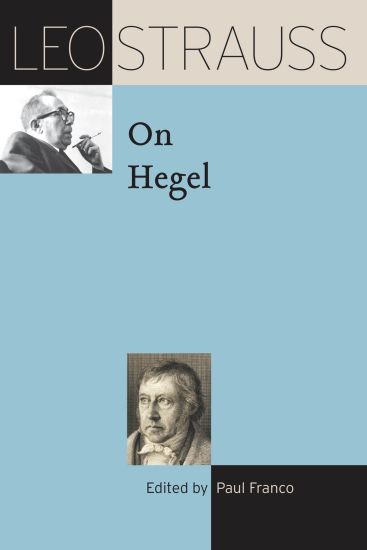
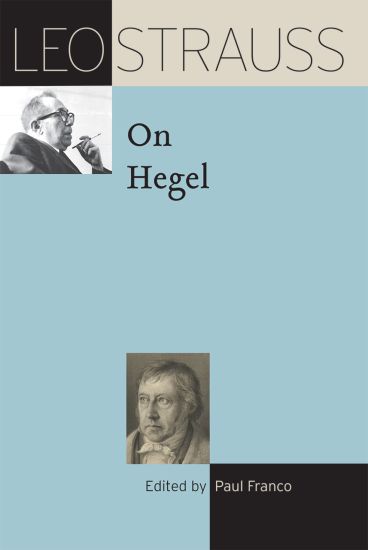
Leo Strauss on Hegel

Leo Strauss on Hegel

Leo Strauss

University of Chicago Press
2021
nidottu
In the winter of 1965, Leo Strauss taught a seminar on Hegel at the University of Chicago. While Strauss neither considered himself a Hegelian nor wrote about Hegel at any length, his writings contain intriguing references to the philosopher, particularly in connection with his studies of Hobbes, in his debate in On Tyranny with Alexandre Koje`ve; and in his account of the “three waves” of modern political philosophy. Leo Strauss on Hegel reconstructs Strauss’s seminar on Hegel, supplemented by passages from an earlier version of the seminar from which only fragments of a transcript remain. Strauss focused his seminar on the lectures collected in The Philosophy of History, which he considered more accessible than Hegel’s written works. In his own lectures on Hegel, Strauss continues his project of demonstrating how modern philosophers related to ancient thought and explores the development and weaknesses of modern political theory. Strauss is especially concerned with the relationship in Hegel between empirical history and his philosophy of history, and he argues for the primacy of religion in Hegel’s understanding of history and society. In addition to a relatively complete transcript, Leo Strauss on Hegel also includes annotations, which bring context and clarity to the text.
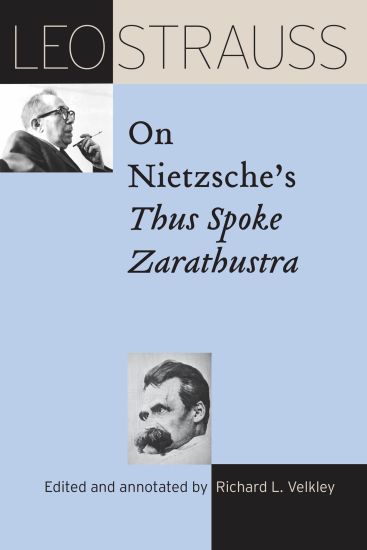
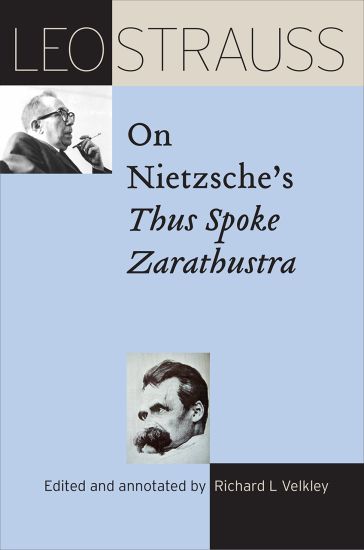
Leo Strauss on Nietzsche's "Thus Spoke Zarathustra"

Leo Strauss on Nietzsche's "Thus Spoke Zarathustra"

Leo Strauss

University of Chicago Press
2021
nidottu
Although Leo Strauss published little on Nietzsche, his lectures and correspondence demonstrate a deep critical engagement with Nietzsche’s thought. One of the richest contributions is a seminar on Nietzsche’s Thus Spoke Zarathustra, taught in 1959 during Strauss’s tenure at the University of Chicago. In the lectures, Strauss draws important parallels between Nietzsche’s most important project and his own ongoing efforts to restore classical political philosophy. With Leo Strauss on Nietzsche’s “Thus Spoke Zarathustra,” eminent Strauss scholar Richard L. Velkley presents Strauss’s lectures on Zarathustra with superb annotations that bring context and clarity to the critical role played by Nietzsche in shaping Strauss’s thought. In addition to the broad relationship between Nietzsche and political philosophy, Strauss adeptly guides readers through Heidegger’s confrontations with Nietzsche, laying out Heidegger’s critique of Nietzsche’s “will to power” while also showing how Heidegger can be read as a foil for his own reading of Nietzsche. The lectures also shed light on the relationship between Heidegger and Strauss, as both philosophers saw Nietzsche as a central figure for understanding the crisis of philosophy and Western civilization. Strauss’s reading of Nietzsche is one of the important—yet little appreciated—philosophical inquiries of the past century, both an original interpretation of Nietzsche’s thought and a deep engagement with the core problems that modernity posed for political philosophy. It will be welcomed by anyone interested in the work of either philosopher.
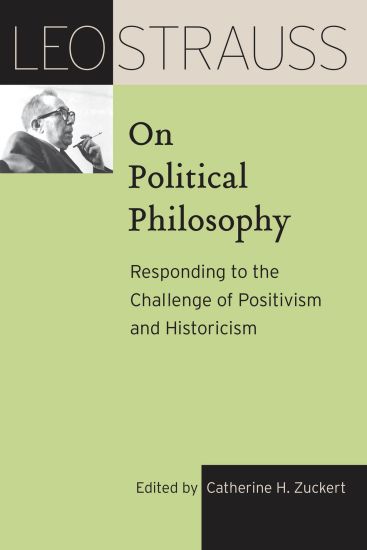
Leo Strauss on Political Philosophy

Leo Strauss on Political Philosophy

Leo Strauss

University of Chicago Press
2021
nidottu
Leo Strauss is known primarily for reviving classical political philosophy through careful analyses of works by ancient thinkers. As with his published writings, Strauss’s seminars devoted to specific philosophers were notoriously dense, accessible only to graduate students and scholars with a good command of the subject. In 1965, however, Strauss offered an introductory course on political philosophy at the University of Chicago. Using a conversational style, he sought to make political philosophy, as well as his own ideas and methods, understandable to those with little background on the subject. Leo Strauss on Political Philosophy brings together the lectures that comprise Strauss’s “Introduction to Political Philosophy.” Strauss begins by emphasizing the importance of political philosophy in determining the common good of society and critically examining the two most powerful contemporary challenges to the possibility of using political theory to learn about and develop the best political order: positivism and historicism. In seeking the common good, classical political philosophers like Plato and Aristotle did not distinguish between political philosophy and political science. Today, however, political philosophy must contend with the contemporary belief that it is impossible to know what the good society really is. Strauss emphasizes the need to study the history of political philosophy to see whether the changes in the understanding of nature and conceptions of justice that gradually led people to believe that it is not possible to determine what the best political society is are either necessary or valid. In doing so, he ranges across the entire history of political philosophy, providing a valuable, thematically coherent foundation, including explications of many canonical thinkers, such as Auguste Comte and Immanuel Kant, about whom Strauss did not write extensively in his published writings.
The Political Philosophy of Hobbes: Its Basis and Its Genesis
This work has been selected by scholars as being culturally important and is part of the knowledge base of civilization as we know it.This work is in the public domain in the United States of America, and possibly other nations. Within the United States, you may freely copy and distribute this work, as no entity (individual or corporate) has a copyright on the body of the work.Scholars believe, and we concur, that this work is important enough to be preserved, reproduced, and made generally available to the public. To ensure a quality reading experience, this work has been proofread and republished using a format that seamlessly blends the original graphical elements with text in an easy-to-read typeface.We appreciate your support of the preservation process, and thank you for being an important part of keeping this knowledge alive and relevant.
Leo Strauss on Hegel

Leo Strauss on Hegel

Leo Strauss

University of Chicago Press
2019
sidottu
In the winter of 1965, Leo Strauss taught a seminar on Hegel at the University of Chicago. While Strauss did not consider himself a Hegelian nor write about Hegel at any length, his writings contain intriguing references to the philosopher, particularly in connection with his studies of Hobbes, in his debate in On Tyranny with Alexandre Koje ve; and in his account of the "three waves" of modern political philosophy. Leo Strauss on Hegel reconstructs Strauss's seminar on Hegel, supplemented by passages from an earlier version of the seminar from which only fragments of a transcript remain. Strauss focused in his seminar on the lectures collected in The Philosophy of History, which he considered more accessible than Hegel's written works. In his own lectures on Hegel, Strauss continues his project of demonstrating how modern philosophers related to ancient thought and explores the development and weaknesses of modern political theory. Strauss is especially concerned with the relationship in Hegel between empirical history and his philosophy of history, and he argues for the primacy of religion in Hegel's understanding of history and society. In addition to a relatively complete transcript, Leo Strauss on Hegel also includes annotations, which bring context and clarity to the text.
Leo Strauss on Political Philosophy

Leo Strauss on Political Philosophy

Leo Strauss

University of Chicago Press
2018
sidottu
Leo Strauss is known primarily for reviving classical political philosophy through careful analyses of works by ancient thinkers. As with his published writings, Strauss’s seminars devoted to specific philosophers were notoriously dense, accessible only to graduate students and scholars with a good command of the subject. In 1965, however, Strauss offered an introductory course on political philosophy at the University of Chicago. Using a conversational style, he sought to make political philosophy, as well as his own ideas and methods, understandable to those with little background on the subject. Leo Strauss on Political Philosophy brings together the lectures that comprise Strauss’s “Introduction to Political Philosophy.” Strauss begins by emphasizing the importance of political philosophy in determining the common good of society and critically examining the two most powerful contemporary challenges to the possibility of using political theory to learn about and develop the best political order: positivism and historicism. In seeking the common good, classical political philosophers like Plato and Aristotle did not distinguish between political philosophy and political science. Today, however, political philosophy must contend with the contemporary belief that it is impossible to know what the good society really is. Strauss emphasizes the need to study the history of political philosophy to see whether the changes in the understanding of nature and conceptions of justice that gradually led people to believe that it is not possible to determine what the best political society is are either necessary or valid. In doing so, he ranges across the entire history of political philosophy, providing a valuable, thematically coherent foundation, including explications of many canonical thinkers, such as Auguste Comte and Immanuel Kant, about whom Strauss did not write extensively in his published writings.
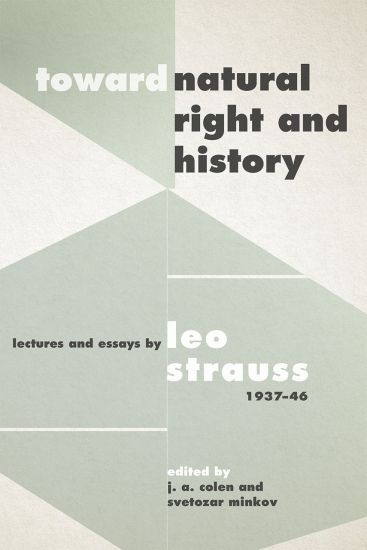
Toward "Natural Right and History"

Toward "Natural Right and History"

Leo Strauss

University of Chicago Press
2018
sidottu
Natural Right and History is widely recognized as Strauss's most influential work. The six lectures, written while Strauss was at the New School, and a full transcript of the 1949 Walgreen Lectures show Strauss working toward the ideas he would present in fully matured form in his landmark work. In them, he explores natural right and the relationship between modern philosophers and the thought of the ancient Greek philosophers, as well as the relation of political philosophy to contemporary political science and to major political and historical events, especially the Holocaust and World War II. Previously unpublished in book form, Strauss's lectures are presented here in a thematic order that mirrors Natural Right and History and with interpretive essays by J. A. Colen, Christopher Lynch, Svetozar Minkov, Daniel Tanguay, Nathan Tarcov, and Michael Zuckert that establish their relation to the work. Rounding out the book are copious annotations and notes to facilitate further study.
Leo Strauss on Nietzsche's Thus Spoke Zarathustra

Leo Strauss on Nietzsche's Thus Spoke Zarathustra

Leo Strauss

University of Chicago Press
2017
sidottu
Although Leo Strauss published little on Nietzsche, his lectures and correspondence demonstrate a deep critical engagement with Nietzsche's thought. One of the richest contributions is a seminar on Nietzsche's Thus Spoke Zarathustra, taught in 1959 during Strauss's tenure at the University of Chicago. In the lectures, Strauss draws important parallels between Nietzsche's most important project and his own ongoing efforts to restore classical political philosophy. With Leo Strauss on Nietzsche's "Thus Spoke Zarathustra," preeminent Strauss scholar Richard L. Velkley presents Strauss's lectures on Zarathustra with superb annotations that bring context and clarity to the critical role played by Nietzsche in shaping Strauss's thought. In addition to the broad relationship between Nietzsche and political philosophy, Strauss adeptly guides readers through Heidegger's confrontations with Nietzsche, laying out Heidegger's critique of Nietzsche's "will to power" while also showing how Heidegger can be read as a foil for his own reading of Nietzsche. The lectures also shed light on the relationship between Heidegger and Strauss, as both philosophers saw Nietzsche as a central figure for understanding the crisis of philosophy and Western civilization. Strauss's reading of Nietzsche is one of the important--yet little appreciated--philosophical inquiries of the past century, both an original interpretation of Nietzsche's thought and a deep engagement with the core problems that modernity posed for political philosophy. It will be welcomed by anyone interested in the work of either philosopher.
Pensees Sur Machiavel

Pensees Sur Machiavel

Leo Strauss

Klincksieck
2017
nidottu
L'interpretation straussienne de Machiavel n'a-t-elle pas valeur de provocation ? En rendant justice au sens commun qui voit en Machiavel un prophete du Mal, l'angelisme de Leo Strauss - auquel d'aucuns se laissent prendre - ne s'avere-t-il pas etre une manoeuvre diabolique ?Notre rapport a Machiavel est obscurci par la maniere dont il a lui-meme ouvertement ou publiquement expose son enseignement. Parce que nous sommes machiavellises , nous ne pouvons plus prendre la mesure de son etrangete. Pris ou compris dans le mouvement de la Modernite dont il est le fondateur, nous ne pouvons plus concevoir qu'il puisse s'instaurer un rapport vivant, fascination ou hostilite, entre lui et nous. Strauss ne lit pas Machiavel a la lumiere de ce qu'il a permis de fonder - la Modernite - mais a la lumiere de ce qu'il a recuse - la Tradition classique. Ce n'est pas la necessairement privilegier comme critere d'interpretation le passe par rapport au futur, mais eclairer ce que Machiavel dissimule: son affrontement avec la philosophie classique. Il dissimule ce conflit par ce qui parait y mettre un terme. Figure enigmatique, ainsi le fait reapparaitre l'interpretation straussienne: car si Machiavel est le premier a porter l'assaut contre la cite classique - premiere vague de la Modernite selon Strauss -, ne nous engage-t-il pas par ailleurs a renouer conversation avec les Anciens et, en suivant la trace de l'antique vertu, a inventer la gloire moderne ? Enigme de Machiavel qui est aussi enigme de Strauss, philosophe politique; car si ce dernier nous a inities par la redecouverte d'un art de l'ecriture a un nouvel art de la lecture, comment lire Strauss lisant Machiavel lecteur de Tite-Live ?Que penser enfin du socratisme de Leo Strauss reconnaissant en Machiavel le compagnon de Socrate, qui, tous deux, contre les Sophistes et la reduction du politique aux purs jeux de langage, ont appris a voir au-dela de cette apparence le serieux et l'aprete des choses humaines ?
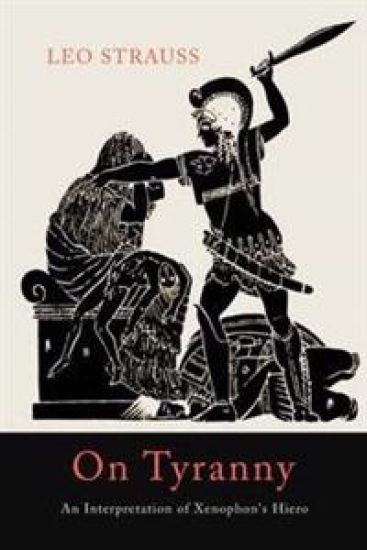
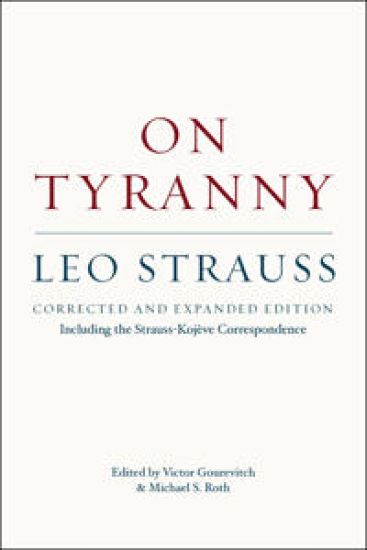
On Tyranny – Corrected and Expanded Edition, Including the Strauss–Kojève Correspondence

On Tyranny – Corrected and Expanded Edition, Including the Strauss–Kojève Correspondence

Leo Strauss; Victor Gourevitch; Michael S. Roth

University of Chicago Press
2013
nidottu
"On Tyranny" is Leo Strauss' classic reading of Xenophon's dialogue Hiero, or Tyrannicus, in which the tyrant Hiero and the poet Simonides discuss the advantages and disadvantages of exercising tyranny. Included are a translation of the dialogue from its original Greek, a critique of Strauss' commentary by the French philosopher Alexandre Kojeve, and the complete correspondence between the two. This corrected and expanded edition introduces important revisions throughout and expands Strauss' restatement of his position in light of Kojeve's commentary to bring it into conformity with the text as it was originally published in France.