Kirjojen hintavertailu. Mukana 12 595 353 kirjaa ja 12 kauppaa.

Kirjailija

Léon Bloy

Kirjat ja teokset yhdessä paikassa: 146 kirjaa, julkaisuja vuosilta 2008-2026, suosituimpien joukossa Correspondance: 1884-1906. Vertaile teosten hintoja ja tarkista saatavuus suomalaisista kirjakaupoista.

Mukana myös kirjoitusasut: Leon Bloy

146 kirjaa

Kirjojen julkaisuhaarukka 2008-2026.

My Journal: 1896-1900

My Journal: 1896-1900

Léon Bloy

Sunny Lou Publishing
2026
nidottu
My Journal: 1896-1900 by L on Bloy (AD 1846-1917) is the second diary in the Ungrateful Beggar series. Edited for publication, the diary chronicles four and a half years in the tortured, perpetually destitute, but "perfectly adorable" life of the intransigeant Catholic writer and his family. It also recounts seventeen months in voluntary exile in the northern climes of Protestant Denmark where, despite his hopes for a new beginning, misfortune and misery followed him and his circumstances went quickly from bad to worse. " January 11, 1899] Journey to Kolding, small neighboring village where we will live as best we can. There is a minuscule Catholic church here, too vast for its parishioners. Emotion to see a humble cr che of the Epiphany with the German magi and camels waiting for us. We are now so far removed from France that it is only here, within these few square meters, on this Catholic islet lost in the middle of Lutherʼs ice floes, that God can speak to us and we can speak to God." Despite everything - and perhaps because of it - the writer was able to produce in this time period Je MʼAccuse... and The Son of Louis XVI, while gathering material for what would later become Exegesis of Commonplaces and Blood of the Poor.
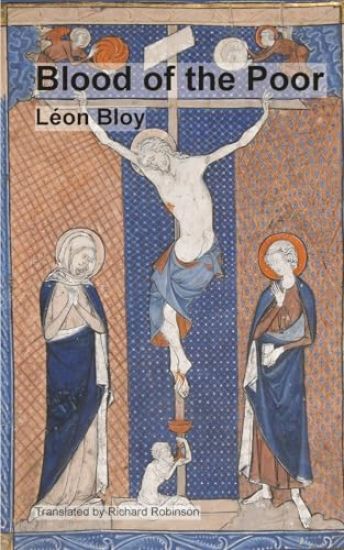
Blood of the Poor

Blood of the Poor

Léon Bloy

Sunny Lou Publishing
2025
pokkari
Blood of the Poor (originally Le Sang du pauvre), by Catholic writer L on Bloy, is perhaps the hardest to read of L on Bloyʼs writings, as it goes straight to the heart of the matter of what is wrong in the world. It is hard to read, emotively, because it gives the honest reader no room for cover, no space for shelter, no shadow of a tree to hide under. With avarice as its subject, it is a dark poem in prose, a sermon in the style of Savonarola, with the biting satire of a Jonathan Swift. "The Blood and the Flesh of the Poor are the only aliments that can nourish, the substance of the rich being a poison and a putrefaction. It is therefore a necessity of hygiene that the poor be devoured by the rich who find that very good, and who ask for it again. Rich children are fortified by the juice of the poorsʼ flesh, and the rich manʼs cuisine is endowed with concentrate of the poor." "You believe yourselves to be innocent because you have not slit somebodyʼs throat, as yet, I want to believe; because you have not forced open somebodyʼs door nor scaled his wall in order to despoil him of his possessions; because finally you have not transgressed human laws too visibly. You are so gross, so carnal, for you do not conceive of a crime that cannot be seen. But I say to you, my very dear brother, that you are a plant, and that that assassin is your flower." "It is true that there are refuges: drunkenness, prostitution of the body, suicide, or madness. Why would the dance not continue?"
Great Men Are Slain Here

Great Men Are Slain Here

Léon Bloy; Richard Robinson

Sunny Lou Publishing
2025
pokkari
Great Men Are Slain Here by L on Bloy is a biography of sorts on Ernest Hello. Originally published in AD 1895 (under the French title of Ici on assassine les grands hommes), it was meant to provide a necessary corrective to the "official" biography commissioned by Mme. Hello, after her husbandʼs passing.L on Bloy was not a fan of Mme. Hello (nor she of him), and he was even less a fan of her husbandʼs biography, in which she had a heavy hand. Great Men Are Slain Here is part biography (to set the record straight), part criticism (of how Mme. Hello treated her husband, his friend, in life and death), and part satire. To tell the virtues of the family, of multiple families, the first phrases of the sublime child, the memorable expressions of papas and mamas, the angelic passions of the young man, his marriage plans, the ineffable purity of soul of the fianc s and their union under the watching eyes of seraphim; - things that should have remained in proud obscurity; - to go on and on, finally, about Madame Hello, the divine Mama Zo , in so many pages, great God ... And all that, from beginning to end, in that rheumy form, runny and cold like scrofula, which characterizes the prospectuses of shirtmakers for clergymen or the sacrilegious instructions of propagation excogitated by some libidinous soutanes.... The biographer] strikes a dithyrambic match across his backside and declares to us, among other things, that "Hello, if read and understood, would illuminate the modern mind," that "his glory, which is that of God, would have been the good fortune of a century." In passing, he compares him to the Sun...
The Ungrateful Beggar

The Ungrateful Beggar

Léon Bloy; Richard Robinson

Sunny Lou Publishing
2025
pokkari
The Ungrateful Beggar (The Authorʼs Journal, 1892-1895), published in 1898, is the first in the Ungrateful Beggar series (or "The Journal") by L on Bloy.Edited for publication by the author, it is a day-by-day account of interactions with friends, artists, wife, children, publishers, landlords, and such events as his hiring on with (and getting sacked from) the Gil Blas, his writing for the Mercure de France, the death of his two boys...; it includes his innermost thoughts, fears, torments, joys, - always in the context of a miserable poverty, and a never-dying Catholic faith, where "all that happens in life is adorable."Artists interacted with in this period include Henry de Groux, mile Zola, Fran ois Copp e, Remy de Gourmont, Laurent Tailhade, Auguste Rodin, Paul Bourget, Charles Buet, Georges dʼEsparb s. Works that the author wrote and published during this period include: Salvation Through the Jews, Sueur de Sang Sweating Blood], Histoires d sobligeantes Disagreeable Tales], L on Bloy devant les cochons L on Bloy Before the Swine], Ici on assassine les grands hommes Great Men Are Slain Here].