Kirjojen hintavertailu. Mukana 12 390 323 kirjaa ja 12 kauppaa.

Kirjailija

Leon Krier

Kirjat ja teokset yhdessä paikassa: 3 kirjaa, julkaisuja vuosilta 2009-2011, suosituimpien joukossa Drawing for Architecture. Vertaile teosten hintoja ja tarkista saatavuus suomalaisista kirjakaupoista.

Mukana myös kirjoitusasut: Léon Krier

3 kirjaa

Kirjojen julkaisuhaarukka 2009-2011.

Get Your House Right

Get Your House Right

Marianne Cusato; Ben Pentreath; Richard Sammons; Leon Krier

Sterling
2011
pokkari
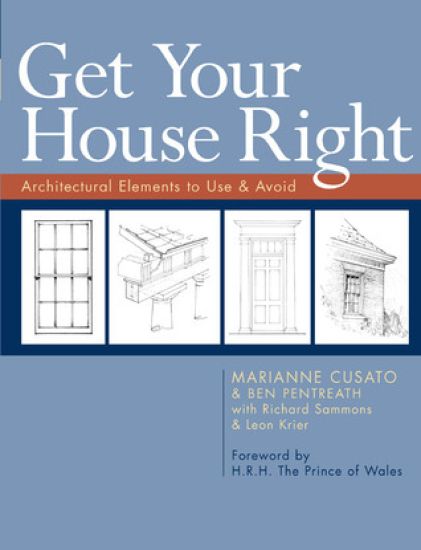
This title includes a foreword by H. R. H. the Prince of Wales. Sick of McMansions? Marianne Cusato, creator of the award-winning Katrina Cottages, is a champion of traditional architectural principles: structural common sense, aesthetics of form, appropriateness to a neighbourhood and sustainability. She presents the definitive guide to what makes houses look and feel right, revealing the dos and don'ts of liveable home design. Hundreds of elegant line drawings, rendering the varieties of architectural features and displaying "avoid" and "use" versions of the same elements side by side, make this an indispensable resource for designing and building a timelessly beautiful home.
The Architecture of Community

The Architecture of Community

Leon Krier

Island Press
2011
nidottu
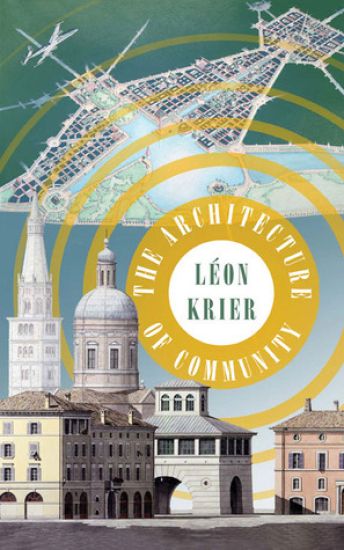
Leon Krier is one of the best-known - and most provocative - architects and urban theoreticians in the world. Until now, however, his ideas have circulated mostly among a professional audience of architects, city planners, and academics. In "The Architecture of Community", Krier has reconsidered and expanded writing from his 1998 book "Architecture: Choice or Fate". Here he refines and updates his thinking on the making of sustainable, humane, and attractive villages, towns, and cities. The book includes drawings, diagrams, and photographs of his built works, which have not been widely seen until now. With three new chapters, "The Architecture of Community" provides a contemporary road map for designing or completing today's fragmented communities. Illustrated throughout with Krier's original drawings, "The Architecture of Community" explains his theories on classical and vernacular urbanism and architecture, while providing practical design guidelines for creating livable towns. The book contains descriptions and images of the author's built and unbuilt projects, including the Krier House and Tower in Seaside, Florida, as well as the town of Poundbury in England. Commissioned by the Prince of Wales in 1988, Krier's design for "Poundbury in Dorset" has become a reference model for ecological planning and building that can meet contemporary needs.
Drawing for Architecture

Drawing for Architecture

Léon Krier; James Howard Kunstler

MIT Press
2009
pokkari
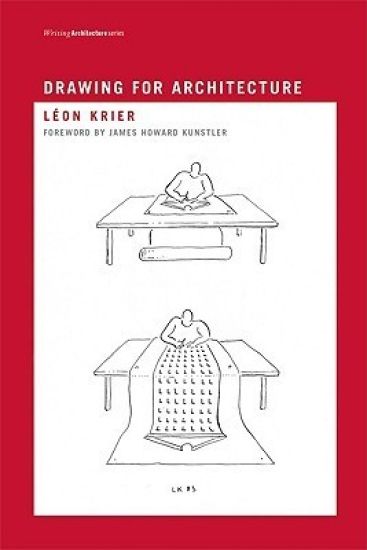
Drawings, doodles, and ideograms argue with ferocity and wit for traditional urbanism and architecture.Architect Leon Krier's doodles, drawings, and ideograms make arguments in images, without the circumlocutions of prose. Drawn with wit and grace, these clever sketches do not try to please or flatter the architectural establishment. Rather, they make an impassioned argument against what Krier sees as the unquestioned doctrines and unacknowledged absurdities of contemporary architecture. Thus he shows us a building bearing a suspicious resemblance to Norman Foster's famous London "gherkin" as an example of "priapus hubris" (threatened by detumescence and "priapus nemesis"); he charts "Random Uniformity" ("fake simplicity") and "Uniform Randomness" ("fake complexity"); he draws bloated "bulimic" and disproportionately scrawny "anorexic" columns flanking a graceful "classical" one; and he compares "private virtue" (modernist architects' homes and offices) to "public vice" (modernist architects' "creations"). Krier wants these witty images to be tools for re-founding traditional urbanism and architecture. He argues for mixed-use cities, of "architectural speech" rather than "architectural stutter," and pointedly plots the man-vehicle-landneed ratio of "sub-urban man" versus that of a city dweller. In an age of energy crisis, he writes (and his drawings show), we "build in the wrong places, in the wrong patterns, materials, densities, and heights, and for the wrong number of dwellers"; a return to traditional architectures and building and settlement techniques can be the means of ecological reconstruction. Each of Krier's provocative and entertaining images is worth more than a thousand words of theoretical abstraction.