
Kirjailija
Leon Shargel
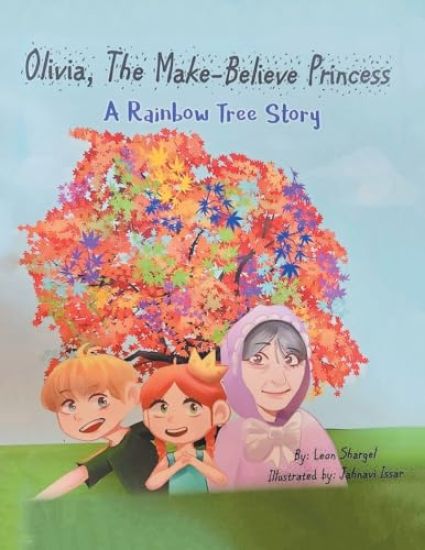
Kirjat ja teokset yhdessä paikassa: 9 kirjaa, julkaisuja vuosilta 2007-2025, suosituimpien joukossa Olivia, The Make-Believe Princess. Vertaile teosten hintoja ja tarkista saatavuus suomalaisista kirjakaupoista.
9 kirjaa
Kirjojen julkaisuhaarukka 2007-2025.
Shargel and Yu's Applied Biopharmaceutics & Pharmacokinetics
Murray P. Ducharme; Leon Shargel
McGraw-Hill Education
2022
nidottu
The authoritative textbook on the principles and practical applications of biopharmaceutics and pharmacokineticsShargel & Yu's Applied Biopharmaceutics & Pharmacokinetics has been the standard textbook in its field for over 40 years. This eighth edition includes recent scientific developments in the field and embodies the collective contribution of experts with deep knowledge and experience in the selected subject areas. Shargel & Yu's Applied Biopharmaceutics & Pharmacokinetics, Eighth Edition provides the reader with a fundamental understanding of biopharmaceutics and pharmacokinetics principles that can be applied to patient drug therapy and rational drug product development.Shargel & Yu's Applied Biopharmaceutics & Pharmacokinetics, Eighth Edition has been expanded and revised to include advancements in biopharmaceutics and pharmacokinetics. The chapter sequence has been reorganized into four main sections, providing a more logical sequence for students. The textbook starts with fundamental concepts, followed by application of these principles to optimize drug therapy and to the rational development of drug products. Each chapter includes theoretical concepts with practical examples and clinical applications. Frequently asked questions provide a discussion of overall concepts.Features:Expanded and revised chapters to include scientific advances in biopharmaceutics and pharmacokineticsFour main sections providing a natural buildup of knowledge: introduction to biopharmaceutics and pharmacokinetics, fundamentals of biopharmaceutics, pharmacokinetic calculations, clinical pharmacokinetics and pharmacodynamics, and biopharmaceutics and pharmacokinetics in drug product developmentAdditional chapters for this edition include: oPhysiological factors related to drug absorptionoApproaches to pharmacokinetics and pharmacodynamics calculations oNovel and complex dosage FormsoClinical Development and Therapeutic Equivalence of Generic Drug and Biosimilar ProductsoPharmacokinetics and Pharmacodynamics in Clinical Drug Product DevelopmentAdditional information on drug therapy, drug product performance, and other related topicsFrequently asked questions, practice problems, clinical examples and learning questions
Generic Drug Product Development: Specialty Dosage Forms explores the issues related to providing evidence of pharmaceutical equivalence and bioequivalence for specialty drug products. It describes various scientific approaches and regulatory requirements for manufacturers who need to demonstrate the therapeutic equivalence of generic specialty drug products to brand name alternatives. The contributors discuss measurement of drug product quality and performance, as well as the regulatory and scientific requirements of topical, nasal and inhalation, and transdermal drug delivery products, along with generic biologics and modified release parenteral drug products.The book is essential reading for specialists and researchers in pharmaceutical drug development, regulation, manufacturing, and others in the pharmaceutical sciences.
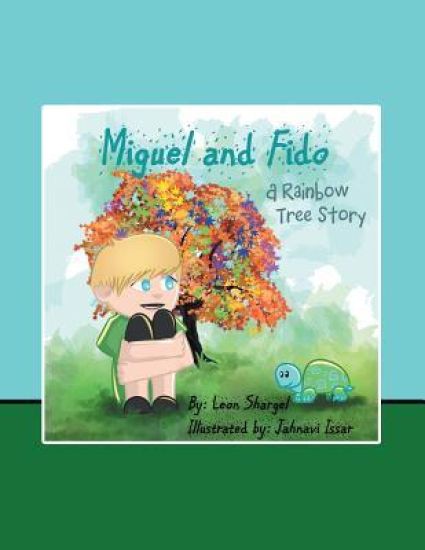
Miguel is a friendly, energetic, and mischievous seven-year-old who lives in the Village of the Rainbow Tree. He has always wanted a dog. Unfortunately, his mother thinks he is too young to care for a pet. After Miguel seeks advice from an old woman in the village, she tells him it is a lot of work to feed and love a dog. After the old woman talks to his mother and receives her approval, she takes Miguel to the back of her cottage to see something. As he excitedly follows her, Miguel has no idea that just past her beautiful garden is a place where special animals live, and that there is one there just for him. Miguel and Fido: A Rainbow Tree Story shares the fun tale of a boys adventure as he adopts a special pet and learns responsibility.

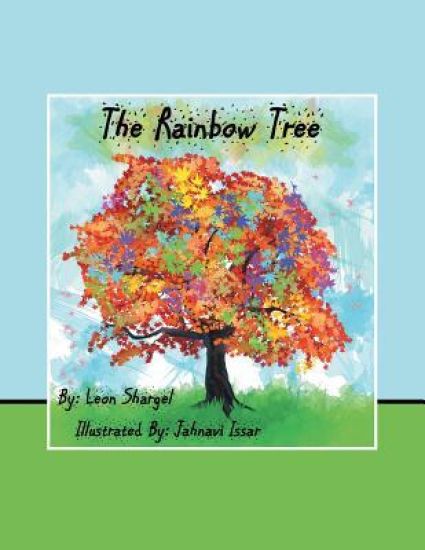
The Rainbow Tree, sitting in the center of the village, has branches so large and so high that no one could see the top of the Rainbow Tree. The villagers do not know that a family of monkeys lives in the Rainbow Tree. Just like the leaves on the Rainbow Tree, each monkey is different.A very young, boy monkey named Reuben likes to ride on his mother's back, just as many baby monkeys do. His mother tells Reuben to hold on tight so that he will not fall, but Reuben wants to play with the older monkeys, even though he isn't old enough yet to jump from branch to branch. He decides to sneak away from his mother while she is asleep. Reuben jumps from one branch to another branch and then jumps again--but then he misses the tree branch and begins to fall Can the Rainbow Tree rescue Reuben?In this children's story, a small monkey named Reuben ignores his mother, jumps from branch to branch in the Rainbow Tree, and falls--learning a valuable lesson in the process.

Applied Biopharmaceutics & Pharmacokinetics, Seventh Edition
Leon Shargel; Andrew Yu
McGraw-Hill Education (Asia)
2016
nidottu
Generic Drug Product Development: Specialty Dosage Forms explores the issues related to providing evidence of pharmaceutical equivalence and bioequivalence for specialty drug products. It describes various scientific approaches and regulatory requirements for manufacturers who need to demonstrate the therapeutic equivalence of generic specialty drug products to brand name alternatives. The contributors discuss measurement of drug product quality and performance, as well as the regulatory and scientific requirements of topical, nasal and inhalation, and transdermal drug delivery products, along with generic biologics and modified release parenteral drug products.The book is essential reading for specialists and researchers in pharmaceutical drug development, regulation, manufacturing, and others in the pharmaceutical sciences.
The assessment of bioequivalence is an important process whereby the bioavailability of a generic drug product is compared with its brand-name counterpart. Generic pharmaceutical products must be approved as therapeutic equivalents to the brand name alternative in order to be interchangeable. The demonstration of bioequivalence is an important component of therapeutic equivalence. Bioequivalence studies are very expensive, time consuming and always have the possibility of failure. The objective of this textbook is to describe some of those specific bioequivalence issues which need to be considered for the design and conduct of bioequivalence studies. By exploring scientific, legal, and international regulatory challenges, Generic Drug Development, discusses the use of alternative approaches to the measurement of plasma drug concentrations for the demonstration of bioequivalence, and covers bioequivalence procedures for drug products that are not easily assessed - based upon the physical and chemical properties of the active drug and the nature of the drug product.