Kirjojen hintavertailu. Mukana 12 595 353 kirjaa ja 12 kauppaa.

Kirjailija

Leon Trotsky

Kirjat ja teokset yhdessä paikassa: 173 kirjaa, julkaisuja vuosilta 1964-2026, suosituimpien joukossa Kapitalismens långa heta vinter har börjat. Vertaile teosten hintoja ja tarkista saatavuus suomalaisista kirjakaupoista.

Mukana myös kirjoitusasut: Léon Trotsky, León Trotsky, Léon Trotsky

173 kirjaa

Kirjojen julkaisuhaarukka 1964-2026.

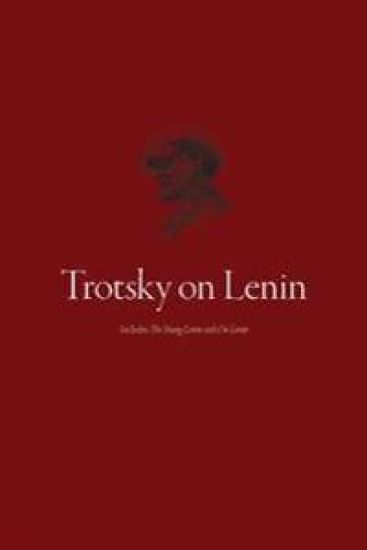
Trotsky On Lenin

Trotsky On Lenin

Leon Trotsky

Haymarket Books
2018
nidottu
Combining Young Lenin and On Lenin in one volume, this is a fascinating political biography by Lenin's fellow revolutionary, Leon Trotsky. Trotsky on Lenin brings together two long-out-of-print works in a single volume for the first time, providing an intimate and illuminating portrait of the Bolshevik leader by another of the twentieth century's greatest revolutionaries.
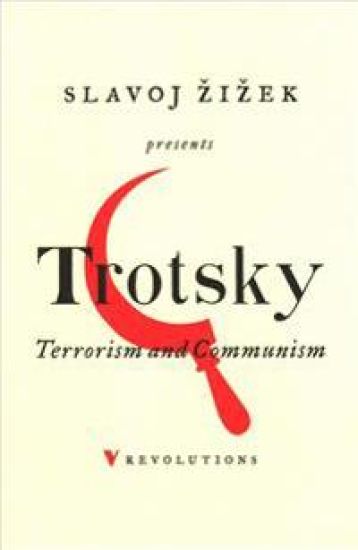
Terrorism and Communism

Terrorism and Communism

Leon Trotsky; Slavoj Zizek

Verso Books
2017
nidottu
Written in the white heat of revolutionary Russia's Civil War, Trotsky's Terrorism and Communism is one of the most potent defenses of revolutionary dictatorship. In his provocative commentary to this new edition the philosopher Slavoj Zizek argues that Trotsky's attack on the illusions of liberal democracy has a vital relevance today.
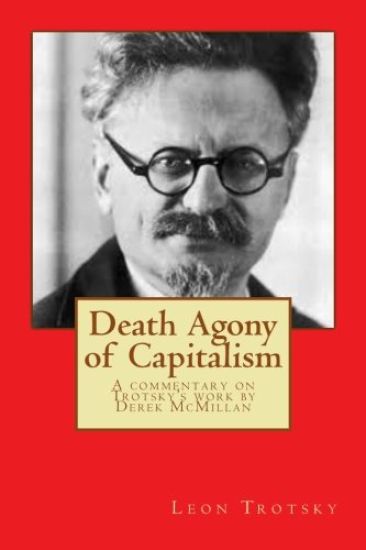
Death Agony of Capitalism: A commentary on Trotsky's work by Derek McMillan

Death Agony of Capitalism: A commentary on Trotsky's work by Derek McMillan

Derek McMillan; Leon Trotsky

Createspace Independent Publishing Platform
2017
nidottu
The resurgence of socialist ideas in the UK and around the world has led to a renewed interest in the ideas of Leon Trotsky. Although he was hounded, exiled and ultimately assassinated, Trotsky's ideas live on in a new generation.The Death Agony of Capitalism and the Tasks of the Fourth International is the full title of this work and it sets out the situation which faced the working class movement in 1938. It has many echoes in the present situation.Trotsky's work is continued by the Committee for a Workers' International.
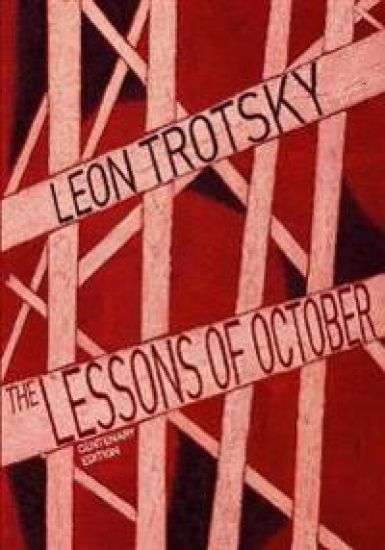
Lessons Of October

Lessons Of October

Leon Trotsky

Haymarket Books
2017
nidottu
In this sharply polemical account, Leon Trotsky draws up a balance sheet of the world's first successful workers' revolution. Written primarily for members of the newly created Communist International, Trotsky focuses on the specific role played by the Bolshevik Party in leading Russian workers to victory.
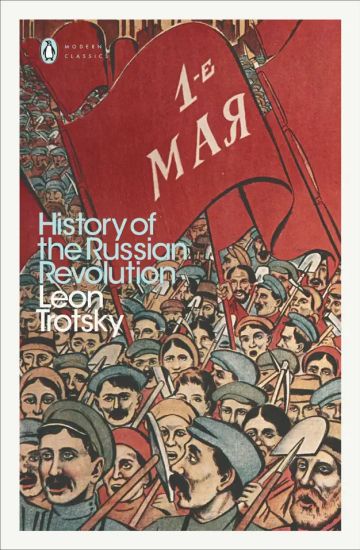
History of the Russian Revolution

History of the Russian Revolution

Leon Trotsky

Penguin Classics
2017
pokkari
'The greatest history of an event I know' - C.L.R. JamesRegarded by many as among the most powerful works of history ever written, The History of the Russian Revolution offers an unparalleled account of one of the most pivotal and hotly debated events in world history. This book presents, from the perspective of one of its central actors, the profound liberating character of the early Russian Revolution.Originally published in three parts, Trotsky's masterpiece is collected here in a single volume. It is still the most vital and inspiring record of the Russian Revolution ever published.
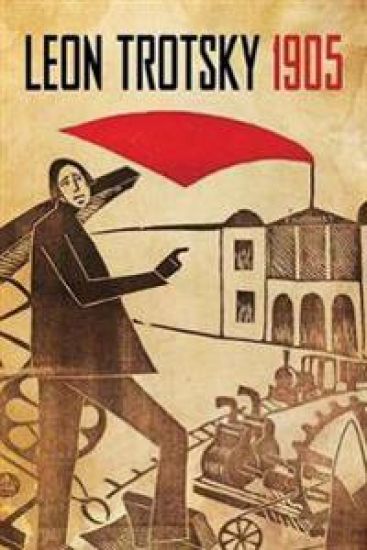
1905

1905

Leon Trotsky

Haymarket Books
2016
nidottu
Leon Trotsky's 1905 - despite long being out of print - has remained the central point of reference for those looking to understand the rising of workers, peasants and soldiers that nearly unseated the Tsar in 1905. Trotsky's elegant, beautifully written account draws on his experience as a key leader of the revolution.
The Real Situation in Russia (Routledge Revivals)
The Real Situation in Russia, first published in 1928, contains three of Trotsky’s harshest rebuttals of Stalin’s takeover of the Russian Revolution following the death of Lenin. The first part contains a defence of the ‘Opposition Platform’ against the Stalinist denunciation; the second details Trotsky’s view of the precise nature of the Stalinist program, as well as its disastrous consequences for Russia; and the third demonstrates the unashamed falsification of the history by Stalin with regard to the beginning of the Revolution. Including a sympathetic, but nonetheless astute, introduction to Trotsky’s argument by the translator, The Real Situation in Russia will prove to be of value to all students of twentieth-century Marxism, and in particular to those interested in the Russian Revolution – not only its origins and early development, but also, perhaps, the reasons for its ultimate failure.
The Essential Trotsky (Routledge Revivals)
When Lenin died and the Russian Revolution began to devour its leaders, Trotsky survived longer than most as an exile in Mexico, until his assassination in 1940. The Essential Trotsky, first published in 1963, demonstrates the significance of this innovative and radical thinker’s contribution to the Bolshevik success, the magnetism of his personality, and also a certain tragic heroism discernible throughout his life.The History of the Russian Revolution to Brest-Litovsk was written immediately after the events it describes, when Trotsky was attending the negotiations that extracted Russia from the First World War; The Lessons of October, an answer to his opponents in 1924, matches Lenin in power of analysis; and Stalin Falsifies History, written in 1927, presents the beginning of the distorting process by which Stalin secured his position, and defeated a range of attitudes, many more benign than his own, towards the future of the Revolution. This is a fascinating reissue that will be of value to students with an interest in early-twentieth century Russia, the Russian Revolution and the writings of Trotsky more generally.
The Defence of Terrorism (Routledge Revivals)
The Defence of Terrorism, originally written in 1920 on a military train during the Russian Civil War, represents one of Trotsky’s most wide-ranging and original contributions to the debates that dominated the 1920s and ‘30s. Trotsky’s intention is "far away from any thought of defending terrorism in general". Rather, he seeks to promote an historical justification for the Revolution, by demonstrating that history has set up the ‘revolutionary violence of the progressive class’ against the ‘conservative violence of the outworn classes’. The argument is developed in response to the influential Marxist intellectual Karl Kautsky, who refuted Trotsky’s ‘militarisation of labour’ and Lenin’s wholesale rejection of a ‘bloodless revolution’. The introduction, written for the second edition of 1935, presents Trotsky’s reflections on the similarities between Kautsky and the burgeoning British Labour Party: specifically, it recapitulates Trotsky’s belief that revolution conducted according to the norms of Parliamentarianism is no revolution at all.