Kirjojen hintavertailu. Mukana 12 595 353 kirjaa ja 12 kauppaa.

Kirjailija

Leon van Schaik

Kirjat ja teokset yhdessä paikassa: 6 kirjaa, julkaisuja vuosilta 2010-2022, suosituimpien joukossa Suburbia Reimagined. Vertaile teosten hintoja ja tarkista saatavuus suomalaisista kirjakaupoista.

6 kirjaa

Kirjojen julkaisuhaarukka 2010-2022.

Trip 1964

Trip 1964

Leon Van Schaik; John Turner

Stuart Geddes
2022
pokkari
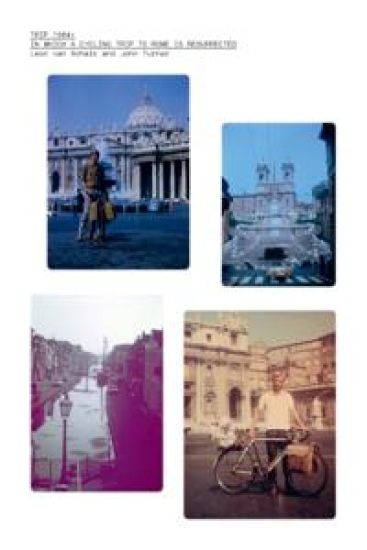
1964, Spring. Two young men, John Turner and Leon van Schaik, school friends, still in their teens, set off from England to cycle to Rome, their "Trip64". Leon wrote a daily journal, John drew and photographed.
Building a Culture

Building a Culture

Leon van Schaik

Uro Publications
2020
nidottu
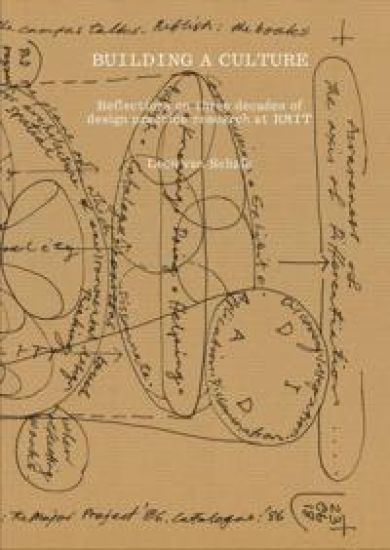
“Every successful enterprise should have a historian at work on its anecdotes…Building a culture is like building a memory, and you need to be sure that the anecdotes you entertain are good ones, ethical ones.”?– Leon van Schaik What makes a good school great? A good community of practice great? For close to half-a-century, architect and educator Leon van Schaik has prosecuted an answer to these questions. It is a venture that would lead him from the Architectural Association in London, to the townships of apartheid South Africa, and finally to Australia and the Royal Melbourne Institute of Technology (RMIT), where he initiated its now globally-renowned practice-based architecture research program. In Building a Culture, van Schaik traces the origin and development of design practice research at RMIT and his own journey into architecture and its teaching. From his early university studies under artist Richard Hamilton, to his experiences with Alvin Boyarsky at the Architectural Association, and his work alongside Cyril Ramaphosa at the Urban Foundation in South Africa, van Schaik imparts learnings garnered from a lifetime spent studying and cultivating successful creative ecologies. Through anecdotes and a consideration of archival material, the author draws a `loose-fit’ roadmap to implementing cultural change in educational organisations, detailing most especially the challenges he encountered developing RMIT’s unique pedagogical culture and its innovative practice-based research program. Based on a 2018 lecture van Schaik gave at RMIT on the occasion of his appointment to Emeritus Professor, Building a Culture is an insider’s account of how organisational transformation was effected within this renowned architectural school. It is also a lively and at times humorous personal reflection on the people, ideas and experiences that have shaped the thinking of one of Australia’s most influential educators.
Suburbia Reimagined

Suburbia Reimagined

Leon van Schaik; Nigel Bertram

Routledge
2018
nidottu
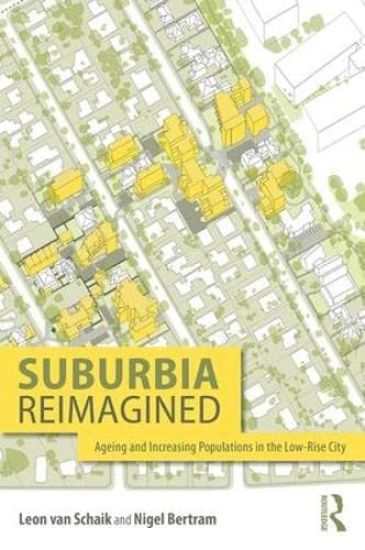
Worldwide, more and more people are living in cities, with suburbs conceived as appendages to the city, rather than being part of the city system, which is densely populated and offers a full range of services. But suburbs are not the city spread too thin, and in fact hold potential for a lived complexity as satisfying as that assumed to be available in inner cities. Just as the ecological function of wetlands was ignored by modernist planning, and swamps once-drained are now recognised as vital to water cycles, suburbs are increasingly recognised as part of a city’s wellbeing with their own alternative ideology and opportunities for urbanity and ecological sustainability. Suburbia Reimagined shows how such subdivision structures can offer new possibilities for sustainably integrating living between generations and between established and arriving migrant communities.The authors worked locally and internationally with university campuses, shopping centres, hospitals, airports, and other large entities spread through suburbia, to identify a broad range of suburban situations that have been modified to ensure that residents have a full access to amenities and services. The book addresses the history and design of suburbia, from the post-war soldier settlements of the 40s and 50s to the university hinterlands of Silicon Valley in order to reappraise the locked potential within such subdivision patterns. The authors propose a new model forward, examining case studies ranging from repurposed malls and railways for ecological sustainability to cul-de-sacs as social units and post-industrial factory conversions, ultimately showing the nascent patterns in suburbia that have the potential to support a rich life for all age groups.
Suburbia Reimagined

Suburbia Reimagined

Leon van Schaik; Nigel Bertram

Routledge
2018
sidottu
Worldwide, more and more people are living in cities, with suburbs conceived as appendages to the city, rather than being part of the city system, which is densely populated and offers a full range of services. But suburbs are not the city spread too thin, and in fact hold potential for a lived complexity as satisfying as that assumed to be available in inner cities. Just as the ecological function of wetlands was ignored by modernist planning, and swamps once-drained are now recognised as vital to water cycles, suburbs are increasingly recognised as part of a city’s wellbeing with their own alternative ideology and opportunities for urbanity and ecological sustainability. Suburbia Reimagined shows how such subdivision structures can offer new possibilities for sustainably integrating living between generations and between established and arriving migrant communities.The authors worked locally and internationally with university campuses, shopping centres, hospitals, airports, and other large entities spread through suburbia, to identify a broad range of suburban situations that have been modified to ensure that residents have a full access to amenities and services. The book addresses the history and design of suburbia, from the post-war soldier settlements of the 40s and 50s to the university hinterlands of Silicon Valley in order to reappraise the locked potential within such subdivision patterns. The authors propose a new model forward, examining case studies ranging from repurposed malls and railways for ecological sustainability to cul-de-sacs as social units and post-industrial factory conversions, ultimately showing the nascent patterns in suburbia that have the potential to support a rich life for all age groups.
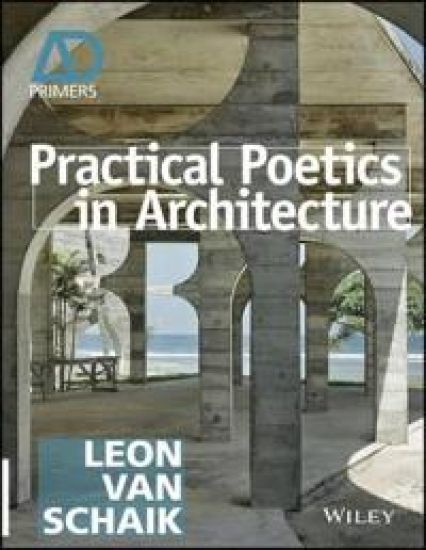
Practical Poetics in Architecture

Practical Poetics in Architecture

Leon van Schaik

John Wiley Sons Inc
2015
nidottu
Integrate poetics into real-world spaces by bringing theory down to earth Practical Poetics in Architecture takes poetics out of the theory class and into the design studio, showing architects how the atmospheric and experiential qualities of built structures can be intentionally considered and planned. With an emphasis on analysing and explaining the sensibility of poetics at work in designing and constructing architecture, this book features projects from architects around the world that demonstrate the principles of poetics come to life. The rich illustration of two hundred colour images, including analytical diagrams, plans, sections, and photos, make this insightful guide a highly visual foray into a topic that has thus far remained more theoretical than practical. The text is matter-of-fact and concrete, yet remains richly connected to its forbears and the writings of William Lethaby, Gaston Bachelard, and Steen Eiler Rasmussen. The perspective is contemporary in its examples and its connections to the evolving science of perception. An established seminar topic in theory classes around the world, poetics tends to rely heavily on classic philosophic texts — until now. Practical Poetics in Architecture brings theory down to earth to show architects how to invoke poetics when designing real projects. Integrate poetics principles into real-world designsConsider atmosphere in terms of form, space, and acousticsStudy actual projects that bring poetics into real spacesTake cues from analytical diagrams of projects accounting for context Poetics — the accumulated experience of place, space, and culture — has become more critical in recent years as the atmospheric and experiential qualities of built spaces have become more elusive in the virtual age. Practical Poetics in Architecture provides real guidance for real projects, and brings poetics out of the mind and onto the plans.
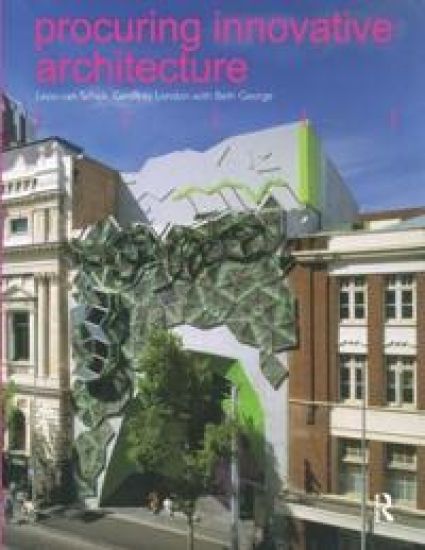
Procuring Innovative Architecture

Procuring Innovative Architecture

Leon Van Schaik; Geoffrey London

Routledge
2010
nidottu
The case studies in this book describe how clients’ promotion of innovative communities of practice has led to important collections of architectural works. The book provides an assessment of the effectiveness of their approaches. Architects and clients will understand what to look for as they construct their careers and their portfolios with innovation as a goal.It is taken for granted nowadays that supporting innovative architecture benefits society. In countries as diverse as Austria, Australia, Belgium, England, Japan, South East Asia, Slovenia, Spain, Switzerland and the USA, retailers, institutions, local and regional government and transport authorities have established substantial bodies of work by new and emerging architects. This books looks at what their goals are and how they have achieved them. Is it possible to promote sustainable communities of innovative practice through such patronage? Can innovation be ‘kick-started’ by importing visionary works?