Kirjojen hintavertailu. Mukana 12 390 323 kirjaa ja 12 kauppaa.
Kirjailija
Leonard A. Brennan
Kirjat ja teokset yhdessä paikassa: 5 kirjaa, julkaisuja vuosilta 2010-2021, suosituimpien joukossa Wild Turkeys in Texas. Vertaile teosten hintoja ja tarkista saatavuus suomalaisista kirjakaupoista.
A look at how wildlife professionals can modernize their approaches to habitat and population management with a fresh take on animal ecology.How can we maximize the probability that a species of wild animal will persist into the future? This audacious book proposes that advancing animal ecology—and conservation itself—demands that we reenvision our basic understanding of how animals interact with their environments and with each other. Synthesizing where we are and where we need to go with our studies of animals and their environs, Foundations for Advancing Animal Ecology asserts that studies of animal ecology should begin with a focus on the behaviors and characteristics of individual organisms. The book examines• the limitations of classic approaches to the study of animal ecology• how organisms organize into collections, such as breeding pairs, flocks, and herds• how the broader biotic and abiotic environment shapes animal populations, communities, and ecosystems• factors underlying the distribution and abundance of species through space and time• the links between habitat and population• why communication between researchers and managers is key• specific strategies for managing wild animal populations and habitats in an evolutionary and ecosystem contextThroughout, the authors stress the importance of speaking a common and well-defined language. Avoiding vague and misleading terminology, they argue, will help ecologists translate science into meaningful and lasting actions in the environment. Taking the perspective of the organism of interest in developing concepts and applications, the authors always keep the potentially biased human perspective in focus. A major advancement in understanding the factors underlying wildlife-habitat relationships, Foundations for Advancing Animal Ecology will be an invaluable resource to professionals and practitioners in natural resource management in public and private sectors, including state and federal agencies, non-governmental organizations, and environmental consultants.
Leonard A. Brennan; José Alfonso Ortega-Santos; Damon L. Williford; Jason B. Hardin; Humberto L. Perotto-Baldivieso; Landon Fritz; Clayton D. Hilton; Fred C. Bryant; Stephan A. Nelle; Brandon M. Mitchell; Nova Silvy
The wild turkey is an iconic game bird with a long history of association with humans. Texas boasts the largest wild turkey population in the country. It is the only state where one can find native populations of three of the five subspecies of wild turkeys - the Eastern wild turkey (Meleagris gallopavo silvestris), the Rio Grande wild turkey (M. g. intermedia), and the Merriam's wild turkey (M. g. merriami). Bringing together experts on game birds and land management in the state, this is the first book in Texas to synthesize the most current information about ecology and management focused exclusively on these three subspecies.Wild Turkeys in Texas addresses important aspects of wild turkey ecology and management in Texas, but its principles are applicable anywhere Eastern, Rio Grande, or Merriam's turkeys exist. This book marks the continuation of one of the biggest success stories in the research, restoration, and management of the wild turkey in North America.
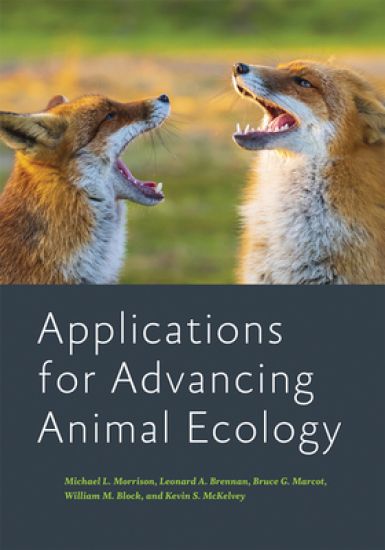
Practical guidance for wildlife professionals working to improve study design, data analysis, and the application of results to habitat and population management.Winner of the Wildlife Society Publications Book Award by The Wildlife SocietyDespite major advances in sampling techniques and analytical methods, many animal ecologists conduct research that is primarily relevant to a specific time and place. They also tend to focus more on the statistical analyses and nuances of modeling than actual study design. Arguing that studies of animal ecology should always begin with a focus on the behaviors and characteristics of individual organisms, including how they form into distinct biological populations, Applications for Advancing Animal Ecology takes a fresh and critical look at the field. Building from its companion volume, Foundations for Advancing Animal Ecology, this practical book presents readers with the principal methods used to observe animal behavior. Teaching them to assess resource abundance categories of species-environmental relationships models, it also explores• major aspects of measuring animal habitat: what to measure and how to measure it;• common sampling and estimation methods to assess population parameters;• when to measure and how to analyze data;• problems that will confront ecologists in the coming years—and how to gather information to adequately address them; and• how the experimental approach can be used to advance the science of animal ecology.Throughout the book, the authors stress the importance of speaking a common and well-defined language. Avoiding vague and misleading terminology, they assert, will help ecologists translate science into meaningful and lasting actions in the environment. Taking the perspective of the organism of interest in developing concepts and applications, the authors always keep the potentially biased human perspective in focus. They also provide a selection of suggested research projects, cautions, and caveats. A major advancement in understanding the factors underlying wildlife–habitat relationships, Applications for Advancing Animal Ecology will be an invaluable resource to natural resource management professionals and practitioners, including state and federal agencies, non-governmental organizations, and environmental consultants.
Authored by some of the state’s top wildlife scientists, The Upland and Webless Migratory Game Birds of Texas presents the most up-to-date and comprehensive information covering twenty-one species of game birds. Ranging from the most well-known, like the Wild Turkey and Mourning Dove, to the marsh-loving rails and other more elusive species, these birds have widespread appeal among both hunters and birders and underscore the diverse challenges facing wildlife scientists, land managers, and conservationists in Texas today. From cultural significance to taxonomy and evolutionary history, this volume provides a wealth of background information on these species. Additionally, the book offers illustrated species accounts, detailed range maps, and information about habitat and management requirements, hunting regulations, and research priorities. Readers will gain a deeper understanding of these game birds and the array of terrestrial and wetland landscapes key to their survival. This will serve as a convenient and thorough reference volume for wildlife biologists and enthusiasts, as well as landowners and hunters.
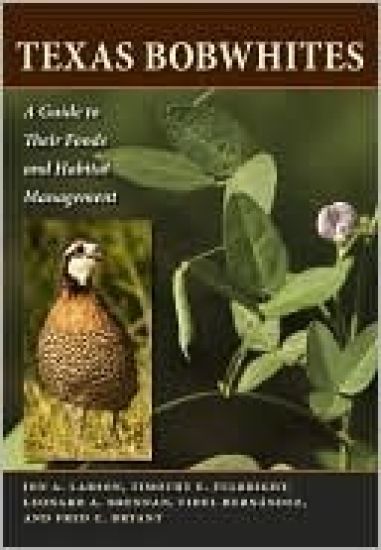
Northern bobwhites are one of the most popular game birds in the United States. In Texas alone, nearly 100,000 hunters take to the field each fall and winter to pursue wild bobwhite quail. Texas is arguably the last remaining state with sufficient habitat to provide quail-hunting opportunities on a grand scale, and Texas ranchers with good bobwhite habitat often generate a greater proportion of their income from fees paid by quail hunters than from livestock production. Managing and expanding bobwhite habitat makes good sense economically, and it benefits the environment as well. The rangelands and woodlands of Texas that produce quail also support scores of other species of wildlife.Texas Bobwhites is a field guide to the seeds commonly eaten by northern bobwhites, as well as a handbook for conserving and improving northern bobwhite habitat. It provides identifying characteristics for the seeds of 91 species of grasses, forbs, woody plants, and succulents. Each seed description includes a close-up and a scale photo of the seed and the plant that produces it, along with a range map. Using this information, hunters can readily identify concentrations of plants that are most likely to attract quail. Landowners and rangeland managers will greatly benefit from the book's state-of-the-art guidance for habitat management and restoration, including improving habitat dominated by invasive and nonnative grasses.