Kirjojen hintavertailu. Mukana 12 307 464 kirjaa ja 12 kauppaa.

Kirjailija

Leonard J. Santow

Kirjat ja teokset yhdessä paikassa: 3 kirjaa, julkaisuja vuosilta 2005-2008, suosituimpien joukossa Social Security and the Middle-Class Squeeze. Vertaile teosten hintoja ja tarkista saatavuus suomalaisista kirjakaupoista.

3 kirjaa

Kirjojen julkaisuhaarukka 2005-2008.

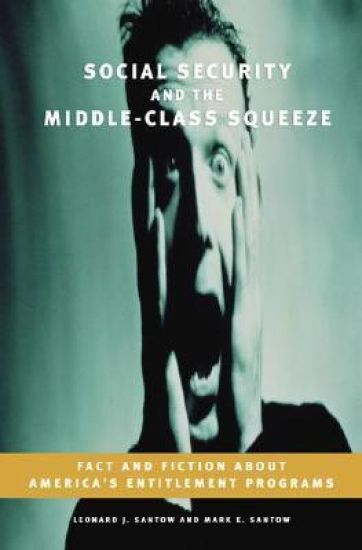
Social Security and the Middle-Class Squeeze

Social Security and the Middle-Class Squeeze

Leonard J. Santow; Mark E. Santow

Praeger Publishers Inc
2005
sidottu
At the outset of his second term, President Bush's proposal to partially privatize Social Security has touched off a debate of enormous proportion. Disentangling the rhetoric and hyperbole from fact is essential for anyone trying to evaluate the potential merits or pitfalls of the plan. Leonard and Mark Santow—a father-and-son team who integrate two different political viewpoints (fiscally conservative and socially liberal, respectively)—offer specific recommendations for improving Social Security, Medicare, and Medicaid in socially responsible ways that relieve some of the stress on the middle class and promote upward mobility. Explaining sophisticated economic concepts in layman's terms, the Santows expose myths about how entitlement programs actually work, arguing, for example, that while the financial state of Social Security gets most of the press, Medicare and Medicaid are in much more serious trouble. They integrate conservative and liberal viewponts to propose a package of reforms that includes both tax cuts and increases and an overhaul of the government's economic forecasting system. Synthesizing mountains of data and explaining sophisticated economic concepts in layman's terms, the Santows expose myths about how entitlement programs actually work, arguing, for example, that while the financial state of Social Security gets most of the press, Medicare and Medicaid are in much more serious trouble. Moreover, they are highly critical of privatization plans, demonstrating that similar programs have failed in other countries and that such plans are programs are neither fiscally nor socially sound. If the American people value the common commitments that these programs embody, we will need to see them as a package, and fund them accordingly. In response to this challenge, the Santows integrate conservative and liberal viewpoints to propose a package of reforms that includes both tax cuts and increases and an overhaul of the government's economic forecasting system. Featuring a timeline of key events since Franklin Roosevelt signed the Social Security Act in 1935 and an appendix of data tables, the authors offer a primer for concerned citizens, policymakers, educators, students, and finance professionals—anyone with a stake in designing a system that pays for these essential programs in an equitable manner and contributes to our collective prosperity.Featuring a timeline of key events since Franklin Roosevelt signed the Social Security Act in 1935 and an appendix of data tables, the authors offer a primer for concerned citizens, policymakers, educators, students, and finance professionals—anyone with a stake in designing a system that pays for these essential programs in an equitable manner and contributes to our collective prosperity.
Social Security and the Middle-Class Squeeze

Social Security and the Middle-Class Squeeze

Leonard J. Santow; Mark E. Santow

Praeger Publishers Inc
2005
nidottu
At the outset of his second term, President Bush's proposal to partially privatize Social Security has touched off a debate of enormous proportion. Disentangling the rhetoric and hyperbole from fact is essential for anyone trying to evaluate the potential merits or pitfalls of the plan. Leonard and Mark Santow—a father-and-son team who integrate two different political viewpoints (fiscally conservative and socially liberal, respectively)—offer specific recommendations for improving Social Security, Medicare, and Medicaid in socially responsible ways that relieve some of the stress on the middle class and promote upward mobility. Explaining sophisticated economic concepts in layman's terms, the Santows expose myths about how entitlement programs actually work, arguing, for example, that while the financial state of Social Security gets most of the press, Medicare and Medicaid are in much more serious trouble. They integrate conservative and liberal viewponts to propose a package of reforms that includes both tax cuts and increases and an overhaul of the government's economic forecasting system. Synthesizing mountains of data and explaining sophisticated economic concepts in layman's terms, the Santows expose myths about how entitlement programs actually work, arguing, for example, that while the financial state of Social Security gets most of the press, Medicare and Medicaid are in much more serious trouble. Moreover, they are highly critical of privatization plans, demonstrating that similar programs have failed in other countries and that such plans are programs are neither fiscally nor socially sound. If the American people value the common commitments that these programs embody, we will need to see them as a package, and fund them accordingly. In response to this challenge, the Santows integrate conservative and liberal viewpoints to propose a package of reforms that includes both tax cuts and increases and an overhaul of the government's economic forecasting system. Featuring a timeline of key events since Franklin Roosevelt signed the Social Security Act in 1935 and an appendix of data tables, the authors offer a primer for concerned citizens, policymakers, educators, students, and finance professionals—anyone with a stake in designing a system that pays for these essential programs in an equitable manner and contributes to our collective prosperity.Featuring a timeline of key events since Franklin Roosevelt signed the Social Security Act in 1935 and an appendix of data tables, the authors offer a primer for concerned citizens, policymakers, educators, students, and finance professionals—anyone with a stake in designing a system that pays for these essential programs in an equitable manner and contributes to our collective prosperity.
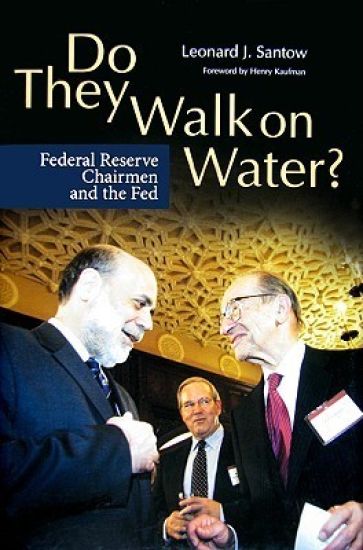
Do They Walk on Water?

Do They Walk on Water?

Leonard J. Santow

Praeger Publishers Inc
2008
sidottu
A crowd gathers. People crane their necks. Cameras flash. The limo door opens. Who is it—Mick Jagger? Oprah? Tiger Woods? No. It's Alan Greenspan—and the crowd still goes wild. Many felt Greenspan walked on water during his lengthy term as Chairman of the Federal Reserve System. But was he a genius or, as Tolstoy might portray him, simply someone who could manifest confidence while attempting to captain an uncontrollable ship? In this book, economist Leonard Santow casts a steely eye on the Fed and its five most recent chairmen—Arthur Burns, G. William Miller, Paul Volcker, Alan Greenspan, and Ben Bernanke. Along the way, readers learn what function the Fed performs and why, how monetary policy differs from fiscal policy, which levers the Fed uses to change the money supply and control inflation, and more. This is one of the few books to explain the inner workings of the Fed and its Open Market Operations in layman's terms, while evaluating its most recent chiefs in their efforts to keep inflation at bay and the economy humming. Written in an easy and accessible style, the book also contains insights on the subprime mess and the securities that helped bring down the real estate house of cards, and it offers prescriptions for smoothing the choppy economic seas going forward.