Kirjojen hintavertailu. Mukana 12 478 668 kirjaa ja 12 kauppaa.

Kirjailija

Leonardo Boff

Kirjat ja teokset yhdessä paikassa: 26 kirjaa, julkaisuja vuosilta 1987-2024, suosituimpien joukossa Plough Quarterly No. 9. Vertaile teosten hintoja ja tarkista saatavuus suomalaisista kirjakaupoista.

26 kirjaa

Kirjojen julkaisuhaarukka 1987-2024.

Plough Quarterly No. 9

Plough Quarterly No. 9

Stanley Hauerwas; Rick Warren; Leonardo Boff; Chiara Lubich; C. S. Lewis; Jean Vanier; Henri J. M. Nouwen; Eberhard Arnold; D. L. Mayfield

Plough Publishing House
2016
pokkari
With the concept of socialism back in mainstream conversations and increasing numbers of Christians unhappy with “Sunday Christianity,” it’s time to give the lifestyle of Jesus’ first followers another look. This issue of Plough Quarterly does just that, profiling intentional Christian communities past and present and gleaning wisdom on the daily practicalities and pitfalls of communal living from those with years of experience in following Jesus together. Hear from Stanley Hauerwas, Rick Warren, Leonardo Boff, Chiara Lubich, C. S. Lewis, Jean Vanier, Henri J. M. Nouwen, Eberhard Arnold, and D. L. Mayfield. Then there’s new poetry, book reviews, a children’s story by Kwon Jong-saeng, and world-class art by Salvador Dali, Wassily Kandinsky, Juan Rizi, Marianne Stokes, Francisco de Zurbarán, Dong-Sung Kim, Christian Schussele, Gustave Caillebotte. Plough Quarterly features stories, ideas, and culture for people eager to put their faith into action. Each issue brings you in-depth articles, interviews, poetry, book reviews, and art to help you put Jesus’ message into practice and find common cause with others.
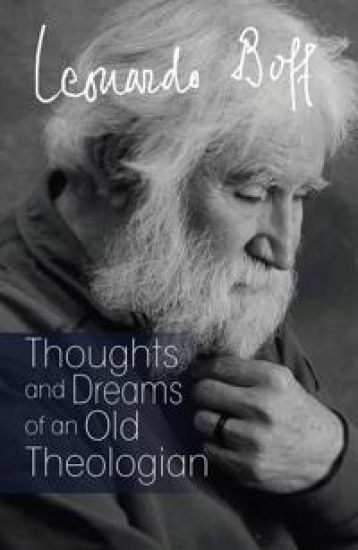
Thoughts of an Old Theologian

Thoughts of an Old Theologian

Leonardo Boff

ORBIS BOOKS (USA)
2022
pokkari
Leonardo Boff, a Brazilian theologian and public intellectual, was one of the foundational voices of Latin American liberation theology. Since those early years he went on to enlarge his perspective by integrating an option for the poor with an "option for the earth," as well as drawing on insights from world religions, indigenous spirituality, the new cosmology, and feminist thought. In this book, written from the perspective of his 80th birthday, he overviews the principles themes of his work beginning with the role of dreams--the capacity to imagine alternatives--before returning to reflection on God, Jesus, the Holy Spirit, the Church, ecotheology, a "universal ethic for the common good," and spirituality.
Way of the Cross-Way of Justice

Way of the Cross-Way of Justice

Leonardo Boff

Wipf Stock Publishers
2021
sidottu
"Theology has two eyes. One looks back toward the past, where salvation broke in; the other looks toward the present, where salvation becomes reality here and now."This Way of the Cross seeks to use both eyes of theology. It is a Way of the Cross, with one eye focusing on the historical Jesus: his life, condemnation, death, and resurrection. It is also a Way of Justice, its other eye focusing on the Christ of faith who continues his passion today in his brothers and sisters who are being condemned, tortured, and killed for the cause of justice."In the light of the perspectives and convictions acquired over the course of seven years of christological studies, I now present this Way of the Cross, which is meant to be a prayerful theology or a theological prayer."Leonardo Boff, from the Introduction
Way of the Cross-Way of Justice

Way of the Cross-Way of Justice

Leonardo Boff

Wipf Stock Publishers
2021
pokkari
"Theology has two eyes. One looks back toward the past, where salvation broke in; the other looks toward the present, where salvation becomes reality here and now."This Way of the Cross seeks to use both eyes of theology. It is a Way of the Cross, with one eye focusing on the historical Jesus: his life, condemnation, death, and resurrection. It is also a Way of Justice, its other eye focusing on the Christ of faith who continues his passion today in his brothers and sisters who are being condemned, tortured, and killed for the cause of justice."In the light of the perspectives and convictions acquired over the course of seven years of christological studies, I now present this Way of the Cross, which is meant to be a prayerful theology or a theological prayer."Leonardo Boff, from the Introduction
Becoming New

Becoming New

Anselm Grun; Leonardo Boff

Orbis Books (USA)
2019
pokkari
Two leading theological and spiritual writers, one from Germany and the other from Brazil, exchange reflections on the nature and presence of God. While Anselm Grun puts more emphasis on finding God within us, Leonardo Boff focuses more on God's presence in the unfolding story of the universe. But they agree that both dimensions must be brought together and that the essence of God is love.
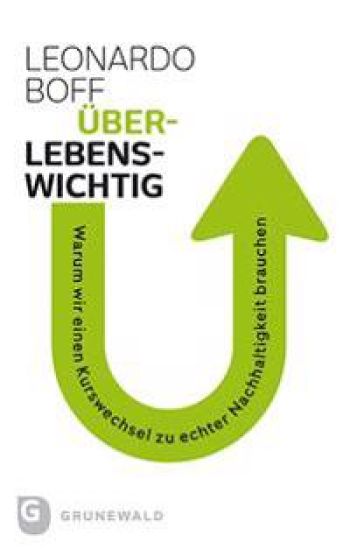
Uberlebenswichtig: Warum Wir Einen Kurswechsel Zu Echter Nachhaltigkeit Brauchen
Die okologische Frage ist die alles entscheidende Frage des 21. Jahrhunderts. Die Zerstorung naturlicher Lebensgrundlagen, Ruckgang der Artenvielfalt, grenzenlose Ausbeutung von Ressourcen, immer weiter steigender Energieverbrauch, lebensfeindliche Wirtschafts- und Finanzsysteme fuhren die Erde an den Rand des Abgrunds. Leonardo Boff zeigt, dass sich die bisherigen Modelle - trotz des Etiketts "okologisch" oder "nachhaltig" - innerhalb des alten Wachstumsparadigma bewegen und deshalb unzulanglich sind. In diesem Buch entwickelt er ein vollig neues zivilisatorisches Modell, ein neues Verhaltnis der Menschen zur auaermenschlichen Kreatur und zur Erde. Er begrundet uberzeugend, wie nur diese revolutionare Sicht einer echten Nachhaltigkeit den drangenden Herausforderungen gerecht wird. Ein Weckruf, die derzeitige bedrohliche Situation als Chance fur ein radikales Umdenken zu begreifen.
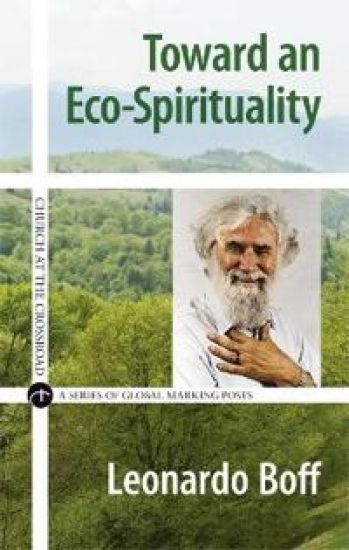
Toward an Eco-Spirituality

Toward an Eco-Spirituality

Leonardo Boff

Crossroad Publishing Co ,U.S.
2015
nidottu
An action plan, based on Christianity, to study and understand the challenges and ramifications of the global ecological crisis known as one of the major liberation theologians, Leonardo Boff has long seen the terrible cost of the ecological crisis to the poor. In this engaging brief, he outlines a new vision for human stewardship of the earth. This is an ideal first step to take for individuals and groups to study ecology in a Christian context, and to understand that ecology is no longer a luxury for a few, but an imperative for everyone working for a more just world.
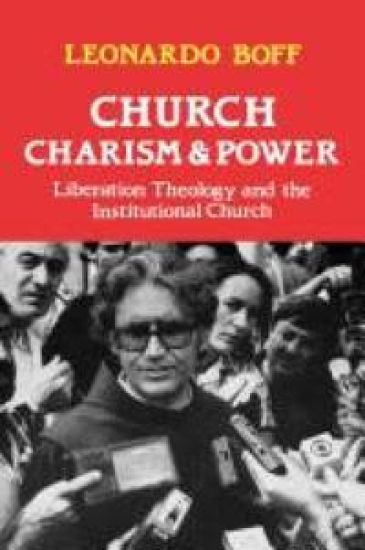
Church, Charism and Power

Church, Charism and Power

Leonardo Boff

SCM Press
2012
nidottu
Since this book has brought Fr Boff into confrontation with the Roman Catholic authorities it is important to let him describe it himself. 'We are living in privileged times. There is an upsurge of life in the church that is revitalizing the entire body from head to toes. The church has been placed on the road to renewal, which will surely result in a new manifestation of the church as institution. There are powerful and living forces, particularly at the grassroots, that are not sufficiently recognized by the traditional channels of the church's present organization. The grassroots are asking for a new structure, a new ecclesial division of labour and of religious power, for this a new vision of the church is necessary. This vision has not yet been developed systematically in a way that responds to the demands of our global reality, but is necessary given what is happening in Latin America and elsewhere in the world. The present book does not pretend to fill this need. It does, however, take on certain challenges, raise criticisms, make suggestions for a new model of the church, and reflect on them in a radical way. This book will most certainly be understood by them precisely in as much as they have overcome the triumphalist mentality. Others will judge this work as superfluous and even inopportune. This will not trouble me in the least. What readily comes to mind is the thought of St Augustine, echoed by the philosopher Ludwig Wittgenstein. And many before us, leading this life, trod tortuous paths which we were obliged to follow, with the weariness and suffering imposed on the sons of Adam.'
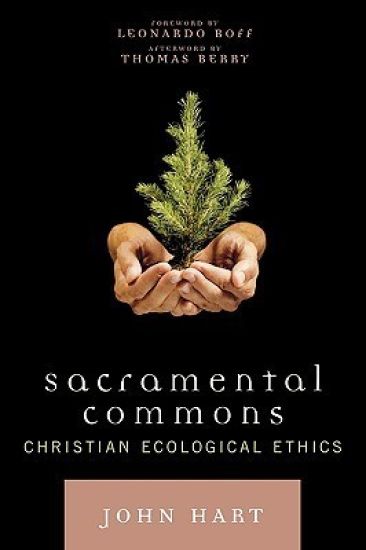
Sacramental Commons

Sacramental Commons

John Hart; Leonardo Boff; Thomas Berry

Rowman Littlefield Publishers
2006
sidottu
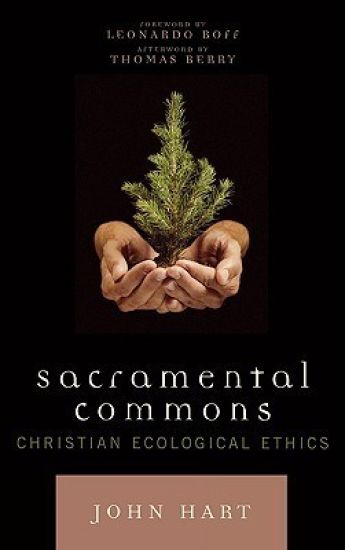
The increasing awareness of environmental issues as ultimately moral issues has led to the intersection of religion and environment. Sacramental Commons presents a unique way of looking at this topic by relating the Christian word "sacrament" (signs of divine presence) to the term "commons" (shared place and shared goods, among people and between people and the natural world), suggesting that local natural settings and local communities can be a source for respect and compassion. Sacramental Commons uses Earth-oriented biblical teachings, and ideas from such thinkers as Hildegard, St. Francis, John Muir, and Black Elk, to provide insights about divine immanence in creation, human commitments to creation, and human accountability to the Spirit, Earth, and biotic community. It extends the concept of "natural rights" beyond humans to include all nature, and affirms intrinsic value in ecosystems in whole and in part. Sacramental Commons declares that the Earth commons and its goods should be shared equitably by human communities and individuals living in interdependent relationships with other members of the community of life. It suggests essential values that will stimulate care for the commons, and embodies them in principles of an innovative Christian Ecological Ethics.
Sacramental Commons

Sacramental Commons

John Hart; Leonardo Boff; Thomas Berry

Rowman Littlefield Publishers
2006
nidottu
The increasing awareness of environmental issues as ultimately moral issues has led to the intersection of religion and environment. Sacramental Commons presents a unique way of looking at this topic by relating the Christian word 'sacrament' (signs of divine presence) to the term 'commons' (shared place and shared goods, among people and between people and the natural world), suggesting that local natural settings and local communities can be a source for respect and compassion. Sacramental Commons uses Earth-oriented biblical teachings, and ideas from such thinkers as Hildegard, St. Francis, John Muir, and Black Elk, to provide insights about divine immanence in creation, human commitments to creation, and human accountability to the Spirit, Earth, and biotic community. It extends the concept of 'natural rights' beyond humans to include all nature, and affirms intrinsic value in ecosystems in whole and in part. Sacramental Commons declares that the Earth commons and its goods should be shared equitably by human communities and individuals living in interdependent relationships with other members of the community of life. It suggests essential values that will stimulate care for the commons, and embodies them in principles of an innovative Christian Ecological Ethics.