Kirjojen hintavertailu. Mukana 12 403 542 kirjaa ja 12 kauppaa.
Kirjailija
Leonid Andreyev
Kirjat ja teokset yhdessä paikassa: 178 kirjaa, julkaisuja vuosilta 2004-2026, suosituimpien joukossa The Dear Departing. Vertaile teosten hintoja ja tarkista saatavuus suomalaisista kirjakaupoista.
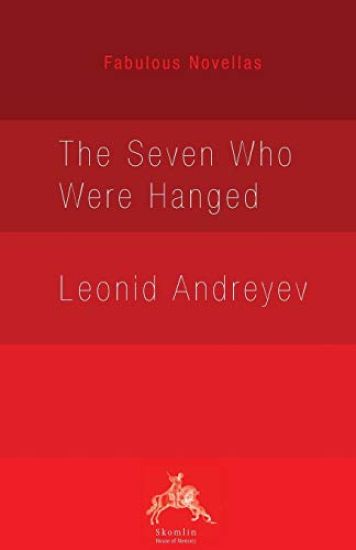
Andreyev depicts the fates of five failed leftist revolutionaries and two common peasants who have received death sentences. The condemned await execution by hanging. In prison, each of the prisoners deals with his fate in his or her own way.This is the book that inspired a group of Bosnian revolutionaries to assassinate Archduke Franz Ferdinand, triggering the crisis that led to World War I.
Andreyev writes about universal emotion and conflict, while his characters represent the true resilience and tenacity of the Russian people. One of the best writers of short stories of all time, his works stay along with those from Machado, Poe, H. James, Joyce etc. Included in this volume are "The Crushed Flower," "A Story Which Will Never Be Finished," "On the Day of the Crucifixion," "The Serpent's Story," "Love, Faith and Hope," "The Ocean," "Judas Iscariot and Others," and "'The Man Who Found the Truth.'"
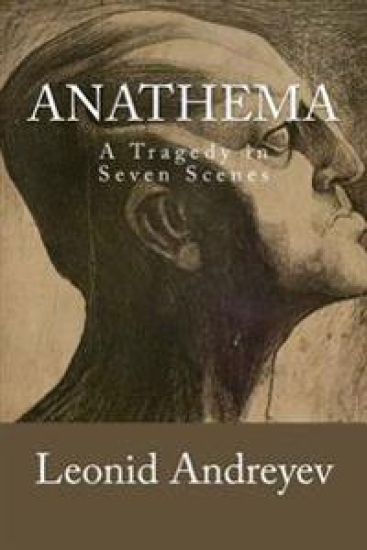
AnathemaA Tragedy in Seven ScenesBy Leonid AndreyevAuthorized Translation by Herman BernsteinLeonid Nikolaievich Andreyev was a Russian playwright, novelist and short-story writer, who is considered to be a father of Expressionism in Russian literature. He is one of the most talented and prolific representatives of the Silver Age period. Andreyev's style combines elements of realist, naturalist, and symbolist schools in literature.Aside from his political writings, Andreyev published little after 1914. In 1916, he became the editor of the literary section of the newspaper "Russian Will." He later supported the February Revolution, but foresaw the Bolsheviks' coming to power as catastrophic. In 1917, he moved to Finland. From his house in Finland he addressed manifestos to the world at large against the excesses of the Bolsheviks. Idealist and rebel, Andreyev spent his last years in bitter poverty, and his premature death from heart failure may have been hastened by his anguish over the results of the Bolshevik Revolution. His last novel, Satan's Diary, was left unfinished at the time of his death.
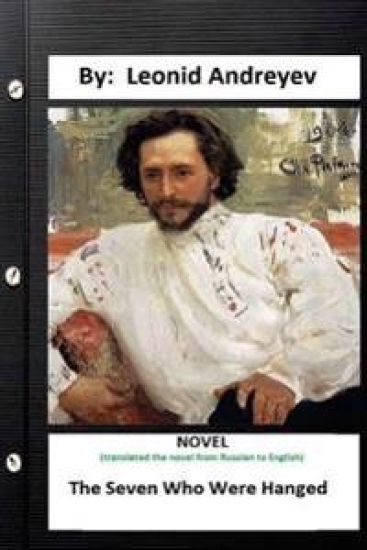
The Seven Who Were HangedA StoryBy Leonid AndreyevAuthorized Translation from The Russian By Herman Bernstein.The Seven Who Were Hanged is a 1908 short story by Russian author Leonid Andreyev. The novel was adapted for film in 1920.Herman Bernstein translated the novel from Russian to English in 1909. Another translation by Anthony Briggs, entitled Seven Hanged, was published in 2016.It is believed that the assassins of Archduke Franz Ferdinand were influenced to assassinate Ferdinand based on the contents of this short story.I am very glad that "The Story of the Seven Who Were Hanged" will be read in English. The misfortune of us all is that we know so little, even nothing, about one another--neither about the soul, nor the life, the sufferings, the habits, the inclinations, the aspirations of one another. Literature, which I have the honor to serve, is dear to me just because the noblest task it sets before itself is that of wiping out boundaries and distances.
When Satan comes to Earth disguised as a human, he doesn't expect to come across a young girl named Maria. The young Maria steals the ancient devil's heart and he struggles for her attention while trying to hide who he really is. The Vatican eventually gets involved in his quest and a cardinal who knows who he is attempts to help.
INTRODUCTION Leonid Andreyev, the great Russian writer, whose "Anathema," "The Seven Who Were Hanged," "The Life of Man" and "Red Laughter" have attracted universal attention, has now written the story of the sorrows of the Belgian people. He delineates the tragedy of Belgium as reflected in the home of the foremost Belgian poet and thinker-regarded as the conscience of the Belgian nation. Leonid Andreyev feels deeply and keenly for the oppressed and weaker nationalities. He has depicted the victims of this war with profound sympathy, -the Belgians, and in another literary masterpiece he analyzed the sufferings of the Jews in Russia as a result of this war. He described vividly the sense of shame of the Russian people on account of the Russian official anti-Jewish policies. In both these works Leonid Andreyev holds German militarism and German influences responsible for the wrongs committed against smaller nationalities. In his treatise on the tragedy of the Jews in Russia, he writes of "Russian barbarians" and "German barbarians" as follows: "If for the Jews themselves the Pale of Settlement, the per cent norm and other restrictions were a fatal fact, which distorted all their life, it has been for me, a Russian, something like a hunch on my back, a monstrous growth, which I received I know not when and under what conditions. But wherever I may go and whatever I may do the hunch is always with me; it has disturbed my sleep at night, and in my waking hours, in the presence of people, it has filled me with a sensation of confusion and shame.... "It is necessary for all to understand that the end of Jewish sufferings is the beginning of our self-respect, without which Russia cannot live. The dark days of the war will pass and the German barbarians' of today will once more become cultured Germans whose voice will again be heard throughout the world. And it is essential that neither their voice nor any other voice should call us loudly 'Russian barbarians.'" Aside from its literary and dramatic value, if this volume on the sorrows of Belgium will tend to arouse a little more sympathy for the sufferings of the victims of the war, or if it will help to call forth in the minds of the people a stronger abhorrence of the horrors of war, it will have served an important and worthy purpose. HERMAN BERNSTEIN. May 25, 1915
INTRODUCTION Leonid Andreyev, the great Russian writer, whose "Anathema," "The Seven Who Were Hanged," "The Life of Man" and "Red Laughter" have attracted universal attention, has now written the story of the sorrows of the Belgian people. He delineates the tragedy of Belgium as reflected in the home of the foremost Belgian poet and thinker-regarded as the conscience of the Belgian nation. Leonid Andreyev feels deeply and keenly for the oppressed and weaker nationalities. He has depicted the victims of this war with profound sympathy, -the Belgians, and in another literary masterpiece he analyzed the sufferings of the Jews in Russia as a result of this war. He described vividly the sense of shame of the Russian people on account of the Russian official anti-Jewish policies. In both these works Leonid Andreyev holds German militarism and German influences responsible for the wrongs committed against smaller nationalities. In his treatise on the tragedy of the Jews in Russia, he writes of "Russian barbarians" and "German barbarians" as follows: "If for the Jews themselves the Pale of Settlement, the per cent norm and other restrictions were a fatal fact, which distorted all their life, it has been for me, a Russian, something like a hunch on my back, a monstrous growth, which I received I know not when and under what conditions. But wherever I may go and whatever I may do the hunch is always with me; it has disturbed my sleep at night, and in my waking hours, in the presence of people, it has filled me with a sensation of confusion and shame.... "It is necessary for all to understand that the end of Jewish sufferings is the beginning of our self-respect, without which Russia cannot live. The dark days of the war will pass and the German barbarians' of today will once more become cultured Germans whose voice will again be heard throughout the world. And it is essential that neither their voice nor any other voice should call us loudly 'Russian barbarians.'" Aside from its literary and dramatic value, if this volume on the sorrows of Belgium will tend to arouse a little more sympathy for the sufferings of the victims of the war, or if it will help to call forth in the minds of the people a stronger abhorrence of the horrors of war, it will have served an important and worthy purpose. HERMAN BERNSTEIN. May 25, 1915
INTRODUCTION Leonid Andreyev, the great Russian writer, whose "Anathema," "The Seven Who Were Hanged," "The Life of Man" and "Red Laughter" have attracted universal attention, has now written the story of the sorrows of the Belgian people. He delineates the tragedy of Belgium as reflected in the home of the foremost Belgian poet and thinker-regarded as the conscience of the Belgian nation. Leonid Andreyev feels deeply and keenly for the oppressed and weaker nationalities. He has depicted the victims of this war with profound sympathy, -the Belgians, and in another literary masterpiece he analyzed the sufferings of the Jews in Russia as a result of this war. He described vividly the sense of shame of the Russian people on account of the Russian official anti-Jewish policies. In both these works Leonid Andreyev holds German militarism and German influences responsible for the wrongs committed against smaller nationalities. In his treatise on the tragedy of the Jews in Russia, he writes of "Russian barbarians" and "German barbarians" as follows: "If for the Jews themselves the Pale of Settlement, the per cent norm and other restrictions were a fatal fact, which distorted all their life, it has been for me, a Russian, something like a hunch on my back, a monstrous growth, which I received I know not when and under what conditions. But wherever I may go and whatever I may do the hunch is always with me; it has disturbed my sleep at night, and in my waking hours, in the presence of people, it has filled me with a sensation of confusion and shame.... "It is necessary for all to understand that the end of Jewish sufferings is the beginning of our self-respect, without which Russia cannot live. The dark days of the war will pass and the German barbarians' of today will once more become cultured Germans whose voice will again be heard throughout the world. And it is essential that neither their voice nor any other voice should call us loudly 'Russian barbarians.'" Aside from its literary and dramatic value, if this volume on the sorrows of Belgium will tend to arouse a little more sympathy for the sufferings of the victims of the war, or if it will help to call forth in the minds of the people a stronger abhorrence of the horrors of war, it will have served an important and worthy purpose. HERMAN BERNSTEIN. May 25, 1915