
Kirjojen hintavertailu. Mukana 12 595 353 kirjaa ja 12 kauppaa.

Kirjailija

Leor Halevi

Kirjat ja teokset yhdessä paikassa: 4 kirjaa, julkaisuja vuosilta 2007-2021, suosituimpien joukossa Modern Things on Trial. Vertaile teosten hintoja ja tarkista saatavuus suomalaisista kirjakaupoista.

4 kirjaa

Kirjojen julkaisuhaarukka 2007-2021.

Modern Things on Trial

Modern Things on Trial

Leor Halevi

Wallflower Press
2021
pokkari
In cities awakening to global exchange under European imperial rule, Muslims encountered all sorts of strange and wonderful new things—synthetic toothbrushes, toilet paper, telegraphs, railways, gramophones, brimmed hats, tailored pants, and lottery tickets. The passage of these goods across cultural frontiers spurred passionate debates. Realizing that these goods were changing religious practices and values, proponents and critics wondered what to outlaw and what to permit.In this book, Leor Halevi tells the story of the Islamic trials of technological and commercial innovations of the late nineteenth and early twentieth centuries. He focuses on the communications of an entrepreneurial Syrian interpreter of the shari?a named Rashid Rida, who became a renowned reformer by responding to the demand for authoritative and authentic religious advice. Upon migrating to Egypt, Rida founded an Islamic magazine, The Lighthouse, which cultivated an educated, prosperous readership within and beyond the British Empire. To an audience eager to know if their scriptures sanctioned particular interactions with particular objects, he preached the message that by rediscovering Islam’s foundational spirit, the global community of Muslims would thrive and realize modernity’s religious and secular promises.Through analysis of Rida’s international correspondence, Halevi argues that religious entanglements with new commodities and technologies were the driving forces behind local and global projects to reform the Islamic legal tradition. Shedding light on culture, commerce, and consumption in Cairo and other colonial cities, Modern Things on Trial is a groundbreaking account of Islam’s material transformation in a globalizing era.
Modern Things on Trial

Modern Things on Trial

Leor Halevi

Columbia University Press
2019
sidottu
In cities awakening to global exchange under European imperial rule, Muslims encountered all sorts of strange and wonderful new things—synthetic toothbrushes, toilet paper, telegraphs, railways, gramophones, brimmed hats, tailored pants, and lottery tickets. The passage of these goods across cultural frontiers spurred passionate debates. Realizing that these goods were changing religious practices and values, proponents and critics wondered what to outlaw and what to permit.In this book, Leor Halevi tells the story of the Islamic trials of technological and commercial innovations of the late nineteenth and early twentieth centuries. He focuses on the communications of an entrepreneurial Syrian interpreter of the shari?a named Rashid Rida, who became a renowned reformer by responding to the demand for authoritative and authentic religious advice. Upon migrating to Egypt, Rida founded an Islamic magazine, The Lighthouse, which cultivated an educated, prosperous readership within and beyond the British Empire. To an audience eager to know if their scriptures sanctioned particular interactions with particular objects, he preached the message that by rediscovering Islam’s foundational spirit, the global community of Muslims would thrive and realize modernity’s religious and secular promises.Through analysis of Rida’s international correspondence, Halevi argues that religious entanglements with new commodities and technologies were the driving forces behind local and global projects to reform the Islamic legal tradition. Shedding light on culture, commerce, and consumption in Cairo and other colonial cities, Modern Things on Trial is a groundbreaking account of Islam’s material transformation in a globalizing era.
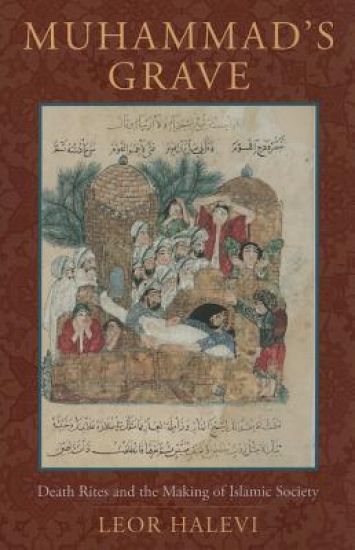
Muhammad's Grave

Muhammad's Grave

Leor Halevi

Columbia University Press
2011
pokkari
In his probing study of the role of death rites in the making of Islamic society, Leor Halevi imaginatively plays prescriptive texts against material culture and advances new ways of interpreting highly contested sources. His original research reveals that religious scholars of the early Islamic period produced codes of funerary law not only to define the handling of a Muslim corpse but also to transform everyday urban practices. Relying on oral traditions, these scholars established new social patterns in the cities of Arabia, Mesopotamia, and the eastern Mediterranean. They distinguished Islamic rites from Christian, Jewish, and Zoroastrian rites and changed the way men and women interacted publicly and privately. In each chapter Halevi explores a different layer of human interaction, following the movement of the corpse from the deathbed to the grave. In the process he analyzes the real and imaginary relationships between husbands and wives, prayer leaders and mourners, and even dreamers and the dead. He describes how Muslims wailed for the deceased, prepared corpses for burial, marched in funerary processions, and prayed for the dead, highlighting the specific economic and political factors involved in these rituals as well as key religious and sexual divisions. Offering a unique perspective on the making of Islamic social and religious ideals during this early period, Halevi forges a fascinating link between the development of funerary rites and the efforts of an emerging religion to carve out its own, distinct identity. Muhammad's Grave is a groundbreaking history of the rise of Islam and the roots of contemporary Muslim attitudes toward the body and society.
Muhammad's Grave

Muhammad's Grave

Leor Halevi

Columbia University Press
2007
sidottu
In his probing study of the role of death rites in the making of Islamic society, Leor Halevi imaginatively plays prescriptive texts against material culture and advances new ways of interpreting highly contested sources. His original research reveals that religious scholars of the early Islamic period produced codes of funerary law not only to define the handling of a Muslim corpse but also to transform everyday urban practices. Relying on oral traditions, these scholars established new social patterns in the cities of Arabia, Mesopotamia, and the eastern Mediterranean. They distinguished Islamic rites from Christian, Jewish, and Zoroastrian rites and changed the way men and women interacted publicly and privately. In each chapter Halevi explores a different layer of human interaction, following the movement of the corpse from the deathbed to the grave. In the process he analyzes the real and imaginary relationships between husbands and wives, prayer leaders and mourners, and even dreamers and the dead. He describes how Muslims wailed for the deceased, prepared corpses for burial, marched in funerary processions, and prayed for the dead, highlighting the specific economic and political factors involved in these rituals as well as key religious and sexual divisions. Offering a unique perspective on the making of Islamic social and religious ideals during this early period, Halevi forges a fascinating link between the development of funerary rites and the efforts of an emerging religion to carve out its own, distinct identity. Muhammad's Grave is a groundbreaking history of the rise of Islam and the roots of contemporary Muslim attitudes toward the body and society.